
Roughly half of all FSA account holders forfeited their funds in 2022, losing an average of $441 that could have gone toward their health. In a city where we walk miles across neighborhoods like Brooklyn Heights and Williamsburg, letting those pre-tax dollars expire while you struggle with foot pain is a missed opportunity for genuine relief. If you’re tired of “powering through” every step, using flexible spending account for orthotics Brooklyn specialists provide is one of the most effective ways to reclaim your comfort before the 2026 deadline.
We know the “use it or lose it” rules feel like a ticking clock, especially when you’re worried about claim denials or confusing documentation requirements. You shouldn’t have to choose between financial prudence and physical health. While we help you optimize your medical benefits, those facing broader financial challenges or legal hurdles may find that the Law Offices of Matthew T. Desrochers, P.C. provides essential guidance for debt relief and family law. This guide will teach you exactly how to utilize your FSA funds for custom-molded orthotics at our local clinics. We’ll cover the specific 2026 contribution limits, the importance of a Letter of Medical Necessity, and the steps we take to ensure your professional evaluation leads to both pain-free walking and a successful reimbursement.
Key Takeaways
- Confirm your eligibility by learning why custom-molded orthotics are considered a qualified medical expense under 2026 IRS guidelines.
- Avoid losing your hard-earned money by identifying the specific “use it or lose it” deadlines for Brooklyn-based FSA plans.
- Discover the step-by-step process for using flexible spending account for orthotics Brooklyn clinics require, from your initial 3D scan to a formal diagnosis.
- Understand why medical-grade custom orthotics offer superior durability and value for your FSA dollars compared to temporary over-the-counter inserts.
- Prepare your documentation correctly with a checklist of essential items, including the Letter of Medical Necessity and required HCPCS coding for successful reimbursement.
Are Custom Orthotics FSA Eligible in 2026?
Yes, custom-molded orthotics are fully qualified medical expenses under IRS guidelines for 2026. Unlike generic retail inserts you might find at a pharmacy, professional orthotics are categorized as Durable Medical Equipment (DME). This classification is vital because it means the IRS recognizes these devices as essential for treating, mitigating, or preventing a specific physical defect or illness. When you are considering using flexible spending account for orthotics Brooklyn specialists prescribe, you’re investing in a medical solution tailored to your unique foot structure rather than a one-size-fits-all cushion.
A Flexible Spending Account allows you to set aside pre-tax earnings to pay for these healthcare needs. While Health Savings Accounts (HSAs) often allow funds to roll over indefinitely, FSAs typically operate on a “use it or lose it” basis. If you don’t spend your allocated balance by the end of the plan year, those funds usually return to your employer. In a walking-heavy environment like Brooklyn, using these funds for custom orthotics is a smart way to protect both your health and your hard-earned money before the year ends.
Why Orthotics Qualify as a Medical Expense
Orthotics qualify because they serve a therapeutic purpose. Our practitioners use them to treat diagnosed clinical conditions such as plantar fasciitis, bunions, and hammertoes. By realigning the foot and ankle, these devices prevent further structural damage and reduce chronic pain that can limit your mobility. A formal diagnosis from a board-certified podiatrist is the “golden ticket” for approval. This medical evaluation proves to your insurance or FSA administrator that the orthotics are a necessity for your recovery and long-term independence, rather than a lifestyle purchase.
2026 FSA Limits and Deadlines for New Yorkers
For the 2026 plan year, the IRS has set the individual medical FSA contribution limit at $3,400. If your employer allows a carryover, you can move up to $680 of unused funds into 2027. However, many New York City employees participate in programs that offer a specific grace period. For example, participants in the NYC Health Care Flexible Spending Account Program generally have until March 15, 2027, to incur expenses using their 2026 balance, with a final claim submission deadline of May 31, 2027.
We strongly recommend scheduling your evaluation at our Brooklyn clinic in October or November. This timing ensures we have enough room in the schedule to complete your 3D scans and manufacture your custom devices well before the end-of-year rush. Don’t wait until the final week of December when appointment availability is often limited and the stress of expiring funds is at its peak.
How to Use Your Flexible Spending Account for Orthotics in Brooklyn
Securing custom-molded medical devices is a straightforward process when you have the right clinical support. Unlike purchasing over-the-counter inserts, using flexible spending account for orthotics Brooklyn patients receive requires a clinical trail that satisfies both medical standards and IRS regulations. This process ensures that your investment actually resolves your pain while meeting the strict criteria for tax-free spending. Following a structured path helps avoid the frustration of denied claims or wasted funds.
- Step 1: Clinical Evaluation. You’ll start with a comprehensive assessment by a board-certified podiatrist to analyze your gait and foot structure.
- Step 2: Formal Diagnosis. We identify the specific medical condition, such as flat feet or chronic heel pain, that necessitates orthotic intervention.
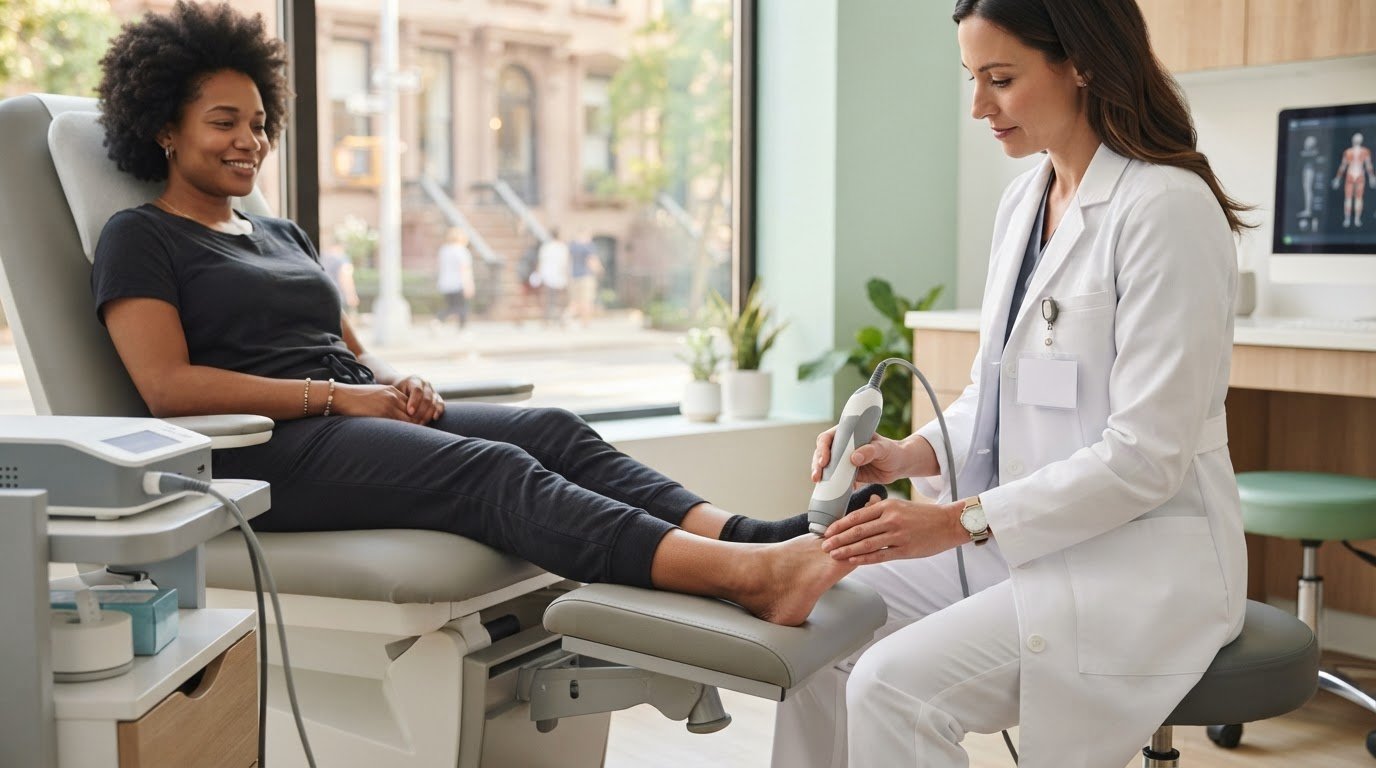
- Step 3: Precision Scanning. Our team uses advanced 3D scanning technology to capture a precise digital map of your feet.
- Step 4: Secure Payment. You can pay using your FSA debit card at our office or request a detailed medical receipt for later reimbursement.
- Step 5: Documentation Submission. We provide the necessary Letter of Medical Necessity (LMN) to ensure your plan administrator approves the claim without delay.
The Clinical Evaluation: More Than Just a Fitting
A professional evaluation at our Brooklyn locations goes far beyond measuring your shoe size. We perform a detailed biomechanical analysis to understand how your feet move when you’re walking through neighborhoods like Park Slope or commuting on the subway. During this visit, we often identify underlying issues like what is plantar fasciitis and how it contributes to your daily discomfort. Our goal is to design a device that supports your specific NYC lifestyle, whether you’re a high-mileage runner in Prospect Park or someone who spends all day on their feet at work. If you’re ready to start the process, you can schedule your initial consultation at our Brooklyn office today.
Payment Methods: FSA Cards vs. Reimbursement
Most patients prefer using their FSA debit card directly at the point of sale. This is often the simplest path; however, it’s common for administrators to flag these transactions as “pending” until they receive a receipt. We provide itemized documentation that aligns with IRS Publication 502, which clearly outlines what qualifies as a deductible medical expense. If you don’t have a physical card, you can pay out-of-pocket and submit our detailed invoice for manual reimbursement. Our administrative team is experienced in providing the exact codes and descriptions required to minimize the risk of a denied claim.
Custom vs. Store-Bought: Maximizing Your FSA Value
When you look at a list of eligible expenses, you’ll see both retail inserts and custom orthotics included. However, for a Brooklynite walking on unforgiving concrete from DUMBO to Bay Ridge, the choice isn’t just about price. It’s about the long-term value of your health. Using flexible spending account for orthotics Brooklyn residents can access at our clinic ensures you’re not just buying a temporary cushion, but a precisely engineered medical tool. Store-bought inserts often lose their structural integrity within months. In contrast, custom-molded orthotics are built to last two to three years, making them a much smarter use of your finite 2026 FSA dollars.
Brooklyn’s streets are notoriously hard on the musculoskeletal system. Every step on concrete sends a shockwave up through your ankles, knees, and lower back. Custom orthotics provide the superior shock absorption needed to mitigate this daily stress. They are especially critical for patients managing diabetic foot care in Brooklyn, where proper pressure distribution is essential for preventing complications and preserving mobility. By investing your pre-tax funds in medical-grade devices, you’re choosing a solution that addresses the root cause of your discomfort rather than just masking the symptoms.
The Engineering of a Custom Orthotic
We select materials based on your specific clinical needs. This might include semi-rigid graphite for high-impact activities or specialized cushioned foam for sensitive areas of the foot. Unlike “one-size-fits-all” products that can actually worsen conditions like high arches or over-pronation by providing support in the wrong places, our custom designs offer precision correction. We map the exact contours of your foot to ensure that every millimeter of the device serves a therapeutic purpose. This level of customization is what turns a simple shoe insert into a powerful tool for regaining your independence.
FSA for Orthopedic Shoes and Modifications
Your FSA can also cover orthopedic shoes, though the IRS typically only allows for the cost difference between the specialized shoe and a standard version. Modifications to your existing footwear, such as lifts or wedges, are also eligible expenses when prescribed by a doctor. When we combine these modifications with sports medicine, we help urban athletes and daily commuters maintain peak performance. Using flexible spending account for orthotics Brooklyn services at our practice allows you to build a comprehensive foot health strategy that fits your active New York lifestyle perfectly.

Avoiding Denied Claims: Essential Documentation and NYC Deadlines
The administrative side of healthcare can feel daunting, but clear documentation is the best defense against a denied claim. When you’re using flexible spending account for orthotics Brooklyn plan administrators look for very specific markers on your paperwork. We ensure every receipt we provide is fully itemized. It will include our provider’s National Provider Identifier (NPI), the exact date of service, and the correct Healthcare Common Procedure Coding System (HCPCS) codes, typically ranging from L3000 to L3030 for custom-molded inserts.
Claim denials often happen because of simple clerical omissions or a lack of medical justification. If your claim is initially rejected, don’t panic. Most administrators allow for an appeal where you can submit additional evidence from our clinical team. We recommend keeping digital scans of every NYC medical transaction on your phone. This makes it easy to resubmit documents without digging through paper files at home, ensuring you don’t lose your 2026 funds to a technicality.
The Anatomy of a Letter of Medical Necessity
An effective Letter of Medical Necessity (LMN) is more than just a signed note. It must include a specific ICD-10 diagnosis code, such as M72.2 for plantar fasciitis or Q66.5 for congenital flat feet. This code tells the administrator that the treatment is medically required to address a specific functional deficit rather than being a “general health” or cosmetic purchase. Our LMNs also specify the duration of treatment, explicitly stating that the orthotics are intended for long-term use to prevent further structural decline and support your daily mobility.
Filing Your Claim: Timelines and Digital Portals
Speed is your ally when managing your benefits. Most modern administrators offer mobile apps like Wageworks or Navia, allowing you to photograph your receipt and upload it before you even leave our office. One critical detail to remember is the “Date of Service.” Your FSA plan cares about when the medical evaluation and casting occurred, not necessarily the “Date of Payment.”
If your FSA debit card is declined at our front desk, it doesn’t mean your purchase isn’t eligible. Sometimes, cards are restricted based on merchant category codes. In these cases, you can pay with a standard credit card and submit our itemized invoice for a manual reimbursement. If you have questions about your specific documentation needs, you can contact our Brooklyn office for assistance with your claim.
Professional Orthotic Fitting at Local Foot Doc in Brooklyn
At Local Foot Doc, we believe that world-class podiatric care should be accessible to every member of our community. Dr. Waldemar Majdanski, a board-certified specialist with extensive expertise in New York foot care, leads our clinical team with a focus on functional recovery. We understand that residents in neighborhoods like Williamsburg and Brooklyn Heights lead active, demanding lives. Our goal is to ensure that using flexible spending account for orthotics Brooklyn patients receive is a seamless experience that results in lasting relief and improved mobility.
We utilize advanced 3D scanning technology to create the most accurate custom fit available in the borough. This digital mapping replaces messy traditional casting and allows for a level of precision that retail inserts simply cannot match. Because we are a professional medical practice, we handle the complex side of insurance and benefits for you. We provide the specific itemized billing codes and clinical documentation your plan administrator requires, ensuring your 2026 FSA funds are processed without a hitch. By integrating modern technical capabilities with individual attention, we help you secure the medical devices you need to stay active.
While our focus remains on providing the best care in the region, we also prioritize convenience for our patients. We serve the local community through our strategically located offices in Forest Hills, Astoria, and Woodhaven. These locations are easily accessible for residents across both Queens and Brooklyn, making it simple to fit a professional evaluation into your busy schedule before the year-end deadline.
Why Brooklyn Residents Trust Local Foot Doc
With over 20 years of experience, we’ve seen how the unique environment of New York City impacts foot health. Our practice offers a comprehensive range of services that go beyond simple fittings. For instance, if your evaluation reveals structural issues that require more than just support, we specialize in advanced procedures like bunion surgery in Queens. This patient-centered approach ensures that we don’t just treat symptoms; we prioritize your long-term independence and return to the activities you love. We view ourselves as a trusted local institution, providing the personal touch of a neighborhood doctor backed by modern medical methodology.
Schedule Your Year-End FSA Consultation
The end of the year is a busy time for health benefits, so we encourage you to act early to avoid the “use it or lose it” rush. Booking your appointment is easy through our online portal or by calling our office directly. When you arrive for your first evaluation, please bring the footwear you use most often, whether they are work shoes or running sneakers. We are committed to helping you maximize your 2026 health benefits. Our team will guide you through every step of using flexible spending account for orthotics Brooklyn clinics provide, from the initial scan to the final fitting, so you can start the new year walking without pain.
Step Into a Pain-Free Future Before the Year Ends
Your foot health shouldn’t be a casualty of expired benefits. By choosing custom-molded medical devices over temporary retail inserts, you’re making a long-term investment in your mobility and independence. We’ve seen how professional documentation and precise clinical coding make all the difference in securing successful reimbursement. Our team is here to ensure that using flexible spending account for orthotics Brooklyn residents rely on is both medically effective and administratively simple. We prioritize your recovery and comfort above all else.
Led by board-certified surgeon Dr. Waldemar Majdanski, we utilize state-of-the-art 3D gait analysis to provide the most accurate fit possible for your unique anatomy. With convenient locations across Brooklyn and Queens, we make it easy for you to access specialized care right in your own community. Don’t let your 2026 funds go to waste while you continue to navigate the city’s concrete streets in discomfort. We’re ready to partner with you on your journey back to an active, pain-free lifestyle.
Schedule Your Custom Orthotic Consultation in Brooklyn Today
We look forward to helping you walk through our city with renewed confidence and ease.
Frequently Asked Questions
Can I use my FSA to buy orthotics for my spouse or children?
Yes, you can use your funds for eligible expenses incurred by your spouse or any tax dependents. This is particularly helpful for children who may require structural support during growth spurts or for a spouse dealing with chronic heel pain. As long as the individual is a legal dependent, their custom-molded medical devices qualify as a tax-free healthcare expense under your plan guidelines.
Do I need a prescription to use my FSA for custom orthotics?
Yes, a formal diagnosis and prescription from a board-certified podiatrist are essential for securing reimbursement. Since custom orthotics are classified as Durable Medical Equipment, administrators require proof that the devices are medically necessary to treat a specific condition. We provide a comprehensive evaluation and the required paperwork to ensure your claim aligns with IRS standards for therapeutic intervention.
What happens if I buy orthotics in December but they aren’t delivered until January?
The IRS typically determines eligibility based on the “Date of Service” rather than the final delivery date. If your clinical evaluation and 3D casting occur in December 2026, the expense is generally applied to the 2026 plan year. For those in the NYC Health Care Flexible Spending Account Program, you may also benefit from a grace period that extends into early 2027 to incur new expenses.
Are over-the-counter Dr. Scholl’s inserts FSA eligible?
Yes, retail inserts are often eligible, though some plans still require a prescription for reimbursement. While these options are accessible, they don’t provide the structural correction needed for complex gait issues. Using flexible spending account for orthotics Brooklyn specialists provide ensures you’re investing in a medical-grade solution that addresses the root cause of your discomfort rather than a temporary, one-size-fits-all cushion. This principle of prioritizing specialized care extends to other areas of health; for example, practices like Nova Premier Dental offer restorative services that are also qualified expenses, and you can read more about their dental crown options.
How often can I use my FSA for a new pair of custom orthotics?
You can use your funds for new orthotics whenever they are medically necessary for your treatment. While custom devices typically last two to three years, changes in your foot structure, weight, or activity level may require a replacement sooner. If our clinical team determines that your current pair no longer provides adequate support, a new prescription will qualify the purchase as a reimbursable expense.
Is the cost of the podiatrist’s office visit also FSA eligible?
Yes, the co-pay or full cost of your clinical consultation is a qualified medical expense. This includes the physical examination, biomechanical gait analysis, and the 3D scanning process used to design your devices. Because these steps are required to diagnose and treat your condition, every part of the clinical process at our office can be paid for using your pre-tax healthcare dollars.
What is a ‘Letter of Medical Necessity’ and how do I get one in Brooklyn?
A Letter of Medical Necessity (LMN) is a formal document where we explain the clinical reasons why you need custom orthotics. It includes your specific diagnosis code and details how the treatment will improve your mobility or reduce pain. You can obtain this document directly from our Brooklyn office following your evaluation; we draft it specifically to meet the strict requirements of your plan administrator.
Can I use my HSA instead of my FSA for orthotics at Local Foot Doc?
Yes, you can use your Health Savings Account (HSA) to pay for custom orthotics at our practice. While HSA funds don’t carry the “use it or lose it” pressure of an FSA, the medical eligibility requirements remain the same. Using flexible spending account for orthotics Brooklyn services or utilizing your HSA balance both provide a path to professional care while maximizing your tax-advantaged healthcare benefits.