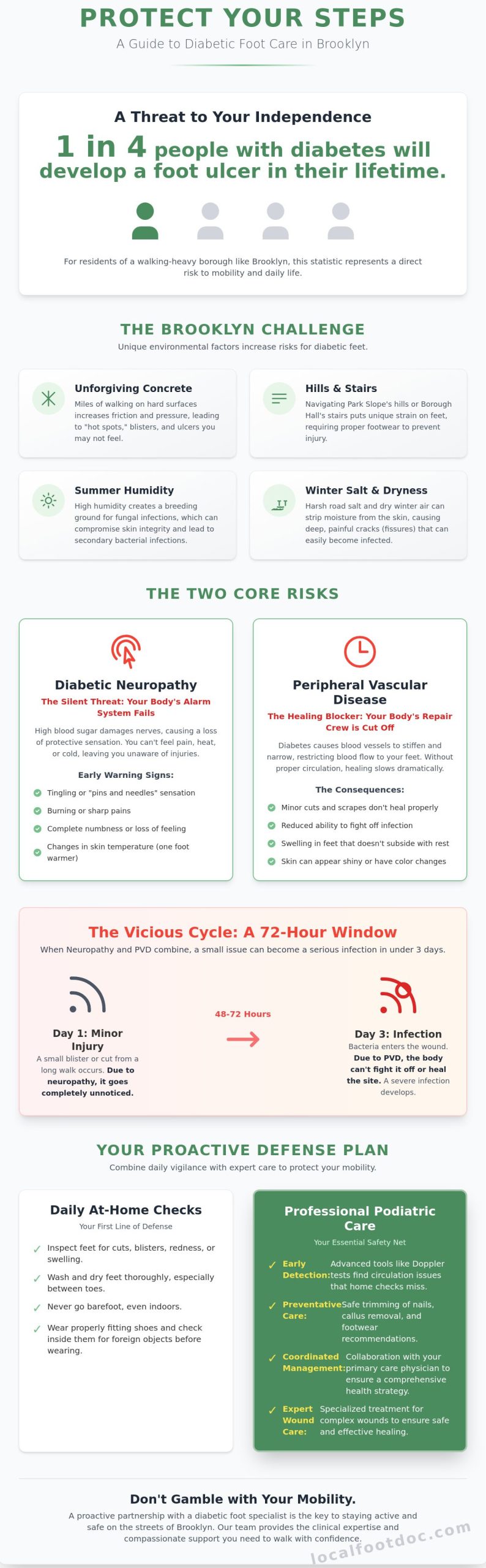
Did you know that nearly 25% of individuals with diabetes will develop a foot ulcer during their lifetime? In a borough where your feet are your primary mode of transportation, that statistic is more than just a number; it represents a real threat to your independence. We understand the stress of checking your feet every night and worrying about every small scratch or patch of numbness. Navigating the steep stairs at the Borough Hall station or walking the blocks of Park Slope shouldn’t feel like a risk to your health.
We agree that managing your health should feel empowering, not overwhelming or confusing. You deserve a straightforward plan that keeps you moving without fear. This guide will show you how professional diabetic foot care Brooklyn can prevent serious complications and ensure you stay active in our community throughout 2026. Our team is dedicated to providing the clinical expertise and compassionate support you need to protect your mobility. We will outline the essential steps for infection prevention, explain how advanced diagnostic tools catch problems early, and help you establish a reliable routine with a local expert who truly understands the New York lifestyle.
Key Takeaways
- Understand why Brooklyn’s unique walking-heavy lifestyle increases your risk for foot complications and how specialized preventative care protects your long-term mobility.
- Learn to identify the subtle symptoms of neuropathy and vascular damage that could slow your healing process and lead to serious infections.
- Discover why professional diagnostic tools, such as Doppler tests, are vital for catching underlying issues that standard at-home foot checks often overlook.
- Identify the specific qualifications and coordination strategies you should look for when choosing a provider for diabetic foot care Brooklyn.
- Explore how our team uses a blend of advanced clinical technology and personalized care to help you manage complex wounds and safely get back on your feet.
Why Specialized Diabetic Foot Care is Essential for Brooklyn Residents
Managing your health in a city that never stops requires a proactive strategy. Specialized diabetic foot care Brooklyn residents rely on is more than just a routine checkup; it’s a medically supervised approach to preserving the structural integrity of your feet. Our team focuses on preventing nerve damage and vascular complications before they compromise your mobility. For those living with diabetes, the body’s ability to heal is often slowed by poor circulation. This means a minor scrape can quickly lead to diabetic foot complications that require intensive intervention. We act as the first line of defense, ensuring that small issues don’t escalate into life-altering conditions.
The Impact of the NYC Environment on Diabetic Feet
Brooklyn’s infrastructure presents unique challenges for diabetic health. Walking several miles a day on unforgiving concrete surfaces causes significant foot fatigue and increases friction. Whether you’re navigating the brownstone steps of Brooklyn Heights or walking the hilly terrain of Park Slope, your footwear must provide more than just style. Improper shoes can cause “hot spots” that lead to ulcers without you even feeling the pain. Seasonal changes add another layer of risk. The high humidity of a New York summer can foster fungal infections, while the harsh road salt used during winter winters can dry out skin, leading to deep cracks and fissures. We help you choose the right gear and maintenance routines to protect your skin integrity year-round.
Recognizing Early Warning Signs in a High-Activity Lifestyle
In a borough where everyone is on the move, it’s easy to ignore subtle changes in how your feet feel. You might notice a faint tingling or a “pins and needles” sensation during your daily commute on the G train. These aren’t just signs of a long day; they are often the first indicators of neurological changes. Pay close attention to skin temperature; if one foot feels significantly warmer than the other, it may signal an underlying infection or inflammation. Swelling that doesn’t subside after a night of rest is another red flag that requires a professional evaluation. Diabetic neuropathy is the loss of protective sensation in the extremities, often leaving patients unaware of injuries until they become critical. Our team uses advanced diagnostic tools to map these changes, helping you get back on your feet with confidence and safety.
Understanding the Risks: Neuropathy and Peripheral Vascular Disease
High blood sugar acts like a slow moving toxin for the small nerves in your feet. Over time, this sugar buildup damages the protective coating of your nerves, leading to diabetic neuropathy. You might notice a tingling, burning, or a complete loss of sensation entirely. This isn’t just an inconvenience; it’s a fundamental breakdown of your body’s alarm system. When you lose the ability to feel pain, you lose the ability to protect yourself from injury. We see this daily in our practice, where patients are surprised to find injuries they never felt happen.
Parallel to nerve damage, Peripheral Vascular Disease (PVD) restricts the very blood flow required for healing. Diabetes causes your blood vessels to stiffen and narrow, which is particularly problematic for the extremities. If you develop a minor cut while walking through Prospect Park or simply navigating your home, your body can’t rush white blood cells and nutrients to the site to fix it. This creates a dangerous vicious cycle. You don’t feel the wound because of neuropathy, and the wound can’t close because of poor circulation. Without intervention, a tiny scratch can escalate into a severe infection in less than 72 hours. If you’re experiencing cramping in your calves while climbing subway stairs or walking long distances, these could be early pads disease symptoms that require immediate attention to prevent further complications.
At Local Foot Doc, we break this cycle using advanced diagnostic imaging and vascular testing. We use non-invasive tools like Doppler ultrasound and Ankle-Brachial Index (ABI) tests to measure your blood flow accurately. These tests allow us to see exactly how much oxygen is reaching your toes, providing a clear roadmap for your treatment and recovery.
The Danger of the “Silent” Wound
Neuropathy often creates what we call silent wounds. A patient might walk for miles on a blister or a stray pebble without knowing it exists. By the time they see redness or swelling on the skin, the infection may have already reached deeper tissues. This is why we emphasize the importance of professional podiatric care and routine exams. Our team catches what you cannot feel. In a 2022 clinical review, early detection of these silent ulcers reduced the risk of major surgery by over 75%.
Vascular Health and Healing Potential
Your vascular health is the foundation of your recovery potential. In an urban environment like Brooklyn, factors like smoking and high salt diets often compound the risks of PVD. We focus on proactive strategies to keep your circulation moving and your skin intact. One effective tool we use is custom orthotics. These devices are precision engineered to redistribute pressure away from hot spots on your feet, preventing the skin breakdown that leads to vascular compromise. Comprehensive diabetic foot care Brooklyn starts with understanding these mechanics before a problem starts. If you’re concerned about numbness or cold feet, you can schedule a comprehensive vascular assessment with our team to ensure your feet stay healthy and active.
Professional Podiatric Care vs. At-Home Maintenance
Daily home checks are your first line of defense. They’re essential for catching small changes before they escalate. However, home observation alone is often insufficient for total safety. While you can see a change in skin color, you can’t see the underlying vascular health or nerve function. Managing diabetes-related foot complications requires a level of diagnostic precision that mirrors and flashlights simply cannot provide. At our clinic, we use specialized tools like the 10-gram monofilament to test for loss of protective sensation. We also utilize handheld Doppler ultrasound to measure arterial blood flow. These tests identify risks that remain invisible during a standard home check.
One of the biggest risks patients take is attempting “bathroom surgery.” It’s tempting to trim a thick callus or an ingrown nail with household scissors or store-bought blades. This is incredibly dangerous for someone with diabetes. A single microscopic nick can lead to a non-healing wound. Statistics show that roughly 15% of diabetic foot infections we treat in our office stem from these at-home attempts. Our team performs professional debridement in a sterile environment using surgical-grade instruments. This process removes non-viable tissue and reduces pressure on the foot without the risk of introducing bacteria into the bloodstream. When you prioritize professional diabetic foot care Brooklyn, you’re choosing safety over convenience.
The Specialist Advantage
Our clinical approach goes beyond basic maintenance. We provide access to medical-grade skin care products and specialized nail trimming tailored for high-risk patients. Our team also performs professional gait analysis. This allows us to identify specific pressure points in your walk before they turn into ulcers. By finding a foot diabetes doctor near me for regular checkups, you ensure that every step you take is monitored by an expert who understands your unique biomechanics. We help you stay mobile and independent.
When Home Care Fails: Red Flags for Immediate Action
We teach our patients the 24-hour rule. If you notice a red spot, a new blister, or a small cut that doesn’t show visible improvement within 24 hours, it’s a medical emergency. Don’t wait for the next scheduled appointment. You must also watch for signs of infection like a foul odor, unusual drainage, or redness that spreads upward. These symptoms require an urgent evaluation. We encourage our Brooklyn patients to treat our office as a “hotline” for these concerns. Getting back on your feet starts with an immediate professional response to these red flags.
How to Choose the Right Diabetic Foot Specialist in Brooklyn
Selecting the right specialist for diabetic foot care Brooklyn is a decision that directly impacts your long-term mobility and independence. You shouldn’t settle for a generalist who only treats occasional sports injuries. A qualified podiatrist must possess board certification from the American Board of Foot and Ankle Surgery or the American Board of Podiatric Medicine. These credentials prove the doctor has undergone rigorous testing and maintains a high standard of clinical excellence. We also recommend verifying hospital affiliations. A podiatrist with privileges at major Brooklyn medical centers can provide seamless, integrated care if you ever require an inpatient procedure or emergency surgery.
Our team believes that effective management requires a collaborative approach. Your podiatrist should act as a bridge between your primary care physician and your endocrinologist. Because diabetes is a systemic condition, your foot health is often a reflection of your internal glucose management. We look for practices that utilize advanced diagnostic technology. This includes non-invasive vascular testing to check blood flow and digital pressure mapping to identify high-risk areas before an ulcer forms. According to clinical data, proactive screenings can reduce the risk of diabetes-related amputations by up to 85%.
Questions to Ask Your Potential Podiatrist
- “How do you handle emergency wound care appointments?” (A practice should offer same-day or next-day slots for urgent issues like new blisters or redness).
- “What preventative technologies, such as 3D-scanned custom orthotics, do you utilize to reduce pressure points?”
- “Do you have specific experience with diabetic limb salvage and reconstructive surgery?”
The Importance of Local Community Roots
Choosing a podiatrist in Forest Hills NY or Astoria ensures your doctor understands the unique lifestyle of a New Yorker. We know the physical toll of walking miles on concrete and the challenges of navigating the subway system with neuropathy. A local doctor is also familiar with New York-specific insurance plans, such as MetroPlus or EmblemHealth, which simplifies the billing and authorization process for specialized equipment.
Community-focused care leads to better health outcomes because it fosters a sense of partnership. When your clinic is easily accessible via multiple NYC locations, you’re more likely to attend every follow-up appointment. This consistency is vital for diabetic foot care Brooklyn. Regular check-ins allow us to catch minor changes in skin texture or temperature before they escalate into serious infections. Our goal is to provide world-class medical expertise with the personal touch of a neighborhood practitioner.
Advanced Diabetic Solutions at Local Foot Doc
Dr. Waldemar Majdanski believes that effective diabetic foot care Brooklyn residents can trust starts with a blend of clinical precision and a personal touch. At Local Foot Doc, we don’t just treat isolated symptoms; we manage the long-term health of your foundation. Our practice handles everything from routine preventative maintenance to high-stakes wound management. We utilize custom orthotics to redistribute weight across the foot, which significantly reduces the 25% lifetime risk diabetic patients face for developing foot ulcers. If structural issues like bunions or hammertoes create dangerous friction points, our team offers surgical corrections to stop skin breakdown before it begins.
Limb Salvage and Wound Care Excellence
When treating non-healing ulcers, our team follows a strict limb salvage protocol designed to avoid amputation. We apply advanced biological dressings that use specialized cellular tissues to jumpstart the body’s natural healing rhythm. Sometimes, the underlying bone structure is the primary culprit behind a recurring wound. This is where procedures like bunion surgery Queens patients rely on become a safety necessity. By correcting the alignment of the big toe, we eliminate the constant pressure that leads to chronic infection. We use surgical intervention to reshape the foot, ensuring that “hot spots” don’t turn into life-altering complications.
Getting Back on Your Feet: Your Path to Recovery
Starting your journey at our Brooklyn or Queens offices is a straightforward, supportive process. New patients undergo a comprehensive vascular and neurological assessment during their very first visit. We explain every finding in plain language so you understand the specific mechanics of your health. The Local Foot Doc promise ensures you leave our office feeling empowered and informed. We prioritize thorough education, teaching you exactly what to look for during your daily home foot inspections. The onboarding process includes:
- Initial diagnostic screening for neuropathy and circulation.
- Gait analysis to identify high-pressure zones.
- Development of a personalized footwear and orthotic strategy.
Every diabetic patient receives a customized “Foot Protection Plan” tailored to their lifestyle, daily activity level, and specific risk factors. Our ultimate goal is to keep you mobile, independent, and healthy for years to come. If you’re looking for comprehensive diabetic foot care Brooklyn providers who treat you like a neighbor, our doors are open.
Take Control of Your Mobility Today
Managing diabetes requires more than just monitoring blood sugar; it demands a proactive approach to your lower limb health. By identifying the early signs of neuropathy and peripheral vascular disease, you can prevent the small issues that lead to severe complications. Our team combines advanced diagnostic technology with a personalized touch to ensure you stay active in your community. When you choose the specialized diabetic foot care Brooklyn residents trust, you’re investing in a future free from the anxiety of chronic foot pain.
With over 20 years of clinical experience across NYC, Dr. Majdanski and the Local Foot Doc team provide the board-certified surgical expertise you need to protect your independence. We operate multiple convenient locations throughout Brooklyn and Queens to make your care as accessible as possible. Don’t wait for a minor blister to become a major medical event. Schedule your comprehensive diabetic foot exam with Dr. Majdanski today and take the first step toward getting back on your feet with confidence. We’re here to help you walk through 2026 with strength and peace of mind.
Frequently Asked Questions About Diabetic Foot Care
How often should a person with diabetes see a podiatrist in Brooklyn?
You should visit a podiatrist at least once every 12 months for a comprehensive diabetic foot exam. If you’ve been diagnosed with neuropathy or peripheral vascular disease, our team recommends scheduling checkups every 60 to 90 days. Regular screenings for diabetic foot care Brooklyn patients reduce the risk of amputation by up to 85 percent. We monitor your circulation and skin integrity to catch minor issues before they become severe infections.
Does insurance cover diabetic foot care and custom orthotics in NYC?
Most major insurance plans in NYC, including Medicare Part B, cover annual diabetic foot exams and medically necessary treatments. Medicare typically pays for 80 percent of the cost for custom orthotics and therapeutic shoes if you have a documented history of foot ulcers or poor circulation. Our staff verifies your benefits during your first visit so you understand your coverage options clearly. We work with various providers across Brooklyn to ensure your care remains accessible.
What are the first signs of diabetic foot problems I should look for?
The first signs of diabetic foot problems include localized swelling, unusual redness, or a temperature change where one foot feels warmer than the other. You might notice 2 to 3 millimeters of skin thickening or a “hot spot” that indicates excessive pressure. Don’t ignore sensations like tingling or a dull throbbing in your toes. These subtle changes often signal underlying inflammation or the beginning of a pressure ulcer that requires immediate professional attention.
Can a podiatrist help with neuropathy pain in my feet?
Our podiatrists utilize advanced diagnostic tools and therapeutic interventions to manage the burning and tingling sensations caused by neuropathy. We offer solutions such as nerve stimulation therapy and prescription topicals that target specific pain pathways in your feet. By improving your local circulation and stabilizing your blood sugar levels in coordination with your primary doctor, our team helps you regain comfort. We focus on non-invasive methods to help you get back on your feet without constant discomfort. Additionally, understanding the causes of cramps on feet can help us develop a comprehensive treatment plan that addresses both neuropathy pain and muscle spasms that often accompany diabetic foot complications.
Is it safe for diabetics to get a pedicure at a regular nail salon?
It’s generally not safe for people with diabetes to get a pedicure at a standard commercial nail salon due to the risk of infection. Standard salons often use tools that aren’t sterilized to medical-grade standards; a single microscopic nick can lead to a limb-threatening infection. In New York, professional medical pedicures performed in a clinical setting provide a safer alternative. We use sterile instruments and specialized techniques to trim nails and manage calluses without compromising your skin’s barrier.
What should I do if I find a small cut on my foot and I have diabetes?
You must clean the area with mild soap and water, apply an antibiotic ointment, and cover it with a sterile bandage immediately. Even a 5-millimeter scratch can escalate quickly if you have poor circulation or high blood sugar. Monitor the site for 24 hours for signs of drainage or increased redness. If the wound doesn’t show clear signs of healing within 2 days, contact us to schedule an urgent appointment for professional diabetic foot care Brooklyn.
How do custom orthotics prevent diabetic ulcers?
Custom orthotics prevent ulcers by redistributing your body weight away from high-pressure zones on the bottom of your feet. These medical devices use precise biomechanical data to offload stress from the metatarsal heads and heel, where 80 percent of diabetic ulcers typically form. By creating a personalized fit, we eliminate the friction and shearing forces that cause skin breakdown. This proactive approach significantly lowers the 25 percent lifetime risk diabetics face for developing a foot ulcer. Diabetic patients who also experience sharp heel pain should be aware that what is plantar fasciitis and how it develops on NYC’s demanding pavement is an important topic, as this condition can complicate pressure distribution and increase ulcer risk when left untreated.
What makes Local Foot Doc different from other Brooklyn podiatrists?
Local Foot Doc stands out because we combine 21st-century diagnostic technology with the personalized attention of a neighborhood practice. We use 3D digital scanning for orthotics and laser therapy for pain, ensuring our Brooklyn neighbors receive world-class treatment close to home. Our team prioritizes your quality of life, focusing on efficient recovery paths that help you maintain your independence. We treat you as a partner in your health, not just another chart in a corporate system.