
Did you know that a standard 12-hour shift at a busy Brooklyn bistro can involve walking up to ten miles on unforgiving quarry tile and sealed concrete? Most people don’t realize that restaurant professionals are essentially endurance athletes, yet they often lack the specialized support that a competitive runner would never go without. If you’re a server in DUMBO or a line cook in Williamsburg, you know that chronic heel pain and arch fatigue aren’t just minor annoyances. They’re direct threats to your ability to earn a living. Finding a specialized podiatrist for restaurant workers in Brooklyn is the most effective way to address these issues before they lead to missed shifts or chronic mobility challenges.
We agree that the NYC hustle shouldn’t come at the cost of your physical well-being. It’s frustrating when mandatory slip-resistant shoes aggravate painful bunions, or when the fear of a long recovery keeps you from seeking the professional care you deserve. This guide promises to show you how specialized podiatric care can help you eliminate foot pain and stay mobile through the most demanding double shifts. We’ll explore custom orthotic solutions designed for industrial work boots, modern treatments for heel pain, and how we use sports medicine protocols to treat the unique needs of the kitchen athlete.
Key Takeaways
- Understand why Brooklyn food service workers are considered “kitchen athletes” and how standing on concrete or tile floors impacts your long-term foot health.
- Learn about evolved treatment options for plantar fasciitis and bunions that are specifically designed to help active professionals return to work quickly.
- Discover why choosing a specialized podiatrist for restaurant workers in Brooklyn who focuses on sports medicine is essential for managing occupational strain.
- Explore the clinical benefits of custom orthotics over generic inserts for providing the durable, all-day support required in industrial kitchen footwear.
- Identify how to utilize your rights to preventative care and accessible local clinics to address pain before it requires surgical intervention.
The “Kitchen Athlete”: Why Brooklyn’s Food Service Workers Need Specialized Podiatry
We view the men and women powering Brooklyn’s dining scene as “kitchen athletes.” This isn’t just a metaphor; it’s a clinical reality. While a marathon runner trains for months to handle high-impact stress, a line cook in Bushwick or a server in Park Slope performs a similar feat of endurance every single day. The primary difference is the playing field. Instead of a padded track, restaurant professionals spend 12 hours a day on unyielding quarry tile and sealed concrete. These surfaces offer zero shock absorption, forcing your foot structure to absorb every ounce of ground reaction force with every step. Choosing a specialized podiatrist for restaurant workers in Brooklyn means finding a partner who understands that your feet are your most important tools and your primary source of income.
General podiatry often focuses on sedentary lifestyles or standard athletic injuries. However, the nuances of a 12-hour standing shift require a deeper understanding of occupational biomechanics. When you spend your entire shift micro-pivoting in a tight galley kitchen or rushing up and down basement stairs for supplies, your feet undergo specific types of micro-trauma. Without specialized intervention, these small issues quickly escalate into chronic conditions that can threaten your livelihood. We focus on keeping you on the floor, because we know that in the Brooklyn food scene, missing a shift isn’t just an inconvenience; it’s a financial blow.
The Biomechanics of a 12-Hour Shift
During a typical double, a restaurant worker might log between 12,000 and 20,000 steps. This cumulative force places immense strain on the plantar fascia, the thick band of tissue supporting your arch. As the hours pass, muscle fatigue sets in, causing your gait to change. You might start to over-pronate or shift your weight to the outside of your feet to avoid discomfort. These postural changes create a domino effect, leading to secondary pain in your ankles, knees, and lower back. It’s a common misconception that “just sitting down” for a ten-minute break will resolve the issue. By the time you feel that deep, throbbing ache at the end of the night, chronic inflammation has already taken hold. Professional intervention is required to reset the balance.
Why General Advice Often Fails Restaurant Pros
Standard medical advice often includes the R.I.C.E. protocol: rest, ice, compression, and elevation. For a busy bartender or a prep cook, “rest” is often a fantasy. Brooklyn’s restaurant culture often rewards a “tough it out” mentality, but pushing through the pain only masks the underlying structural damage. Reactive self-care, like buying generic gel inserts from a drugstore, rarely provides the support needed for industrial use. We advocate for proactive medical intervention. A specialized podiatrist for restaurant workers in Brooklyn looks past the immediate symptoms to identify the root cause of your pain, offering solutions that fit into your actual work life rather than suggesting impossible lifestyle changes.
Common Foot Conditions Facing Brooklyn Chefs and Servers
Living and working in a borough known for its world-class dining means Brooklyn’s culinary professionals face physical demands that most office workers can’t imagine. When you’re logging up to 20,000 steps during a busy Friday night service in Williamsburg or Greenpoint, your feet are under constant duress. As a specialized podiatrist for restaurant workers in Brooklyn, we frequently see how the combination of hard floors and industrial safety standards creates a unique set of clinical challenges. Understanding these conditions is the first step toward regaining your independence from daily pain.
Plantar Fasciitis: The #1 Enemy of the Server
The most common complaint we treat is plantar fasciitis, which often manifests as a sharp, stabbing pain in the heel during those first few steps out of bed. This occurs because the plantar fascia ligament becomes inflamed and develops micro-tears from supporting your arch for 8 to 14 consecutive hours on unyielding surfaces. While specialized stretching and night splints can offer temporary relief between shifts, professional intervention is necessary when the pain persists. If left untreated, chronic inflammation can lead to more serious tearing that might sideline you for weeks.
Bunions and Hammertoes in Tight Work Shoes
Industrial slip-resistant footwear is essential for safety, but many standard kitchen clogs and boots are notoriously narrow. This lack of a wide toe box forces the toes into unnatural positions, accelerating the development of bunions and hammertoes. For active professionals who can’t afford long recovery periods, bunion surgery Queens techniques have evolved significantly. We prioritize minimally invasive corrections that focus on structural integrity and a faster return to the floor. If you’ve noticed a growing bump at the base of your big toe, scheduling a biomechanical evaluation can help determine if conservative changes or modern surgical options are right for you.
Skin and Nail Issues in the Kitchen
The “hot house” effect created by waterproof, non-breathable kitchen boots often leads to persistent moisture, which is the perfect breeding ground for infection. We provide comprehensive fungal nail treatment to address discoloration and thickening before they become painful. Additionally, the constant “stop-and-start” motion of a busy floor can cause the nail to crowd into the skin, resulting in recurring ingrown toenails. We recommend a quick daily foot inspection for all restaurant staff:
- Check for redness or swelling around the nail borders.
- Look for skin maceration (whitening) between the toes.
- Identify any new calluses or “hot spots” that indicate uneven pressure.
- Monitor any changes in nail color or texture.
Evaluating a Podiatrist: What Brooklyn Restaurant Pros Should Look For
When your livelihood depends on your ability to stand for ten hours at a stretch; your choice of medical provider is a business decision. You shouldn’t settle for a generalist who doesn’t understand the specific mechanics of the service industry. Instead; you need a podiatrist for restaurant workers in Brooklyn who treats you with the same urgency and precision as a professional athlete. Because your feet endure high-impact stress on a daily basis; prioritize a doctor with a background in sports medicine. This ensures your care plan focuses on functional recovery and long-term durability rather than just temporary symptom relief.
Specialized Diagnostic Capabilities
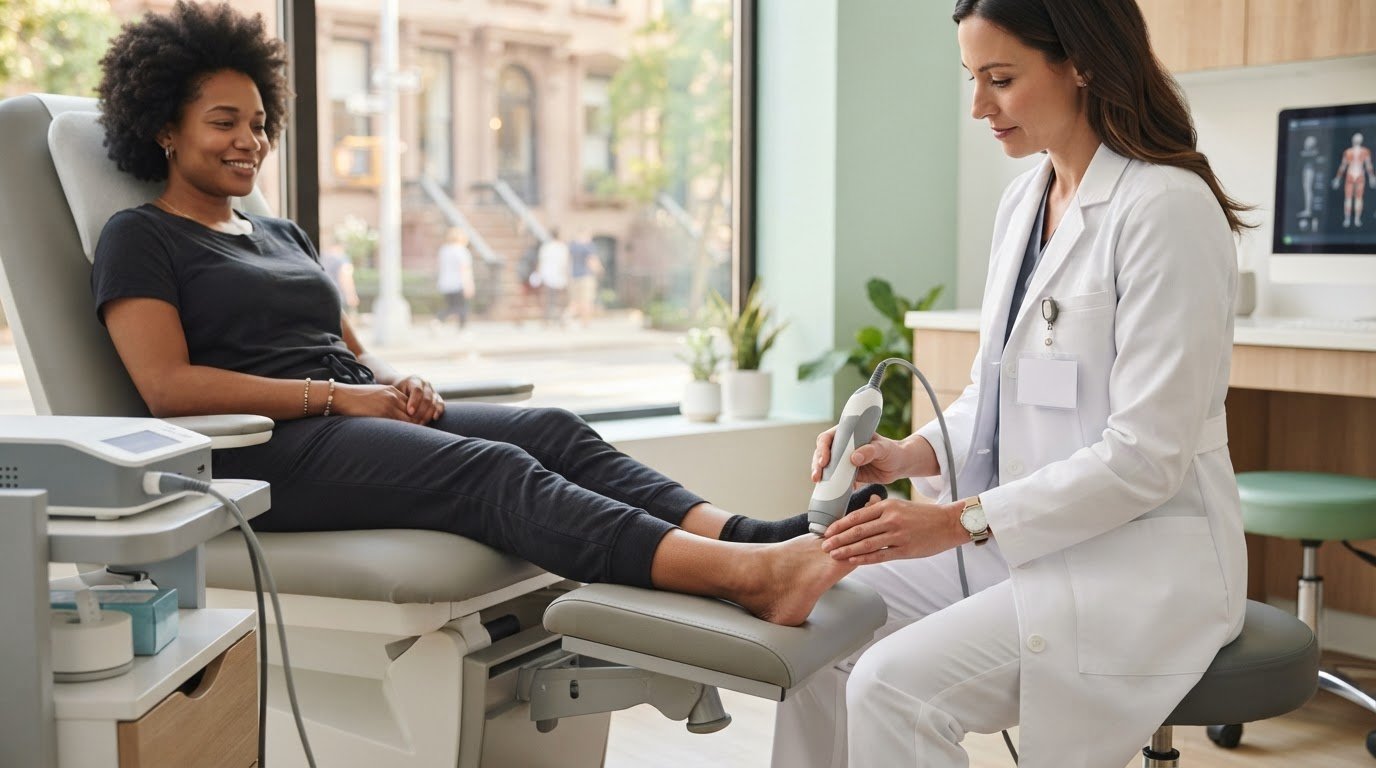
Efficiency is vital when you’re balancing a busy shift schedule. Look for a practice that offers on-site diagnostic imaging; such as digital X-rays and ultrasound. These tools are essential for identifying stress fractures or deep tissue inflammation that a physical exam alone might miss. Digital X-rays provide immediate results; allowing us to catch small structural issues before they become debilitating injuries. Additionally; look for a clinic that performs professional gait analysis. Understanding how you move behind a bar or along a narrow line allows us to create a precise diagnosis. This level of detail leads to a faster; more effective treatment plan that respects your need to stay active.
Experience with Working Professionals
A great podiatrist understands that “stay off your feet for two weeks” isn’t practical advice for a Brooklyn bartender or sous-chef. During your consultation; ask specific questions about “return to work” protocols. You want a provider who offers minimally invasive options and proactive recovery strategies. Dr. Waldemar Majdanski brings over 20 years of clinical experience in NYC to every patient interaction. This deep-rooted community knowledge means we understand the local hustle; the transit challenges; and the financial pressure of missing shifts. We focus on partnership and collective care; ensuring your treatment fits into your industrial work life.
Finally; verify that the clinic provides genuine custom orthotic casting. Many retail outlets charge thousands of dollars for non-prescription “custom fit” insoles that lack a true clinical foundation. A professional medical practice will use 3D digital scans or plaster casts to create medical-grade devices. With multiple accessible locations in Forest Hills; Astoria; and Woodhaven; we ensure that high-quality care is always within reach for those commuting from Williamsburg; Bushwick; or Downtown Brooklyn.

Occupational Solutions: Custom Orthotics and Preventive Care
Addressing the physical toll of the service industry requires more than just reactive treatment; it demands a proactive strategy to protect your mobility. For many, the most effective long-term solution involves shifting from generic support to medical-grade intervention. As a specialized podiatrist for restaurant workers in Brooklyn, we focus on providing tools that stand up to the rigors of a high-volume kitchen or a crowded dining room. While drugstore gel pads might offer a few hours of soft cushioning, they lack the structural integrity to correct the underlying biomechanical issues caused by standing on concrete for half a day.
The Science of Custom Orthotics
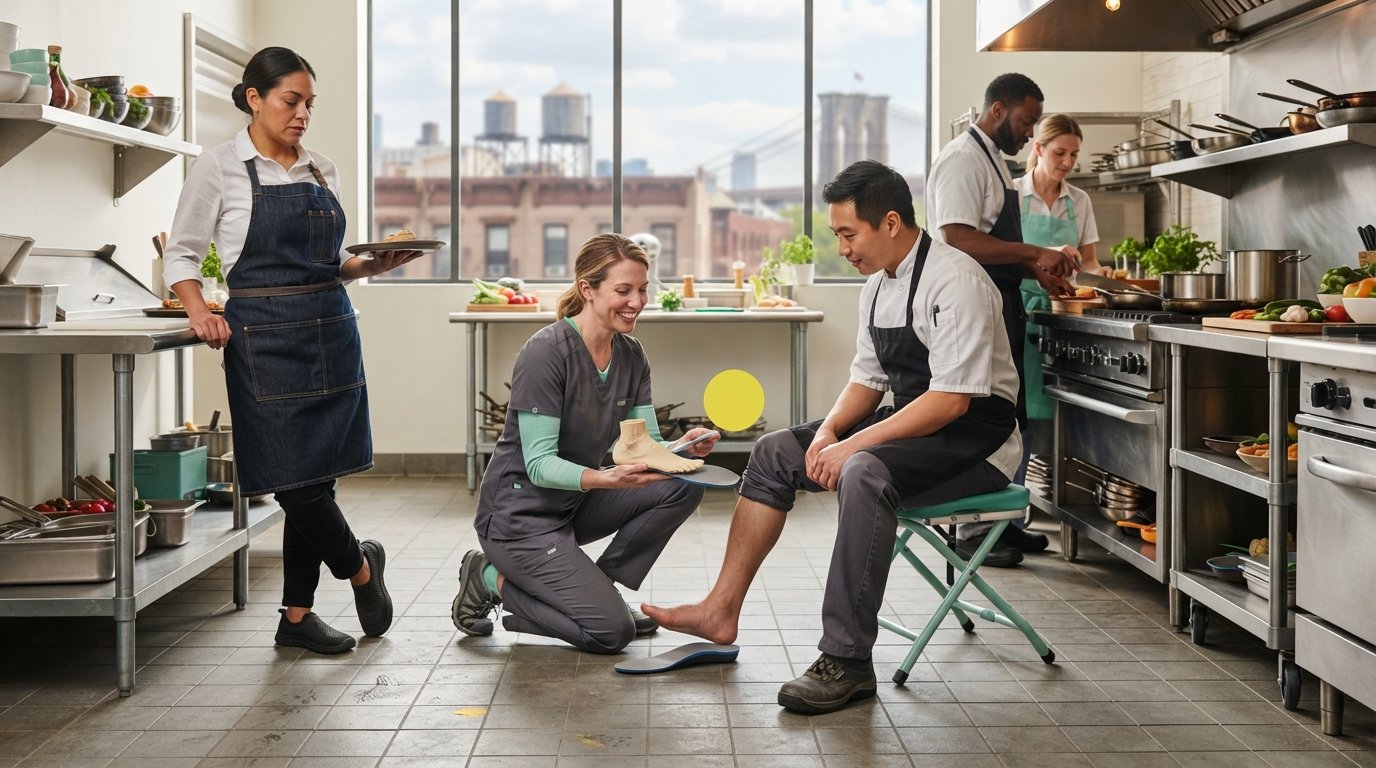
Custom orthotics are not just simple insoles; they are highly engineered medical devices. The process begins with a precise casting or 3D digital scan that captures the unique architecture of your foot while it’s in a non-weight-bearing position. This allows us to identify exactly where your arch needs support and where pressure needs to be redistributed. We select materials based on your specific role; carbon fiber offers lightweight, rigid support for those who walk miles during a shift, while semi-rigid plastics provide the durable flexibility needed for stationary prep work. Prescription orthotics correct biomechanical imbalances to prevent the progression of deformities that could eventually require surgery. By aligning the foot properly, we reduce the strain on the plantar fascia and the Achilles tendon, allowing you to finish your shift without debilitating pain.
Footwear Strategy for the Service Industry
Your shoes are your most critical piece of equipment. When selecting slip-resistant footwear, you must look beyond the “non-slip” label. A high-quality work shoe should feature a firm heel cup to stabilize the back of the foot, robust arch support, and a wide toe box that allows your toes to splay naturally. This is especially important for those managing diabetic foot care Brooklyn, where preventing pressure points and friction is vital for avoiding complications. We also recommend the “two-pair” rule: rotate between two different pairs of high-quality work shoes. This gives the materials time to decompress and ensures the interior of the shoe dries completely, which helps prevent the moisture buildup that leads to fungal infections.
Integrating custom orthotics into standard kitchen clogs or industrial boots is often the final step in achieving shift-long comfort. Most professional-grade footwear comes with a removable factory insole that can be easily replaced with your custom device. If you’re tired of finishing your double shift with throbbing feet, schedule a consultation for custom orthotics to see how professional support can change your workday.
Expert Podiatry in Brooklyn: How Local Foot Doc Supports the Industry
Dr. Waldemar Majdanski has spent over 20 years deeply rooted in the New York City community, developing a clinical practice that understands the unique hustle of our borough. We recognize that for a chef in Greenpoint or a bartender in Downtown Brooklyn, foot health isn’t just a matter of comfort; it’s a matter of professional survival. As a specialized podiatrist for restaurant workers in Brooklyn, we’ve tailored our practice to meet the high-intensity needs of the service industry. Our goal is to provide reliable, community-focused care that feels like a partnership in your long-term health rather than a detached medical transaction.
Accessibility is a cornerstone of our commitment to local workers. We know that after a grueling double shift, the last thing you want is a complicated commute. That’s why we maintain multiple locations near major transit hubs, serving as a dedicated resource for those who need the best podiatrist in Forest Hills, Astoria, or Woodhaven. These locations are easily accessible for Brooklyn professionals commuting from neighborhoods like Williamsburg or Bushwick, ensuring that expert care is always within reach of your route home.
A Patient-Centered Approach to Recovery
We believe in a “conservative-first” philosophy, prioritizing non-surgical interventions that allow you to maintain your income and activity levels. Think of our office as the “pit crew” for your shift-long performance. We monitor your structural health and provide the “maintenance” needed to prevent major breakdowns. Because we understand the seasonal nature of the restaurant industry, we work with you to find treatment windows that don’t disrupt your busiest times, such as holiday rushes or Restaurant Week. Having a board-certified surgeon who also specializes in conservative sports medicine means you get a comprehensive perspective on every available path to recovery.
Getting Started with Local Foot Doc
Your journey toward pain-free shifts begins with a comprehensive foot and ankle evaluation. Our streamlined appointment process is designed to respect your time, offering clear paths to diagnosis and relief without unnecessary delays. When you come in for your initial consultation, we encourage you to bring your most-worn work shoes. These provide our team with vital diagnostic data about your gait and pressure distribution that we can’t see from a physical exam alone. This information allows us to build a personalized plan that addresses your specific occupational challenges.
Ready to walk your next shift without pain? Book your consultation at Local Foot Doc today and take the first step toward regaining your independence from chronic foot discomfort.
Protecting Your Livelihood with Proactive Foot Care
Your feet are the foundation of your career in the Brooklyn food industry. We’ve explored how the relentless physical demands of a 12-hour shift require more than just standard rest; they require specialized diagnostic insight and custom-engineered support. By addressing structural issues like plantar fasciitis or bunions early, you protect your ability to stay mobile and productive in a high-pressure environment. Professional intervention isn’t just about comfort; it’s about ensuring your long-term physical independence.
Finding a dedicated podiatrist for restaurant workers in Brooklyn allows you to access specialized occupational foot care plans tailored to the unique stresses of industrial kitchens. With board-certified surgical expertise and over 20 years serving the NYC community, our team is here to ensure you don’t have to choose between your health and your paycheck. We’re committed to helping you navigate the physical challenges of the service industry with reliable, expert care.
Schedule your specialized foot evaluation at Local Foot Doc today and reclaim your independence from chronic foot pain. We look forward to helping you walk your next shift with total confidence and comfort.
Frequently Asked Questions
How can I tell if my foot pain is just tiredness or a medical issue?
Foot pain that disappears after a full night of rest is typically just muscle fatigue. However, if you experience sharp pain during your first steps in the morning or discomfort that worsens throughout your shift, it’s a medical issue. Chronic conditions like plantar fasciitis or stress fractures don’t heal with rest alone. We recommend a professional evaluation if the pain persists for more than three consecutive days despite your best efforts to recuperate.
Do custom orthotics really work better than the inserts I buy at the pharmacy?
Custom orthotics are significantly more effective because they’re medical devices designed for your specific foot architecture. Pharmacy inserts provide generic cushioning that often compresses within weeks of industrial use. Our custom-molded solutions use durable materials like carbon fiber to redistribute pressure and correct biomechanical imbalances. This precision helps prevent long-term structural damage. It’s an investment in your career longevity that off-the-shelf pads simply cannot match in a demanding kitchen environment.
What are the best slip-resistant shoes for people with high arches or flat feet?
The most effective shoes for high arches or flat feet must meet the ASTM F3445-24 slip-resistance standards while providing a deep heel cup and a removable insole. This allows a podiatrist for restaurant workers in Brooklyn to integrate custom orthotics into your footwear. Brands like Birkenstock Professional or specialized lines from Shoes For Crews offer the necessary stability. We suggest looking for a wide toe box to prevent the friction that causes bunions and hammertoes.
Can I get bunion surgery without missing weeks of work in the kitchen?
We utilize minimally invasive surgical techniques that focus on faster functional recovery. While we don’t promise specific recovery times in days, our goal is to get you back to the floor as quickly as safety allows. These modern methods involve smaller incisions and advanced stabilization, which often results in less post-operative swelling. This approach is specifically designed for active professionals who cannot afford the extended downtime associated with traditional, more invasive foot surgeries.
Why does the bottom of my heel hurt so much during the first few minutes of my shift?
Sharp heel pain at the start of a shift is a hallmark symptom of plantar fasciitis. This occurs when the thick band of tissue supporting your arch becomes inflamed and tightens during periods of rest. When you begin your shift, the sudden stretching of this ligament causes painful micro-tears. Consulting a podiatrist for restaurant workers in Brooklyn can help you manage this inflammation through custom orthotics and specialized stretching protocols before the condition worsens.
Is it normal for my feet to be swollen after every double shift?
While some fatigue is expected after a 12-hour shift, persistent swelling is not a normal part of the job. It often indicates that your footwear is failing to support your circulatory system or that you have an underlying biomechanical issue. We recommend elevating your feet after work and using compression therapy. If the swelling doesn’t subside by morning, it’s time for a professional evaluation to rule out more serious vascular or structural concerns.
How often should a restaurant worker see a podiatrist for a check-up?
We recommend that restaurant professionals schedule a biomechanical check-up at least once a year. If you have a history of bunions, hammertoes, or flat feet, a visit every six months is more appropriate. These regular evaluations allow us to catch small structural changes before they require surgical intervention. Think of it as preventative maintenance for your most important work tools. Consistent care ensures you stay mobile and pain-free throughout the busiest dining seasons.
What should I do if I get a burn or a deep cut on my foot while working?
Immediate first aid is crucial because kitchen floors are breeding grounds for bacteria. Clean the wound with mild soap and water, apply a sterile dressing, and seek professional care. Deep cuts or burns in a high-moisture environment can quickly lead to serious infections like cellulitis. We provide specialized wound care and diabetic foot care protocols to ensure proper healing. Don’t wait for redness or swelling to spread before seeking a medical evaluation from our team.