

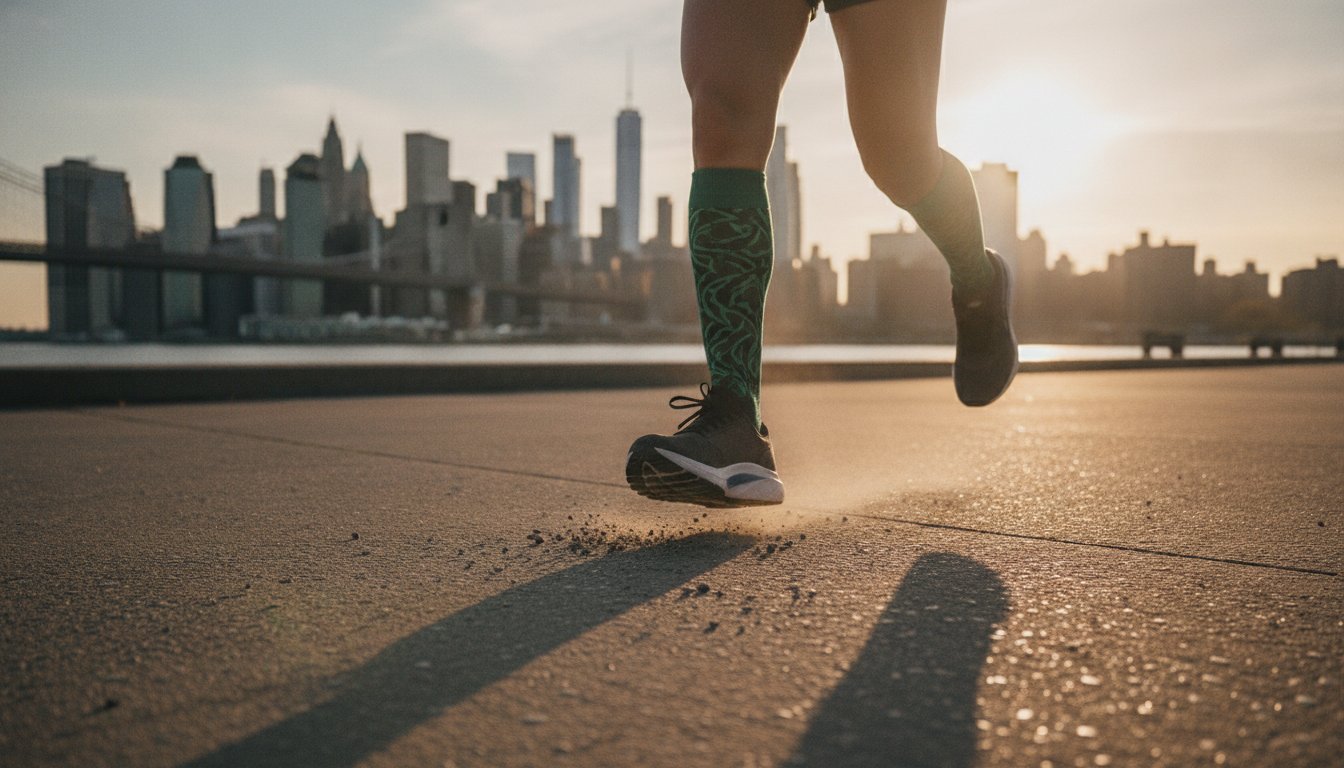
The hardest part of the New York City Marathon isn’t the 26.2-mile distance; it’s the unforgiving concrete that treats every stride like a hammer blow to your joints. We understand the unique physical toll that training on city streets takes on your body. If you’ve been waking up to sharp heel pain or worrying that a persistent ache might turn into a season-ending stress fracture, you aren’t alone. Most runners accept these issues as an inevitable part of the process, but we believe your journey to the finish line should be defined by progress, not pain.
Finding a specialized foot doctor for marathon training NYC is the most effective way to protect your investment in your health and your gear. Our goal is to help you move beyond temporary fixes like bandaids for blisters and transition into a strategy for peak performance. In this article, we’ll explain how professional gait analysis and custom-molded orthotics can correct your pronation, stabilize your stride, and save your joints from the impact of the pavement. You’ll learn how our sports medicine approach in Forest Hills and Astoria provides the clinical validation you need to train with confidence and finish your race strong.
Key Takeaways
- Consult with a foot doctor for marathon training NYC to develop a personalized plan that addresses the specific biomechanical demands of running on city pavement.
- A clinical gait analysis identifies subtle imbalances in your stride, such as overpronation or supination, to prevent chronic discomfort before it starts.
- Learn why custom-molded orthotics offer superior support and durability compared to standard over-the-counter inserts for high-mileage training.
- Discover proactive “pre-hab” tips and professional treatments for the most common marathon injuries, including plantar fasciitis and stress fractures.
- Access expert sports medicine care at our convenient locations in Forest Hills, Astoria, and Woodhaven to ensure you reach the finish line pain-free.
Why Marathon Runners in NYC Need a Specialized Podiatrist
Preparing for 26.2 miles is a massive undertaking that requires more than just cardiovascular endurance; it demands structural integrity. A sports podiatrist acts as a biomechanical engineer for your lower extremities. While general podiatry often focuses on routine care like infections or basic nail health, sports medicine for runners prioritizes the repetitive stress of high-mileage weeks. We focus on how your feet interact with the ground to ensure every stride is efficient and safe.
In a city like New York, the environment itself is a primary obstacle. Most training plans assume a mix of surfaces, but local runners often spend 90% of their time on unforgiving pavement. Finding a specialized foot doctor for marathon training NYC is essential because we understand the specific pathologies that arise from training on the asphalt of the Queensboro Bridge or the concrete paths of the East River. We use “preventative podiatry” to catch minor imbalances before they force you to drop out of your training block in week twelve.
The Impact of NYC Concrete on Your Biomechanics
NYC concrete doesn’t forgive. Unlike the soft dirt of a trail or the spring of a synthetic track, pavement provides zero energy return. This means your muscles and bones must absorb the full force of every impact. Over thousands of repetitions, even a slight misalignment in your foot structure can lead to significant joint inflammation. If your arches collapse slightly, the hard surface exacerbates that motion, pulling on the tendons in your ankles and knees. To mitigate this, we often recommend varying your training routes. While the city streets are convenient, spending your long runs on the softer loops of Central Park or the dirt paths in Forest Park can provide your joints with a much-needed break from the relentless vibration of the sidewalk.
When to See a Foot Doctor Before Race Day
You shouldn’t wait for a debilitating injury to seek professional help. We recommend a baseline gait analysis at the start of your 16-week training block. This allows us to identify your foot type and provide professional validation for your footwear choices before you log hundreds of miles in the wrong shoes. It’s also vital to distinguish between normal training soreness and a clinical injury. General muscle fatigue usually fades after a day of rest, but “yellow flag” symptoms require an evaluation from a foot doctor for marathon training NYC. These include pain that is sharp rather than dull, discomfort that increases during a run, or any swelling that persists overnight. Early intervention at our Astoria or Woodhaven offices can mean the difference between a minor adjustment and a season-ending fracture.
Evaluating Your Gait: What a Sports Podiatrist Looks For
When you visit a foot doctor for marathon training NYC, the most critical part of your evaluation is the clinical gait analysis. We don’t just look at your feet while you’re standing still; we observe how your entire lower kinetic chain moves under load. This process involves a detailed assessment of your joint range of motion, muscle strength, and the specific way your foot strikes the pavement. We look closely at the foot-to-hip alignment to see if a weak glute is causing your knee to cave in or if a stiff ankle is forcing your foot to over-rotate. Dynamic gait analysis is the gold standard for runners because it captures the feet in motion at race-pace speeds rather than during static standing. This level of detail allows us to create a treatment plan that is specific to your body’s unique mechanics and training goals.
Understanding Pronation and Supination
Pronation is a natural part of the gait cycle, but excessive movement in either direction can lead to trouble. Overpronation occurs when the arch collapses too far inward, placing extreme tension on the soft tissues of the foot. This often leads to shin splints or the sharp, stabbing heel pain described in our What is Plantar Fasciitis? guide. Conversely, supination happens when the foot rolls outward, which prevents the body from absorbing shock effectively. This lack of cushioning significantly increases the risk of stress fractures, particularly on the hard surfaces of New York City. Understanding these mechanics is a key part of the Prevention and Treatment of Running Injuries for any serious athlete training for the NYC Marathon.
The Role of Diagnostic Imaging in Sports Medicine
Sometimes, a visual assessment isn’t enough to see what’s happening beneath the skin. We utilize advanced diagnostic imaging to catch “hidden” issues that could derail your training block. X-rays allow us to check for early-stage bone stress or structural abnormalities that might be worsening under high mileage. Ultrasound imaging is also highly effective for visualizing soft tissue inflammation or identifying a Morton’s neuroma, which often feels like walking on a pebble. These diagnostic tools are available right in our offices in Forest Hills, Astoria, and Woodhaven, ensuring you get answers quickly. If you’re feeling an unusual pinch or a persistent ache that won’t go away, our sports medicine team can provide the clarity you need to keep moving forward toward race day.
Custom Orthotics vs. Over-the-Counter Inserts for Running
Choosing between drugstore inserts and professional intervention is often the most significant gear decision a runner makes. While retail stores offer “custom” kiosks, Prescription custom orthotics are medical devices designed specifically for your unique bone structure and joint mobility. For a runner logging 30 or 40 miles every week, the difference isn’t just about comfort; it’s about structural survival. We see many patients who have spent hundreds of dollars on various foam inserts only to find their heel pain persists because the device didn’t address their specific biomechanical imbalance. A foot doctor for marathon training NYC provides the clinical expertise needed to ensure your gear supports your goals rather than hindering them.
Why OTC Inserts Often Fail Marathoners
Over-the-counter (OTC) inserts follow a “one size fits none” philosophy. These mass-produced products are typically made from soft foams or gels that compress quickly under the repetitive force of a runner hitting the pavement thousands of times per hour. If you have a high arch but the insert’s peak is positioned too far forward, it acts as a lever that can actually strain your plantar fascia or cause new lateral knee pain. Generic inserts might be sufficient for a casual walker or someone doing low-impact gym work, but they often lack the rigid control needed to stabilize a foot during a three-hour training run. Relying on them for high-mileage training often introduces a false sense of security that leads to overuse injuries.
The Performance Advantage of Custom Medical Orthotics
The process of creating custom orthotics at our practice involves precise medical casting or 3D scanning to capture your foot in its ideal neutral position. This ensures that the support is exactly where your anatomy requires it. When your foot is properly aligned, your muscles don’t have to work as hard to stabilize your gait, which significantly reduces muscle fatigue during the final miles of a long run. Your foot doctor for marathon training NYC can also adjust the shell’s flexibility based on your body weight and running speed. Unlike foam inserts that lose their shape after 100 miles, medical-grade materials like carbon fiber or high-density polypropylene are built to last 500 miles or more. Investing in professional care at our Forest Hills, Astoria, or Woodhaven clinics provides a durable solution that protects your independence as an athlete and ensures you remain mobile throughout the entire race season.

Common Marathon Injuries: Prevention and Clinical Treatment
Even with the best preparation, the repetitive nature of distance running can lead to physical setbacks. Most marathoners will encounter at least one of the “Big Three” injuries during their training: plantar fasciitis, stress fractures, or Achilles tendonitis. These conditions often stem from the specific biomechanical pressures we discussed in previous sections, combined with the high-impact reality of New York streets. Our approach to sports medicine in New York City focuses on identifying these issues early to keep your training on track. We prioritize a partnership with our patients, helping you understand the difference between a temporary ache and a clinical injury that requires professional intervention.
Plantar Fasciitis: The Marathoner’s Nemesis
The hallmark symptom of plantar fasciitis is a sharp, stabbing pain in the heel during your first steps in the morning. This happens because the fascia tightens overnight, and the sudden weight of standing creates micro-tears. To manage this at home, we recommend three specific “pre-hab” stretches: pulling your toes back toward your shin while seated, performing wall-supported calf stretches, and using a frozen water bottle to roll out the arch for ten minutes after a run. If these home remedies don’t provide relief, a foot doctor for marathon training NYC can provide clinical solutions such as night splints to keep the tissue elongated or specialized physical therapy referrals to address the underlying calf tightness.
Stress Fractures and Achilles Tendonitis
It is vital to distinguish between a dull muscular ache and the localized “point pain” associated with a stress fracture. A stress fracture usually feels like a deep throb that hurts even when you aren’t running. This is often the result of the “too much, too soon” error, where training volume increases faster than the bone can remodel. Achilles tendonitis, on the other hand, presents as stiffness or swelling at the back of the heel. Both injuries require a structured protocol for a safe return to activity. We typically recommend a period of pain-free walking followed by a gradual run-walk interval program. This ensures your tendons and bones are ready for the load before you resume full mileage. Choosing footwear with the appropriate heel-to-toe drop is also a critical factor in preventing these issues from recurring. If you are struggling with persistent discomfort, we invite you to schedule a sports medicine evaluation at our Forest Hills, Astoria, or Woodhaven locations to protect your race day goals.
Training Pain-Free with Local Foot Doc
Dr. Waldemar Majdanski and our team at Local Foot Doc believe that every runner deserves a clear path to the finish line. We don’t just treat symptoms; we manage the athlete as a whole. When you’re searching for a foot doctor for marathon training NYC, you need a practitioner who understands that your training schedule is non-negotiable. Our approach combines advanced clinical expertise with a deep commitment to the local running community. Whether you’re aiming for a personal best or simply trying to complete your first marathon without a trip to the emergency room, we provide the stability and support your feet require.
Personalized Treatment Plans for NYC Athletes
Your training cycle has a rhythm, and your podiatric care should match it. We design treatment plans that are tailored to your specific race calendar, ensuring that interventions like custom orthotics or physical therapy happen at the optimal time. Our primary goal is always to keep you moving through conservative, effective care. By addressing biomechanical issues early, we often help patients avoid the need for bunion surgery or other invasive procedures that could sideline them for months. We understand that choosing the right podiatrist is a critical decision in your training ecosystem. We take that responsibility seriously, offering a partnership that prioritizes your long-term mobility and independence.
Book Your Marathon Prep Consultation Today
Starting your journey toward the 2026 NYC Marathon begins with a proactive assessment of your structural health. During your first consultation, we conduct a thorough evaluation of your medical history, current training load, and any persistent aches that have been bothering you on long runs. We make professional medical care accessible to busy New Yorkers through our multiple locations in Forest Hills, Astoria, and Woodhaven. Our offices are equipped with modern diagnostic tools to provide immediate answers. To reduce financial friction and ensure you get the care you need, we accept most major insurance plans. Don’t wait for a minor discomfort to become a season-ending injury. You can schedule your gait analysis at Local Foot Doc today and take the first step toward a pain-free race day. Our team is ready to help you reclaim your stride and reach your peak performance.
Step Confidently Toward Your Finish Line
Training for a marathon is a massive commitment that shouldn’t be derailed by preventable physical setbacks. By prioritizing a clinical gait analysis and investing in medical-grade custom orthotics, you’re giving your body the structural support it needs to survive NYC’s unforgiving concrete. We’ve seen how understanding your biomechanics and catching “yellow flag” symptoms early can make the difference between a season-ending injury and a personal best.
Led by board-certified surgeon Dr. Waldemar Majdanski, our practice specializes in high-performance sports medicine for athletes of all levels. With convenient locations in Forest Hills, Astoria, and Woodhaven, we’re proud to serve as a trusted local institution for the New York running community. Don’t let persistent heel pain or the fear of stress fractures hold you back from your 2026 goals. Partnering with a specialized foot doctor for marathon training NYC ensures your feet are as prepared as your lungs for race day.
Schedule Your Marathon Gait Analysis at Local Foot Doc Today and take control of your recovery and performance. We look forward to helping you cross that finish line strong and pain-free.
Frequently Asked Questions
How often should I see a podiatrist while training for a marathon?
You should ideally visit a podiatrist at least twice during a standard 16-week training block. We recommend an initial consultation at the start for a baseline gait analysis and a follow-up as your mileage peaks. Seeing a foot doctor for marathon training NYC early helps us identify structural risks before they become injuries. If you experience persistent pain that lasts more than 48 hours, schedule an immediate evaluation at our Forest Hills or Woodhaven offices.
Can custom orthotics actually make me run faster?
Custom orthotics can improve your speed indirectly by enhancing biomechanical efficiency and reducing muscle fatigue. When your feet are properly aligned, your body wastes less energy correcting for overpronation or instability. This allows your muscles to focus on forward propulsion rather than stabilization. By keeping you injury-free, orthotics also ensure you don’t miss critical speed workouts, which is the most reliable way to improve your race-day pace and overall performance.
What are the best running shoes for NYC pavement?
The best shoes for NYC pavement are those that match your specific foot type while providing high-rebound cushioning. Because concrete offers zero shock absorption, we often suggest shoes with a slightly higher stack height for long training runs. However, the ideal shoe is subjective; a neutral runner needs different support than someone who overpronates. We recommend bringing your current trainers to our Astoria clinic so we can evaluate the wear patterns and provide professional validation.
Is it normal for my feet to be numb after a long run?
Numbness is not a normal part of training and usually indicates nerve compression or restricted blood supply. This sensation, known as paresthesia, can be caused by shoes tied too tightly or structural issues like Morton’s neuroma. If the numbness persists after you remove your shoes, it is important to seek a clinical evaluation. We can help determine if you need a wider toe box or a specific orthotic modification to relieve pressure on the nerves in your feet.
How do I know if I have a stress fracture or just a sore foot?
A stress fracture typically presents as localized, sharp pain that hurts when you press on a specific spot on the bone. General soreness is usually a dull ache that dissipates with rest or light movement. If the pain increases during a run or causes you to change your stride, it’s a significant red flag. Our team uses in-office diagnostic imaging to confirm if a fracture is present, allowing us to start a structured recovery process immediately.
Should I keep running if I have a black toenail?
You can usually keep running with a black toenail as long as the area isn’t throbbing or showing signs of infection. A black toenail, or subungual hematoma, is caused by repetitive trauma against the front of your shoe. While it looks concerning, it’s often a common occurrence for distance runners. However, if you feel intense pressure or see redness spreading, visit us for professional drainage to prevent further complications or the development of a fungal nail infection.
Do custom orthotics fit in standard running shoes?
Yes, our custom orthotics are designed to fit seamlessly into most standard running shoes once the factory insole is removed. We specifically mold these inserts to be low-profile while providing maximum structural support for high-impact activity. When you receive your orthotics at our Queens or Brooklyn locations, we recommend bringing your primary training shoes to the fitting. This allows us to ensure the device sits correctly and doesn’t cause any unnecessary rubbing or heel slippage during your runs.
How long does it take to break in new custom orthotics before a race?
You should allow at least three to four weeks to fully break in new custom orthotics before race day. We suggest wearing them for short walks initially, then gradually introducing them to easy runs before attempting a long-distance effort. This transition period allows your muscles and tendons to adapt to the new alignment. Never debut a new pair of orthotics during the NYC Marathon itself; consistency and professional preparation are the keys to a pain-free finish.




