
You are standing on the subway platform after a grueling double shift, and the sharp, rhythmic throbbing in your heels feels louder than the incoming R train. If you have ever considered hanging up your apron or scrubs because the physical toll is too high, you aren’t alone. A 2025 survey found that 48% of people with chronic foot pain have actually thought about changing jobs just to find relief. We know that effective foot care for service industry workers NYC is about more than just buying a new pair of insoles. It’s about protecting your ability to navigate our city’s demanding landscape without the constant distraction of physical suffering.
We have designed this 2026 survival guide to help you reclaim your comfort, whether you’re serving tables in Astoria or managing a retail floor in Forest Hills. You will learn how to identify the early signs of conditions like plantar fasciitis, how to select shoes that meet both safety standards and medical needs, and exactly what to do the moment you get home to reduce swelling. By following this structured daily checklist, you can move from simply surviving your shift to thriving in your career with total confidence in your long-term mobility.
Key Takeaways
- Understand how the combination of hard workplace floors and long subway commutes creates unique “hard-surface fatigue” for New York professionals.
- Learn the specific footwear criteria, including rigid shanks and wide toe boxes, that protect your feet from developing bunions and hammertoes.
- Master a simple post-shift recovery checklist to reduce inflammation and maintain effective foot care for service industry workers NYC.
- Identify critical warning signs, like sharp morning heel pain, that indicate when standard soreness has become a medical issue requiring expert attention.
- Explore how professional solutions like custom orthotics and diagnostic imaging can restore your mobility and provide a permanent path to pain-free shifts.
The NYC Service Industry Foot Strain: Why Your Shift is Different
Working in a restaurant in Astoria or a retail shop in Forest Hills isn’t just about the hours on the clock. It’s about the environment. Unlike workers in other cities who might commute by car, NYC professionals face a relentless combination of unforgiving surfaces. For those seeking effective foot care for service industry workers NYC, understanding this environmental reality is the first step toward recovery. We see the toll this takes every day. Your feet aren’t just tired; they’re enduring a specialized form of physical stress that requires a specialized solution.
When you spend 40 or more hours a week on your feet, the cumulative stress is staggering. Most commercial spaces in Brooklyn and Queens are built on concrete slabs covered by thin tile or wood. Concrete has zero “give,” meaning every step you take sends a shockwave directly into your heels and arches. Over time, this leads to chronic inflammation and structural changes that can sideline even the most dedicated professional. We believe that by identifying these stressors early, we can partner with you to prevent long-term damage.
The Concrete Jungle vs. Your Arches
Your feet were designed to walk on soft, variable terrain, not the unyielding stone of a modern kitchen or showroom floor. When the ground doesn’t absorb impact, your joints and ligaments must. This is a primary driver of the health risks of prolonged standing, which often manifest as a deep, burning sensation in the soles of your feet by mid-afternoon. At Local Foot Doc, we use principles from sports medicine to treat these repetitive strain injuries. We view service workers as urban athletes because the physical demands of your shift are often higher than those of a marathon runner. Without proper intervention, this “hard-surface fatigue” can lead to evening swelling that makes even a short walk home feel impossible.
NYC Commuter Complications
Your shift doesn’t start when you punch in; it starts the moment you head for the subway. The average New Yorker adds two to three miles of “hidden” walking just to get to and from work. Navigating steep subway stairs puts immense pressure on your Achilles tendon and the balls of your feet. These transit habits are a major contributor to what is plantar fasciitis, a condition where the thick band of tissue on the bottom of your foot becomes micro-torn. Carrying heavy bags while walking on uneven city sidewalks only compounds this stress. We often recommend a “commuter shoe” strategy, where you wear high-quality supportive sneakers for the transit portion of your day and switch to your professional footwear once you arrive. This simple change can significantly reduce the mechanical load on your feet before your shift even begins.
The Ultimate Footwear Checklist for Long Shifts
Choosing the right shoes is the most significant investment you can make in your long-term health. For effective foot care for service industry workers NYC, we look past the brand logo and focus on the mechanical integrity of the shoe. Your work footwear is a piece of medical equipment, not just a uniform requirement. When you are standing for eight to twelve hours, the structural features of your shoe determine whether you’ll finish your shift in comfort or in agony. We recommend focusing on five non-negotiable criteria before you head back to the floor.
- Rigid Shank: A quality work shoe should not bend in the middle. If you can fold it in half, it won’t support your arch against the “hard-surface fatigue” we discussed earlier.
- Wide Toe Box: Your toes need room to splay naturally. Narrow shoes cause the compression that leads to hammertoes and painful bunions.
- ASTM-Rated Slip Resistance: In NYC hospitality and healthcare, non-slip soles are essential for safety and reducing the muscle strain caused by walking on slick surfaces.
- Deep Heel Cup: This feature stabilizes your foot, preventing the over-pronation that often occurs when navigating the uneven sidewalks of Woodhaven or Astoria.
- Moisture-Wicking Materials: High-activity environments create heat. Breathable or moisture-wicking linings help prevent the damp conditions where fungal infections thrive.
Anatomy of a Professional Work Shoe
You can verify a shoe’s stability by performing the “twist test.” Hold the heel in one hand and the toe in the other, then try to wring the shoe like a towel. A professional-grade shoe will resist this motion, providing a stable platform for your weight. We also suggest looking for styles with replaceable insoles. The internal cushioning of most shoes collapses after four to six months of heavy NYC use. In kitchen environments, leather or high-grade synthetics are superior to mesh because they offer better protection against spills and provide a more durable barrier for your feet.
When Off-the-Shelf Shoes Aren’t Enough
Standard retail arch supports are designed for a “universal” foot that rarely exists in reality. If you still experience sharp pain despite wearing high-quality footwear, it is likely that your foot structure requires a more precise level of correction. This is where custom orthotics become a game-changer. Unlike generic inserts, these are medical-grade devices crafted from 3D scans of your unique foot shape. They redistribute pressure and correct the specific mechanical imbalances that lead to chronic injury. Understanding what a podiatrist treats can help you recognize that professional intervention is often the missing piece in your foot care strategy. If you find yourself limping toward the subway every night, a consultation at Local Foot Doc can help you find a permanent path back to pain-free mobility.
Daily Foot Care & Recovery Checklist for NYC Workers
When your shift finally ends in Woodhaven or Forest Hills, your work isn’t quite finished. To maintain effective foot care for service industry workers NYC, you must transition from performance mode to recovery mode the moment you get home. We’ve seen that the most successful professionals in hospitality and healthcare don’t just “rest” their feet; they actively rehabilitate them. By following a structured daily checklist, you can flush out the inflammation caused by the concrete jungle and prepare your body for tomorrow’s challenges.
- Step 1: The Post-Shift Elevation. Get your feet above your heart for at least 15 minutes. This uses gravity to drain the fluid that pools in your ankles during a long shift.
- Step 2: Contrast Bath Therapy. Alternate between three minutes of warm water and one minute of cold water. This “vascular pumping” action helps reduce deep-tissue inflammation.
- Step 3: Targeted Myofascial Release. Roll your foot over a tennis ball or a frozen water bottle. This breaks up the adhesions in the plantar fascia that lead to morning stiffness.
- Step 4: Moisture Management. Wash and thoroughly dry your feet, paying special attention to the areas between your toes. This is the best defense against “restaurant foot” and other bacterial issues.
- Step 5: Dynamic Calf Stretching. Perform gentle stretches to keep the Achilles tendon from tightening up overnight, which is a primary cause of heel pain.
The 15-Minute Recovery Protocol
Gravity is your biggest adversary during a ten-hour shift. When you stand all day, blood and lymph fluid accumulate in your lower extremities, leading to that heavy, throbbing sensation we call NYC commute swelling. We recommend lying on the floor with your legs resting vertically against a wall. While in this position, you can use a frozen water bottle to perform a cryo-massage on your arches. The cold constricts blood vessels to stop swelling while the rolling motion stretches the connective tissue. For added muscle relaxation, an Epsom salt soak can help replenish magnesium and soothe the micro-strains in your small foot muscles.
Prevention Tactics Mid-Shift
You don’t have to wait until you’re home to start your recovery. Adhering to workplace foot safety guidelines can prevent chronic issues before they start. We suggest taking 30 seconds every few hours to stretch your calves against a kitchen line or a sturdy counter. This simple habit keeps your mechanics fluid and prevents the “locking” sensation in your arches. Additionally, rotating between two different pairs of supportive shoes every other day allows the materials to fully decompress and dry out. Seeking professional fungal nail treatment is significantly more difficult and time-consuming than performing daily moisture-wicking prevention. By staying proactive during your shift, you protect your mobility and your long-term ability to work pain-free.

When “Soreness” Becomes a Medical Issue: Warning Signs
In the high-pressure environments of NYC hospitality and healthcare, there’s a dangerous tendency to normalize physical suffering. You might think that a burning sensation or a sharp jab in your heel is just an unavoidable part of the job. However, for effective foot care for service industry workers NYC, we must distinguish between simple muscle fatigue and clinical pathology. When soreness persists even after rest, it’s your body’s way of signaling that the structural integrity of your foot is under threat. We believe that early recognition is the key to avoiding long-term disability.
- Morning Heel Pain: If your first steps out of bed feel like walking on broken glass, it’s a classic sign that your plantar fascia is micro-tearing. While we’ve discussed recovery protocols, chronic pain in this area often requires professional intervention to prevent permanent scarring.
- The “Bunion Bump”: A change in the shape of your foot isn’t just a cosmetic issue. If you notice the joint at the base of your big toe protruding, your foot’s mechanics are shifting. This shift puts extra pressure on other joints and ligaments.
- Numbness or Tingling: That “burning” sensation in your toes often indicates a Morton’s Neuroma. This occurs when a nerve is being compressed by the bones in your forefoot, a common result of wearing narrow, slip-resistant shoes for 10 or more hours.
- Persistent Swelling: If the swelling in your ankles doesn’t subside after 15 minutes of elevation at home, it may indicate a circulation issue rather than simple gravity-induced edema.
The Bunion & Hammertoe Threshold
Constant standing on concrete accelerates structural deformities. When a bunion becomes so painful that it dictates your choice of footwear or limits your shift length, it has crossed the threshold into a surgical concern. We offer modern bunion surgery in Queens that focuses on permanent realignment and a rapid return to your career. Similarly, ignoring a hammertoe can lead to rigid joints and permanent mobility loss. This makes it impossible to stay active in a demanding NYC role. We focus on correcting these issues before they require more invasive intervention.
Diabetic Concerns for Service Workers
For professionals living with diabetes, the stakes are significantly higher. We believe that a specialized diabetic foot care routine is essential because high-activity environments increase the risk of friction-based injuries. A small blister or callus that a healthy worker might ignore can quickly become a serious infection for someone with compromised circulation. We watch for signs of neuropathy, such as a loss of sensation, which can lead to unnoticed injuries during a busy shift. If you’re experiencing any of these warning signs, don’t wait for the pain to sideline you; schedule a consultation at Local Foot Doc to protect your future mobility.
Professional Foot Care Solutions in Brooklyn & Queens
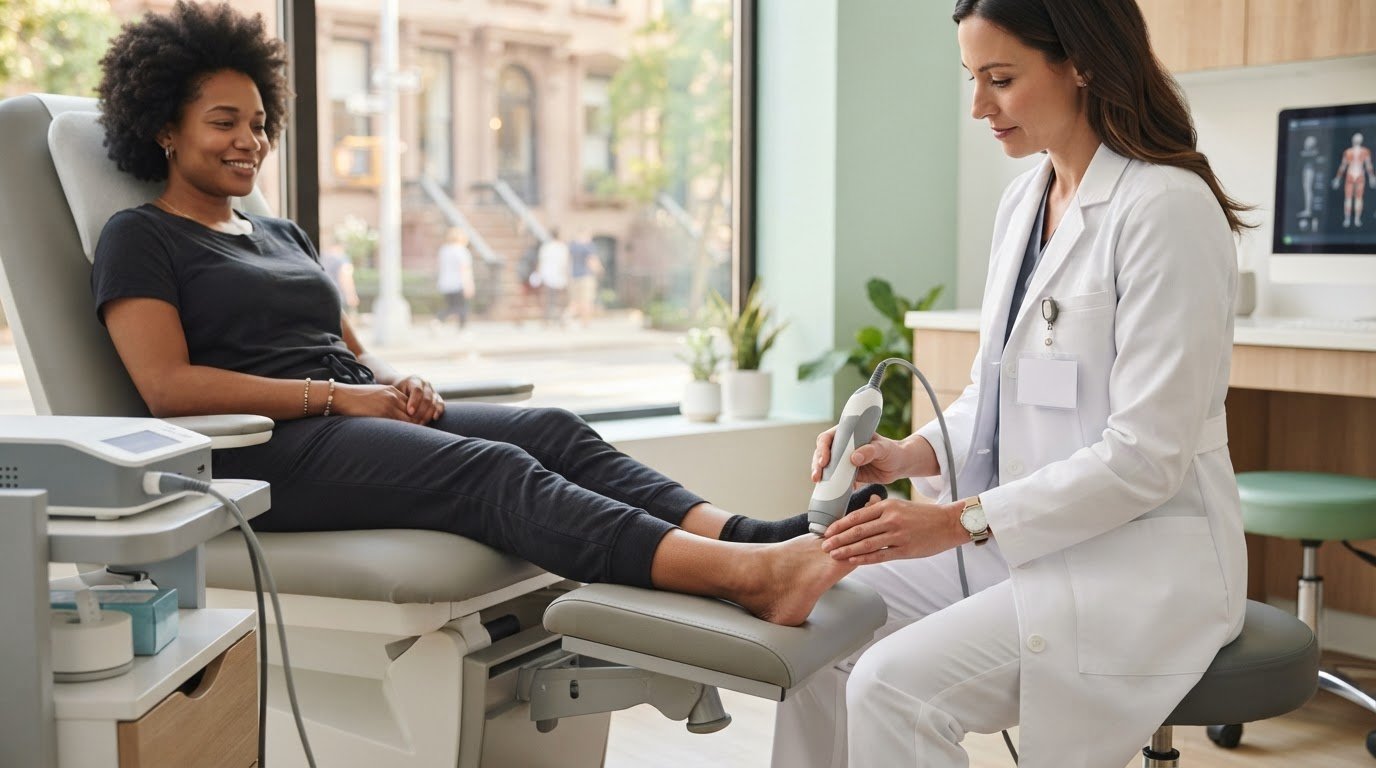
While a daily recovery checklist is a powerful tool for maintaining your health, some conditions require the precision of clinical intervention. We believe that professional foot care for service industry workers NYC should be as specialized as the jobs you perform. When standard rest and supportive footwear no longer provide the relief you need, our team is here to offer advanced diagnostic and treatment options. We focus on getting you back to your shift with the stability and comfort required to navigate a demanding workday.
- Comprehensive Evaluations: We perform detailed biomechanical assessments to understand exactly how your feet interact with the hard surfaces of your workplace.
- Advanced Diagnostic Imaging: We use modern imaging technology to catch stress fractures or ligament tears that might be mistaken for simple muscle soreness, ensuring you don’t stay sidelined by a hidden injury.
- Custom-Molded Orthotics: These aren’t generic inserts. We create medical-grade devices tailored to your specific foot structure and the unique demands of your work environment, providing the ultimate upgrade for your work boots or shoes.
- Minimally Invasive Surgical Options: If conservative treatments aren’t enough, we offer surgical solutions designed for faster recovery times, allowing you to return to work and regain your independence sooner.
Why Local Foot Doc Understands the NYC Worker
Dr. Waldemar Majdanski brings over 20 years of NYC clinical experience to every consultation. He has spent decades treating the local workforce, from chefs in Astoria to retail managers in Forest Hills. We understand that for a New Yorker, being unable to walk comfortably means a loss of more than just a shift; it’s a loss of mobility and freedom. Our practice is built on the duality of cutting-edge technical capability and personal rapport. We have strategically placed our offices in Forest Hills, Astoria, and Woodhaven near major transit hubs to ensure that expert foot care for service industry workers NYC is always within reach of your commute.
Your Next Steps to Pain-Free Shifts
Taking the first step toward recovery shouldn’t be stressful. When you book your initial consultation, we invite you into a partnership focused on your long-term health. We recommend bringing your primary work shoes to your appointment so we can analyze the wear patterns and provide specific footwear recommendations. We’ll work together to identify the underlying cause of your discomfort and outline a clear, predictable path to healing. Whether you need a permanent solution for a painful bunion or a customized set of orthotics to survive a double shift, we are committed to helping you walk strong. Schedule your consultation with Local Foot Doc today and start your journey back to pain-free mobility.
Reclaiming Your Mobility in the City
The relentless pace of a double shift in Woodhaven or Astoria shouldn’t come at the cost of your long-term independence. By mastering a structured recovery routine and prioritizing footwear that meets medical stability standards, you can effectively manage the physical strain of the concrete jungle. We have explored how proper foot care for service industry workers NYC is a 24-hour commitment that starts with the right shoes and ends with active post-shift rehabilitation. Each step you take to protect your arches today ensures you can continue to navigate our city with confidence tomorrow.
When daily maintenance isn’t enough to stop the throb of a bunion or the sharp jab of heel pain, professional intervention is your most reliable path forward. Dr. Waldemar Majdanski, a board-certified podiatric surgeon with over 20 years of NYC experience, specializes in bunion surgery and sports medicine designed for the urban athlete. We are here to help you move past temporary fixes and toward permanent relief. Don’t let foot pain end your career; schedule a professional evaluation at Local Foot Doc today. We look forward to helping you walk strong across every borough.
Frequently Asked Questions
How often should NYC service workers replace their work shoes?
NYC service workers should generally replace their work shoes every 4 to 6 months to maintain proper support. Even if the exterior soles still look intact, the internal cushioning and structural foam usually collapse under the weight of 40-hour work weeks and long subway commutes. If you start feeling new aches in your knees or lower back, it’s a clear signal that your footwear is no longer providing the necessary shock absorption.
Are compression socks actually helpful for waitstaff and nurses?
Compression socks are incredibly beneficial for waitstaff and nurses because they assist with venous return. By applying graduated pressure, these socks help prevent blood from pooling in your lower legs, which reduces the heavy feeling and swelling you experience after a shift. We often recommend them as a core component of foot care for service industry workers NYC to maintain healthy circulation and prevent long-term vascular issues.
Can I treat my plantar fasciitis without taking time off work?
You can often manage and treat plantar fasciitis without missing shifts by using medical-grade stabilization tools like custom orthotics. The key is to support the arch during high-impact activities to prevent the fascia from stretching or tearing further. When combined with our recommended recovery protocol at home, most workers find they can maintain their independence and continue working while their body heals from the repetitive strain of the job.
What is the best way to prevent bunions if I have to stand all day?
The most effective way to prevent bunions is to choose footwear with a wide toe box that allows your toes to splay naturally. If you have a genetic predisposition to structural changes, using custom-molded orthotics can redistribute pressure away from the big toe joint. This prevents the mechanical friction that causes the bunion bump to worsen over years of standing on hard kitchen or retail showroom floors.
When should I see a podiatrist in Brooklyn or Queens instead of just buying new insoles?
You should schedule a professional evaluation if your pain lasts longer than two weeks or if you experience any numbness or tingling. While over-the-counter insoles provide temporary cushioning, they don’t address the underlying biomechanical cause of your discomfort. Visiting our locations in Forest Hills, Woodhaven, or Astoria allows us to use diagnostic imaging to catch issues like stress fractures before they become permanent, career-ending injuries.
Are there specific stretches I can do during a 10-minute break?
During a 10-minute break, we recommend performing dynamic calf stretches against a wall and toe scrunches to engage the small muscles in your arches. These movements help counteract the locked feeling caused by static standing on concrete. Staying mobile for even 60 seconds every hour can significantly reduce the cumulative strain on your Achilles tendon and help you finish your long shift with much less discomfort.
What should I do if I develop a painful callus from my work boots?
A painful callus is usually a symptom of a localized pressure point or an ill-fitting work boot. You should avoid using store-bought medicated pads or sharp tools to remove them yourself, as this can lead to dangerous infections. Instead, have a professional evaluate the area to determine if the callus is caused by a structural imbalance that requires a permanent change in footwear or a custom orthotic.
Does insurance typically cover custom orthotics for workers?
Many health insurance plans in New York cover medically necessary podiatry services, including custom orthotics for chronic conditions like heel pain. While every plan is different, we find that most workers can access these professional solutions with a standard specialist copay. This makes professional foot care for service industry workers NYC a highly affordable investment in your long-term ability to stay active and remain pain-free on the job.