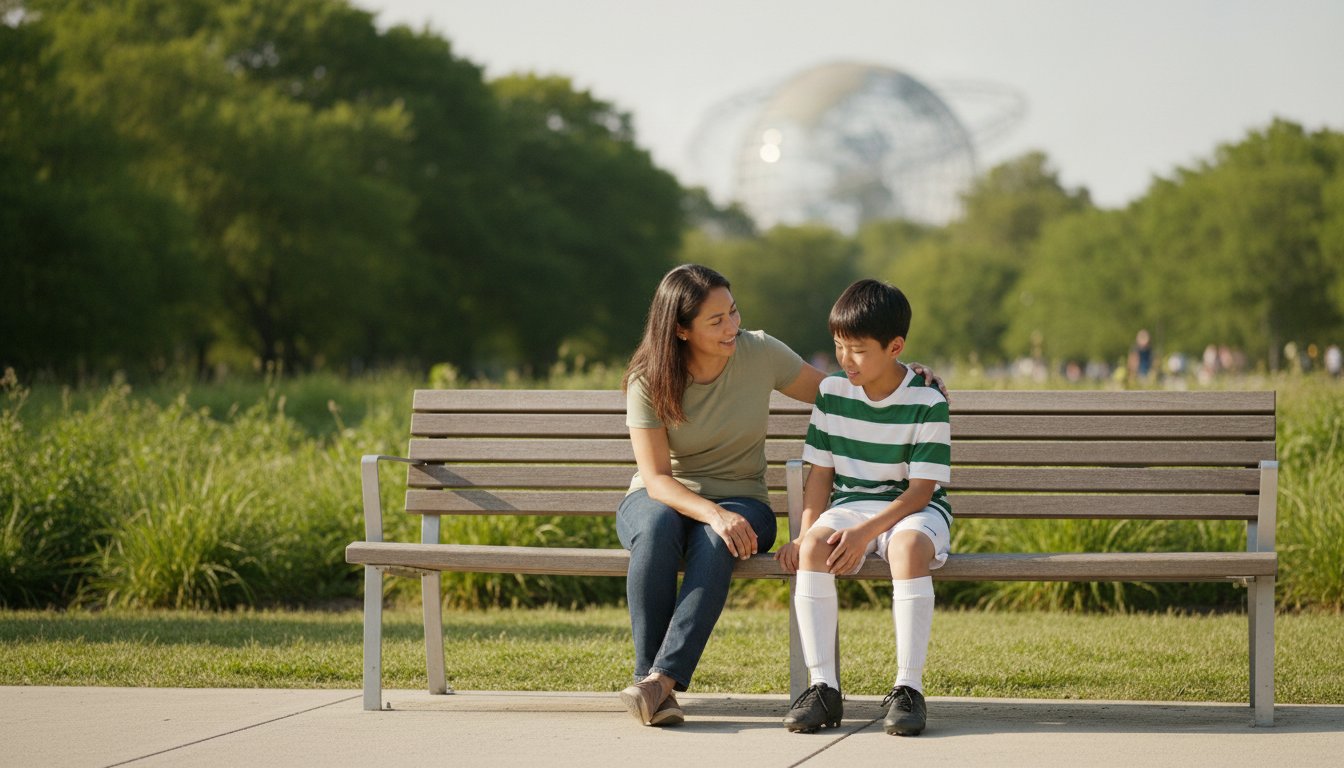
You watch from the sidelines at Flushing Meadows as your child suddenly pulls up, limping slightly after a sprint, only to tell you later that their heels feel like they are “burning.” It is a common scene for many families across Forest Hills and Astoria, yet the anxiety it causes is very real. You might wonder if these are just standard growing pains or if your young athlete has sustained a genuine injury that could sideline them for the season. Research shows that Sever’s disease accounts for up to 16% of musculoskeletal injuries in active children, meaning your child is certainly not alone in this struggle.
We know how difficult it is to find a pediatric-friendly specialist who understands the unique demands of an active Queens lifestyle. Our team is dedicated to treating pediatric heel pain in Queens by offering a clear, non-surgical path to recovery that does not always require stopping all activity. In this guide, we will help you identify the specific symptoms of Sever’s disease and explain how our professional diagnosis leads to a personalized plan. You will discover how modern tools like custom orthotics and sports medicine provide lasting relief, helping your child regain their independence and return to the sports they love with confidence.
Key Takeaways
- Learn how to identify Sever’s disease as an inflammation of the heel’s growth plate rather than dismissing it as a standard growth spurt.
- Understand the “wait and see” trap and how early intervention prevents secondary injuries in young athletes.
- Explore non-surgical methods for treating pediatric heel pain in Queens, including tailored stretching protocols and custom orthotics.
- Get professional advice on balancing year-round PSAL and travel team schedules to prevent overtraining and recurring discomfort.
- Discover how our community-focused approach in Forest Hills, Astoria, and Woodhaven offers a clear, reliable path to your child’s recovery.
Understanding Pediatric Heel Pain: Is it Sever’s Disease?
When your child complains of a sharp ache in their heel, your first instinct might be to worry about a fracture or a permanent injury. In most cases, we find that the culprit is actually a condition called calcaneal apophysitis. To help answer the question What is Sever’s Disease?, it’s essentially an inflammation of the growth plate located at the back of the heel bone. This isn’t a disease in the traditional sense; it’s a developmental stage that typically affects active kids between the ages of 8 and 14.
It’s vital to recognize that pediatric foot issues differ significantly from adult ones. While an adult might struggle with plantar fasciitis, which involves the connective tissue along the bottom of the foot, children have skeletal structures that are still maturing. Their growth plates are made of softer cartilage, making them the “weak link” in the foot’s architecture. The good news is that once the growth plate fully hardens into bone, the condition resolves itself. Our goal in treating pediatric heel pain in Queens is to manage the discomfort and prevent long-term complications during this window of skeletal maturity.
Common Symptoms Parents Should Watch For
The signs of Sever’s disease often appear gradually. You might notice your child complaining of pain specifically at the back or bottom of the heel during or immediately after a soccer match at Flushing Meadows or a basketball game in a local school gym. Watch for these specific indicators:
- Limping or altered gait: Your child might favor one foot or walk with a noticeable limp after physical activity.
- Tiptoe walking: To avoid putting pressure on the painful growth plate, some children instinctively walk on their toes.
- The Squeeze Test: If you gently squeeze the sides of the back of the heel and your child winces, it’s a strong indicator of calcaneal apophysitis.
Why It Happens During Growth Spurts
Sever’s disease is often the result of a biological “tug-of-war.” During a growth spurt, the heel bone often grows faster than the muscles and tendons in the leg. This causes the Achilles tendon to become tight and pull forcefully on the sensitive growth plate. This repetitive tension leads to the inflammation and pain your child feels.
The environment plays a significant role here as well. In Queens, many of our young athletes spend hours on high-impact surfaces like turf fields or concrete playgrounds in Astoria and Forest Hills. These hard surfaces don’t offer much shock absorption, which increases the stress on the heel. When treating pediatric heel pain in Queens, we take these local environmental factors into account to create a plan that protects the foot while the body catches up to its own growth.
Diagnosing Heel Pain in Queens: When to See a Podiatrist
Waiting for heel pain to disappear on its own is a common approach, but it often leads to what we call the “wait and see” trap. When a child limps to protect a sore heel, they instinctively shift their weight in ways that strain their knees, hips, and lower back. Ignoring these early signals can turn a temporary growth plate issue into a more complex mechanical problem. At our practice, we focus on treating pediatric heel pain in Queens by identifying the root cause before these secondary injuries take hold. Early intervention is the fastest way to get your young athlete back to their normal routine.
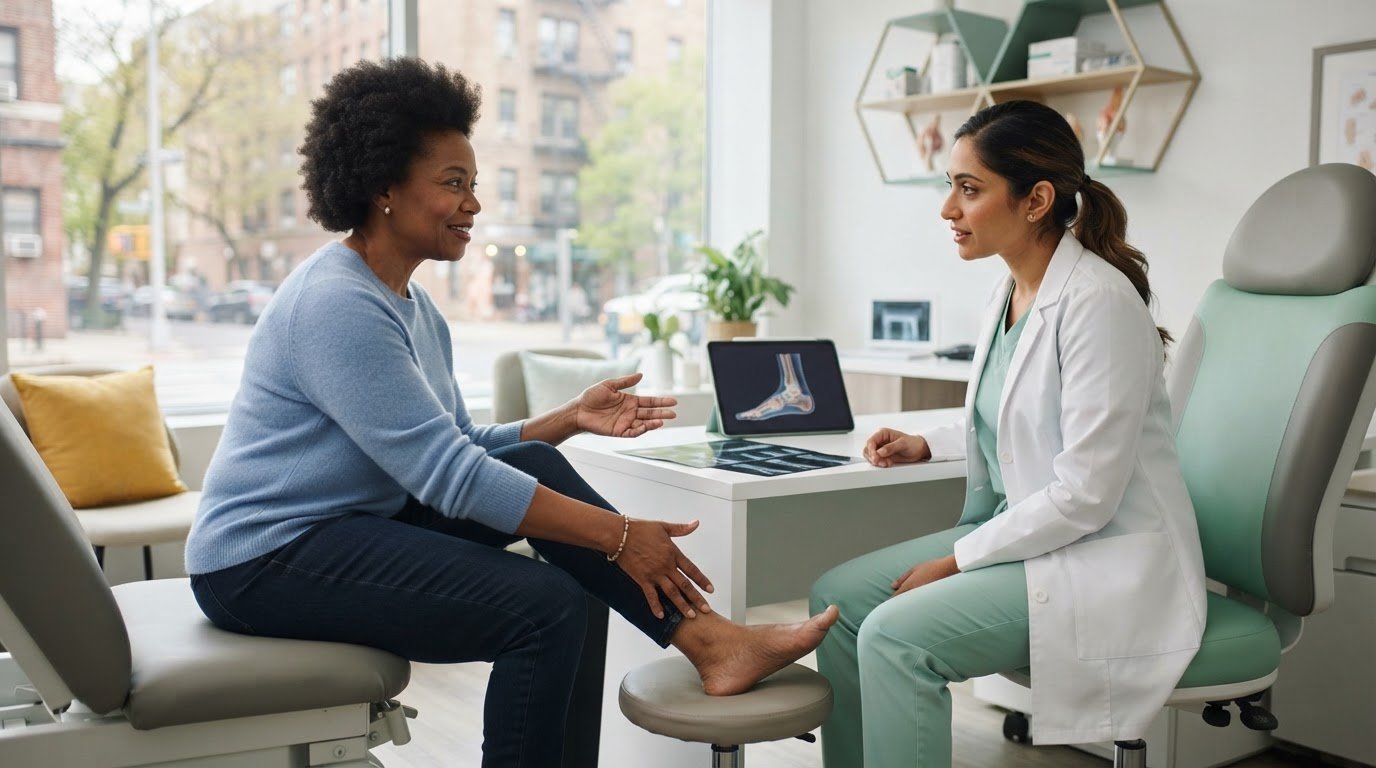
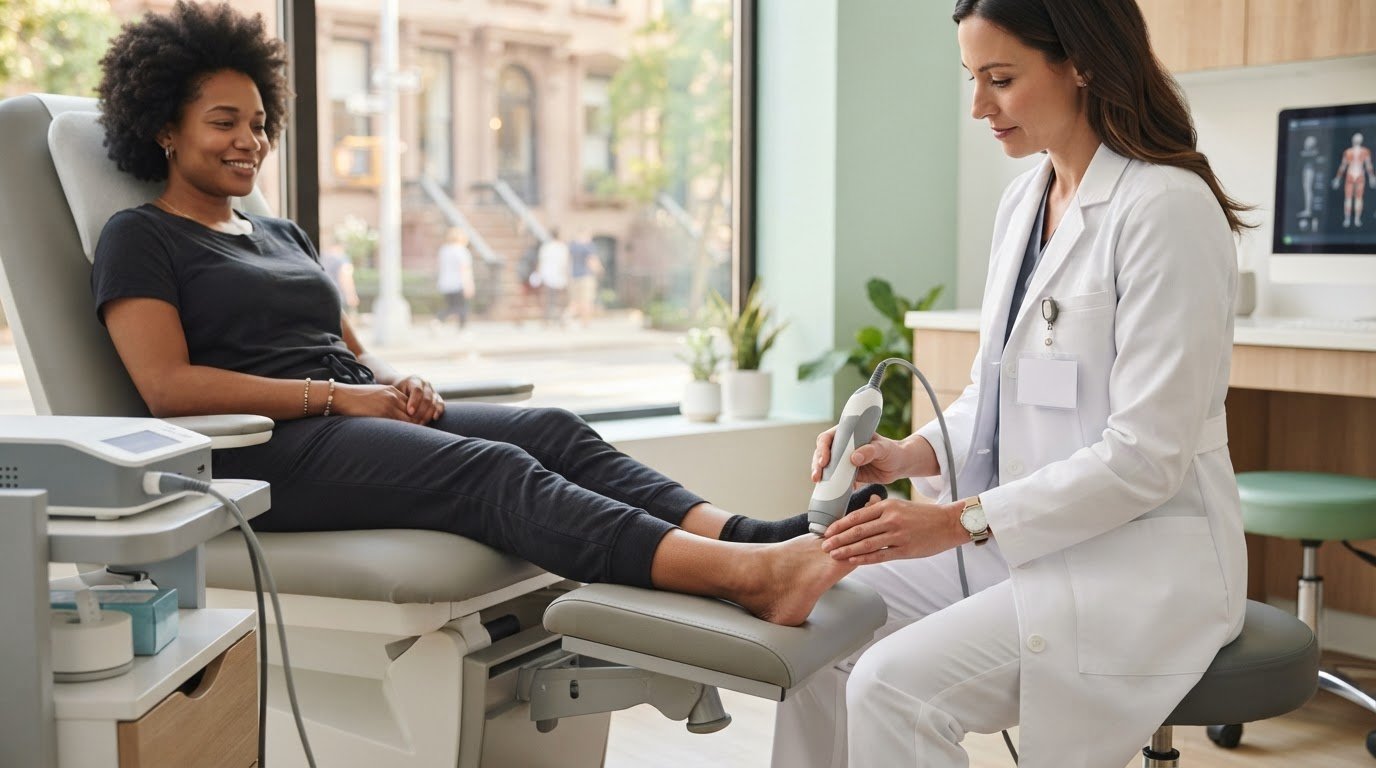
During a pediatric foot exam at our Forest Hills or Astoria locations, we do more than just look at the spot that hurts. We evaluate your child’s entire gait and biomechanics. We watch how they walk and run to see if their arches collapse or if their ankles lack the stability needed for high-impact sports. We also utilize in-office diagnostic imaging to rule out more serious concerns like stress fractures or bursitis immediately. This level of detail is essential for diagnosing and treating heel pain accurately, ensuring your child’s recovery stays on the right track from the very first visit.
The Queens Parent’s Diagnostic Checklist
If you are unsure whether it is time to call a specialist, use this checklist to assess your child’s discomfort. Professional attention is usually necessary if you notice:
- Pain that persists for more than two weeks despite reduced activity and home rest.
- Visible swelling, redness, or heat around the back of the heel area.
- Discomfort that occurs even when your child is resting or not playing sports.
- A noticeable change in how they walk, such as favoring one side or avoiding heel-to-toe contact.
Professional Evaluation vs. Home Assessment
While home remedies can offer temporary relief, a clinical biomechanical review provides the long-term solution. We look at the foot as a complete system. Sometimes, what looks like simple Sever’s disease is actually complicated by underlying issues like flat feet or Achilles tendonitis. By analyzing your child’s specific foot structure, we can determine if they need targeted support or simple lifestyle adjustments. A professional diagnosis provides a specific roadmap for a safe return-to-play, removing the guesswork for parents and coaches alike. If you’ve noticed your child struggling on the field, it may be time to consult with our team to ensure they are moving correctly and safely.
Treatment Options: Home Remedies vs. Professional Care
When an acute flare-up occurs, the immediate goal is to reduce inflammation and provide comfort. We often recommend parents start with the RICE method: Rest, Ice, Compression, and Elevation. Applying an ice pack to the back of the heel for 15 minutes after activity can significantly dull the “burning” sensation common in Sever’s disease. However, while these home remedies manage the symptoms, they don’t always address the underlying mechanical tension. Effective protocols for treating pediatric heel pain in Queens must involve a balance of immediate relief and long-term structural support.
Because the Achilles tendon is the primary “puller” in this tug-of-war, targeted stretching is essential. We guide families through pediatric-specific stretching routines that focus on lengthening the calf muscles without overstressing the growth plate. It is also important to evaluate your child’s footwear. Many cleats used in Queens youth soccer or baseball leagues are designed for traction rather than support. They often have flat, hard soles that offer zero shock absorption on the firm turf fields found throughout our borough. By applying sports medicine principles, we can help you choose better gear that protects the heel during high-impact play.
The Power of Custom Orthotics for Kids
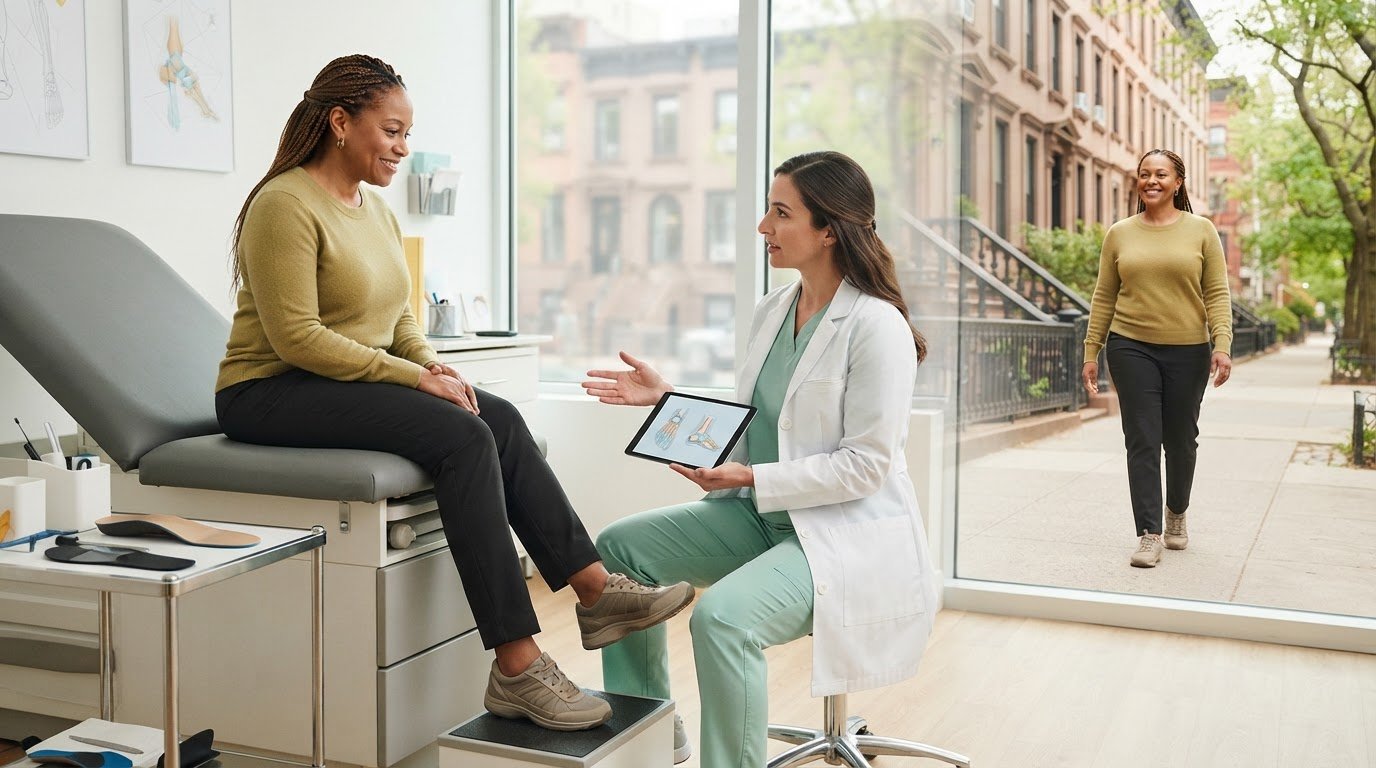
Many parents initially try over-the-counter heel cups, but these often provide only a temporary cushion. Medical-grade custom orthotics, which we design specifically for your child’s foot shape in our clinic, offer a much more sophisticated solution. These devices are engineered to offload the growth plate by correcting the foot’s alignment, allowing for pain-free activity. A common concern we hear in Forest Hills and Astoria is that children will simply “grow out of them” too quickly. In reality, modern orthotics are durable and can often be adjusted or refurbished as the child’s foot matures, making them a sustainable tool for both recovery and athletic performance.
Advanced Non-Invasive Therapies
For more persistent cases, we may incorporate advanced therapies that go beyond simple rest. This might include physical therapy sessions focused on calf flexibility and core stability, which helps distribute weight more evenly. We prioritize activity modification over total “bench time.” Instead of telling a child they can’t play, we might suggest reducing their practice frequency or switching to lower-impact drills for a few weeks. In severe instances, we may use night splints to maintain a gentle stretch on the Achilles while the child sleeps. Understanding Sever’s disease symptoms and treatment helps us create a plan that respects the child’s need to stay active while ensuring the growth plate has the environment it needs to heal.

Keeping Queens Youth Athletes on the Field
NYC youth sports are remarkably intense. Between PSAL basketball seasons and travel soccer tournaments at Flushing Meadows, many children are on their feet year-round without a significant break. This constant activity is often where we encounter the most challenges when treating pediatric heel pain in Queens. The repetitive impact on hard gym floors and synthetic turf doesn’t give the heel’s growth plate much time to recover. We focus on helping families manage these demanding schedules, ensuring that “active rest” is built into their routine to prevent the overtraining that leads to chronic inflammation.
Collaboration with local coaches is another critical piece of the puzzle. We often provide specific guidance for physical education teachers and club coaches in Astoria or Forest Hills, explaining that a child isn’t just being “lazy” when they slow down; they are managing a clinical condition. During the cold New York winters, this communication becomes even more important. Cold muscles are naturally less flexible, which increases the tension on the Achilles tendon. A longer, more deliberate warm-up is mandatory before any competitive play during the winter months to protect the maturing bone structure.
Footwear Guide for NYC Sports
The right shoe is your child’s first line of defense against the hard concrete of Queens playgrounds and local parks. For soccer, we suggest choosing cleats that offer a wider base and more cushioning, especially if they are playing on turf rather than natural grass. In basketball, a high-quality sneaker with a firm heel counter can provide the stability needed to distribute forces more evenly across the foot. We recommend that parents replace athletic shoes every 3 to 6 months during growth spurts. Worn-out midsoles lose their ability to absorb shock quickly, which leaves the growth plate vulnerable to injury.
Daily Stretching Routine for Active Kids
Consistency is the key to maintaining flexibility and reducing the “tug-of-war” on the heel. We suggest making stretching a pre-game ritual rather than an afterthought. The “Wall Stretch” is particularly effective for this age group. Have your child stand facing a wall, place their hands on it for balance, and step one foot back while keeping the heel flat on the ground. Holding this position for 30 seconds, three times a day, keeps the calf muscles from becoming too tight. Kid-friendly moves like the “Downward Dog” pose also help lengthen the entire posterior chain, providing a fun way to improve overall mobility. If your child is struggling to keep up with their teammates due to discomfort, schedule a consultation at one of our Queens locations to get them back in the game safely.
Why Choose Local Foot Doc for Your Child’s Care?
Choosing a medical provider for your child is a deeply personal decision that requires a balance of trust, convenience, and specialized skill. We understand the anxiety that comes with seeing your child in pain, which is why our approach is rooted in compassionate reassurance and clinical excellence. Dr. Waldemar Majdanski brings over 20 years of dedicated experience in New York City podiatry to every consultation. While he is a board-certified surgeon, his philosophy for treating pediatric heel pain in Queens always prioritizes non-surgical, long-term solutions that protect your child’s developing skeletal structure while getting them back to their favorite activities.
Our practice is designed to feel like a trusted local institution rather than a detached medical group. We view ourselves as your partners in your child’s health, offering a collaborative atmosphere where every question is answered and every treatment plan is clearly explained. By combining modern diagnostic capabilities with the personal touch of a neighborhood doctor, we ensure that your family feels supported from the initial diagnosis through the final day of recovery. We focus on results that improve your child’s quality of life and athletic performance.
Accessible Care in Your Neighborhood
We believe that high-quality specialized care should be easy to reach. With offices in Forest Hills, Astoria, and Woodhaven, we are a fixture in the communities where our patients live and play. Scheduling an appointment at our Forest Hills podiatrist office is straightforward, and our multilingual staff is dedicated to making every family feel at home. To further ease the process, we accept a wide range of major insurance plans common in the NYC area, including Aetna, Cigna, and Empire Blue Cross Blue Shield, ensuring that professional care is accessible when your child needs it most.
Expertise You Can Trust
Dr. Majdanski’s board-certified surgical background provides a unique advantage, even when surgery is not the chosen path. This high-level training informs our non-surgical treatments, such as custom orthotics and sports medicine protocols, ensuring they are grounded in the latest clinical research. We have a proven track record of helping thousands of young Queens athletes regain their independence from pain and return to the field with improved biomechanics. Ready to help your child play pain-free? Schedule a consultation at one of our Queens locations today and take the first step toward a lasting solution.
Helping Your Child Reclaim Their Active Lifestyle
Watching your child limp after a game at Flushing Meadows is stressful, but understanding that Sever’s disease is a manageable, temporary condition provides a clear path forward. We have explored how identifying symptoms early and implementing proper stretching can make a significant difference. By focusing on non-surgical treatments like custom orthotics, we address the mechanical root of the pain rather than just masking the symptoms. This specialized approach ensures your young athlete stays on the field while their body matures safely.
Our team, led by board-certified surgeon Dr. Waldemar Majdanski, is dedicated to treating pediatric heel pain in Queens with the personalized care your family deserves. With convenient locations in Forest Hills, Astoria, and Woodhaven, professional help is always close to home. You don’t have to wait for your child to “grow out” of the pain while they miss out on the sports they love. Schedule your child’s pediatric foot exam at our Queens office today to ensure they return to the field stronger and more confident than before. We look forward to helping your young athlete move without limits once again.
Frequently Asked Questions
Is pediatric heel pain just ‘growing pains’ that I can ignore?
No, you shouldn’t ignore persistent heel pain as simple “growing pains.” While Sever’s disease is related to skeletal maturity, the inflammation is a real physical response to repetitive stress on the growth plate. Ignoring these symptoms can lead to compensatory injuries in the knees or hips as your child changes their gait to avoid discomfort. Treating pediatric heel pain in Queens early ensures a much faster return to full activity.
How can I tell if my child has Sever’s disease or a more serious injury?
Sever’s disease typically presents as tenderness specifically at the back of the heel, especially during the “squeeze test.” More serious injuries, such as stress fractures or acute ligament tears, often involve a sudden onset of pain, visible bruising, or an inability to bear any weight at all. We use in-office diagnostic imaging to rule out these severe conditions, providing you with a definitive diagnosis and a focused recovery plan.
Will my child have to stop playing sports during treatment?
Most children do not need to stop playing sports entirely during their recovery. We prioritize activity modification, which might mean reducing the number of weekly practices or avoiding high-impact drills on hard surfaces like asphalt. By using tools like custom orthotics and proper stretching, many young athletes in Forest Hills and Astoria continue to participate in their leagues while their growth plate heals, ensuring they stay connected to their teammates.
Does my child need surgery for Sever’s disease?
Surgery is almost never required for Sever’s disease. Because this condition involves an open growth plate, it naturally resolves once the bone fully matures and hardens. Our focus remains on non-surgical interventions like sports medicine protocols, footwear adjustments, and physical therapy. These conservative methods are highly effective at managing inflammation and allowing the body to heal itself without the need for invasive clinical procedures or long, difficult recovery times.
What are the best types of shoes for a child with heel pain in Queens?
The best shoes for a child with heel pain are supportive sneakers with a firm heel counter and a slightly elevated, cushioned heel. You should avoid completely flat shoes, such as certain fashion sneakers or worn-out cleats that offer no shock absorption. In an urban environment like Queens, where kids often play on hard turf or concrete, a high-quality midsole is essential for protecting the sensitive growth plate from repetitive impact.
How long does it take for pediatric heel pain to go away?
Most children experience significant relief within two to six weeks of starting a professional treatment plan. However, because Sever’s disease is tied to growth, flare-ups can occasionally recur until the growth plate closes, which usually happens by age 15. Consistently treating pediatric heel pain in Queens with the right stretching and support helps minimize these episodes, ensuring the discomfort does not interfere with your child’s long-term athletic development or daily life.
Do custom orthotics really help children with Sever’s disease?
Yes, custom orthotics are one of the most effective tools for managing this condition. Unlike generic store-bought inserts, custom devices are molded to your child’s specific foot structure to offload the growth plate and correct biomechanical imbalances. This targeted support reduces the tension the Achilles tendon places on the heel bone. Many parents find that orthotics allow their children to return to high-impact sports like basketball or soccer with much less pain.
Can heel pain in children lead to permanent foot problems?
Sever’s disease itself does not cause permanent damage or long-term foot deformities. It is a self-limiting condition that resolves once the growth plate closes. The primary risk lies in the development of poor movement habits or secondary strain on other joints if the pain is left untreated for many months. Ensuring your child receives a professional evaluation helps them maintain proper foot alignment and healthy biomechanics throughout their important developmental years.