
Did you know that foot and ankle pain is the second leading cause of absenteeism among healthcare professionals, with 24% of nurses missing work because of it in the last year? You likely spend your 12-hour shifts walking up to nine kilometers on unforgiving hospital floors, leaving your feet feeling bruised and exhausted. We understand that for a healthcare provider, your feet are your most essential equipment. If you’ve been searching for a podiatrist for nurses in Queens, you know how difficult it can be to find specialized care that fits between your demanding shifts.
We believe that chronic heel pain or bunion discomfort shouldn’t force you into an early career change. In this 2026 guide, we’ll explain how professional podiatric intervention can provide immediate relief and extend your career longevity. You’ll discover how custom orthotics designed specifically for clinical environments can transform your workday. We also provide a clear path to recovery through our community-focused practices in Forest Hills, Astoria, and Woodhaven, ensuring your mobility remains a priority. It’s time to move from enduring the pain to reclaiming your comfort on the floor.
Key Takeaways
- Understand how the unique biomechanical load of a 12-hour shift on hospital floors accelerates joint wear and soft tissue damage.
- Discover why medical-grade custom orthotics are essential clinical tools that correct structural imbalances far more effectively than over-the-counter cushions.
- Learn how a specialized podiatrist for nurses in Queens can provide rapid relief for common shift-work ailments like plantar fasciitis and bunion progression.
- Explore how proximity to major medical hubs and in-office diagnostic imaging allow for streamlined care that fits into a busy healthcare professional’s schedule.
- Identify personalized treatment paths designed to eliminate chronic pain, ensuring you can maintain your career longevity and physical independence.
The Nursing Foot Crisis: Why Queens Healthcare Workers Need Specialized Care
Nurses in our community don’t just work; they perform a grueling athletic feat every single day. A typical 12-hour shift often involves walking between eight and nearly ten kilometers. This isn’t a leisurely stroll on a soft track. You’re navigating hard hospital floors, usually made of linoleum over concrete, which offer almost zero shock absorption. This environment creates a unique biomechanical load that places immense pressure on the 26 bones and dozens of joints in your feet. If you’re searching for a podiatrist for nurses in Queens, you need a specialist who understands that your footwear is more than just a uniform requirement; it’s a vital piece of medical equipment.
The “silent” progression of foot fatigue is what often leads to long-term career interruptions. It starts as a dull ache at the end of a shift, but without intervention, it can transform into debilitating structural damage. Many healthcare professionals try to self-treat with standard retail shoe inserts. While these cushions might provide temporary “squish,” they fail to address the underlying alignment issues caused by repetitive stress. They don’t offer the medical-grade support required to stabilize the foot during a 10-mile day, which is why professional evaluation is essential for long-term health.
The Impact of Prolonged Standing on Hospital Floors
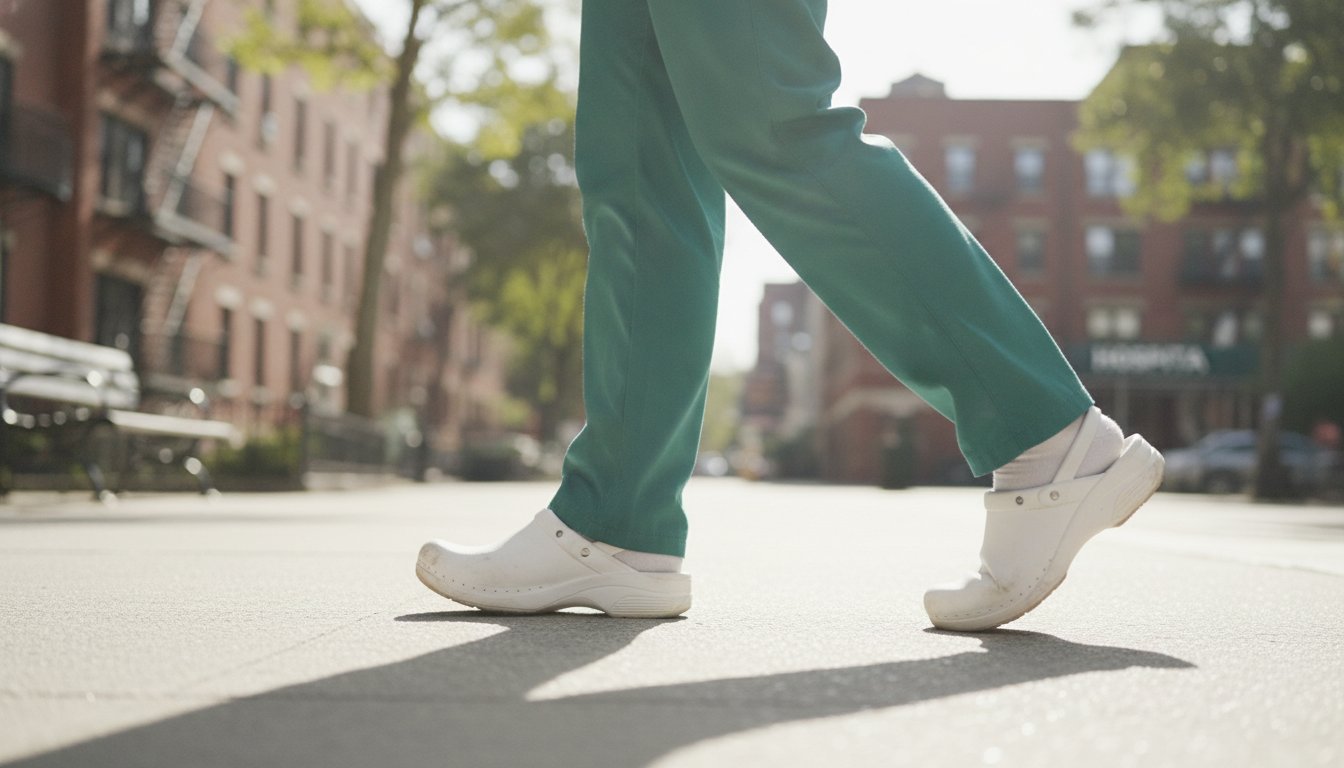
The physics of a nursing shift are brutal on the musculoskeletal system. When you stand for hours, gravity and muscle fatigue cause your arches to gradually collapse. This repetitive strain often leads to Plantar Fasciitis, a condition characterized by sharp, stabbing heel pain that is usually worst during those first few steps after a break. While many nurses rely on popular clogs, these shoes often provide a wide toe box but lack the specific arch height or heel stability your unique foot structure requires. Early warning signs of occupational strain include burning sensations in the ball of the foot or stiffness in the morning, both of which suggest your feet are struggling to recover from the previous day’s load.
Why Queens Nurses are at Higher Risk
Queens is home to some of the busiest medical facilities in the country, including New York-Presbyterian Queens and Long Island Jewish Forest Hills. The high-volume nature of these trauma centers and ERs means you’re often sprinting to patient rooms or standing through intensive procedures without a seat. Adding to this stress is the “Queens commute.” Many local healthcare heroes spend significant time on their feet navigating the MTA or walking through neighborhoods like Astoria and Woodhaven before their shift even begins. A 2025 study found that approximately 93.5% of nursing students reported experiencing foot discomfort, showing that the damage begins even before the first official day on the job. We’re here to help you manage these risks and keep you moving comfortably.
Common Foot Conditions Affecting Nurses in Queens
Your feet bear the brunt of every code, every patient transfer, and every mile walked across the unit. When you work a 12-hour shift, your feet don’t just get tired; they undergo structural stress that can lead to specific medical conditions. As a dedicated podiatrist for nurses in Queens, we focus on identifying these issues before they become career-ending injuries. By understanding the underlying pathology of your pain, we can implement treatments that allow you to stand with confidence and focus on your patients rather than your discomfort.
Plantar Fasciitis and Heel Pain
The most frequent complaint we treat among healthcare workers is plantar fasciitis. If you’ve finished a long night shift only to feel a sharp, stabbing sensation in your heel the moment you step out of bed the next morning, you’re experiencing the classic diagnostic indicator of this condition. The ligament that supports your arch becomes inflamed and develops micro-tears from the constant pounding on hard surfaces. We offer several non-surgical interventions in our Astoria and Forest Hills offices, ranging from therapeutic stretching protocols to advanced orthotic support, designed to calm the inflammation and restore your mobility.
Bunions and Structural Deformities
While heel pain is common, we also see significant occupational hazards for nurses involving structural deformities like bunions and hammertoes. A bunion isn’t just a bump; it’s a progressive misalignment of the big toe joint. Constant standing exacerbates this deformity, especially if your professional footwear has a narrow toe box. If the pain begins to interfere with your ability to stand during procedures, it may be time to consider bunion surgery in Queens to realign the joint and prevent further damage to the surrounding toes. Ignoring these structural changes can lead to hammertoes, where the smaller toes curl painfully against the top of your shoes.
The stress of nursing also extends to the back of the leg. Achilles tendonitis and chronic calf tightness are frequent results of the constant “stop-and-go” movement on the floor. When your calf muscles are perpetually tight, they pull on the heel bone, worsening arch pain and even contributing to circulatory issues like varicose veins. Your feet act as the pump for your entire lower body’s blood flow. When pain causes you to change your gait, that pump becomes less efficient. If you’re noticing swelling or persistent aching, scheduling an evaluation can help us develop a personalized plan to keep your circulation and your career on track.
Queens Podiatrist Guide for Healthcare Professionals
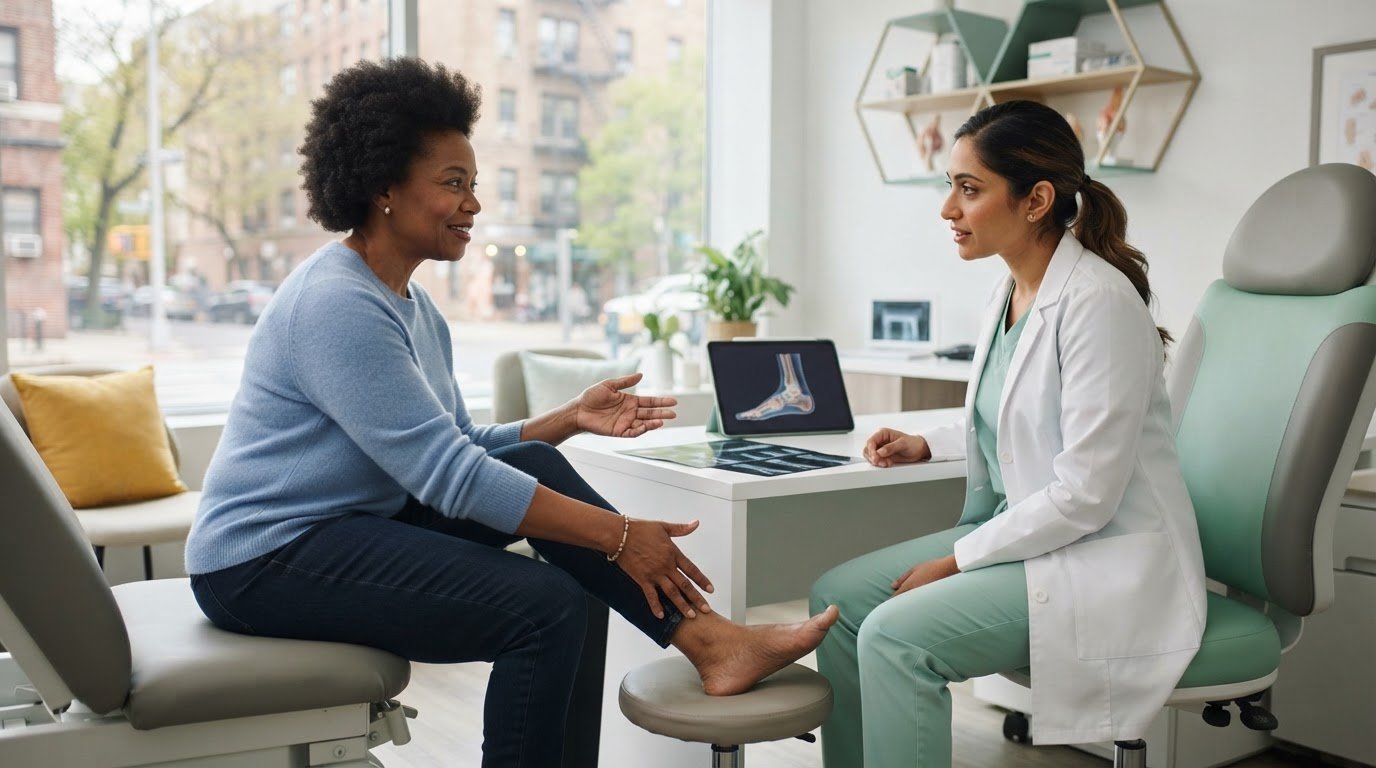
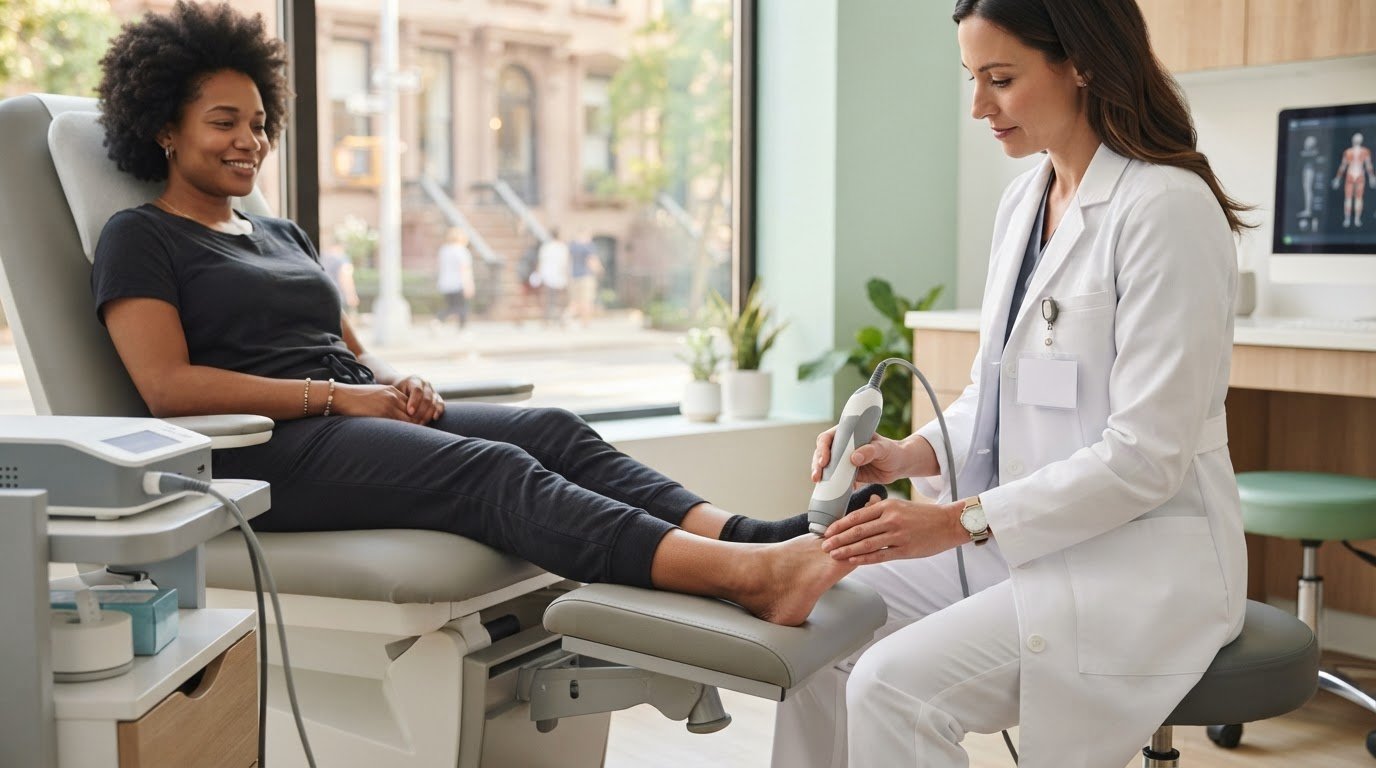
Locating a specialist shouldn’t be another chore on your day off. Our offices are strategically positioned near major medical hubs like New York-Presbyterian Queens, Long Island Jewish Forest Hills, and Mount Sinai Queens. We understand that your career follows a unique rhythm, often the demanding 3-on, 4-off rotation. Because we specialize in industrial foot health, which addresses the specific physical demands placed on professional walkers, we’ve equipped our practices with advanced diagnostic tools. Having in-office X-ray and Ultrasound capabilities means we can identify structural issues or soft tissue tears immediately. This efficiency is vital for busy professionals who don’t have time for multiple appointments at different facilities.
Board Certification and Surgical Expertise
When you’re dealing with chronic pain, you need a provider who offers both clinical depth and surgical precision. Dr. Waldemar Majdanski is a board-certified surgeon who prioritizes conservative care whenever possible. We believe surgery should be the final step, not the first. During your medical consultation, it’s helpful to ask about the specific biomechanical causes of your discomfort. A qualified podiatrist for nurses in Queens will be able to explain how a treatment plan impacts your ability to return to the floor safely. We focus on results that allow you to resume your normal lifestyle without the constant anxiety of a recurring injury. Our approach is designed to foster a sense of partnership in your healing process.
Insurance and Accessibility in Queens
We recognize that navigating insurance can be as complex as a patient’s chart. Our administrative team is highly experienced with the plans common to NYC healthcare unions, ensuring your care remains accessible. With locations in Forest Hills, Astoria, and Woodhaven, we serve as a trusted local institution rather than a detached corporate medical group. This neighborhood-focused approach allows us to provide the personalized attention that large hospital systems often lack. We don’t just see a set of symptoms; we see a colleague in the Queens medical community who needs to regain their physical independence. Our goal is to provide a clear, comforting path to recovery that respects your time and your dedication to your patients.

Custom Orthotics: The “Secret Weapon” for 12-Hour Shifts
Most healthcare workers recognize the importance of quality footwear, often investing in reputable brands like Dansko, Hoka, or Clove. However, even the most expensive sneakers or clogs come with generic factory insoles designed for an “average” foot that doesn’t exist. For a professional walking ten miles a day on concrete, these foam cushions are insufficient. They provide temporary softness but lack the structural integrity to manage your unique biomechanics. As a specialized podiatrist for nurses in Queens, we view custom orthotics as essential medical equipment rather than a luxury accessory. These devices are the key to preventing the cumulative damage that leads to chronic pain and missed shifts.
The return on investment for medical-grade orthotics is significant. By correcting the way your foot strikes the ground, you’re not just treating current heel pain; you’re actively preventing future bunion surgery or debilitating joint wear. Unlike over-the-counter inserts that lose their shape within weeks, custom orthotics are fabricated from durable materials designed to withstand the “industrial” use of a hospital environment. They act as a foundation that stabilizes your entire musculoskeletal system, from your ankles up to your lower back.
The Process of Getting Custom Orthotics
Our approach to orthotic therapy is rooted in clinical precision. We don’t rely on generic “step-on” pressure mats found in retail stores. The process begins with a comprehensive physical examination and a clinical gait analysis to see how your foot moves under a load. We then move to the following steps:
- Precision Casting: We take a non-weight-bearing mold or a high-resolution digital scan of your feet in their ideal neutral position.
- Custom Fabrication: Your scans are sent to a medical lab where the orthotics are built to your exact specifications, including modifications for specific shoe types like narrow sneakers or deep-well clogs.
- Fitting and Adjustment: We ensure the device integrates perfectly with your work shoes, making any necessary tweaks to guarantee comfort during your longest shifts.
Why Nurses Specifically Benefit from Rigid vs. Soft Orthotics
There’s a common misconception that “softer is better” for standing all day. While soft foam feels good initially, it offers no control over over-pronation, which is the inward rolling of the foot. This movement is particularly dangerous during high-stress activities like patient transfers or sprinting to a code. We often recommend semi-rigid or rigid orthotics for nurses because they provide the necessary structural support to keep the foot aligned. This stability reduces the strain on the plantar fascia and prevents the arch from collapsing under the weight of a long day. If you’re tired of finishing your shift in agony, it’s time to explore how custom orthotics can restore your independence and keep you moving comfortably.
How Local Foot Doc Supports the Queens Nursing Community
We view our role not just as medical providers, but as partners in the Queens healthcare ecosystem. Dr. Waldemar Majdanski and our entire team are committed to keeping our local heroes mobile. We understand that a nurse’s career depends on their ability to move without hesitation. This is why we’ve streamlined our care paths to respect your time, offering efficient diagnostic and treatment options that address the root cause of your discomfort. Whether you require conservative management for a minor strain or advanced surgery for a complex deformity, we provide a consistent, high standard of care.
Our expertise in sports medicine is uniquely suited for the nursing professional. We treat the repetitive stress of a hospital shift with the same precision an athlete requires for peak performance. Many of your colleagues in the NYC nursing community have already found relief through our personalized treatment plans, moving from chronic pain to regained independence. By choosing a specialized podiatrist for nurses in Queens, you’re ensuring that your care is tailored to the specific environmental challenges of the modern clinical floor.
Our Queens Locations and Contact Information
Accessibility is a cornerstone of our practice. We’ve established three key locations to ensure that specialized foot care is always within reach:
- Forest Hills: Located conveniently for staff at Long Island Jewish Forest Hills and nearby private practices.
- Astoria: A primary resource for Mount Sinai Queens employees and those working in the busy medical corridors of Western Queens.
- Woodhaven: Serving as a central hub for community-based healthcare workers and those commuting across the borough.
Take the First Step Toward Pain-Free Shifts
Booking an appointment is straightforward and designed to fit into your 3-on, 4-off rotation. You can schedule your visit online or call our office directly. To get the most out of your first consultation, we ask that you bring the footwear you wear during your shifts. Examining the wear patterns on your clogs or sneakers provides invaluable diagnostic data about your gait and pressure distribution. We’ll work together to identify the ailment, explain the cause, and outline the specific steps toward a solution. Don’t let another shift pass in discomfort. Schedule your consultation with Dr. Majdanski today and reclaim the mobility you need to excel in your vital work.
Reclaim Your Comfort on the Hospital Floor
Your career in healthcare is a marathon, not a sprint. We’ve explored how the relentless pressure of hospital floors leads to conditions like plantar fasciitis and why specialized medical-grade orthotics act as essential clinical tools for your profession. By addressing these biomechanical stresses now, you’re investing in your long-term mobility and actively preventing the need for future surgical intervention. Taking proactive steps today ensures that your feet remain strong enough to support your dedication to your patients for years to come.
Finding a dedicated podiatrist for nurses in Queens is the first step toward pain-free shifts and regained independence. With over 20 years of NYC clinical experience and a specialized focus on occupational foot health, our team provides the sophisticated care required by active medical professionals. We offer convenient locations across Queens and Brooklyn to ensure your recovery path is accessible and fits your unique shift rotation. It’s time to prioritize your own well-being so you can continue to provide the best care for others.
Schedule Your Nursing Foot Health Consultation at Local Foot Doc
You spend your life caring for the community; let us help you stay on your feet. We look forward to partnering with you on a clear, comforting path to total recovery.
Frequently Asked Questions
How can I tell if my foot pain is just tiredness or a medical condition?
Fatigue usually resolves with rest, while medical conditions like plantar fasciitis persist or even worsen over time. If you feel sharp pain during your first steps in the morning or if the discomfort lingers through your days off, it’s likely a structural issue. Persistent swelling, numbness, or pain that changes your walking gait are clear signals that you should consult a specialist to prevent long-term damage.
Do Queens podiatrists accept insurance plans common for NYC nurses?
Yes, we work with many insurance plans common to NYC healthcare unions to ensure your care remains accessible. Our administrative team is highly experienced in navigating the specific requirements of provider networks associated with major Queens hospital systems. We recommend contacting our office directly to verify your specific coverage and any necessary documentation required for your visit so we can streamline your path to recovery.
Can custom orthotics fit inside my standard nursing clogs?
Custom orthotics are specifically fabricated to fit the footwear you use most, including popular brands like Dansko, Hoka, or Clove. During your consultation with a podiatrist for nurses in Queens, we’ll examine your work shoes to ensure the inserts provide maximum stability without being too bulky. This precision fitting is essential for maintaining comfort and proper alignment throughout a long shift on hard clinical floors.
What is the fastest treatment for plantar fasciitis for someone who can’t take time off?
Non-surgical interventions like therapeutic taping, night splints, and custom orthotics provide immediate support without requiring any downtime. We focus on stabilizing the plantar fascia to reduce inflammation while you continue working your regular schedule. Combining these tools with specific stretching protocols can significantly alleviate sharp heel pain. We prioritize efficient care paths that respect your demanding 12-hour shift rotation and your commitment to your patients.
How often should a nurse replace their work shoes to prevent injury?
Most high-activity professionals should replace their work shoes every 4 to 6 months. Even if the exterior looks intact, the internal support structures often break down after 300 to 500 miles of walking. Since a nurse may walk up to 10 kilometers per shift, the shock absorption in standard sneakers or clogs degrades much faster than it does for the average person, increasing the risk of joint strain.
Is surgery the only option for bunions caused by years of nursing?
Surgery is not the only option, as we always prioritize conservative management first. Many nurses find relief through custom orthotics that realign the foot and reduce pressure on the big toe joint. However, if the deformity progresses to the point where it interferes with your daily activity or causes chronic pain, board-certified bunion surgery might be the best path toward regaining your physical independence and returning to activity.
Do I need a referral to see a podiatrist in Queens?
Whether you need a referral depends entirely on your specific insurance plan. Many PPO plans allow you to book directly with a podiatrist for nurses in Queens without seeing a primary care physician first. If you have an HMO plan, you’ll likely need a referral from your doctor. Our staff can help you determine the requirements for your specific policy when you call to schedule your initial medical consultation.
What should I do for immediate relief after a 12-hour shift?
Immediate relief can often be found through contrast baths or rolling your foot over a frozen water bottle to reduce inflammation. Elevating your feet above your heart level helps drain fluids and reduce the swelling common after prolonged standing. These home care steps are excellent temporary measures, but they should be paired with professional evaluation if the pain becomes a recurring part of your work week or limits your mobility.