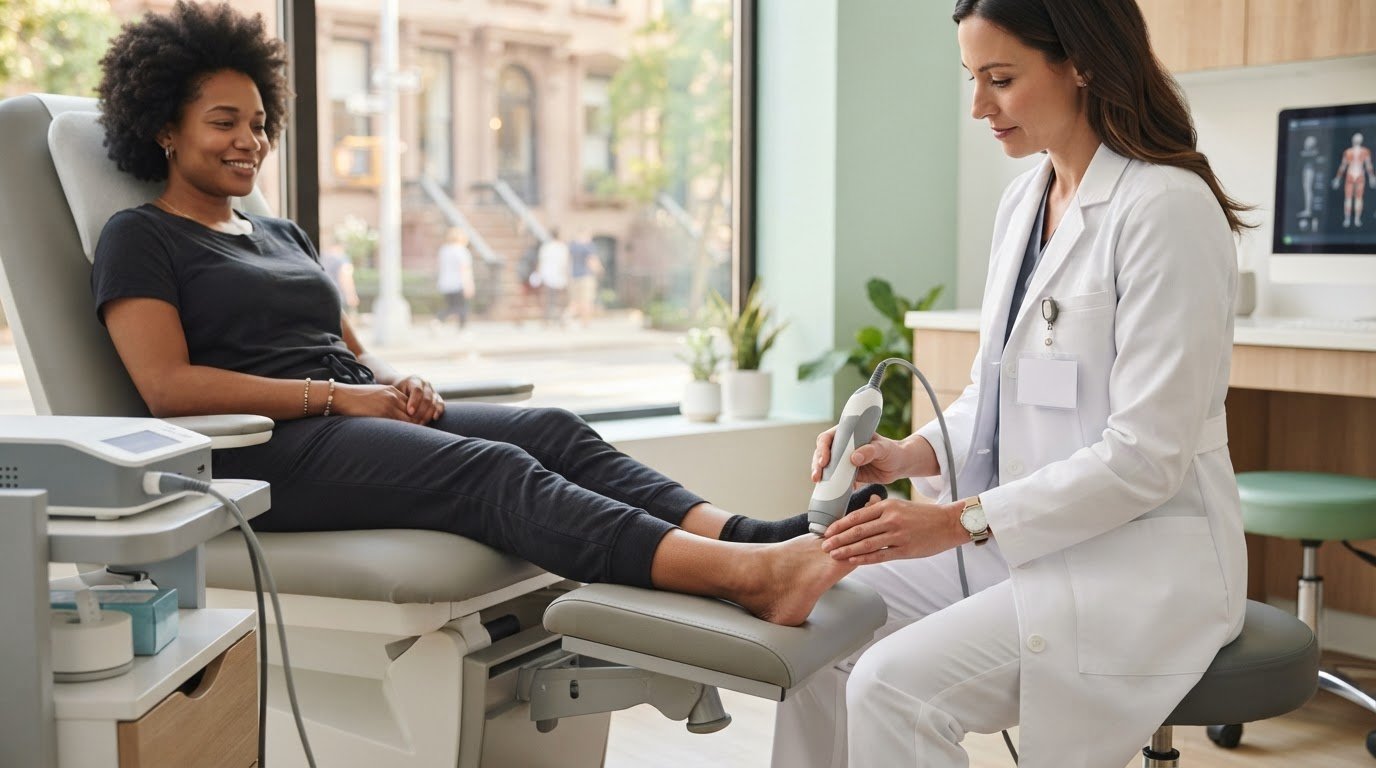

Did you know that approximately 12% of people living with Charcot neuroarthropathy will eventually require an amputation? For many of our neighbors, what begins as a simple “swollen foot” can quickly spiral into a frightening loss of stability that makes navigating the NYC transit system or walking to the corner store feel impossible. If you’re searching for a Charcot foot surgery specialist Brooklyn, you’re likely feeling anxious about your future mobility. We understand that fear, and we’re here to tell you that a diagnosis doesn’t have to mean the end of your independence.
The good news is that specialized care can change your trajectory. We’ll show you how modern limb-salvage techniques are designed to stabilize your foot’s structure and prevent permanent limb loss. We’re committed to helping you achieve a stable, ulcer-free foot so you can return to the Brooklyn streets you know so well. This article previews the latest 2026 surgical advancements, including innovative fixation devices, new skin substitute protocols, and multidisciplinary care models that help patients regain their stride and walk safely again.
Key Takeaways
- Learn to identify the subtle signs of Charcot neuroarthropathy before joint collapse occurs, making early limb-salvage intervention possible.
- Understand why a Charcot foot surgery specialist Brooklyn is essential for complex reconstruction when traditional diabetic foot care no longer provides stability.
- Discover the differences between internal and external fixation techniques used to realign and fuse the foot’s structure for a safer stride.
- Get a realistic look at the 2026 recovery timeline, including the crucial non-weight-bearing phase required to ensure long-term healing.
- See how local expertise from Dr. Waldemar Majdanski and our team helps you navigate the specific challenges of living and healing in our NYC neighborhoods.
What is Charcot Neuroarthropathy? Why a Brooklyn Specialist is Essential
Charcot foot isn’t just a simple injury; it’s a serious medical emergency that often hides in plain sight. Scientifically known as Charcot Neuroarthropathy, this condition causes the bones in your foot to soften and weaken. Over time, the joints begin to collapse, leading to severe deformities that can make walking impossible. Because it develops slowly, many patients don’t realize their foot’s architecture is failing until the damage is extensive. The bones literally crumble under the weight of your own body, making early detection the most critical factor in saving your limb.
The Link Between Diabetes and Charcot Foot
High blood sugar levels over many years can damage the small blood vessels that nourish your nerves and bones. This leads to a loss of sensation, or neuropathy, where you can’t feel pain, heat, or pressure in your feet. Neuropathic arthropathy is a progressive degenerative condition where sensory loss allows repetitive trauma to destroy joints and bones without the patient feeling a single pang of pain. Without that early warning system, you might continue walking on a fractured bone, accelerating the collapse. This is why consistent diabetic foot care Brooklyn is your first line of defense. Catching the heat and swelling of the acute stage can save you from a permanent rocker-bottom deformity.
Why General Podiatry May Not Be Enough
While many clinics offer basic check-ups, managing a collapsing foot requires the specific skills of a Charcot foot surgery specialist Brooklyn. Standard care often focuses on surface-level issues, but Charcot reconstruction involves complex bone realignment and stabilization. At Local Foot Doc, we use advanced imaging like high-resolution MRI and CT scans to map out the internal damage before it’s visible to the naked eye. Dr. Waldemar Majdanski brings decades of board-certified surgical experience to these cases, focusing on limb salvage when others might see no hope. Finding a dedicated Charcot foot surgery specialist Brooklyn ensures that you have access to the specialized hardware and surgical planning necessary to save your limb.
Choosing a local provider isn’t just about convenience; it’s about survival for your mobility. Treatment often requires frequent casting, specialized imaging, and weekly monitoring to ensure the bones are healing correctly. Being able to access your specialist right here in Brooklyn means you don’t have to navigate a grueling commute while your foot is at its most vulnerable. We are here to provide that steady, expert hand throughout every step of your recovery process.
When is it Time for Charcot Foot Surgery?
Deciding when to move from conservative management to surgical intervention is one of the most critical choices you’ll make for your long-term health. Initially, many patients are treated with total contact casting or CROW boots to keep weight off the foot during the acute phase. This is the period when the foot is hot, red, and swollen. If the bones continue to shift despite these efforts, you enter the chronic stage where permanent deformity sets in. At this point, the question isn’t just about comfort; it’s about whether your foot can remain a functional part of your body. As a leading Charcot foot surgery specialist Brooklyn, we help you determine if your foot has become too unstable for braces to handle.
We often hear patients ask if surgery is truly safer than living with the deformity. It’s a valid concern. However, a rocker-bottom foot creates high-pressure points that almost inevitably lead to skin breakdown and ulcers. These open wounds are gateways for bone infections. For those seeking a comprehensive overview of Charcot foot, the National Institutes of Health provides detailed data on how these stages progress from simple inflammation to total bone destruction. In this context, surgery is a limb salvage mission. It’s a proactive step taken to prevent the future need for an amputation.
The Surgical Necessity Checklist
- Joint Instability: Your foot “gives way” or feels like it’s shifting, even when you’re wearing prescribed therapeutic shoes or braces.
- Rocker-Bottom Ulcers: You’ve developed sores on the bottom of your foot that won’t heal because a collapsed bone is pressing directly against the ground.
- Severe Malalignment: The foot has twisted or flattened to a degree where you can no longer fit into standard or even custom-molded footwear.
The Risks of Delaying Surgical Intervention
Waiting too long can turn a manageable reconstruction into an impossible task. What starts as a small fracture can quickly progress to total midfoot collapse if you continue to walk on it. This delay significantly increases your risk of developing osteomyelitis, a dangerous bone marrow infection that often necessitates more drastic measures. If you’re noticing your foot shape changing despite wearing your prescribed boot, it’s time to consult with a specialist to discuss your options. A Charcot foot surgery specialist Brooklyn can evaluate the structural integrity of your foot and intervene before the damage becomes irreversible. Our goal is always to act while reconstruction is still a viable path to keeping you on your feet and active in your community.

Advanced Surgical Techniques for Charcot Reconstruction
We approach Charcot reconstruction as a precision mission to rebuild your foot’s foundation from the inside out. When you consult a Charcot foot surgery specialist Brooklyn, you’re looking for solutions that go beyond temporary fixes. Our goal is to create a stable, functional limb that can support your weight and withstand the demands of daily life in New York City. We utilize a variety of advanced methods to achieve this, ranging from internal hardware to external stabilization frames. Each technique is chosen to address the specific way your foot’s architecture has shifted.
Internal fixation is a common approach where we use specialized plates and screws to fuse collapsed joints back into a healthy position. These aren’t standard surgical screws. They’re engineered from high-grade, durable materials designed to handle the specific challenges of diabetic bone. For patients with less severe deformities but painful bony protrusions, we may perform an exostectomy. This procedure involves carefully removing the “bumps” that cause pressure, which effectively prevents the development of chronic skin ulcers. By smoothing the bone, we remove the source of friction before it becomes a dangerous wound.
Internal vs. External Fixation: Which is Right for You?
Choosing between internal and external fixation depends largely on your bone quality and the complexity of your deformity. Dr. Majdanski evaluates each case individually to determine the safest path forward. Internal fixation typically offers a more streamlined recovery, as there’s no hardware outside the skin. However, external fixation, which involves a circular metal frame, is often the gold standard for complex realignments. While the frame requires more intensive daily care, it allows us to correct severe deformities that internal plates simply can’t reach. Both methods aim for the same result: a foot that can once again carry you through your neighborhood safely.
Achieving a Plantigrade Foot
The ultimate success of any reconstruction is measured by achieving a plantigrade foot. This clinical term simply means a foot that can rest flat on the floor. When your foot is plantigrade, weight is distributed evenly across the sole rather than being concentrated on a single, collapsing joint. A stable foot is the best defense against recurrence. Once we’ve established this solid base, we can transition you into custom orthotics. These specialized inserts provide the long-term support needed to maintain your new alignment and keep you walking comfortably for years to come. Our focus is always on your return to activity and the long-term health of your limb.
Recovery in Brooklyn: Navigating the City Post-Surgery
Recovering from a complex reconstruction requires more than just patience; it requires a strategy tailored to the reality of New York City living. While generic medical advice often suggests simple “rest and elevation,” we know that our patients face unique hurdles. Navigating a fourth-floor walk-up or managing a small apartment layout adds layers of difficulty to the healing process. As your Charcot foot surgery specialist Brooklyn, we partner with you to create a recovery plan that accounts for these urban challenges. You can expect a realistic timeline of 8 to 12 weeks where you must remain strictly non-weight-bearing to allow the new bone fusions to solidify.
The transition from a surgical cast to a walking boot is a major milestone, but it must be handled with extreme care. During this period, we closely monitor your progress through frequent follow-up appointments. We often recommend that our patients apply for Access-A-Ride services well in advance of their surgery date to ensure reliable transportation to our clinics without the need to navigate subway stairs. If you live alone, we can help you coordinate with home health aides who understand the specific needs of post-surgical diabetic patients. This collaborative approach ensures that your recovery is as smooth as possible.
The Importance of Strict Non-Weight Bearing
We cannot overstate this: even a single step on your operated foot can ruin the delicate surgical reconstruction. The specialized plates and screws we use need a stable environment to bond with your bone. To stay mobile in a typical Brooklyn apartment, we suggest using tools like knee scooters or seated walkers rather than traditional crutches, which can be cumbersome in tight hallways. Preparing your home by moving essentials to the ground floor or setting up a “recovery station” helps you manage daily tasks without putting any pressure on your healing limb. Consistency during these first three months is the key to your future independence.
Long-term Foot Protection
Once you’ve regained the ability to walk, the focus shifts to protecting your investment. Charcot patients must commit to wearing protective footwear or custom-molded shoes for the rest of their lives. We also integrate principles of sports medicine to help you safely rebuild your balance and leg strength after months of inactivity. It’s equally vital to monitor your “other foot” daily. Because the underlying neuropathy remains, the non-operated foot often takes on extra weight, increasing the risk of bilateral Charcot issues. If you’re ready to start your journey toward a stable, pain-free future, schedule a consultation with our team today. We are dedicated to keeping you moving safely through every borough.
Why Local Foot Doc is Brooklyn’s Choice for Charcot Care
Choosing the right surgical partner is the most important decision you’ll make on your journey to recovery. At Local Foot Doc, we combine high-level clinical expertise with the personal touch of a neighborhood practitioner. Dr. Waldemar Majdanski brings over 20 years of surgical experience to our community, having spent decades saving limbs and restoring mobility for patients across New York City. As a dedicated Charcot foot surgery specialist Brooklyn, we’ve built our practice around the specific needs of our neighbors. We don’t just treat a condition; we care for the person living with it.
Accessibility is a cornerstone of our care model. We maintain multiple convenient locations across Brooklyn and Queens, ensuring that you don’t have to travel far for the frequent monitoring and specialized imaging required for Charcot reconstruction. Our community-first approach means we’re always here to answer your questions and provide the reassurance you need during a stressful time. We believe that professional medical care should be reliable, approachable, and deeply rooted in the local districts we serve.
Personalized Treatment Plans
We recognize that Charcot neuroarthropathy doesn’t exist in a vacuum. Effective treatment requires a collaborative effort, which is why we work closely with your primary care physician and endocrinologist to manage your overall health. This partnership ensures that your blood sugar levels and vascular health are optimized for the best possible surgical outcome. We prioritize patient education because we’ve seen how understanding the “why” behind a procedure can significantly reduce anxiety. When you choose us, you’ll see the same surgeon from your initial consultation through your final recovery milestone. This continuity of care builds trust and ensures that every detail of your healing process is managed with precision.
Take the Next Step Toward Stability
Your mobility is more than just a medical goal; it’s your independence. Whether you want to walk to your favorite local deli or simply navigate your home without fear, we’re here to help you regain your stride. Charcot foot is a progressive condition, and waiting to seek help only increases the complexity of the eventual reconstruction. By acting now, you can avoid the most severe complications and keep your feet firmly on the ground. We invite you to join our family of patients who have successfully reclaimed their active Brooklyn lifestyles through expert intervention and compassionate care.
Don’t let the fear of a diagnosis keep you from the treatment you deserve. Our team is ready to provide a comprehensive evaluation and discuss the limb-salvage options that are right for your specific situation. Schedule your Charcot foot evaluation at Local Foot Doc today. We look forward to being your partners in health and helping you walk safely into the future.
Your Path to Lasting Stability and Mobility
Your journey back to a stable, active lifestyle doesn’t have to be a path you walk alone. Modern medical advancements and early intervention can stop the progression of bone collapse and preserve your quality of life. By choosing a dedicated Charcot foot surgery specialist Brooklyn, you’re opting for a partner who understands both the clinical complexity of limb salvage and the practical realities of NYC living. Our focus is to move you from the anxiety of a “swollen foot” toward the safety of a plantigrade, functional limb.
Local Foot Doc brings together board-certified surgical expertise and over 20 years of New York clinical experience to provide a specialized focus on diabetic limb salvage. We’re here to help you navigate the recovery process so you can return to the Brooklyn neighborhoods you love. Don’t wait for a small fracture to become a life-altering deformity. Book a Consultation with Brooklyn’s Charcot Specialist today to secure your mobility for 2026 and beyond. We’re ready to help you take that first step toward a stronger, more stable future.
Frequently Asked Questions
Is Charcot foot surgery painful during recovery?
Most patients with Charcot foot already have significant neuropathy, which means they often feel less pain during recovery than those undergoing other foot surgeries. However, we proactively manage any surgical site discomfort with a personalized pain management plan. We focus on keeping you comfortable so you can concentrate on the strict rest required for successful bone fusion. Our team monitors your healing closely to ensure any sensations you do feel are addressed promptly and effectively.
Can I walk again after Charcot foot reconstruction?
The primary goal of reconstruction is to restore a plantigrade foot that allows you to walk safely and independently again. While you won’t be back on your feet immediately, most patients successfully return to walking after the initial non-weight-bearing phase. We’ll transition you into custom orthotics or therapeutic shoes to provide the ongoing support your rebuilt foot needs to navigate Brooklyn streets. Regaining your independence is our ultimate objective for every surgical plan we create.
What is the success rate of Charcot foot surgery for diabetics?
Surgical success in limb salvage is high when patients follow post-operative protocols, particularly regarding weight-bearing. While individual health factors like blood sugar control and circulation influence healing, our specialized techniques are designed to stabilize the foot and prevent amputation. Seeing a Charcot foot surgery specialist Brooklyn ensures your procedure is handled with the precision necessary for the diabetic population. We prioritize stabilization to give you the best possible long-term outcome.
How long do I have to stay off my foot after surgery?
You should expect to be strictly non-weight-bearing for approximately 8 to 12 weeks. This period is essential because the bones and internal hardware need a completely stable environment to fuse correctly. We’ll guide you through this phase with tools like knee scooters to help you maintain mobility in your home without putting any pressure on the surgical site. This commitment to rest during the first few months is what makes a successful return to walking possible.
Will I need to wear a special boot forever?
You likely won’t need a heavy walking boot forever, but you will need to wear specialized or protective footwear for the rest of your life. Charcot neuroarthropathy permanently changes the structural integrity of your foot. Wearing custom orthotics or extra-depth shoes helps distribute weight evenly and prevents the recurrence of deformities or the development of new pressure-related ulcers. These protective measures are a small trade-off for the ability to remain mobile and active in your community.
Is Charcot foot surgery covered by insurance in New York?
Most major insurance providers in New York cover Charcot foot surgery because it’s a medically necessary procedure to prevent amputation and infection. Coverage details can vary between plans, so we recommend checking with your specific provider regarding deductibles and co-pays. Our office team can assist you in verifying your benefits and understanding the clinical requirements for authorization. We want to ensure that the financial aspects of your care are as transparent as possible.
Can Charcot foot return after a successful surgery?
While the surgically fused joints are stable, Charcot can potentially affect other joints in the same foot or even the opposite foot. This is why lifelong diabetic foot care is vital to your health. We monitor your feet regularly to catch early signs of heat or swelling; this ensures that any new developments are managed before they lead to another collapse. Staying vigilant and maintaining regular check-ups with a Charcot foot surgery specialist Brooklyn is your best defense against future issues.
How do I know if my foot swelling is Charcot or just an infection?
Distinguishing between the red, hot swelling of acute Charcot and a soft-tissue infection is challenging even for medical professionals. Charcot often lacks the open wound or fever typically seen with infections, but both are emergencies for diabetic patients. We use advanced imaging and temperature checks to provide an accurate diagnosis and start the correct treatment immediately. If you notice sudden swelling or heat, it’s critical to seek a professional evaluation right away to protect your mobility.