
Watching your child run across the hard pavement of a Brooklyn playground, you might notice their feet look completely flat against the ground. It is a common sight that leaves many parents wondering when to worry about a child’s flat feet NYC style, especially when walking miles of concrete every day. We understand the anxiety that comes with conflicting advice from neighbors and the worry over whether custom orthotics are a medical necessity or an avoidable expense. You aren’t alone in wanting the best for your child’s future mobility.
We are here to help you distinguish between normal developmental milestones and genuine structural issues with our expert guide on pediatric foot health. You’ll gain a clear checklist of red flag symptoms, understand the difference between normal growth and medical conditions, and know exactly when it’s time to book a professional evaluation at one of our local offices in Forest Hills, Astoria, or Woodhaven. Our goal is to provide the clarity you need to ensure your child stays active, confident, and pain-free as they grow.
Key Takeaways
- Understand the developmental timeline of arches to help you decide when to worry about a child’s flat feet NYC versus when it’s a normal growth phase.
- Learn how to perform the “Big Toe Test” at home to distinguish between flexible arches and rigid structural conditions.
- Identify subtle behavioral red flags, like a child avoiding the playground or complaining of leg fatigue after walking a few city blocks.
- Discover why the “concrete jungle” environment of New York puts additional strain on flat feet and how to mitigate the impact of hard surfaces.
- Get an overview of conservative treatment paths available at our Queens and Brooklyn offices, including gait analysis and custom orthotic casting.
Understanding Pediatric Flat Feet: What’s Normal for NYC Kids?
Pediatric flat feet, clinically known as pes planus, often looks more alarming to a parent than it feels to a child. In its simplest terms, it is a condition where the entire sole of the foot touches the floor when standing. When you are trying to determine when to worry about a child’s flat feet NYC parents should remember that nearly all babies are born with what appears to be a flat foot. This is entirely normal. Their skeletal structure is still mostly soft cartilage, and a thick layer of fat, known as the infant fat pad, sits right where the arch will eventually be. This pad protects the foot as they take those first wobbly steps across your apartment floor.
We often see parents in our Forest Hills and Astoria offices who are concerned because their three-year-old doesn’t have a visible arch. However, the arch is a dynamic structure that develops gradually. While the fat pad begins to disappear around age two, the muscles and ligaments that support the arch take longer to strengthen. Most children will not show a permanent, well-defined arch until they are between six and seven years old. We view this period as a vital window for observation rather than immediate intervention.
The Anatomy of a Developing Arch
The transition from a toddler’s soft foot to a stable adult foot is a complex process. As your child begins to navigate the uneven sidewalks of Brooklyn or the long hallways of their school, their tendons and ligaments begin to tighten. This tension pulls the bones into the curved shape we recognize as an arch. During this phase, the midfoot bones are still ossifying, or turning from cartilage into bone. Walking on NYC’s unforgiving hard surfaces can actually influence this development. While concrete doesn’t provide the natural “give” of grass or sand, it forces the foot’s supporting structures to work harder. We monitor this closely to ensure the foot is adapting correctly rather than collapsing under the stress of the city environment.
When ‘Flat’ is Just a Growth Milestone
It is helpful to know that approximately 70% of children between the ages of three and six appear flat-footed. This is usually a Flat feet developmental phase rather than a medical emergency. We encourage parents to track changes over time. If the foot looks flat while standing but an arch appears when your child sits down or stands on their tiptoes, they likely have flexible flat feet. This is a normal milestone. We don’t want you to panic at age two; instead, we look for a steady progression toward a more defined shape as they approach elementary school. Understanding this timeline is the first step in knowing when to worry about a child’s flat feet NYC and when to simply let nature take its course.
Flexible vs. Rigid Flat Feet: The ‘Big Toe Test’ and Key Differences
Distinguishing between a normal developmental phase and a clinical issue starts with one key question: Is the foot flexible or rigid? This distinction is the most important factor when determining when to worry about a child’s flat feet NYC. Flexible flat feet are quite common in young children. You’ll notice that while the foot looks flat as your child stands on the kitchen floor, an arch magically appears as soon as they sit down or stand on their tiptoes. In these cases, the tendons and ligaments are simply supple, and the arch usually develops as the child grows stronger.
Rigid flat feet are a different matter entirely. In a rigid foot, the arch is absent regardless of whether the child is standing, sitting, or hanging their feet off the edge of an exam table. This lack of flexibility often indicates that the bones of the foot aren’t moving as they should. While flexible feet are often painless, rigid feet are frequently associated with the symptoms of flat feet that cause daily discomfort, such as cramping or a refusal to participate in sports. If you suspect your child has a rigid foot structure, it is time to seek a professional opinion.
How to Perform the Big Toe Test at Home
You can perform a simple assessment at home called the Hubscher Maneuver, or the Big Toe Test. It only takes a moment and provides valuable information for your next visit to our Brooklyn podiatry office. Follow these steps:
- Have your child stand barefoot on a flat, hard surface with their weight evenly distributed.
- While they are standing, gently lift their big toe upward toward the shin.
- Observe the inner side of the foot. Does a visible arch “pop up” or curve away from the floor?
If an arch appears when you lift the toe, the foot is flexible. If the foot remains stubbornly flat against the ground despite the toe being lifted, it suggests a rigid structure. While this test isn’t a replacement for a clinical diagnosis, it’s an excellent starting point for parents monitoring their child’s development.
Recognizing Rigid Flat Feet (The Real Red Flag)
Rigid flat feet often stem from physical obstructions, such as a tarsal coalition. This occurs when two or more bones in the midfoot or hindfoot are fused together, preventing the natural “spring” of the arch. This rigidity can lead to significant pain as your child becomes more active. Because NYC kids spend so much time on hard concrete, these structural issues often manifest as frequent ankle sprains or a visible limp. If the Big Toe Test shows no movement, we recommend scheduling a flat feet treatment consultation to prevent long-term gait complications. Early intervention allows us to use modern diagnostic imaging to see exactly what is happening beneath the surface before pain becomes a daily obstacle.
Red Flags: When Your Child’s Flat Feet Require a Specialist
While we often reassure parents that flat feet are a normal part of development, there is a clear point where observation should turn into action. Knowing when to worry about a child’s flat feet NYC involves looking beyond the shape of the foot and focusing on how your child functions during their daily routine. If your child experiences localized pain in the arch, heel, or ankle, it is a signal that their foot structure is struggling to manage their weight and activity level. We often find that children don’t always use the word “pain,” but they might describe their feet as feeling “heavy” or “sore” after a day of school.
Gait changes are another significant indicator of underlying issues. You might notice your child running with a clumsy or labored stride, or perhaps they trip over their own feet more often than their peers. Inward-rolling ankles, a condition known as overpronation, can cause a chain reaction of discomfort up the legs and into the lower back. Behavioral cues are equally important. If your child usually enjoys the playground but suddenly refuses to walk or asks to be carried frequently, they are likely experiencing physical fatigue that they cannot yet fully articulate. We view these shifts in behavior as legitimate medical concerns that warrant a professional evaluation.
Activity-Based Warning Signs
A family trip to the American Museum of Natural History involves hours of walking on unforgiving marble and stone floors. If your child complains of “tired legs” halfway through the day, it isn’t just whining. This fatigue often stems from the muscles in the foot working overtime to stabilize a collapsed arch. Without proper support, this constant strain can eventually lead to plantar fasciitis, even in younger patients. We also see the impact of flat feet on the sports field. If a child struggles to keep up in gym class or shows a sudden lack of interest in school sports, their foot alignment might be hindering their athletic performance and confidence.
Physical Clues in Shoes and Skin
You can find many answers by simply examining your child’s sneakers and skin. Flip their shoes over and check the soles; excessive wear on the inside edge of the heel or the ball of the foot is a sign of an imbalanced gait. When your child stands barefoot, look at them from behind. If their heels appear to tilt inward toward each other rather than standing vertically, the foot is out of alignment. Finally, check the skin along the inner arch. Persistent redness, swelling, or the development of unusual calluses after a long day of walking are red flags. These physical signs help you identify when to worry about a child’s flat feet NYC and when to visit our specialists in Brooklyn or Queens for a comprehensive gait analysis.

The NYC Environment: How Hard Pavement Impacts Developing Feet
Living in New York City means your child’s feet are essentially urban explorers from their very first steps. The “Concrete Jungle” effect is a real phenomenon that we see daily in our practice. Unlike suburban children who might spend their afternoons running on soft grass or backyard mulch, NYC kids are raised on unforgiving stone, asphalt, and pavement. This environment is a critical factor when assessing when to worry about a child’s flat feet NYC. Developing feet are designed to walk on variable, natural terrain that encourages muscle engagement. Constant contact with hard, flat surfaces prevents the foot from using its natural shock-absorbing capabilities, placing the burden of impact directly on developing joints.
Consider the typical daily commute for a city student. They aren’t just walking from a car to a classroom. They are navigating steep subway stairs, trekking ten blocks to school, and standing on moving trains. These repetitive, high-impact activities place immense stress on immature tendons and ligaments. Over time, this cumulative stress can turn a minor developmental delay into a painful structural issue. We believe that understanding the unique physical demands of our city is the first step in protecting your child’s long-term mobility.
The Biomechanics of Walking on Concrete
When a child with a low arch walks on a hard surface, the foot is forced to over-pronate, or roll inward, to find stability. This isn’t just a foot problem; it affects the alignment of the knees, hips, and lower back. The cumulative effect of thousands of steps on NYC sidewalks acts like an “urban marathon” for a toddler or elementary-aged child. We often apply sports medicine principles to these young patients because their daily activity levels often mirror those of competitive athletes. If the foot structure cannot handle the city’s pace, it’s time for a professional intervention.
Choosing the Right School Shoes for NYC Kids
Because the ground doesn’t provide any “give,” the shoe must do the work. We recommend looking for daily sneakers that feature firm arch support, rigid heel counters to prevent the foot from sliding, and just enough flexibility in the forefoot. Fashion-forward shoes like flat-soled slip-ons or flimsy canvas sneakers can exacerbate flat foot pain by offering zero protection against the concrete. In many cases, custom orthotics are the most effective way to provide the missing “cushion” and support that the urban environment lacks. If you’ve noticed your child’s shoes wearing out unevenly or they seem to struggle with the city’s pace, we invite you to schedule a pediatric foot evaluation at one of our local offices. We’ll help you find the right balance of support to keep them moving comfortably through every borough.
Treatment and Long-Term Health: The Local Foot Doc Approach
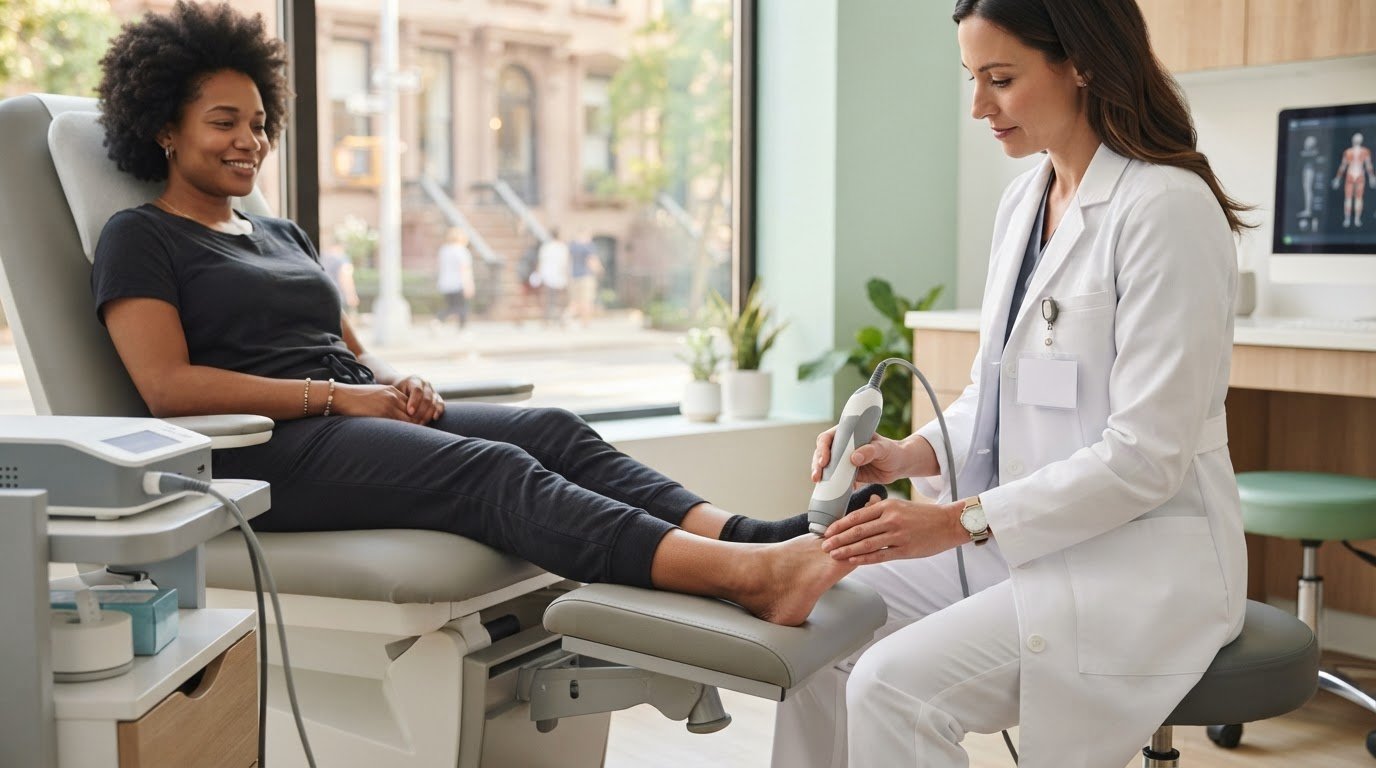
Once you’ve identified the signs of concern, our approach at Local Foot Doc focuses on a thorough, clinical evaluation to determine the best path forward. We start by performing a comprehensive gait analysis at our offices in Forest Hills, Astoria, or Woodhaven. Watching your child walk and run allows us to see exactly how their feet interact with the ground. We pair this with on-site diagnostic imaging to look at the skeletal alignment. This data-driven process takes the guesswork out of knowing when to worry about a child’s flat feet NYC parents often face, providing a clear roadmap for treatment.
Conservative care is always our first priority. We often recommend specific stretching routines to address tight Achilles tendons or physical therapy to strengthen the muscles that support the arch. Activity modification doesn’t mean stopping play; it means finding ways to keep your child moving without causing pain. The most powerful tool in our arsenal for realigning the growing foot is the use of custom orthotics. These aren’t just cushions; they’re medical devices designed to hold the foot in a neutral position, allowing the bones and ligaments to develop correctly as the child matures.
Custom Orthotics vs. Over-the-Counter Inserts
Generic “one size fits all” inserts from a drugstore can’t address the unique structural needs of a developing foot. In fact, an ill-fitting insert can sometimes shift pressure to the wrong areas. Our process involves creating a precise 3D model of your child’s foot through custom casting. This ensures the device provides support exactly where it’s needed. As your child grows, their orthotics will need to be updated, typically every 12 to 18 months or when they jump up a couple of shoe sizes. This ensures the support remains effective throughout their active NYC childhood.
Preventing Future Deformities
Addressing flat feet now is an investment in your child’s adult health. Untreated pediatric flat feet often lead to a lifetime of compensatory movements that contribute to adult hammertoes and the eventual need for bunion surgery. By stabilizing the foot during growth, we reduce the likelihood of these painful deformities. Establishing a healthy foot structure early is also a vital component of long-term diabetic foot health later in life. We’re here to partner with you to restore your child’s independence, ensuring they can navigate every city block with confidence and comfort.
Protecting Your Child’s Mobility in the Concrete Jungle
Navigating the developmental milestones of childhood can be challenging, but understanding when to worry about a child’s flat feet NYC shouldn’t be. While many children grow out of their flat-footed phase, persistent pain, behavioral changes, or a rigid foot structure require professional attention. The hard pavement of our city blocks creates a unique demand on young feet that often requires specialized support to prevent long-term complications like bunions or chronic gait issues. We are dedicated to ensuring your child remains active and pain-free through every stage of their growth.
Dr. Waldemar Majdanski and our board-certified team provide expert care at our convenient locations in Forest Hills, Astoria, and Woodhaven. We utilize specialized pediatric gait analysis and on-site custom orthotic casting to create a tailored path to recovery. Don’t let foot discomfort limit your child’s independence or athletic potential. Schedule a pediatric foot evaluation in Brooklyn or Queens today. We look forward to helping your little New Yorker take their next steps with strength and confidence.
Frequently Asked Questions
Do children eventually outgrow flat feet?
Most children develop a functional arch by the time they are six or seven years old. During toddlerhood, the arch is often hidden by a natural fat pad that provides extra stability for those first steps. We monitor this progression closely because while many outgrow the condition, some children have structural issues that require intervention to ensure healthy mobility as they enter their teenage years.
Can flat feet cause knee or back pain in children?
Flat feet frequently lead to knee, hip, and lower back pain because they cause the ankles to roll inward. This misalignment, known as overpronation, forces the entire leg to rotate internally with every step. For a child navigating the long hallways of a Queens school, this repetitive strain can cause significant discomfort that radiates upward from the feet into the larger joints of the body.
How can I tell if my child’s flat feet are flexible or rigid?
You can identify flexible flat feet if an arch appears when your child sits down or stands on their tiptoes. If the foot remains completely flat against the floor regardless of their position, it is considered a rigid flat foot. Understanding this distinction is a major part of knowing when to worry about a child’s flat feet NYC parents should discuss with a specialist to rule out fused bones.
At what age should I take my child to a podiatrist for flat feet?
We recommend a professional evaluation if your child is over the age of three and experiencing pain or frequent tripping. While arches develop until age six or seven, early symptoms shouldn’t be ignored. If you notice your child avoiding physical activity or complaining of leg fatigue after walking through Astoria Park, a baseline gait analysis can provide peace of mind and a clear plan.
Are custom orthotics necessary for every child with flat feet?
Custom orthotics are only necessary for children who are experiencing pain, fatigue, or structural instability. We don’t prescribe them for asymptomatic flexible flat feet that are following a normal developmental curve. However, for children struggling with the city’s hard pavement, these devices provide the alignment needed to prevent secondary issues like tendonitis or premature wear on their joints as they grow.
Will my child need surgery to correct their flat feet?
Surgery is rarely required for pediatric flat feet and is typically reserved for severe, rigid cases that don’t respond to conservative treatments. Most of our patients find lasting relief through a combination of physical therapy, supportive footwear, and custom orthotics. We prioritize non-invasive solutions that restore your child’s independence and allow them to return to their favorite activities without the need for clinical intervention.
What are the best types of shoes for a child with flat feet in NYC?
The best shoes for NYC kids are high-quality sneakers with a firm heel counter and built-in arch support. You should avoid flimsy slip-ons or shoes that can be easily twisted in the middle. Because our city’s sidewalks offer no shock absorption, a shoe with a structured midsole is essential to protect the foot from the repetitive impact of walking on concrete and climbing subway stairs.
Can flat feet lead to bunions when my child is an adult?
Untreated flat feet are a significant contributing factor to the development of adult bunions. When the arch collapses, it places excessive pressure on the big toe joint, eventually causing the bone to shift out of alignment. This is exactly when to worry about a child’s flat feet NYC specialists emphasize early care, as stabilizing the foot during childhood can prevent the need for invasive surgeries later in life.