
Did you know that nearly 50% of all youth sports injuries are actually caused by simple overuse rather than a single dramatic fall? For a dedicated student-athlete in New York City, balancing a grueling PSAL or CHSAA schedule with daily practices often means pushing through “growing pains” that never seem to fade. You want your child to excel on the court or field, but the constant worry of a season-ending injury or the confusion over whether they need custom orthotics can be overwhelming. Finding a specialized podiatrist for student athletes NYC parents can trust is the first step toward moving from the sidelines back into the game.
We understand the unique pressures of the city’s competitive sports landscape and the anxiety that comes with persistent physical discomfort. Our team is here to show you how expert biomechanical care can transform your child’s athletic journey, preventing injuries before they happen and optimizing every stride for peak performance. We will explore the latest diagnostic tools available in 2026, the real difference between store-bought and custom inserts, and how our local clinics in Brooklyn and Queens make professional care fit into your family’s busy schedule.
Key Takeaways
- Learn to identify early warning signs of common conditions like Sever’s Disease and stress fractures before they lead to a season-ending break.
- Understand the critical difference between retail cushioning and medical-grade custom orthotics for protecting vulnerable growth plates during high-impact play.
- Discover how a specialized podiatrist for student athletes NYC can provide a clear diagnosis for persistent “growing pains” that won’t go away.
- Explore a phased “Return to Play” roadmap that ensures a fast, safe transition from initial injury management back to the turf or court.
- Find out how neighborhood-based care in Brooklyn and Queens helps busy families manage expert medical visits alongside grueling practice schedules.
Navigating the High Stakes of NYC Student Athletics and Foot Health
The competitive nature of New York City youth sports is unlike anywhere else in the country. Whether your child is competing in the PSAL, CHSAA, or high-level club leagues, the physical demands are immense. In this high-pressure environment, a single step can be the difference between a championship win and a season-ending injury. While many families rely on a general practitioner for routine check-ups, these visits often focus on systemic health rather than the intricate mechanics of the lower extremities. Consulting a specialized podiatrist for student athletes NYC ensures that subtle biomechanical risks, such as a slight overpronation or an abnormal gait, are identified before they lead to chronic pain.
Missing a season in NYC isn’t just about losing playing time. For many young competitors, it impacts college recruitment opportunities, academic scholarships, and their overall sense of identity. As the field of sports medicine continues to evolve, the role of the podiatrist has become central to the modern athletic team. We focus on the “why” behind the pain, looking at how the foot interacts with the ground to prevent the repetitive stress that leads to long-term damage. Our goal is to keep your athlete moving with confidence and independence.
The NYC Student-Athlete Lifecycle
The transition from middle school “growth spurts” to the intensity of varsity sports is a critical window for foot health. During these years, growth plates are still closing, making them highly susceptible to inflammation. NYC athletes often maintain a year-round calendar, moving from Fall soccer to Winter basketball and Spring track without a break. We recommend including a podiatric assessment as part of the 2026 Pre-Participation Physical Evaluation (PPE). This proactive step helps us catch issues early, ensuring the athlete’s foundation is strong enough to handle the increased load of high school competition. For families of athletes who compete in international tournaments, it is also beneficial to explore Annual Physical Exams with John Abroon M.D. to manage vaccinations and total wellness alongside specialized foot care.
Why Urban Athletes Face Unique Foot Stress
Living and training in the city adds a layer of “hidden mileage” that most suburban athletes don’t experience. The daily commute on foot between school, the subway, and practice puts constant pressure on the feet before the game even begins. Most NYC sports are played on non-forgiving urban surfaces like concrete tracks, asphalt courts, and synthetic turf laid over hard bases. These surfaces don’t absorb shock; they reflect it back into the foot and ankle. This often results in “NYC turf toe,” shin splints, or persistent heel pain. We see these issues frequently at our clinics in Brooklyn and Queens, where we specialize in neutralizing the toll these hard surfaces take on young joints.
Specialized Podiatric Care for Common Youth Sports Injuries
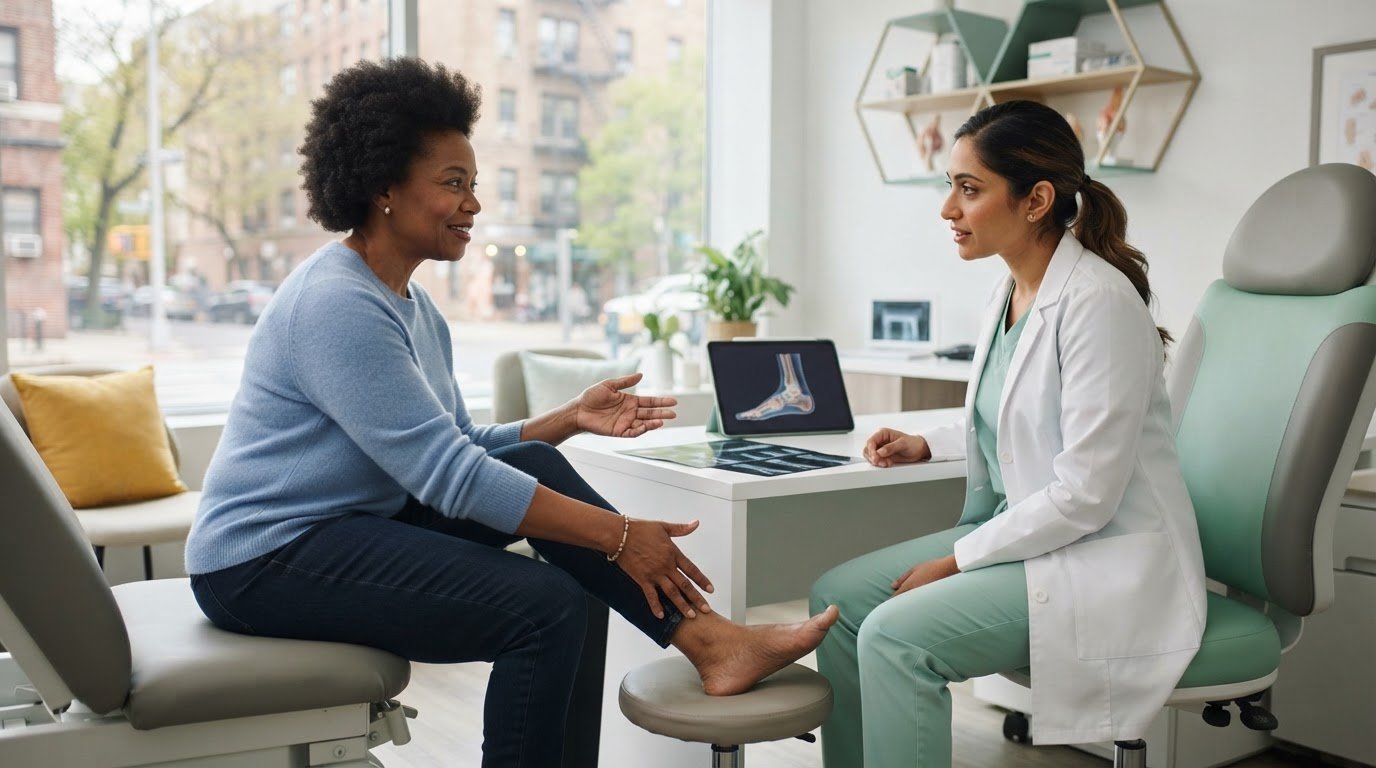
Young competitors aren’t just smaller versions of adult athletes. Their musculoskeletal systems are in a state of constant flux, requiring a specialized approach to healing and injury prevention. When we see a patient as a podiatrist for student athletes NYC, we look beyond the surface of the injury to understand how their developing anatomy plays a role. One of the most frequent complaints we treat is Sever’s Disease, also known as calcaneal apophysitis. This isn’t a disease in the traditional sense; it’s an inflammation of the growth plate in the heel. It’s the primary cause of heel pain in active NYC kids, often triggered by the high-impact nature of basketball or soccer on hard urban courts.
Stress fractures are another serious concern for our local competitors. Unlike a sudden break, these tiny cracks develop over time from repetitive stress on unforgiving surfaces. “Pushing through” this type of pain is a recipe for a season-ending injury that could have been prevented with early intervention. We also focus on breaking the cycle of recurrent ankle sprains. Without proper rehabilitation and biomechanical support, a single sprain can lead to chronic instability, making the athlete prone to future injuries. Even “adult” problems like plantar fasciitis can strike young runners, while locker room risks like ingrown toenails and fungal issues can cause unnecessary discomfort and infection if left untreated.
It’s essential to prevent foot and ankle injuries by recognizing that even minor issues can sideline an athlete. If your child is struggling with persistent pain, we invite you to schedule a consultation at one of our local offices to get a clear path forward.
Adolescent-Specific Pathologies
During peak competition years, growth plates are the weakest link in the musculoskeletal chain. Many parents are told their child has “growing pains,” but this often masks underlying biomechanical issues like untreated pediatric flat feet. Over time, these structural misalignments can cause significant strain on the knees and hips, potentially leading to long-term mobility challenges if they aren’t addressed during the developmental window. We prioritize identifying these issues early to protect your child’s future athletic career.
Advanced Diagnostics for Fast Answers
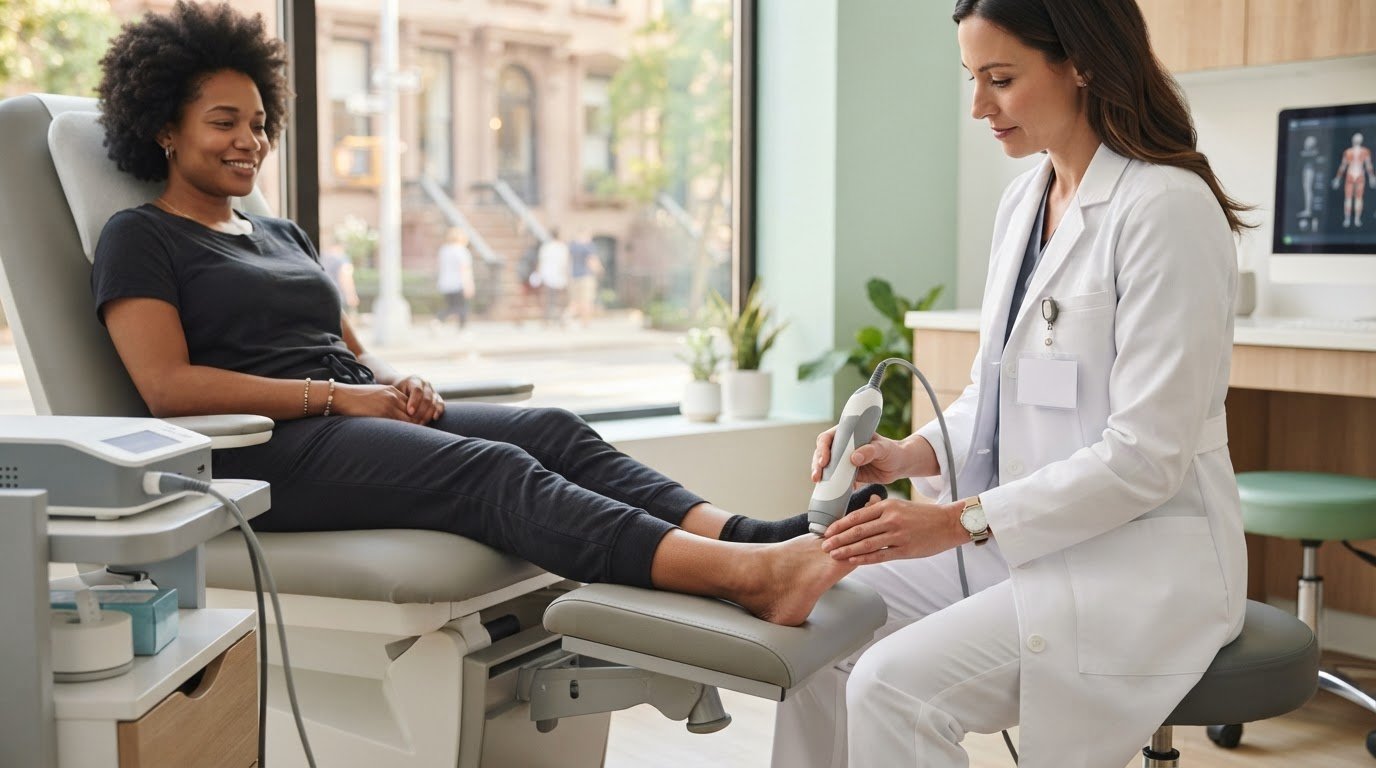
To get your athlete back on the field safely, we utilize on-site digital X-rays at our Forest Hills and Brooklyn locations to rule out fractures immediately. We also use ultrasound to visualize soft tissue damage, such as Achilles tendinitis, which standard X-rays might miss. Precise diagnostic imaging ensures we don’t waste precious season time on trial-and-error treatments, allowing for a focused and effective recovery plan that prioritizes a safe return to competition.
Biomechanical Optimization: Custom Orthotics for NYC Turf and Courts
When a young competitor steps onto a synthetic turf field in Brooklyn or a hardwood court in Queens, their feet absorb forces several times their body weight. For many, this is where “leaks” in athletic power begin. Biomechanical optimization is the process of identifying these inefficiencies and correcting them before they lead to injury. As a specialized podiatrist for student athletes NYC, we don’t just look for existing damage; we analyze how the foot functions during high-speed movement. By aligning the foot correctly, we ensure that every ounce of energy the athlete generates is transferred efficiently into their performance rather than being lost to poor mechanics.
To further support peak physical output, many dedicated athletes and high-performers explore Metabolic Testing as a way to reclaim their full vitality and ensure their internal systems are functioning at their best.
The need for this precision is backed by the epidemiology of youth sports injuries, which highlights the high prevalence of lower extremity issues in developing athletes. Custom orthotics play a vital role in this optimization by redistributing pressure away from vulnerable growth plates. This is particularly important for student-athletes who are still growing. Proper support helps prevent the micro-trauma that eventually leads to the stress fractures and inflammatory conditions discussed earlier. We aim to provide a foundation that allows your child to compete with full independence and zero hesitation.
Custom Orthotics vs. Retail Inserts
There is a common misconception that store-bought “cushioning” is enough for a competitive athlete. Retail inserts are designed for the average foot, but young athletes are rarely average. A “one-size-fits-all” approach can actually worsen alignment issues by providing support in the wrong places. Medical-grade custom orthotics offer “correction” rather than just comfort. We use professional casting and biomechanical mapping to create a device tailored to your child’s specific foot structure. These devices are made from durable, high-grade materials that outlast drugstore foam, providing consistent support throughout a grueling season.
Footwear Strategy for NYC Surfaces
Choosing the right gear is just as important as the support inside it. NYC athletes often move between different environments, each requiring a specific footwear strategy. Synthetic turf fields require specific cleat patterns to prevent the foot from “sticking,” which is a major cause of ankle and knee strain. Similarly, basketball players on hard urban courts need maximum shock absorption to protect their joints from the unforgiving surface. Understanding the Difference between running and walking shoes and sport-specific spikes is essential for any young competitor. Our team provides expert guidance on selecting the right footwear to complement your child’s custom orthotics and their specific sport.

The ‘Return to Play’ Roadmap: Safely Transitioning from Injury to Competition
The most difficult part of any injury isn’t the initial pain; it’s the period spent watching from the sidelines. We understand the urgency student-athletes feel to rejoin their teammates in the PSAL or CHSAA. However, rushing back without a structured plan often leads to a cycle of recurring pain. As a specialized podiatrist for student athletes NYC, we use a clinical roadmap to guide our patients through a safe, predictable recovery. This process ensures that when you return to the court or field, your foundation is stronger than it was before the injury.
Our “Return to Play” protocol is divided into four distinct phases designed to rebuild both physical strength and athletic confidence:
- Phase 1: Acute Management – We focus on reducing inflammation and protecting the injury site. This often involves stabilization and the initial diagnostic imaging we discussed earlier to establish a clear baseline.
- Phase 2: Biomechanical Correction – Once the initial pain subsides, we introduce sports medicine in NYC strategies like custom orthotics or targeted physical therapy to fix the underlying cause of the stress.
- Phase 3: Functional Loading – This is a graduated return to movement. We move from simple weight-bearing exercises to sport-specific drills, such as light jogging or controlled pivoting.
- Phase 4: Full Clearance – The athlete must meet objective clinical benchmarks for game-speed activity before receiving full clearance for competition.
If your child is currently sidelined, don’t leave their recovery to chance. Request an appointment today at our Forest Hills or Brooklyn offices to begin a professional roadmap back to the game.
Preventing the ‘Re-Injury’ Trap
The last 10% of recovery is where most student-athletes fail. When the pain is gone, it’s tempting to skip the final stages of rehabilitation, but this is exactly when the risk of re-injury is highest. We emphasize proprioceptive training, which retrains the nerves and muscles to respond to sudden changes in balance, a critical step for preventing future ankle sprains. It’s vital that an athlete meets objective strength and stability benchmarks before they are permitted to face the high-intensity demands of game day.
Coordinating with Coaches and Trainers
Recovery doesn’t happen in a vacuum. We pride ourselves on being a collaborative partner in the NYC athletic community. Our team frequently communicates with school athletic trainers and coaches to ensure everyone is on the same page regarding an athlete’s limitations and progress. By adjusting practice loads during the recovery window, we can keep the athlete engaged with their team while protecting their healing tissues. This unified approach is what makes Local Foot Doc a trusted institution for families across Queens and Brooklyn.
Why Local Foot Doc is the Choice for NYC Families and Student Athletes
Selecting the right podiatrist for student athletes NYC isn’t just about finding a medical provider; it’s about choosing a partner who understands the specific rhythms of your child’s life. At Local Foot Doc, led by Dr. Waldemar Majdanski, we combine high-level clinical authority with the personal touch of a neighborhood practice. We recognize that for a young competitor in Brooklyn or Queens, foot health is the foundation of their independence and future opportunities. Our philosophy is strictly results-oriented, prioritizing a fast return to activity and a long-term improvement in quality of life.
We offer a comprehensive spectrum of care that bridges the gap between conservative treatments and advanced surgical excellence. Whether your athlete needs precisely mapped custom orthotics to correct a gait issue or requires expert intervention for a broken foot or ankle sprain, our team is equipped to handle the full journey of recovery. We believe in a collaborative atmosphere where parents and athletes are active participants in the healing process. This partnership ensures that every treatment plan is tailored to the unique physical demands of the athlete’s specific sport and lifestyle.
Expert Care in Astoria, Forest Hills, and Beyond
Our commitment to the local athletic community is reflected in our physical presence across the city. With convenient locations in Forest Hills, Astoria, Woodhaven, and Brooklyn, we ensure that expert care is always within reach for busy families. Coordinating medical visits shouldn’t feel like a second job, so we prioritize easy scheduling and transparent insurance coordination. If you’re searching for the Best podiatrist in Forest Hills or a trusted provider in Astoria, our doors are open to help your athlete regain their competitive edge. We take pride in being a reliable institution that NYC families can count on year after year.
Ready for the Next Season?
The best time to address potential biomechanical issues is before the first whistle blows. A pre-season assessment allows us to identify risks and fit custom orthotics before a small ache becomes a season-ending injury. When you come for your first sports podiatry appointment, please bring the footwear your child uses most often, such as basketball court shoes or soccer cleats. This allows us to see how their feet interact with their gear in real-world conditions. We’re ready to help your child achieve their peak performance on and off the field. Schedule your athlete’s consultation at Local Foot Doc today and take the first step toward a stronger, pain-free season.
Building a Stronger Foundation for Every Season
Navigating the intense landscape of NYC youth sports requires more than just talent and grit. It demands a proactive approach to foot health that accounts for the unique stresses of urban surfaces and the complexities of growing anatomy. We’ve explored how specialized care can turn persistent “growing pains” into a clear path for recovery and how custom orthotics provide the necessary correction to protect vulnerable growth plates. By following a structured “Return to Play” roadmap, your child can move from the sidelines back to the game with full confidence and independence. Success on the field starts with a foundation that’s built to last.
At Local Foot Doc, we bring the board-certified surgical expertise of Dr. Waldemar Majdanski and over 20 years of NYC clinical experience directly to your neighborhood. With multiple locations throughout Brooklyn and Queens, we make it easy to prioritize your child’s mobility alongside their academic and athletic commitments. Choosing the right podiatrist for student athletes NYC means ensuring your competitor has the professional support they need to excel on the turf, court, or track. We’re proud to be a trusted part of your local athletic community.
Schedule a Sports Podiatry Consultation for Your Athlete today. We’re ready to help your student-athlete reach their full potential and enjoy a healthy, active future.
Frequently Asked Questions
Is it normal for my student-athlete to have heel pain after every practice?
Persistent heel pain is never a normal part of athletic development. While mild muscle soreness is expected after intense activity, pain that occurs after every practice often indicates an underlying issue like Sever’s Disease or significant biomechanical strain. Ignoring these signs can lead to chronic inflammation or compensatory injuries. We recommend a professional evaluation to identify the cause and prevent a minor ache from becoming a season-ending problem for your child.
Can a podiatrist help my child jump higher or run faster?
Yes, podiatric care can indirectly improve performance by optimizing your child’s biomechanics. When the foot and ankle are properly aligned, energy transfer becomes more efficient, reducing power leaks during explosive movements like jumping or sprinting. By addressing structural inefficiencies with custom orthotics or gait correction, we help athletes move with greater precision and less wasted effort. This often translates to improved speed and verticality on the court or field.
How do I know if my child needs custom orthotics or just better sneakers?
Determining the need for custom orthotics requires a professional gait analysis and structural assessment. While high-quality sneakers provide essential cushioning and surface-specific traction, they cannot correct underlying alignment issues like overpronation or pediatric flat feet. If your child experiences localized pain, uneven shoe wear, or persistent discomfort despite wearing premium athletic footwear, it is a strong sign that medical-grade correction is necessary to protect their developing growth plates.
What is the most common cause of foot pain in high school basketball players?
High school basketball players in NYC frequently suffer from stress fractures and plantar fasciitis due to the repetitive impact on hard hardwood or asphalt courts. These conditions are often driven by the constant jumping and pivoting required by the sport. As a podiatrist for student athletes NYC, we often find that inadequate arch support or poor shock absorption significantly increases the risk of these overuse injuries during the high-intensity winter season.
Will my child have to stop playing sports during treatment?
Not every treatment plan requires a complete break from competition. We prioritize keeping your athlete active whenever it is clinically safe to do so. Our “Return to Play” roadmap often involves adjusting practice intensity or using protective bracing and orthotics rather than total rest. However, if a serious injury like a stress fracture is detected, a brief period of immobilization may be necessary to ensure the bone heals properly and prevent long-term damage.
Do you work with PSAL and CHSAA insurance or school physical forms?
We regularly work with families to complete the necessary medical documentation for PSAL and CHSAA participation. Our staff is experienced in coordinating with school athletic trainers and providing the clinical clearances required for a safe return to the field. We understand the administrative pressures of the NYC school system and aim to make the insurance and paperwork process as seamless as possible so you can focus entirely on your child’s recovery.
How often should a student-athlete’s foot biomechanics be re-evaluated?
We recommend a biomechanical re-evaluation at least once a year or following any significant growth spurt. As children grow, their bone structure and muscle attachments change, which can shift their gait and the effectiveness of existing orthotics. For highly active student-athletes, an annual pre-season check-up ensures their footwear and support systems are still providing the necessary protection for their evolving anatomy and increased competitive intensity during the school year.
What should I do if my child suffers an acute ankle injury during an away game?
If your child suffers an acute injury, immediately follow the RICE protocol: rest, ice, compression, and elevation. Avoid letting them “walk it off” until a professional can rule out a fracture or high ankle sprain. You should schedule a diagnostic visit with a podiatrist for student athletes NYC as soon as possible. Our locations in Brooklyn and Queens offer on-site digital X-rays to provide fast answers and prevent unnecessary hours spent in a hospital emergency room.