
When nearly 73% of professional ballet dancers face a musculoskeletal injury every single season, finding a foot doctor for dancers in Queens isn’t just a precaution; it’s a career necessity. Whether you’re navigating the intense demands of Forest Hills rehearsals or preparing for a showcase in Astoria, you’ve likely felt that familiar anxiety when a sharp twinge in your arch or a dull ache in your ankle appears. We know the unique pressure artistic athletes face, especially the deep-seated fear that a medical visit will end with a generic instruction to just stop dancing.
We believe your treatment should be as precise as your technique. Our team focuses on a collaborative approach that prioritizes your return to the studio, using specialized sports medicine to address the specific biomechanics of turnout and pointe work. You’ll discover how accurate diagnosis of dance-specific injuries and custom orthotics for your off-stage shoes can optimize your performance and protect your longevity. This guide outlines how we help dancers in our local community prevent long-term damage and return to the stage faster and stronger than before.
Key Takeaways
- Understand why the unique biomechanical stresses of turnout and relevé require a specialized approach to prevent long-term injury.
- Learn to recognize the early warning signs of dance-specific conditions such as “dancer’s tendon” pain and sesamoiditis.
- Discover how a specialized foot doctor for dancers in Queens provides comprehensive evaluations of your technique and footwear to keep you on stage.
- Gain insights into the vital role of pointe readiness assessments and pre-season screenings in ensuring your bones and muscles are prepared for high-impact landings.
- Explore how personalized treatment plans and custom orthotics for off-stage wear help maintain your mobility and professional longevity.
Why Dancers Require a Specialized Foot Doctor in Queens
Dancers are elite athletes who operate under a unique set of physical rules. While a soccer player or a runner relies on their feet for locomotion, a dancer uses them as a primary instrument of expression and a structural foundation for extreme positions. This dual role as both an artist and an athlete means that standard podiatric care often falls short. A general podiatrist might see a foot that functions perfectly for daily walking, but a specialized foot doctor for dancers in Queens looks for the subtle misalignments that cause pain during a triple pirouette or a heavy landing from a grand jeté.
The biomechanical stresses of dance are unlike any other sport. Turnout, which requires external rotation from the hips, often leads to “compensatory” foot positions where the arches collapse to achieve a greater aesthetic line. Relevé puts the entire weight of the body on the delicate metatarsal heads. Without an expert who understands these specific demands, micro-traumas like stress reactions or early-stage tendonitis can be overlooked. We recognize that for a dancer in the competitive New York scene, the “show must go on” mentality is real. Our goal isn’t to simply tell you to stop; it’s to provide the specialized care found in Performing arts medicine to keep you moving safely.
Understanding Dance Biomechanics
When a dancer moves en pointe, the center of gravity shifts entirely, placing immense pressure on the big toe and the top of the foot. This shift changes how the joints in the midfoot interact and can lead to impingement if not managed correctly. We also consider the environment where you train. Many Queens dance studios utilize different flooring surfaces, from traditional sprung wood to modern marley overlays, each of which impacts joint shock absorption differently. To stay safe, dancers must maintain high levels of proprioception. Proprioception is the body’s internal sense of its position in space, which is critical for dancers to maintain balance and prevent ankle sprains during complex choreography.
The Local Foot Doc Approach to Dance Medicine
At our practice, we combine clinical authority with a compassionate, patient-centered atmosphere. We don’t just treat the symptom; we analyze the movement pattern that caused it. Our approach focuses on functional recovery, ensuring that your foot isn’t just “healed” for walking, but strengthened for the studio. We are proud to serve the local Queens dance community with convenient locations in Forest Hills, Astoria, and Woodhaven. By acting as your neighborhood foot doctor for dancers in Queens, we provide the high-level expertise of a sports medicine clinic with the personal touch of a trusted local provider.
Common Dance Injuries Treated at Our Queens Podiatry Offices
Dancers often push through physical discomfort, viewing pain as a byproduct of their craft. However, our team understands that ignoring symptoms can lead to chronic issues that threaten your longevity on stage. We specialize in identifying conditions that are specific to the unique biomechanics of dance. For instance, sesamoiditis is a frequent concern for those who spend significant time in relevé. This condition involves inflammation of the two tiny bones under the big toe joint, which act as pulleys for the tendons. Because dancers constantly load the forefoot, these bones are subject to intense pressure that can lead to debilitating inflammation if not managed by a foot doctor for dancers in Queens.
Another common ailment we treat is Flexor Hallucis Longus (FHL) tendonitis, widely known as “dancer’s tendon.” This tendon is responsible for pointing the big toe and stabilizing the arch. When it becomes overworked through repetitive pointing and jumping, you may feel deep pain in the back of your ankle or along the inside of your arch. According to a guide on Common Dance Injuries and Prevention Tips, early recognition of these symptoms is vital. We also keep a close watch for stress fractures in the metatarsals. These aren’t sudden breaks but tiny cracks caused by repetitive loading. If you notice localized swelling or pain that worsens during jumps, it’s essential to seek a professional evaluation before the bone fails completely.
Overuse vs. Acute Injuries
Managing chronic conditions like plantar fasciitis is a delicate balance. We work with you to create treatment plans that reduce heel pain without requiring you to miss every rehearsal. While overuse injuries develop over time, acute injuries like ankle sprains happen in an instant. A missed landing or a slick floor can overstretch ligaments, requiring immediate care to prevent long-term instability. Consulting a foot doctor for dancers in Queens early ensures that an acute injury doesn’t turn into a permanent weakness in your technique.
Deformities and Structural Issues
Structural issues can be particularly frustrating for artistic athletes. Bunions are often hereditary, but the mechanical stress of forced turnout can accelerate their progression. When conservative treatments like padding or toe spacers no longer provide relief, we offer specialized bunion surgery Queens designed to restore function and aesthetic alignment. We also address hammertoes, which often develop due to the tight-fitting nature of pointe shoes or jazz flats. Whether you’re managing flat feet or exceptionally high arches, we focus on optimizing your balance and power. If you are feeling a new twinge or persistent ache, scheduling a sports medicine consultation with our team can help you identify the root cause before it impacts your performance.
Dance Medicine vs. General Podiatry: What Queens Dancers Should Expect
Many performers believe they must travel into Manhattan to find high-level specialized care. While institutions like the Harkness Center for Dance Injuries provide incredible resources, having a dedicated foot doctor for dancers in Queens offers the convenience of local follow-ups and a provider who knows the specific floor conditions of neighborhood studios. A general podiatrist focuses on how a foot functions during a normal gait, but our evaluation goes much deeper. We examine how your foot behaves under the extreme torque of a pirouette or the repetitive impact of a tap routine.
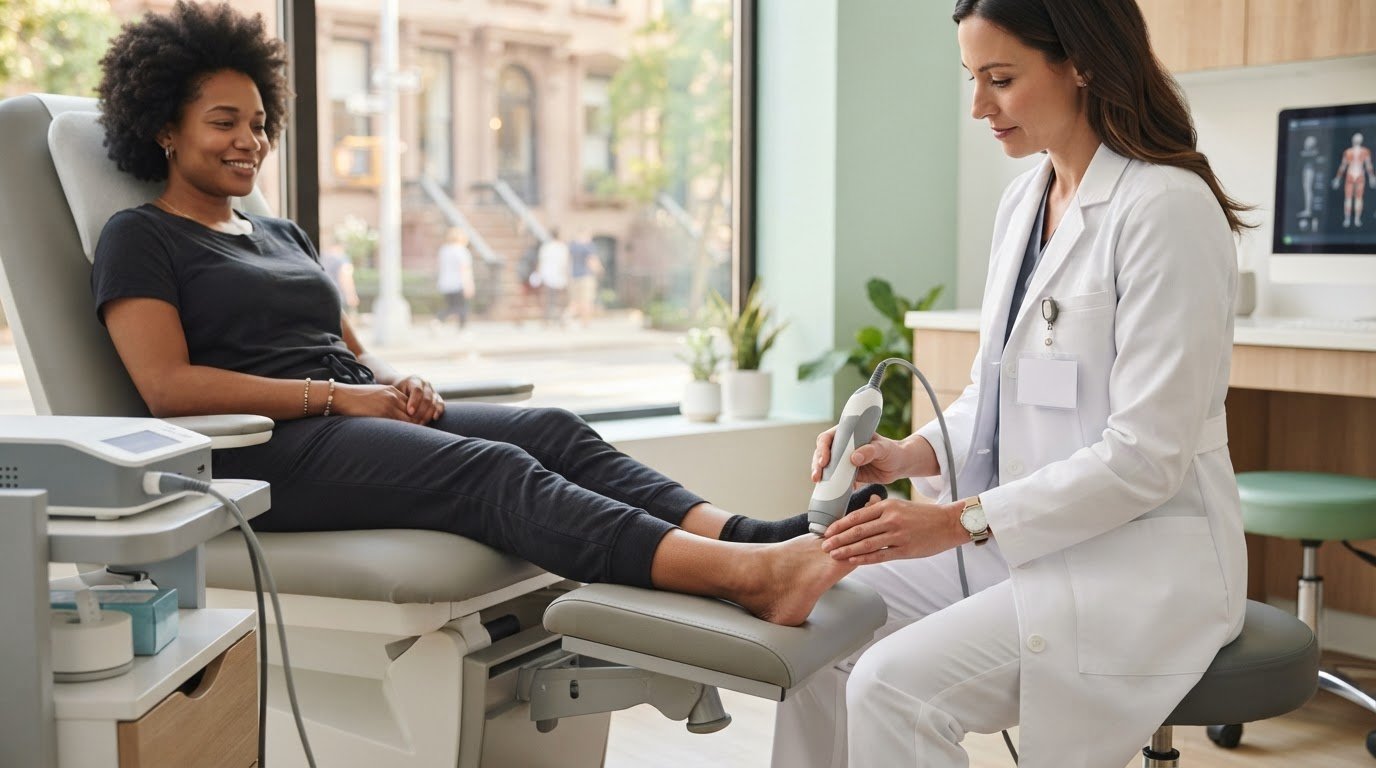
Our assessment begins with your toolkit. We don’t just look at your feet; we inspect your pointe shoes, jazz flats, and even your everyday sneakers for telling wear patterns. If you are “forcing” turnout from the feet rather than the hips, it creates a specific strain on the midfoot that a general practitioner might miss. To get a complete picture, we use diagnostic imaging, including in-office X-rays, to view the foot in dance-specific positions. Seeing the bones under the load of a relevé allows us to identify impingements or misalignments that aren’t visible in a flat-footed stance. Our treatment plans prioritize “active rest,” which involves modified rehearsals and cross-training rather than a total cessation of movement.
The Consultation Experience
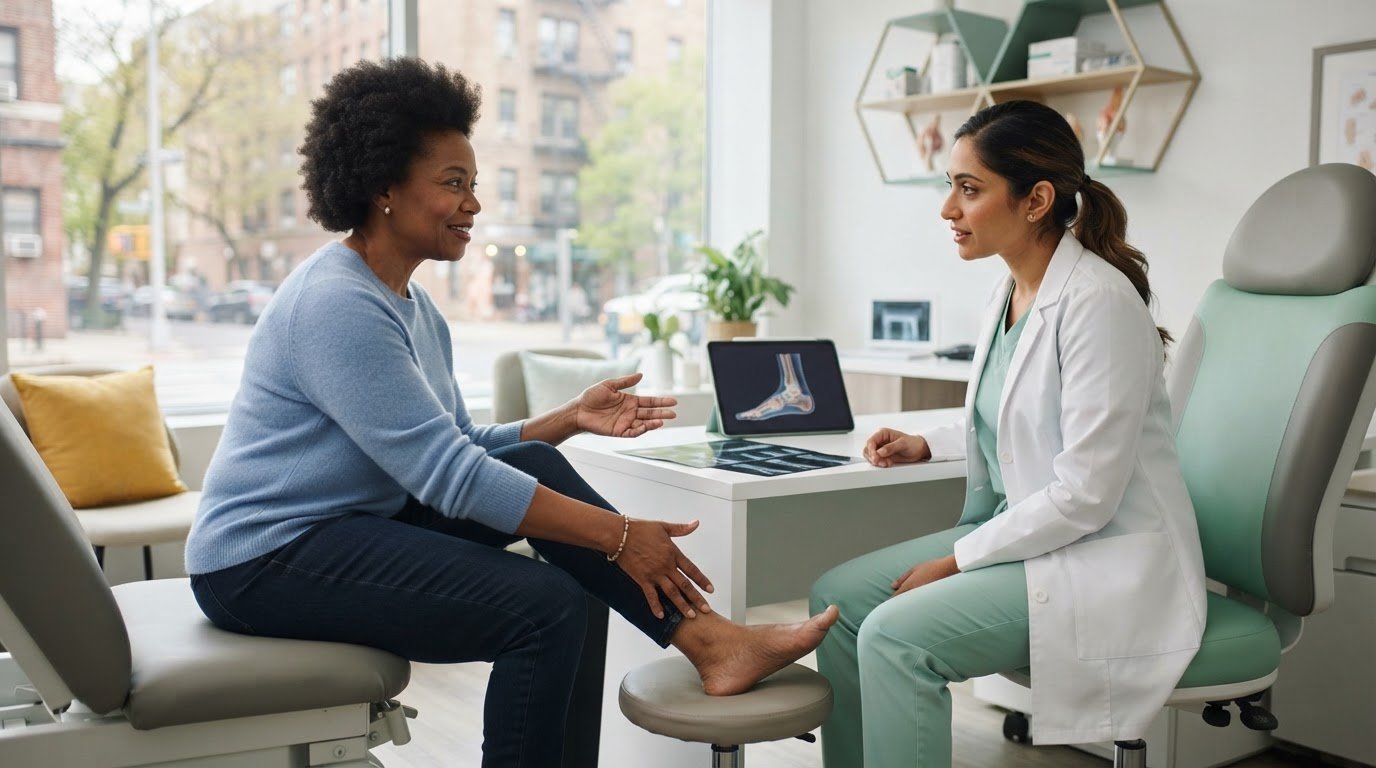
Your first visit is structured like a professional consultation. We ask you to bring your most-used dance shoes and a clear timeline of your discomfort. Dr. Majdanski evaluates your foot’s range of motion based on your specific discipline, as the requirements for a musical theater performer differ vastly from those of a classical ballerina. We discuss your long-term goals to ensure your treatment aligns with your schedule. Whether you are preparing for a year-end recital or managing a professional career, we tailor the pace of your recovery to your needs.
Conservative Care and Custom Orthotics
Support during your “off-hours” is just as important as your time in the studio. We often recommend custom-molded inserts for your street shoes to provide the structural support your arches need to recover between performances. When necessary, we provide referrals to dance-literate physical therapists across New York City who can help refine your technique to prevent re-injury. For immediate needs during a show week, we can teach you specific taping and padding techniques that provide relief without compromising your feel for the floor. Having a foot doctor for dancers in Queens means you have a partner who understands the local performance season and is committed to keeping you on your feet.
Readiness and Recovery: Protecting Your Career and Passion
Prevention is often more effective than treatment when it comes to a dancer’s longevity. While we focus on healing injuries, our ultimate goal as a foot doctor for dancers in Queens is to identify physical vulnerabilities before they lead to a season-ending injury. Pre-season screenings allow us to evaluate your current strength, flexibility, and alignment. By catching a slight imbalance in the arch or a weakness in the ankle early, we can implement corrective exercises that keep you in the studio. We also prioritize education on foot hygiene. Because dance shoes create a warm, damp environment, we provide proactive care for fungal nail treatment and professional ingrown toenail removal to prevent minor irritations from becoming painful infections.
Pointe Readiness and Adolescent Dancers
Young dancers often feel immense pressure to begin pointe work, but starting too early can cause permanent skeletal damage. Our pointe readiness evaluations ensure that a student’s feet are structurally and functionally prepared for the box. We look for specific strength benchmarks, such as the ability to maintain a stable neutral ankle and sufficient intrinsic foot strength. Ossification is the biological process where cartilage is replaced by hard bone; this transition must be sufficiently advanced to support the extreme vertical forces of pointe work. If a dancer isn’t ready, we provide a clear roadmap of strengthening exercises to help them reach that milestone safely.
Longevity for the Professional Performer
Maintaining a professional career requires a shift in how you view recovery. The cumulative effects of years on the stage can lead to joint stiffness or early-onset arthritis in the midfoot. We utilize advanced sports medicine principles to manage these chronic stresses, focusing on maintaining mobility and reducing inflammation. For those returning from a major injury or surgery, we guide a measured return to the barre. This process ensures that you don’t overtax the healing tissues before they’ve regained their full structural integrity. Whether you’re a young student or a seasoned veteran, having a foot doctor for dancers in Queens ensures your treatment plan is built for the long haul.
If you’re preparing for a new season or considering the transition to pointe, we can help you build a foundation for success. Contact our Queens office today to schedule your comprehensive dance readiness evaluation.
Choosing Local Foot Doc for Your Dance Podiatry Needs in Queens
Selecting the right medical partner is a pivotal decision for any performer. We combine the clinical rigor of a high-volume surgical practice with the personalized, compassionate care you expect from a neighborhood institution. While many specialists require a commute across the bridge, our practice serves as a dedicated foot doctor for dancers in Queens, offering world-class expertise in your own backyard. We believe that effective treatment starts with transparency. Our team takes the time to explain the underlying cause of your discomfort and outlines a clear, step-by-step path toward recovery.
Our commitment to the local arts community is reflected in our accessibility. We maintain three convenient locations across the borough to ensure that your rehabilitation doesn’t conflict with your rehearsal schedule. Whether you are coming from a studio in Long Island City or a school in central Queens, our offices provide a professional and welcoming environment. We don’t just treat symptoms; we partner with you to protect your passion and your career. By staying local, you gain the advantage of consistent follow-up care that is essential for complex dance-related pathologies.
Meet Dr. Waldemar Majdanski
Dr. Waldemar Majdanski is a board-certified surgeon with decades of experience in both surgical and non-surgical foot care. His approach is rooted in the belief that every patient is an individual with unique physical demands. For dancers, this means looking beyond the immediate injury to understand how your specific technique and goals influence your healing process. He is deeply invested in the Queens community and takes pride in helping local athletes regain their mobility and independence. By combining modern methodology with traditional interpersonal rapport, Dr. Majdanski ensures you feel understood on a human level while receiving the highest standard of technical care.
Schedule Your Visit
We’ve streamlined our administrative process so you can focus on your recovery. Our team offers easy online booking and efficient insurance verification to get you into the office as quickly as possible. We provide comfortable, professional environments at our locations in Forest Hills, Astoria, and Woodhaven. If you are ready to address chronic pain or want a preventative screening to ensure you’re ready for the next season, we invite you to experience our specialized approach. A dedicated foot doctor for dancers in Queens can make the difference between a lingering injury and a triumphant return to the stage.
Schedule your dance foot consultation at Local Foot Doc and take the first step toward optimized performance and long-term foot health.
Take the Next Step Toward Your Best Performance
Your feet are the foundation of your artistry and your athletic career. We’ve explored how specialized dance medicine differs from general podiatry, focusing on the unique biomechanical demands of turnout, relevé, and high-impact landings. Whether you’re seeking a pointe readiness evaluation for a young student or advanced sports medicine for a chronic injury, our team provides the expert care you need right in your own community. We believe that no dancer should have to choose between their health and their passion.
With 20 years of clinical experience and the expertise of a board-certified podiatric surgeon, we offer a path to recovery that prioritizes your return to the studio. Our convenient locations in Forest Hills, Astoria, and Woodhaven make it easy to access professional care without leaving the borough. Selecting a dedicated foot doctor for dancers in Queens ensures your treatment plan is as precise as your technique. Don’t let persistent pain hold you back from the stage or your professional goals. For performers who also wish to address other aspects of their professional image, such as hair density, you can explore FUE Hair Transplant to learn about advanced restoration options.
Book Your Specialized Dance Podiatry Consultation in Queens today. We are here to help you regain your independence and move with confidence once again.
Frequently Asked Questions
When should a dancer see a podiatrist instead of just icing their foot?
You should consult a professional if your pain persists for more than 48 hours or returns immediately when you resume dancing. While icing helps manage acute inflammation, it doesn’t address underlying biomechanical issues or structural micro-trauma. Seeking help from a foot doctor for dancers in Queens early prevents minor strains from becoming chronic injuries that could sideline you for an entire season.
Can I still dance if I have a bunion or do I need surgery?
Many dancers continue to perform successfully with bunions by using conservative management strategies. We focus on padding, toe spacers, and technique adjustments to alleviate pressure on the joint. Surgery is generally considered a last resort when the deformity causes significant pain or impairs your functional movement. If intervention becomes necessary, we offer precision surgical options designed to restore alignment while preserving your athletic range of motion.
What are the most common causes of arch pain in ballet dancers?
Arch pain in ballet is frequently linked to Flexor Hallucis Longus (FHL) tendonitis or plantar fasciitis. To complement professional treatment, you can visit Clínica Bernáldez Sportme for expert guidance on home remedies for heel discomfort. The repetitive motion of rising to relevé and the pressure of pointe work can overtax the tendons and ligaments that support your arch. Forcing turnout from the feet rather than the hips also places excessive torque on the midfoot joints. We analyze your specific dance mechanics to identify and treat the root cause of this discomfort.
How do custom orthotics help dancers when they aren’t on stage?
Custom orthotics provide essential structural support during the many hours you spend in street shoes. Dancers often have highly mobile feet that need a stable foundation to recover from the stresses of the studio. By wearing tailored inserts in your daily footwear, you allow inflamed tissues to rest in a neutral position. This preventative care is a key reason to visit a foot doctor for dancers in Queens to protect your long-term health.
Is it normal for my toes to be numb after a long rehearsal?
Persistent numbness is not a normal part of training and often indicates nerve compression or restricted blood flow. This sensation can be caused by poorly fitted pointe shoes or a condition called Morton’s neuroma, where the nerve between the toe bones becomes thickened. It’s important to address this early to prevent permanent nerve damage. We can evaluate your footwear and foot structure to ensure your nerves aren’t being compromised during long rehearsals.
How can I tell if my foot pain is a stress fracture or just a bruise?
Stress fractures typically present with localized “point tenderness” and pain that intensifies during impact, such as jumping. While a bruise usually changes color and improves within a few days, the pain from a stress fracture lingers and may cause swelling on the top of the foot. We use in-office diagnostic tools to provide a definitive answer. Catching a stress fracture early allows for a faster, safer return to the barre without risking a complete bone break.
Do you offer dance-specific foot evaluations for students in Queens?
We provide comprehensive pointe readiness assessments and pre-season screenings for adolescent dancers across the borough. These evaluations check for sufficient ankle stability, intrinsic foot strength, and the maturity of the foot bones. Ensuring a student is physically prepared for the demands of advanced training is vital for preventing lifelong deformities. Our team takes pride in supporting the next generation of Queens performers by building a foundation for safe, healthy careers.
How long is the recovery time for common dance-related foot surgeries?
Recovery timelines are highly individual, but most dancers can expect to return to light barre work within 6 to 12 weeks following surgery. We utilize a phased rehabilitation program that gradually reintroduces weight-bearing activities and dance-specific movements. Our goal is to ensure the surgical site is fully stable before you attempt high-impact jumps or return to pointe work. We work closely with you throughout the healing process to ensure a confident return to the stage.