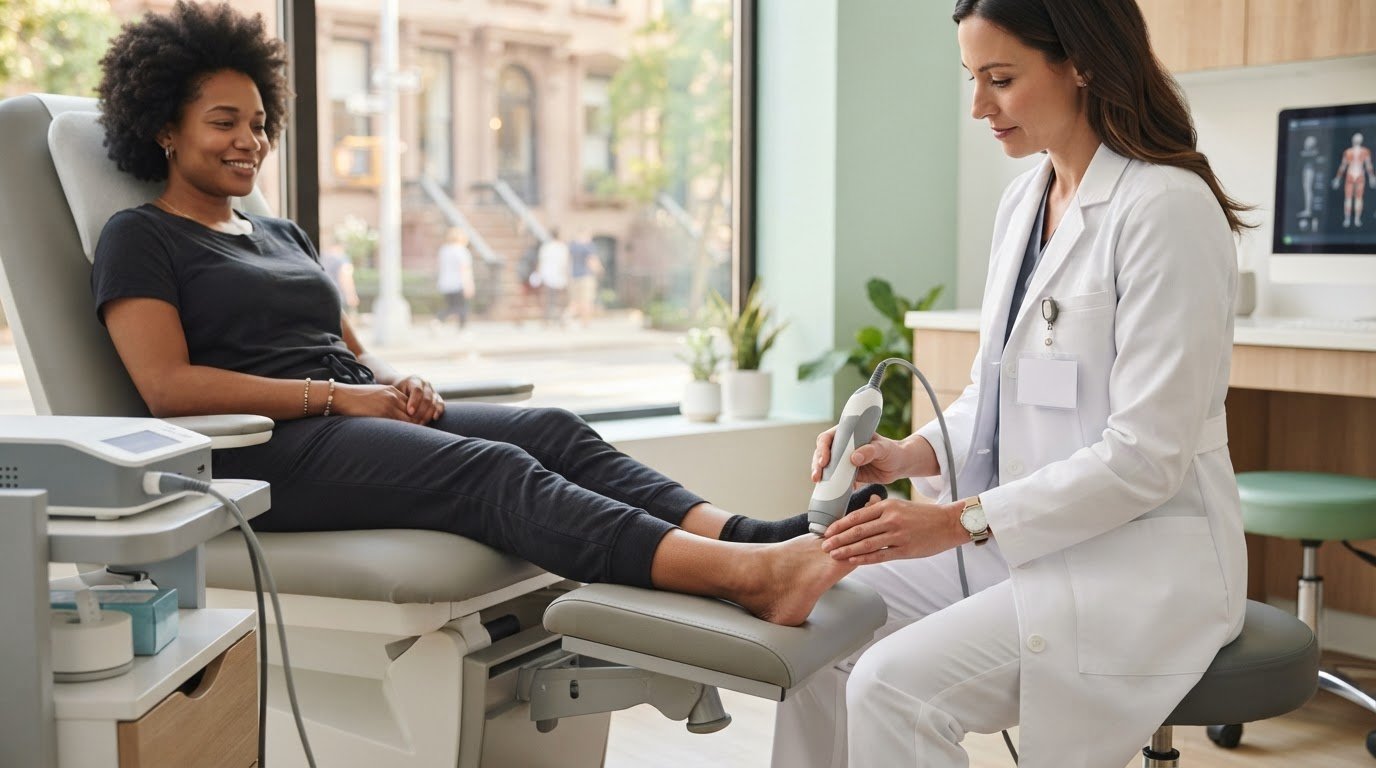
Imagine your child finally gets back on the soccer field in Astoria, only to come home limping because that familiar redness and swelling has returned for the third time this year. It’s incredibly frustrating to watch your little one suffer through the same cycle of chronic pain, especially when home soaks and “wait and see” approaches haven’t provided a lasting fix. You simply want them active and happy, not sidelined by a stubborn toe. If you’re searching for what to do for a child’s recurring ingrown toenails NYC families often feel stuck between temporary remedies and the anxiety of “surgery” or needles.
We understand those concerns and are here to show you that a permanent, gentle solution exists right in your neighborhood. At our Brooklyn and Queens clinics, we specialize in pediatric care that stops the recurrence cycle without the stress you might expect from a medical office. We’ll explore why these infections keep coming back, how a specialized matrixectomy provides a lifetime of relief, and what to expect during a child-friendly visit designed to get them back to the playground quickly and safely.
Key Takeaways
- Understand the specific anatomical and lifestyle factors, such as long NYC school commutes and youth sports, that cause nails to grow inward repeatedly.
- Learn how to apply the “3-Day Rule” to determine if home soaking is providing a real cure or just acting as a temporary band-aid.
- Discover what to do for a child’s recurring ingrown toenails NYC podiatrists recommend for permanent relief, including the gentle, root-neutralizing matrixectomy.
- Use our NYC Parent’s Checklist to master the “Straight-Across” trimming technique and the “Thumb Test” for more accurate shoe sizing.
- Access expert, child-centered care from Dr. Waldemar Majdanski at our convenient neighborhood clinics in Forest Hills, Astoria, and Woodhaven.
Why Your Child’s Ingrown Toenails Keep Coming Back
It’s a cycle we see often in our Brooklyn and Queens clinics. A parent manages to calm a child’s red, swollen toe with a soak, only for the pain to return weeks later. If you are wondering what to do for a child’s recurring ingrown toenails NYC lifestyle factors and genetics often play a larger role than a single bad trim. Understanding these triggers is the first step toward finding a permanent solution that keeps your child active and pain-free.
The Role of Genetics and Nail Morphology
For many children, the issue is structural. Some nails are “programmed” to grow inward due to hereditary shapes like pincer nails or involuted nails. In these cases, the nail plate curves deeply into the skin, making even perfect trimming ineffective. Children are particularly vulnerable because their skin is softer and more pliable than adult skin. This allows a sharp nail edge to pierce the “sulcus,” or nail fold, more easily. For a comprehensive overview of ingrown toenails, including how these shapes develop, clinical resources highlight that Onychocryptosis often stems from this natural predisposition rather than just poor hygiene.
NYC Lifestyle: Shoes, Sports, and Concrete
The environment in New York City presents unique challenges for growing feet. Unlike kids in more suburban areas, NYC children spend a significant amount of time walking on unforgiving concrete. Whether it’s the daily walk to school in Forest Hills or running between subway transfers, this constant “stop-and-go” motion creates friction in the toe box. This micro-trauma is often accelerated by:
- Tight Athletic Gear: Soccer cleats and ballet slippers are notoriously narrow, compressing the toes and forcing the nail into the surrounding skin.
- Growth Spurts: Children can jump a full shoe size in months. If they are wearing last season’s shoes, the pressure on the big toe becomes a catalyst for inflammation.
- Hand-Me-Downs: We often caution city families against used shoes. Worn-out soles change a child’s gait, which can shift weight onto the edges of the toenails.
Another major factor in recurrence is the “bathroom surgeon” trap. When parents try to dig out a painful corner at home, they often leave behind a small, jagged spike of nail hidden deep under the skin. This spike acts like a splinter, causing the infection to return with more intensity. We focus on breaking this cycle by addressing the root cause, ensuring your child can return to their favorite sports and playgrounds without the fear of the next flare-up.
Home Remedies vs. Professional Clinical Treatments
Most parents naturally start with home care when they notice a child’s toe looking pink or tender. While warm Epsom salt soaks can effectively draw out mild inflammation, they often act as a temporary band-aid for a structural problem. If you are researching what to do for a child’s recurring ingrown toenails NYC specialists recommend the “3-Day Rule.” If the redness, swelling, or pain doesn’t show significant improvement after three days of consistent soaking, home care has likely reached its limit. Continuing past this point often allows the nail to penetrate deeper into the skin fold, making the eventual treatment more complex.
We also advise city families to skip old-wives’ tales like the “V-cut” myth. Cutting a notch in the center of the nail does not change the way the corners grow; it only creates a weaker nail plate that is more prone to snagging on socks. Research indicates that ingrown toenails account for approximately 20% of foot problems seen in primary care settings. Since the highest incidence occurs in teenagers and young adults, addressing these issues early prevents a decade of recurring pain.
The Limits of Home Care
There are specific red flags that require an immediate visit to a podiatrist. If you notice pus, red streaks extending up the foot, or if your child develops a fever, the infection has progressed beyond what topical ointments can handle. Chronic inflammation often leads to the development of “granulation tissue,” a red, fleshy overgrowth that bleeds easily and prevents the wound from closing. Ignoring these signs in a developing foot can lead to deeper soft-tissue infections or, in rare cases, affect the underlying bone.
What Happens During a Professional Consultation?
Our goal is to alleviate the anxiety children often feel about “surgery.” We use child-friendly language to explain the process, such as describing our numbing technique as “sleepy juice” for the toe. Unlike home “bathroom surgery,” a professional Partial Nail Avulsion (PNA) removes only the thin sliver of nail causing the irritation, providing instant relief. We may also use diagnostic imaging to check for rare bone spurs that can push the nail upward into the skin. Choosing the right podiatrist in Forest Hills means finding a team that balances this clinical precision with a gentle, neighborhood touch. If your child’s pain has returned despite your best efforts at home, we invite you to reach out to our team to discuss a more permanent path to recovery.
Permanent Solutions: Understanding the Matrixectomy
When the same corner of a nail causes repeated infections, we must look beyond temporary relief. For parents wondering what to do for a child’s recurring ingrown toenails NYC specialists at our clinics often recommend a matrixectomy. This is considered the gold standard for stopping the recurrence cycle permanently. It is a straightforward, 20-minute in-office procedure that addresses the underlying cause rather than just the symptoms. By focusing on the “root” of the problem, we ensure your child can return to their favorite activities without the looming threat of another painful flare-up.
The process is designed to be as stress-free as possible for both the child and the parent. We begin by gently numbing the toe, ensuring your child feels nothing but a bit of pressure. Once the area is comfortable, we remove the narrow sliver of nail that is digging into the skin. To prevent this specific section from growing back, we use a specialized chemical like phenol or a precision laser to neutralize the corresponding part of the nail matrix. Most NYC kids are back in their sneakers and ready for school within 24 to 48 hours.
The ‘Root’ of the Problem: Treating the Nail Matrix
The nail matrix is the area where nail growth begins. In a recurring case, this matrix is “programmed” to produce a nail that is too wide or too curved for the toe. By using phenol, we safely and selectively stop growth only at the very edge of the nail. One of the most common concerns parents have is how the toe will look afterward. Because we only treat the offending sliver, the nail continues to look completely normal; it is simply a few millimeters narrower. This technique is highly effective, with success rates for preventing future ingrown edges often exceeding 95%.
Post-Procedure Care for Busy NYC Families
We know that city families have tight schedules, so we’ve streamlined the recovery process. Your child won’t need to spend a week on the couch. Post-procedure care typically involves simple daily dressing changes and a brief soak, which can be done before school or soccer practice. Pain management is usually very manageable. Most children only require standard over-the-counter relief for the first evening, and by the next day, they are walking comfortably. While this guide focuses on older children and teens, we also provide specialized care for our youngest patients. You can learn more about safe treatment steps for newborn ingrown nails if you notice issues starting in infancy. Our goal is to provide a collaborative path to recovery that fits into your family’s busy New York lifestyle.

Preventing Future Occurrences: The NYC Parent’s Checklist
Once we have addressed the immediate pain of a recurring infection, our focus shifts to long-term maintenance. In a city where children walk thousands of steps daily on hard pavement, small habits make a significant difference in foot health. If you are still determining what to do for a child’s recurring ingrown toenails NYC environments require a proactive approach to footwear and hygiene. We find that combining proper trimming techniques with the right environmental adjustments often breaks the cycle of irritation for good.
One of the most effective tools in your arsenal is the “Thumb Test” for shoe sizing. There should always be a full thumb’s width of space between your child’s longest toe and the end of the shoe. This extra room is essential because feet naturally swell during long walks through Brooklyn or Queens. Additionally, we must consider moisture management. Between the heat of the subway and heavy winter boots, “city sweat” can keep socks damp for hours. This softens the skin around the nail, making it much easier for a sharp nail edge to pierce the skin fold. Encourage your child to change into dry socks immediately after school or sports.
Sometimes, the issue isn’t just the shoe or the nail, but the foot’s mechanics. Over-pronation, where the foot rolls inward excessively, can cause the toes to crowd together inside the shoe. This constant pressure forces the nail into the skin. In these cases, we often prescribe custom orthotics to stabilize the foot and redistribute pressure away from the big toe.
The Ultimate NYC Shoe Buying Guide
We recommend city families shop for new shoes in the afternoon or evening. This ensures you are fitting the shoe when the foot is at its largest after a day of activity. It is also vital to avoid the “hand-me-down” trap. While it is tempting to pass shoes between siblings, worn-out soles often have established wear patterns that can force a child’s foot into unhealthy positions, leading to nail trauma. Understanding the difference between running and walking shoes for kids can help you select a pair with the appropriate support for their specific daily activities.
Nail Hygiene and Trimming Habits
Proper trimming is a skill that takes practice, especially with squirmy younger children. Always cut the nail straight across rather than following the curve of the toe. Use high-quality safety clippers designed specifically for toenails; fingernail clippers are often too curved and can encourage the corners to grow inward. For older children and teens, teach them to monitor their toes for early signs of pinkness or tenderness. If your child has a high-risk nail shape that is difficult to manage at home, contact our team to discuss professional maintenance options that can prevent painful infections before they start.
Expert Pediatric Podiatry at Local Foot Doc
At Local Foot Doc, we believe that medical care for children should be defined by patience, clarity, and precision. Dr. Waldemar Majdanski, a board-certified surgeon with over 20 years of clinical experience, leads our team with a focus on child-centered solutions. If you’ve been searching for what to do for a child’s recurring ingrown toenails NYC families can find a reliable partner at our practice. We’ve intentionally designed our clinical environment to be a “no-fear” zone. We take the time to explain every step to our young patients in a language they understand, ensuring they feel like active participants in their own healing process.
Accessibility is a priority for busy New York families. We maintain convenient locations across Queens in Forest Hills, Astoria, and Woodhaven, along with a dedicated presence in Brooklyn. This geographic footprint ensures that expert pediatric podiatry is always within reach of your neighborhood. Whether your child is an athlete in Astoria or a student in Forest Hills, we provide the same high standard of community-focused care that has made us a local institution.
Why NYC Parents Trust Local Foot Doc
For more than two decades, we’ve served the families of Brooklyn and Queens with a commitment to restoring mobility and comfort. Our primary goal is always to return your child to their normal, active life. We know that in New York, being “active” means more than just gym class; it involves navigating subway stairs, walking to the library, and playing in crowded local parks. While our focus here is on pediatric needs, our expertise covers the full spectrum of foot health. For instance, understanding a family history through diabetic foot care Brooklyn resources can provide valuable context for a child’s long-term circulatory and neurological foot health.
Ready for Permanent Relief?
Starting the journey toward a pain-free life for your child is a straightforward process. For your first appointment, we recommend bringing any athletic shoes or school footwear your child wears frequently. This allows us to identify specific friction points that might be contributing to their condition. We also suggest making a list of any home remedies or previous treatments you’ve tried. We work hard to make foot care accessible by accepting a wide range of insurance plans and providing clear, direct information about every procedure. When you’re ready to break the cycle of chronic pain and get your child back to the playground, you can schedule your child’s consultation at Local Foot Doc today.
Restoring Your Child’s Active NYC Lifestyle
Recurring ingrown toenails don’t have to be a permanent fixture in your child’s life. By understanding the structural causes and the unique stresses of a New York City lifestyle, you can move past temporary home remedies toward lasting relief. We’ve seen how a gentle matrixectomy can break the cycle of infection, allowing your child to return to the sports and playgrounds they love without hesitation. If you’ve been wondering what to do for a child’s recurring ingrown toenails NYC parents can trust the board-certified surgical expertise of Dr. Waldemar Majdanski at Local Foot Doc.
Our clinics in Forest Hills, Astoria, and Woodhaven are dedicated to providing a “no-fear” experience through specialized pediatric protocols. We focus on clear communication and compassionate care to ensure every visit is as comfortable as possible. Your child’s independence and mobility are our top priorities; we are ready to help them walk, run, and play pain-free once again. End the cycle of pain, book a pediatric consultation at Local Foot Doc today! We look forward to welcoming your family into our practice and guiding your child toward a full recovery.
Frequently Asked Questions
Is the procedure to fix a recurring ingrown toenail painful for a child?
No, the procedure itself is not painful because we use local anesthesia to ensure the toe is completely numb. Your child might feel a brief, small pinch during the initial numbing process, but once the medication takes effect, they will only feel a bit of pressure. We use child-friendly language and a gentle approach to minimize anxiety throughout the 20-minute visit. Most of our young patients are pleasantly surprised by how quick and easy it feels.
How long does a child need to stay home from school after nail surgery?
Most children can return to school the very next day. While we recommend taking it easy on the evening of the procedure, normal walking is perfectly fine within 24 hours. If your child has a long commute in NYC, we suggest wearing a slightly looser shoe or a sandal for the first day to ensure there is no pressure on the dressing. High-impact sports should usually wait about one week to ensure full healing.
Can tight shoes really cause a nail to keep coming back?
Yes, tight shoes are a primary catalyst for recurrence because they force the skin against the nail edge. In NYC, where children walk long distances to school, this friction is constant. If you are wondering what to do for a child’s recurring ingrown toenails NYC specialists often point to the narrow “toe-box” of athletic cleats or school uniforms. If the shoe is too narrow, it creates a structural trap that home care cannot fix.
Will my child’s toenail look ‘weird’ after a permanent removal procedure?
No, the nail will continue to look natural and healthy. During a Partial Nail Avulsion with a matrixectomy, we only remove the thin sliver of nail that is causing the irritation. The remaining 90% of the nail plate remains intact and continues to grow normally. The resulting nail is simply a few millimeters narrower. This change is usually not noticeable to anyone except the child and the podiatrist, and it won’t affect their activity.
What is the difference between a pediatrician and a podiatrist for ingrown nails?
A pediatrician provides excellent general care and can prescribe antibiotics for an infection. However, a podiatrist is a specialist who addresses the structural cause of the problem. We use specialized surgical tools and techniques, such as matrixectomies, to ensure the nail doesn’t grow back. While a pediatrician might treat the symptoms, our focus at Local Foot Doc is providing a permanent solution to stop the recurrence cycle entirely for our Brooklyn and Queens families.
Are there any risks to a permanent matrixectomy in a growing child?
The risks are minimal and the procedure is very safe for children. The most common side effect is a small amount of drainage as the area heals, which is normal and expected. Because we only treat the very edge of the nail matrix, it does not affect the growth of the toe or the underlying bone. We follow strict pediatric protocols to ensure the highest standard of safety for our young patients across our NYC locations.
How can I tell if my child’s ingrown toenail is actually infected?
Look for signs such as persistent redness, warmth to the touch, and swelling along the side of the nail. If you see pus or if the area is throbbing, an infection is likely present. Another red flag is the growth of granulation tissue, which looks like a small, red, fleshy bump. When deciding what to do for a child’s recurring ingrown toenails NYC parents should seek professional help if these symptoms don’t improve within 72 hours.
Does insurance typically cover pediatric ingrown toenail removal in NYC?
Yes, most insurance plans in New York cover these procedures because they are considered medically necessary to treat pain and prevent infection. New York Medicaid also covers medically necessary podiatry services. We recommend checking with your specific provider regarding co-pays or deductibles. Our staff at our Forest Hills, Astoria, and Woodhaven locations can help you navigate the insurance process to ensure your child receives the professional care they need without unnecessary stress.