That painful corn rubbing against your shoe isn’t actually an isolated skin condition; it’s a structural alarm. Commuters and active walkers often ask us: can hammertoes cause corns and calluses? The short answer is an unequivocal yes. When an imbalanced tendon forces the middle toe joint to buckle upward, the elevated knuckle bears the brunt of every step. You’ve likely tried pumice stones or over-the-counter cushions, only to watch the stinging buildup return just weeks later as normal shoes press against the stiff joint.
Filing down thickened skin without addressing the underlying bone alignment guarantees recurrence. In this guide, you’ll discover how hammertoe joint contractures trigger chronic hyperkeratosis, why aggressive home remedies can endanger sensitive or diabetic tissue, and which clinical solutions offer genuine relief. We will explore proven approaches ranging from custom orthotics to corrective outpatient procedures that eliminate pressure points and help you reclaim pain-free movement.
Key Takeaways
- Examine the underlying structural mechanics to see how can hammertoes cause corns and calluses through relentless friction inside everyday footwear.
- Distinguish between the deep, nerve-compressing core of a hard corn and the broad protection of a callus to pinpoint the source of your pain.
- Learn why over-the-counter medicated acid patches and bathroom trimming frequently backfire, risking chemical burns and serious ulcers.
- Determine whether your toe deformity is flexible or rigid to identify the right clinical path, from custom orthotics to lasting outpatient correction.
The Biomechanical Link: How Hammertoes Form Corns and Calluses
When patients visit our Queens and Brooklyn clinics asking, “can hammertoes cause corns and calluses?”, we explain that these lesions are rarely skin problems at all. Instead, they are direct mechanical consequences of skeletal displacement. A standard foot distributes pressure evenly across the ball and pads of the toes during gait. When a structural shift occurs, the delicate balance between bone, tendon, and skin collapses, forcing specific digital joints to endure abnormal mechanical forces.
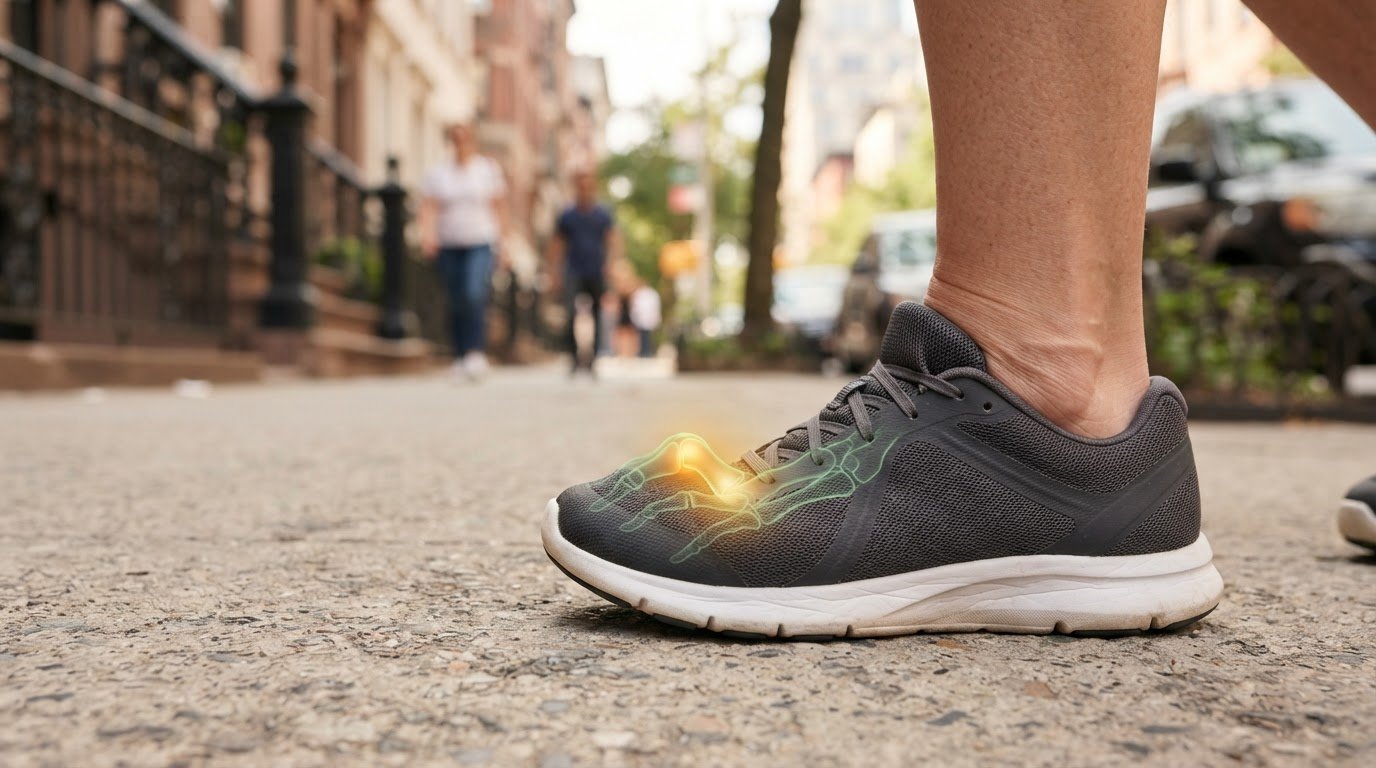
Pounding urban pavement throughout New York City amplifies this ground-reactive impact. As you walk, thousands of pounds of cumulative force transfer through improperly positioned digital joints, driving the elevated knuckles upward into rigid shoe leather while driving the tips downward into the sole.
Anatomy of a Hammertoe: Tendon Imbalance and Joint Buckling
A classic Hammer toe develops when dynamic stabilizing tendons fall out of sync. Specifically, the flexor digitorum longus tendon overpowers the weaker extensor digitorum longus, pulling the toe into an unnatural curl. This persistent contracture forces the proximal interphalangeal (PIP) joint to buckle upward under load.
In its early stages, the deformity remains flexible, meaning you can still manually straighten the toe with your fingers. Over time, chronic contracture causes the surrounding joint capsules and collateral ligaments to tighten. Left unaddressed, the joint undergoes adaptive shortening, transforming into an inflexible, rigid contracture that permanently alters weight distribution.
Hyperkeratosis: The Skin’s Defensive Response to Friction and Pressure
The skin’s response to this relentless mechanical friction is known as hyperkeratosis. When the skin gets trapped between an elevated PIP joint and the interior lining of a shoe, baseline shear forces trigger rapid keratinocyte proliferation. The body produces excess layers of hardened dead skin cells to shield deeper tissues from tearing.
This biological defense mechanism works against you in confined footwear. Underlying bone spurs, or exostoses, frequently develop at the margins of the irritated joint, creating an internal anvil. Trapped between this rigid bony spur on the inside and stubborn shoe material on the outside, hyperkeratosis accelerates. This process demonstrates exactly how structural imbalances answer whether can hammertoes cause corns and calluses; the skin simply thickens to survive the pressure.
Corns vs. Calluses on Bent Toes: Key Differences and Symptom Patterns
People often use the terms interchangeably, but corns and calluses are structurally distinct lesions that behave differently under pressure. A corn contains an inverted conical keratin core whose sharp apex points inward, directly compressing sensory nerve endings in the deeper dermis. Calluses, by comparison, are broad, flat plaques of thickened stratum corneum without a focal nucleus. When patients ask how can hammertoes cause corns and calluses across different regions of the foot, the answer lies in whether friction is concentrated at a single point or distributed broadly across an overloaded surface.
Hard Corns (Heloma Durum) on the Dorsal Toe Knuckle
Hard corns typically develop over the prominent dorsal knuckle of contracted lesser toes. As leading medical centers note, patients with contracted digits frequently develop painful blisters, corns, or calluses when the raised joint collides with the inner lining of closed shoes. Walking drives the inverted keratin plug into surrounding tissue, producing a sharp, pinpoint ache similar to having a pebble lodged inside your sock.
Soft Corns (Heloma Molle) Between the Toes
Soft corns develop interdigitally, most frequently in the web space between the fourth and fifth digits. When a toe curls and rotates inward, the bony condyles of adjacent digits grind together with every step. Perspiration prevents the hyperkeratotic skin from drying out, creating a spongy, macerated white lesion. Because these damp lesions easily crack, they carry a high risk of bacterial entry.
Metatarsalgia and Plantar Calluses Under the Ball of the Foot
Hammertoes also cause substantial problems along the sole. When a contracted digit buckles, it loses contact with the ground and fails to purchase weight during push-off. This transfers severe retrograde force back down into the metatarsophalangeal joint, depressing the metatarsal head into the pavement. Over time, the protective plantar fat pad thins, sparking sharp forefoot inflammation alongside broad plantar calluses. This mechanical failure frequently coincides with bunion deformities that drift beneath the second digit. If stubborn lesions make walking through the city uncomfortable, scheduling a comprehensive podiatric evaluation will help determine the exact structural cause.
Why OTC Corn Removers and Home Trimming Often Backfire
Facing a throbbing toe after a long commute, many people reach for over-the-counter medicated pads or bathroom clippers. It feels logical to attack the hard skin directly. Yet treating hyperkeratosis as an isolated surface blemish ignores the core reality: can hammertoes cause corns and calluses if you keep paring them down? Absolutely. Shaving away dead tissue does nothing to realign the buckled joint underneath, leaving the underlying bone to grind relentlessly against your footwear.
The Hidden Hazards of Salicylic Acid Corn Plasters
Medicated corn plasters typically rely on high concentrations of salicylic acid to dissolve dense keratin. Unfortunately, topical acid cannot distinguish between a hardened corn nucleus and healthy surrounding skin. The caustic agent often seeps into adjacent tissue, producing painful chemical burns, skin maceration, and open wounds. This chemical damage frequently masks a developing bacterial infection beneath layers of dead, white skin.
The Danger of ‘Bathroom Surgery’ and Infection Risks
Attempting bathroom surgery with razor blades, scissors, or unsterilized clippers introduces severe danger. A minor slip easily introduces aggressive staph or strep bacteria into deeper fascial tissue, creating rapid cellulitis or even joint infections (osteomyelitis). Even successful self-trimming offers short-lived results. Because the elevated proximal joint remains in place, the mechanical recurrence loop triggers thick keratin buildup within weeks. Professional podiatric care safely enucleates the central core without risking deep tissue injury.
Special Warnings for Patients with Diabetes or Poor Circulation
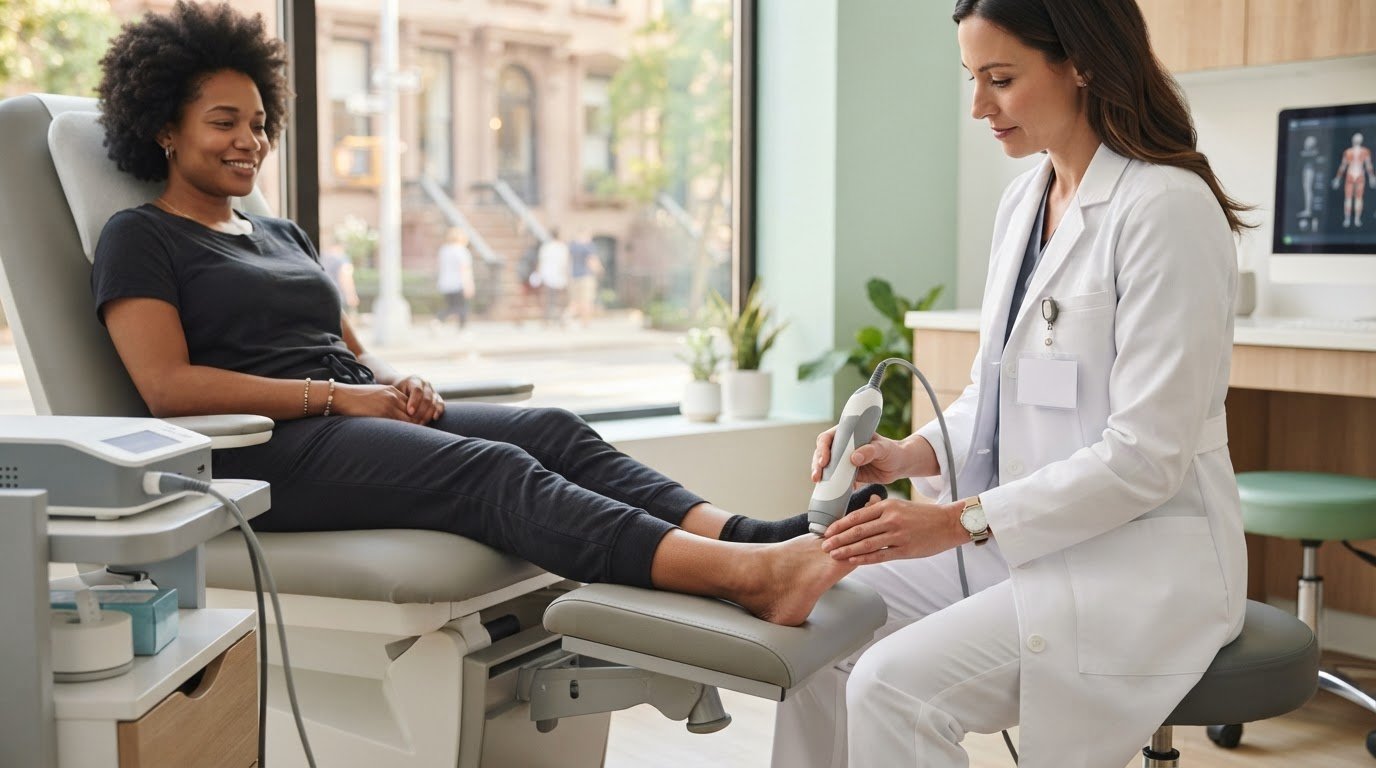
Home treatments are especially dangerous for individuals with systemic health challenges. Peripheral neuropathy dulls sensation, masking the warning signs of blisters, acid burns, and friction abrasions. Meanwhile, reduced arterial blood flow delays tissue repair, turning minor cuts into stubborn wounds. For our patients throughout Queens and Brooklyn, scheduling dedicated diabetic foot care in Brooklyn ensures safe mechanical offloading, routine clinical debridement, and thorough screening to protect your long-term mobility.

Conservative vs. Advanced Clinical Solutions for Hammertoe Friction
Effective treatment begins with an accurate assessment of joint mobility. Understanding how can hammertoes cause corns and calluses is only half the battle; knowing whether your joint is flexible, semi-rigid, or completely rigid dictates your therapeutic options. Flexible deformities often respond remarkably well to conservative intervention, whereas rigid contractures require targeted clinical offloading or structural realignment to prevent recurring skin breakdown.
Non-Surgical Offloading: Medical Debridement, Padding, and Orthotics
Conservative management focuses on relieving immediate focal friction and redirecting biomechanical pressure across the sole:
- Clinical Debridement: A podiatrist uses sterile scalpel technique to carefully enucleate the hard central corn nucleus, providing swift relief without injuring healthy surrounding dermis.
- Medical-Grade Silicone Padding: Digital sleeves and silicone crest pads gently elevate the distal tip of the toe, cushioning the prominent knuckle without caustic chemicals.
- Custom Functional Orthotics: Customized biomechanical casting stabilizes the rearfoot, controls overpronation, and redistributes weight away from overloaded metatarsal heads to balance tendon tension during gait.
Footwear Modification Strategies for Urban Commuters
Navigating subway stairs and sidewalks places extreme demands on your forefoot. Tapered shoes and high heels shove the toes forward, forcing them into a contracted posture. Choose footwear featuring a deep, rounded toe box that allows the dorsal knuckles to sit naturally without pressing into the shoe upper. Opt for soft, unlined leather or flexible knit materials that yield to anatomical contours rather than resisting them.
Addressing Concurrent Bunion Deformities
Hammertoes rarely develop in a vacuum. A shifting hallux valgus (bunion) frequently crowds the adjacent lesser digits, forcing the second toe upward and inward into shoe leather. In these cases, treating the curled toe alone cannot solve the mechanical problem. Lasting relief requires stabilizing the broader forefoot framework. When conservative therapies fail to halt chronic pain, exploring options like bunion surgery in Queens alongside hammertoe realignment creates lasting space between the toes. To eliminate painful friction and take control of your foot health, book an appointment with our podiatric specialists today.
When to Consider Hammertoe Correction: Long-Term Relief and Recovery
When silicone pads, wider shoes, and routine debridement no longer prevent burning friction, managing symptoms becomes exhausting. If you find yourself wondering how long can hammertoes cause corns and calluses before permanent soft tissue damage occurs, the turning point arrives when joint stiffness actively disrupts your routine. Structural deformities ultimately require structural solutions. When non-surgical care reaches its limit, modern corrective procedures offer a reliable path toward lasting alignment and pain-free movement.
Clinical Indicators: Moving from Management to Permanent Correction
Certain clinical signs show that conservative maintenance is no longer keeping pace with the deformity:
- Fixed, rigid contractures that can no longer be manually straightened
- Chronic adventitious bursitis developing beneath deep, persistent corns
- Recurrent skin breakdown, fissures, or pre-ulcerative open sores
Diagnostic digital X-rays evaluate joint subluxation, arthritis, and underlying exostoses. If daily walking provokes deep joint ache, meeting with an experienced podiatrist in Forest Hills NY ensures you receive an accurate diagnosis and a clear treatment roadmap.
Modern Corrective Procedures: Tendon Release to Arthroplasty
Podiatric surgical procedures are tailored directly to the flexibility of the digit and the extent of bone involvement:
- Tendon Release or Transfer: For flexible deformities, releasing tight flexor tendons rebalances muscle pull so the toe rests flat against the ground.
- PIP Joint Arthroplasty: For rigid deformities, resecting a small portion of bone at the buckled joint relaxes the contracture, permanently removing the dorsal bump.
- Digital Arthrodesis: Severe, unstable deformities benefit from joint fusion, which locks the digit in a stable, straight position.
Modern outpatient techniques emphasize minimal soft tissue disruption, stabilizing the digit while preserving neighboring joint dynamics.
What to Expect During Recovery and Returning to Daily Activity
Post-operative protocols are designed to keep patients safely mobile while tissues heal. Most individuals begin immediate protected weight-bearing using a specialized surgical boot. Initial healing generally takes several weeks, during which swelling gradually subsides before you transition back into supportive street footwear. Although we recognize that can hammertoes cause corns and calluses through repetitive mechanical rubbing, surgical realignment permanently removes the underlying pressure points so the lesions do not return. The team at Local Foot Doc provides personalized surgical consultations across our Brooklyn and Queens clinics to help you regain full, comfortable stride.
Step Forward Without Friction and Chronic Foot Pain
Persistent foot discomfort should not dictate how you navigate daily life. We’ve examined how can hammertoes cause corns and calluses by bending delicate joints into relentless friction points against shoe leather. Grinding away keratin or masking deep irritation with drugstore cushions will never correct buckled bone or imbalanced tendons. True relief begins when you address the mechanical source rather than the surface symptom.
With over 20 years of dedicated podiatric experience across Brooklyn and Queens, our team helps New Yorkers break this cycle. Whether your mobility calls for custom functional orthotics or advanced minimally invasive outpatient realignment, lasting comfort is within reach. Schedule a consultation at Local Foot Doc in Forest Hills, Astoria, or Woodhaven today, and take your next steps with confidence.
Frequently Asked Questions
Can a hammertoe go away on its own without medical treatment?
No, a hammertoe is a progressive structural deformity that will not resolve on its own. Because it stems from an anatomical tendon imbalance, the contracture tends to worsen over time without clinical intervention. While supportive footwear and targeted physical therapy can slow progression in early stages, the buckled bone cannot realign itself. Ignoring early symptoms typically allows flexible digits to stiffen into permanently rigid contractures that require surgical correction.
Why does my corn keep coming back after I trim it off?
Corns return because trimming the surface keratin ignores the bone structure rubbing underneath. When patients ask us can hammertoes cause corns and calluses repeatedly, we explain that the skin thickens as a defense mechanism against continuous friction. Every time you walk in standard shoes, the buckled knuckle presses into the leather. Until you correct the digital alignment or offload the pressure point, the body will keep producing protective hyperkeratosis.
Are over-the-counter medicated corn remover patches safe to use?
Medicated corn patches are generally unsafe because their concentrated salicylic acid cannot distinguish between dead callus and healthy skin. The acid easily spreads into neighboring tissue, causing chemical burns, painful ulcers, and secondary infections. This risk is particularly severe for anyone living with diabetes or vascular disease. Non-medicated silicone pads or professional podiatric debridement provide safe symptom relief without exposing delicate digital tissue to harsh chemical erosion.
What is the difference between a corn, a callus, and a plantar wart on the toes?
Corns are small, concentrated hyperkeratotic lesions featuring a hard central nucleus that presses into nerves. Calluses are broad, diffuse areas of thickened skin formed across wider weight-bearing zones. Plantar warts, conversely, stem from a viral infection (HPV), disrupt normal skin striations, and often contain tiny pinpoint black dots from clotted capillaries. Because treatments differ drastically, accurate clinical diagnosis at a podiatry office ensures you avoid worsening the condition.
Can custom orthotics straighten my hammertoes and eliminate corns?
Custom orthotics cannot physically reverse an established bone deformity, but they can slow progression and eliminate friction points. By controlling abnormal foot pronation, prescription orthotics rebalance muscular pull across the digits during walking. This stabilizes the forefoot, offloads high-pressure metatarsal heads, and prevents the toe from driving aggressively into the upper shoe. For flexible deformities, orthotics often provide substantial comfort by preventing new corn formation.
What happens if a painful hammertoe and corn are left untreated?
Leaving the deformity untreated allows flexible tendon tightness to progress into a fixed, arthritic joint contracture. As structural friction intensifies, how can hammertoes cause corns and calluses becomes even more apparent through chronic bursitis and open skin breakdown. In advanced stages, relentless shoe pressure causes deep tissue ulcerations. For New York commuters walking miles daily, this severe breakdown raises serious risks of cellulitis and dangerous bone infections.
How do I know if my hammertoe is flexible or rigid?
You can test joint mobility by gently using your fingers to straighten the curled toe while seated. If the digit flattens out easily without sharp resistance, the deformity remains flexible. If the joint feels stiff, locked, or immovable, it has progressed to a rigid contracture. A podiatric examination with digital X-rays provides a definitive assessment, mapping out whether conservative offloading or modern corrective procedures will restore your mobility.