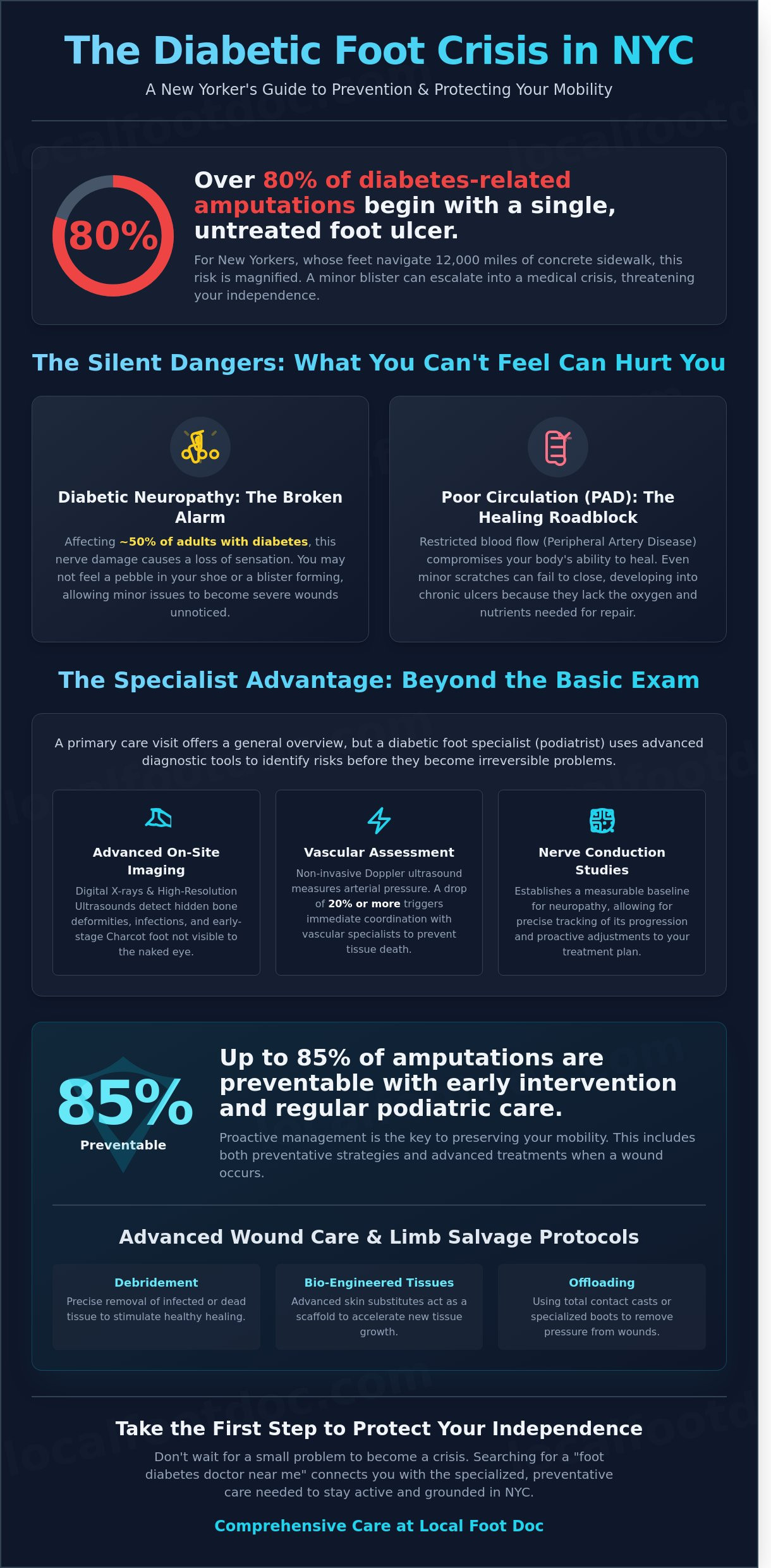
According to the American Podiatric Medical Association, over 80% of diabetes-related amputations begin with a single, untreated foot ulcer. We understand that for a New Yorker, your feet are your primary engine for navigating the city’s 12,000 miles of sidewalk. When you feel a strange “burning” sensation in your toes or notice a blister that hasn’t closed after 72 hours, it’s natural to worry about losing your independence. You deserve to walk through Manhattan or Brooklyn without the constant fear of a hidden injury becoming a medical crisis.
Searching for a reliable foot diabetes doctor near me is the most important step you can take to protect your lifestyle. In this guide, we’ll explain how specialized podiatric care prevents the progression of neuropathy and keeps you active in our fast-paced city. You’ll learn about the specific risks facing NYC diabetics and how our team at Local Foot Doc uses advanced technology to build a preventative plan that avoids surgery. We’re here to help you stay grounded and get back on your feet with confidence.
Key Takeaways
- Understand why the high-impact lifestyle of walking on NYC concrete makes specialized preventative care essential for protecting diabetic foot health.
- Learn why searching for a “foot diabetes doctor near me” provides access to critical diagnostic tools, like Doppler ultrasounds, that go far beyond a standard primary care exam.
- Discover how advanced on-site imaging and specialized wound care protocols can identify hidden bone issues and treat ulcers before they threaten your mobility.
- Get expert tips on navigating the city’s unique environment, from moisture management in NYC humidity to choosing footwear that balances support with safety.
- Explore how our neighborhood-focused approach combines cutting-edge technology with compassionate care to help you stay active and get back on your feet.
Why Finding a Foot Diabetes Doctor Near You in NYC is Critical
Living in New York City puts a unique strain on your body. If you manage diabetes, the 10,000 steps you walk on hard concrete every day aren’t just exercise; they’re a constant test of your foot health. A diabetic podiatrist serves as a specialist in limb salvage and preventative care, acting as a vital line of defense against complications. Understanding what is a diabetic foot requires looking at how chronic high blood sugar levels damage the nerves and blood vessels in your extremities. Finding a foot diabetes doctor near me in neighborhoods like Queens or Brooklyn ensures you have a local expert to monitor these changes before they become life-altering.
Diabetes affects the feet through two primary mechanisms: neuropathy and poor circulation, often referred to as Peripheral Artery Disease (PAD). When blood flow is restricted, your body’s ability to heal even minor scratches is compromised. Having a specialist nearby means you don’t have to delay care when you notice a change in skin color or temperature. We prioritize regular screenings to keep your vascular health in check, ensuring your feet receive the oxygen and nutrients they need to stay resilient against the city’s demanding pace. If you experience leg cramping or burning sensations during your daily walks, it’s important to understand PAD disease symptoms that could indicate circulation problems requiring immediate attention.
Understanding the Risks of Diabetic Foot Complications
In NYC, a minor blister from walking to the subway can quickly escalate into a serious ulcer. This happens because the “alarm system” of the body is often broken. Diabetic neuropathy is a specific type of nerve damage that affects approximately 50% of adults with diabetes, frequently resulting in a total loss of sensation in the feet. This silent progression is the biggest danger you face. Without the ability to feel pain, a small pebble in your shoe or a tight heel can cause a deep wound that goes unnoticed for days. Our team focuses on identifying these “silent” risks during regular checkups to prevent infection before it starts.
The Goal: Getting You Back on Your Feet
We measure our success by your mobility. If you can’t walk to the corner bodega or commute to your job, your quality of life suffers. Research indicates that early intervention and regular podiatric care can prevent up to 85% of diabetes-related amputations. At Local Foot Doc, we combine advanced diagnostic technology with a community-centered approach. We’re your neighbors in Brooklyn and Queens, and we’re dedicated to keeping you active. By establishing a relationship with a foot diabetes doctor near me, you aren’t just treating a symptom; you’re securing your independence. Our focus remains on clear, comforting paths to recovery that get you back to your routine quickly and safely.
Specialized Diabetic Foot Services: Beyond the Basic Exam
Finding a foot diabetes doctor near me involves moving past simple visual inspections. Our team utilizes on-site digital X-rays and high-resolution ultrasound to identify underlying bone issues or fluid collections that aren’t visible to the naked eye. These diagnostic tools allow us to catch structural changes, such as the early stages of Charcot foot, before they lead to permanent deformity. We also perform nerve conduction studies to establish a measurable baseline. This data helps us track the progression of neuropathy over a 12-month period, ensuring your treatment plan evolves as your condition changes.
Our clinical approach includes detailed vascular assessments to check the blood flow that keeps your tissues alive. We use non-invasive Doppler ultrasound to measure arterial pressure in the lower extremities. If we detect a 20% or greater decrease in circulation, we immediately coordinate with vascular specialists to prevent tissue death. This proactive monitoring is a cornerstone of our commitment to keeping our neighbors active and mobile.
Diabetic Wound Care and Limb Salvage
Specialized wound care is about more than just a bandage. We focus on limb salvage through precise debridement, which involves removing dead or infected tissue to stimulate healthy healing. We also emphasize preventing serious diabetic foot problems by using bio-engineered tissue substitutes. These advanced materials act as a scaffold for new skin growth, often accelerating recovery times for patients who have struggled with stagnant wounds for months.
When a wound refuses to close, we implement offloading techniques to remove pressure from the affected area. This might involve total contact casting or specialized walking boots. For many patients, a 30% reduction in ulcer size within the first four weeks of treatment is a key indicator of a successful path toward healing. If you are currently dealing with a non-healing sore, you should schedule a comprehensive evaluation to discuss your options. Surgery is only considered a necessary tool when conservative methods cannot resolve deep infections or stabilize the bone structure.
Custom Orthotics for the Diabetic Foot
New Yorkers walk an average of 2 to 5 miles every day. Standard store-bought inserts often fail to protect a diabetic foot from the constant friction of a subway commute or a walk through the park. We provide Custom Orthotics in Brooklyn that are molded specifically to your foot’s unique architecture. These aren’t simple cushions; they are medical devices designed to redistribute your body weight away from “hot spots” where ulcers typically form.
These custom-molded solutions provide the stability needed to prevent the skin shearing that leads to blisters and infections. By balancing your gait and correcting biomechanical imbalances, we can reduce the risk of new skin breakdown by up to 50% compared to standard footwear. Seeing a foot diabetes doctor near me for a professional fitting is the most effective way to ensure your shoes are working for you, not against you.
Podiatrist vs. Primary Care: Why Diabetics Need a Specialist
Your primary care physician (PCP) acts as the quarterback of your medical team, but they often lack the specialized tools and time required for high-risk diabetic foot management. During a standard 15-minute physical, a PCP typically performs a 60-second visual check of your skin. This brief glance can miss the microscopic changes in circulation or nerve function that lead to 80% of diabetes-related amputations. When you search for a foot diabetes doctor near me, you’re looking for a specialist who treats your feet as a priority, not a checklist item.
Our team at Local Foot Doc bridges the gap between general medicine and advanced podiatric care. Dr. Majdanski maintains a collaborative relationship with your endocrinologist, sharing data to ensure your A1C levels and foot health are managed in tandem. We provide immediate, safe treatments for common issues like thick toenails or deep corns. Performing these tasks at home is dangerous for diabetics; we use sterilized, surgical-grade instruments to prevent the infections that often start with a simple nick or cut.
The Specialized Diagnostic Toolkit
A specialist’s exam is significantly more rigorous than a general checkup. We use a 10-gram monofilament to test 10 specific pressure points on each foot, identifying exactly where sensation is fading. While a PCP might check your pulse by hand, we utilize Doppler ultrasound technology to listen to the specific rhythm of blood flow in your pedal arteries. The American Diabetes Association recommends at least one comprehensive foot exam every 12 months, but for our patients in Brooklyn and Queens with existing neuropathy, we often schedule quarterly visits to ensure they stay healthy and active. We strictly advise against “bathroom surgery” on calluses. Using a razor or store-bought acid on a callus can create an open wound that won’t heal, leading to 100% avoidable hospitalizations.
Preventative Maintenance and Education
We believe that education is just as vital as clinical treatment. Our goal is to empower you with the skills to protect your mobility every day. We teach every patient a specific protocol to identify “Red Flag” symptoms, such as localized warmth, skin color changes, or drainage on your socks. If you notice these signs, you need a same-day NYC appointment to prevent a minor irritation from becoming a major ulcer. Our team guides you through the daily foot care guidelines established by the APMA to ensure your home routine is as effective as our office treatments. We focus on professional nail and callus care to keep you moving without pain. By catching small changes early, we help you avoid the operating room and focus on getting back on your feet for your daily walk through your neighborhood.
Navigating NYC with Diabetes: Protecting Your Feet on the Go
New Yorkers walk an average of 8,000 to 10,000 steps every single day. This high level of activity means your footwear isn’t just a fashion choice; it’s a medical necessity. When you search for a foot diabetes doctor near me, you’re often looking for ways to stay mobile without risking ulcers or infections. Many popular “New York walking shoes” are actually too narrow or lose their structural integrity after just 300 miles of pavement pounding. Worn-out soles fail to absorb shock; this increases pressure on the metatarsal heads and leads to dangerous calluses.
NYC humidity often hits 70% or higher during July and August. This creates a breeding ground for fungal infections like tinea pedis. In winter, the city uses heavy amounts of rock salt to melt ice. If this salt penetrates your shoes, it can dehydrate the skin and cause micro-tears. Our team sees a 20% increase in skin irritations during the peak winter months. Protecting your feet requires a year-round strategy that accounts for the specific environment of the five boroughs.
The Commuter’s Guide to Diabetic Foot Safety
Never walk barefoot, even in your own apartment or at a Brooklyn gym locker room. Small punctures from debris can go unnoticed if you have neuropathy. We recommend checking your shoes every morning for pebbles or “friction points” before you head to the subway. Switch to moisture-wicking, seamless socks to prevent the bunching that leads to blisters during long walks across town. These small habits reduce the risk of complications by nearly 50% according to recent clinical observations. Additionally, if you experience sudden muscle spasms during your daily commute, understanding the causes of cramps on feet can help you address these painful episodes before they interfere with your mobility. When walking becomes painful due to cramping or burning sensations in your calves, these could be early PAD disease symptoms that require immediate evaluation to prevent serious complications.
Neighborhood-Specific Care in Queens and Brooklyn
We provide specialized care across the boroughs to ensure you never have to travel far for a check-up. Whether you live in Forest Hills, Astoria, Woodhaven, or Ridgewood, consistent follow-ups are vital for long-term health. Local Foot Doc operates multiple clinics to serve the diverse communities of New York City. Finding a reliable foot diabetes doctor near me shouldn’t be a chore when you’re already managing a busy schedule. Our team focuses on the intersection of advanced technology and personalized care to keep you moving safely. For residents specifically in Brooklyn, our comprehensive diabetic foot care Brooklyn services provide specialized treatment plans designed for the unique challenges of navigating this dynamic borough.
Don’t wait for a small blister to become a major health concern. Schedule your diabetic foot screening today to keep your mobility and independence intact.
Comprehensive Care at Local Foot Doc: Your NYC Diabetic Specialists
Finding a reliable foot diabetes doctor near me shouldn’t feel like an overwhelming task. At Local Foot Doc, Dr. Waldemar Majdanski brings over 20 years of board-certified podiatric experience directly to your neighborhood. We believe that top-tier medical care works best when it’s paired with a personal touch. Our team treats you like a neighbor, not just a chart number. We’ve established four convenient locations across Brooklyn, Queens, and the Bronx to ensure that high-quality diabetic foot care is always within reach for every New Yorker. We accept over 15 major insurance plans, making it easier for you to access the specialized treatment you need without unnecessary financial stress.
State-of-the-Art Facilities in Your Neighborhood
Our Forest Hills and Astoria offices are equipped with advanced diagnostic tools, such as PADnet vascular testing and high-resolution digital sensory examinations. These technologies allow us to identify circulation issues or nerve damage long before they become visible to the naked eye. When you visit us for a consultation, we conduct a thorough 10-point diabetic foot assessment. This process identifies specific issues like “stiffness” in joints or “throbbing” in the extremities. We’re committed to keeping our patients active and mobile. Our goal is to ensure you can walk through Flushing Meadows Park or navigate your daily subway commute without fear of hidden injuries.
Take the First Step Toward Protection
Proactive intervention is the key to avoiding the most severe complications of diabetes. If you’re searching for a foot diabetes doctor near me, remember that waiting for a visible wound to appear is often too late. Neuropathy can hide a “burning” sensation or sharp pain, making regular professional exams vital for your safety. We’ve streamlined our scheduling process so you can book an appointment in under two minutes via our website or a simple phone call.
- Fast Access: Same-week appointments are often available at all four NYC locations.
- Expert Guidance: Receive a personalized care plan designed for your specific activity level.
- Preventative Focus: We stop small blisters from becoming life-altering infections.
Don’t let foot health concerns slow you down. Our practice combines the efficiency of modern medicine with the reliable bedside manner of a trusted local doctor. Book Your Diabetic Foot Exam Today and take the first step toward reclaiming your mobility and independence. Our team is ready to help you get back on your feet with confidence.
Take Control of Your Diabetic Foot Health in New York City
Living with diabetes in a fast-paced environment like Queens or Brooklyn means your feet carry a heavy burden. Managing neuropathy or circulation issues requires more than a standard checkup; it demands specialized intervention to prevent serious complications. By choosing a dedicated foot diabetes doctor near me, you ensure that symptoms like burning or numbness are treated with advanced podiatric technology rather than just observation. We prioritize your mobility so you can continue navigating the city streets without fear of injury or infection.
Our team at Local Foot Doc brings over 20 years of NYC clinical experience to every patient visit. Dr. Majdanski is a Board-Certified Podiatric Surgeon who oversees our 4 convenient locations to provide the specialized care that a general practitioner cannot offer. We focus on the intersection of personalized treatment and clinical excellence to keep you active. You don’t have to navigate chronic pain or the risks of diabetes alone. We’re here to help you stay mobile and get back on your feet with confidence.
Schedule Your Diabetic Foot Consultation with Dr. Majdanski
Frequently Asked Questions
How often should a diabetic see a foot doctor in NYC?
You should schedule a comprehensive diabetic foot exam at least once every 12 months if your feet are healthy. If you’ve been diagnosed with peripheral neuropathy or have a history of ulcers, our team recommends a visit every 90 days to prevent complications. Statistics from the American Diabetes Association show that regular preventative care can reduce amputation rates by 85 percent. We provide these essential screenings across our NYC locations to keep you active.
Can a podiatrist help with diabetic neuropathy pain?
Yes, we specialize in managing the burning, tingling, and numbness associated with diabetic neuropathy. Our clinical approach often includes advanced nerve conduction studies to assess the 3 main types of nerve damage. We use a combination of custom orthotics to redistribute pressure and specific medical therapies that target nerve pain at its source. If you’re searching for a foot diabetes doctor near me, our specialists offer personalized plans to restore your comfort.
What are the first signs of a diabetic foot ulcer?
The first signs of a diabetic foot ulcer include unusual drainage on your socks, localized redness, or new swelling. You might also notice a persistent odor or a firm callus that appears discolored. Data from the Journal of the American Podiatric Medical Association indicates that 15 percent of people with diabetes will develop a foot ulcer in their lifetime. Early detection is critical, so check your feet daily for these subtle changes.
Is diabetic foot care covered by insurance in New York?
Most New York insurance plans, including Medicare Part B and major private carriers, cover medically necessary diabetic foot care. Medicare specifically covers 100 percent of an annual foot exam and typically pays 80 percent of the cost for therapeutic shoes if you meet specific criteria. Our office staff works directly with your provider to verify benefits before your appointment. This ensures you receive the care you need without financial surprises and stress.
Why is my foot changing shape? (Understanding Charcot Foot)
Your foot may be changing shape due to Charcot Foot, a condition where bones weaken and joints shift or collapse. This often starts with a 2 to 3 degree increase in skin temperature and visible swelling before the arch begins to flatten. Research shows that Charcot Foot affects approximately 0.4 percent of the diabetic population. We use specialized casting and bracing to stabilize the foot, preventing permanent deformity and helping you stay mobile.
What should I do if I find a cut on my foot and I have diabetes?
You should clean the wound with mild soap, apply a sterile dressing, and contact our office within 24 hours. Even a minor 5 millimeter cut can lead to a serious infection if your blood flow is compromised. Avoid using iodine or hydrogen peroxide, as these can damage healing tissue. Seeking professional care from a foot diabetes doctor near me quickly ensures the wound is properly debrided and monitored to prevent further complications.
Can I get custom diabetic shoes at Local Foot Doc?
Yes, we offer professional fittings for custom diabetic shoes and therapeutic inserts at all our locations. These shoes are designed with extra depth and seamless interiors to prevent the friction that causes 70 percent of diabetic blisters. Our custom orthotics can reduce peak pressure on the bottom of your foot by 30 percent. We prioritize both functionality and style, ensuring your footwear supports your health while you navigate the streets of New York.
What is the difference between a diabetic foot exam and a regular foot exam?
A diabetic foot exam focuses specifically on neurological and vascular health using specialized tools like the 10 gram monofilament test. We also perform a Doppler ultrasound to measure blood flow in your pedal arteries, which isn’t standard in a routine checkup. These tests allow us to identify risks before they become physical symptoms. Our goal is to provide a higher level of clinical scrutiny to protect your long term mobility and health.