Imagine you’re halfway up the stairs at the Broadway-Lafayette station and your calves start to burn so intensely you have to stop. It’s easy to blame the fast pace of the city or a long day on your feet, but ignoring these sensations can be dangerous. Recognizing pads disease symptoms early is the difference between a simple lifestyle adjustment and a life-altering surgery. According to the CDC, approximately 6.5 million Americans aged 40 and older have Peripheral Artery Disease, yet many dismiss the pain as simple fatigue or aging.
We know that for a New Yorker, your feet are your primary mode of transportation. Whether you’re navigating the crowds in Queens or walking the brownstone-lined blocks of Brooklyn, losing your stride feels like losing your freedom. Our team at Local Foot Doc wants to help you protect that independence. This guide will help you determine if that persistent cramping in your legs is a temporary ache or a sign of reduced blood flow. We’ll break down the specific warning signs to watch for in 2026 and show you how early detection can keep you out of the operating room and help you get back on your feet.
Key Takeaways
- Learn to identify the “walking warning signs” of PAD, including the specific leg pain and numbness that can make navigating New York City crowds difficult.
- Understand the clinical difference between common muscle cramps and pads disease symptoms to ensure you receive the correct treatment for your circulation.
- Discover why early detection is vital for New Yorkers, especially if you manage risk factors like diabetes or high blood pressure while maintaining an active lifestyle.
- Explore how non-invasive diagnostic tools like the Ankle-Brachial Index (ABI) allow our team in Brooklyn and Queens to create a personalized roadmap for your recovery.
- Find out how targeted treatment plans can preserve your mobility, helping you get back on your feet and stay independent in the world’s most walking-heavy city.
What is PAD? Understanding Peripheral Artery Disease Symptoms in NYC
Living in New York City requires a certain level of physical resilience. Whether you’re rushing to catch the L train or walking the long blocks of Astoria, your legs do the heavy lifting every single day. When that movement starts to feel painful or heavy, many patients turn to the internet to search for pads disease symptoms to understand why their mobility is declining. At Local Foot Doc, we see this frequently in our community. Peripheral Artery Disease (PAD) is a circulatory condition where plaque builds up in the arteries that carry blood to your legs and feet. To understand What is Peripheral Artery Disease, you have to look at it as a plumbing issue where atherosclerosis narrows the “pipes,” restricting vital blood flow to your extremities.
In 2026, medical data indicates that approximately 8.5 million Americans over age 40 live with this condition. For older New Yorkers, PAD isn’t just a medical diagnosis; it’s a direct threat to their daily independence. It often acts as a silent thief, beginning with subtle changes in the feet that many people mistake for normal aging or simple fatigue. Because the feet are furthest from the heart, they’re usually the first area to show signs of reduced circulation, making early detection by a specialist vital for long-term health.
The Link Between Atherosclerosis and Foot Health
When plaque accumulates in your leg arteries, your feet lose the oxygen-rich blood they need to function and repair themselves. This lack of oxygen can lead to slow-healing sores or skin that feels unusually cool to the touch. Our podiatrists are frequently the first specialists to identify these issues during routine exams. We check for faint pulses or changes in skin texture that indicate vascular trouble. This is especially critical for those managing other health hurdles, as we often coordinate care through our diabetic foot care Brooklyn services to prevent severe complications like ulcers or infections.
Why NYC Walkers Are at Higher Risk of Noticing Symptoms
New Yorkers have a unique advantage in early detection: the “Subway Test.” In car-dependent cities, people might not notice arterial blockages because they rarely push their physical limits. In Brooklyn or Queens, your daily life involves 10,000 steps and multiple flights of steep stairs. You’ll likely notice pads disease symptoms like cramping, “claudication,” or heaviness when transferring at Union Square or climbing out of a deep station. Additionally, New York’s temperature swings, from 95-degree humidity to sub-zero winter gusts, put extra stress on your circulatory system, making the burning or numbness of PAD much more obvious than it would be in a milder climate.
Common PAD Symptoms: The “Walking Warning Signs”
Navigating the bustling sidewalks of Manhattan or the long corridors of Grand Central requires reliable mobility. When blood flow to your limbs becomes restricted, your body sends clear, physical signals that something is wrong. We often refer to these as “walking warning signs” because they frequently appear when you’re on the move. Recognizing PAD disease symptoms early is the most effective way to prevent long-term damage and keep you active in the city you love. Beyond the typical aches, our podiatrists look for specific markers during a clinical exam:
- Skin and Nail Changes: You might notice the skin on your legs becoming unusually shiny or smooth. Brittle toenails and a sudden loss of hair on the lower legs or feet are also common indicators of poor circulation.
- Temperature Variance: If one foot feels noticeably colder than the other when you’re relaxing at home, it’s a sign that blood isn’t reaching the extremities equally.
- Weak or Absent Pulse: This is a primary diagnostic marker we check for in our offices. A faint pulse in the posterior tibial or dorsalis pedis arteries often confirms a vascular blockage.
- Leg Numbness: A heavy, weak feeling can make navigating NYC crowds difficult, often leading to a loss of balance or a “clumsy” gait.
Understanding the full spectrum of pads disease symptoms helps our team at Local Foot Doc create a tailored plan to restore your circulation. If you’ve noticed these changes, it’s time to schedule a vascular screening with our specialists.
Claudication: The Pain That Stops You on the Sidewalk
The most classic symptom of PAD is intermittent claudication. You might experience a tight, cramping, or “heavy” sensation in your calves or thighs while walking toward Central Park or climbing subway stairs. This isn’t a random cramp; it’s a predictable muscle response to oxygen deprivation during exertion. The pain typically disappears within five minutes of resting on a park bench or a subway seat because the muscles no longer demand the high oxygen levels required for movement. By 2026, data suggests that nearly 30 percent of New Yorkers over age 60 with PAD will experience this specific type of activity-induced discomfort.
Rest Pain: When PAD Symptoms Progress
When the disease advances, the pain doesn’t wait for you to start walking. Rest pain occurs when your legs don’t receive enough oxygenated blood even while you’re sitting or lying in bed at night. This often manifests as a sharp, burning, or aching sensation in the toes or the balls of the feet. Many patients instinctively use the “gravity trick,” which involves hanging their feet over the edge of the bed or sleeping in a recliner to help pull blood down into the feet. While this provides temporary relief, it’s a major red flag that the arterial blockage is becoming severe. If you’re struggling with pain in ankles at night, it’s vital to distinguish between simple joint inflammation and a more serious vascular issue.
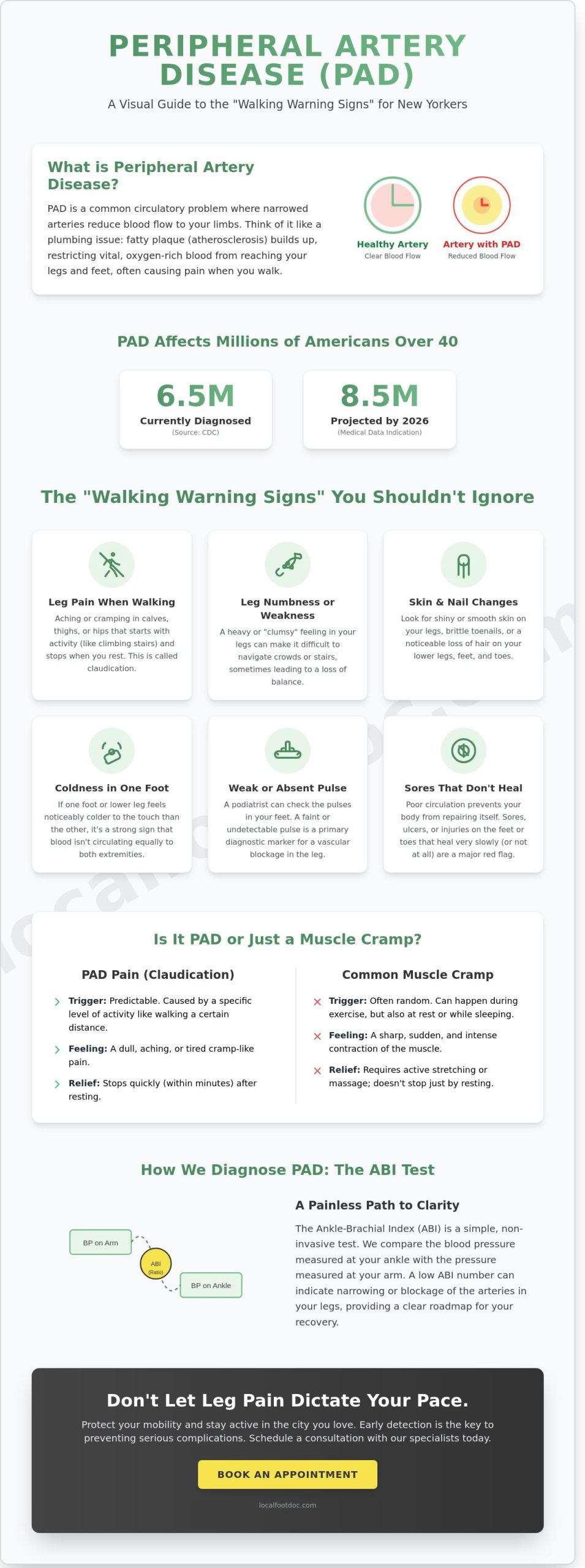
Is it PAD or Just a Cramp? Comparing Symptoms
Distinguishing between various types of leg discomfort is critical for New Yorkers who rely on their mobility to navigate the city. While it’s easy to blame a long day on the pavement for calf pain, pads disease symptoms differ significantly from standard muscle fatigue. Musculoskeletal issues like plantar fasciitis or Achilles tendonitis usually cause sharp, localized pain that’s most intense after rest or during the first steps of the day. In contrast, vascular pain from PAD is a systemic circulation failure. If your pain feels like a deep, heavy ache that only appears after walking a specific distance, it’s likely your arteries, not your tendons.
We also see patients confuse PAD with venous insufficiency or diabetic neuropathy. Venous issues often lead to visible swelling and a “heavy” feeling in the legs that improves when you elevate them. Neuropathy, common among our diabetic patients, feels like burning or tingling “pins and needles” that can happen anytime. PAD is unique because it’s a “supply and demand” problem. Your muscles demand oxygenated blood during movement, but narrowed arteries can’t deliver it, resulting in predictable cramping. Identifying Common PAD Symptoms early is the best way to prevent these issues from limiting your independence.
PAD vs. Common Leg Cramps
The primary difference between PAD and a standard charley horse is predictability. Nocturnal leg cramps often strike randomly at night and are frequently linked to dehydration or low magnesium levels. You can often resolve these by improving your intake of electrolytes or water. However, PAD pain follows a strict, mechanical pattern. If you notice that you can walk exactly two blocks before the cramping starts, and it consistently stops after two minutes of rest, you’re likely experiencing intermittent claudication. Understanding the causes of cramps on feet helps you rule out minor issues, but persistent, activity-triggered pain requires a professional vascular assessment.
The Danger of Misdiagnosis in NYC
In a fast-paced environment like Manhattan or Queens, the temptation to “walk it off” is strong. This is dangerous for anyone showing pads disease symptoms. Treating a vascular blockage like a simple muscle strain can lead to tissue loss or non-healing wounds. For instance, many people reach for compression socks to treat leg pain. While great for swelling, these socks can actually restrict blood flow further in patients with severe PAD. Our team uses advanced diagnostics to prevent these errors. When you visit a foot diabetes doctor near me at our practice, we utilize non-invasive Doppler ultrasound. This technology provides an immediate, 95 percent accurate look at your blood flow velocity, ensuring we treat the root cause rather than just the sensation.
Risk Factors and Complications: Why Early Detection Matters
Understanding the underlying risks of peripheral artery disease is the first step toward reclaiming your mobility. Our team focuses on the “Big Three” risk factors: smoking, diabetes, and high blood pressure. According to 2025 clinical data, smokers are 400% more likely to develop arterial blockages than non-smokers. When these factors intersect, the likelihood of experiencing severe pads disease symptoms increases significantly, often leading to restricted blood flow that the body can’t overcome without intervention.
New York presents what we call the Walking City Paradox. While the average New Yorker walks approximately 8,000 to 10,000 steps daily, this high activity level can be a double-edged sword. It serves as excellent natural therapy for early-stage PAD, but it also makes the transition from claudication (pain during movement) to Critical Limb Ischemia (CLI) much more apparent. CLI is a severe progression where blood flow is so restricted that pain occurs even at rest. Furthermore, your leg health is a direct window into your cardiovascular system. Statistics show that 60% of individuals diagnosed with PAD also have significant, often undiagnosed, coronary artery disease.
Non-Healing Wounds: The Podiatric Emergency
In a city where we navigate subway stairs and long concrete blocks, a small blister from a new pair of shoes can quickly escalate into a dangerous ulcer. We tell our patients in Brooklyn and Queens to never ignore a foot sore. If a wound doesn’t show significant healing within 14 days, it’s a podiatric emergency. Reduced circulation prevents the oxygen and nutrients required for repair from reaching the site, which can lead to infection or tissue death. Our specialized wound care protocols focus on limb salvage to prevent the complications that lead to the 150,000 amputations performed annually in the United States due to vascular issues.
NYC Lifestyle Adjustments for PAD Patients
Managing your vascular health doesn’t mean giving up the New York lifestyle. It means making smarter choices within it. We encourage patients to utilize the New York State Smokers’ Quitline at 1-866-NY-QUITS for localized support. You can also turn the city’s grid system into a structured walking program. For example, walking five blocks, resting when the pain starts, and then continuing for another five blocks helps build collateral circulation. When visiting your local deli, choose low-sodium options like fresh turkey or avocado instead of processed meats to manage blood pressure effectively. We are dedicated to helping you make these transitions so you can focus on getting back on your feet.
Diagnosis and Treatment at Local Foot Doc in Brooklyn & Queens
At Local Foot Doc, we believe that managing pads disease symptoms shouldn’t mean traveling to a cold, distant hospital complex. Our team provides expert care right in your neighborhood. Whether you visit us in Forest Hills, Astoria, or Woodhaven, Dr. Majdanski uses advanced, non-invasive technology to assess your circulation. The primary tool we use is the Ankle-Brachial Index (ABI). This test compares the blood pressure measured at your ankle with the blood pressure measured at your arm. It’s a painless process that takes about 15 minutes and provides a clear, numerical snapshot of your vascular health.
We prioritize keeping you active and mobile. Most patients find success through conservative management strategies. This often includes a combination of supervised walking programs and medications designed to improve blood flow. If we detect a blockage that doesn’t respond to these methods, we’ll coordinate a referral to a trusted vascular surgeon. Our goal is to ensure you stay active on New York City’s busy streets. If you’ve noticed pads disease symptoms like cramping while walking to the subway, our diagnostic process provides immediate answers and a path forward.
What to Expect During Your Vascular Foot Exam
When you arrive at our NYC offices, we perform a comprehensive circulation check. We start by manually feeling the pulses in your feet and ankles to gauge the strength of your blood flow. Our team examines your skin texture for signs of thinning or hair loss, which are common indicators of poor circulation. We also test your capillary refill time by applying gentle pressure to your toes to see how quickly color returns. This data helps us build a complete profile of your health. We regularly share these findings with your primary care physician to ensure your entire medical team is on the same page.
Getting Back on Your Feet in New York City
For over 20 years, our practice has served as a local pillar for community-focused podiatry. We understand that a New Yorker’s life depends on their ability to walk comfortably. To support your recovery, we might prescribe custom orthotics or specific shoe modifications. These tools help redistribute pressure and reduce the physical strain of a PAD-friendly walking routine. By combining advanced technology with a personal touch, we help you maintain your independence and keep your stride strong. Schedule your consultation at our Forest Hills or Brooklyn locations today.
Keep Your NYC Hustle Moving
Living in New York City requires being on your feet, whether you’re navigating the subway or walking through Forest Hills. Ignoring persistent leg pain as a simple sign of aging is a mistake that can lead to serious mobility complications. You now understand that recognizing pads disease symptoms, such as cramping during a brisk walk or skin discoloration, is the first step toward protecting your long-term circulation. Early intervention prevents the progression of arterial blockages and ensures you maintain the independence needed for your daily routine.
Board-certified surgeon Dr. Waldemar Majdanski has spent over 20 years serving the Brooklyn and Queens communities with expert podiatric care. Our team combines advanced diagnostic technology with a compassionate, neighborly approach to help you recover. With convenient locations in Forest Hills, Astoria, and Woodhaven, professional medical support is always just a short trip away. We’re dedicated to helping you stay active and pain-free through every borough.
Don’t let leg pain stop your NYC hustle; schedule a circulation exam with Dr. Majdanski today!
Your health is the foundation of your lifestyle. We’re here to help you walk with confidence again.
Frequently Asked Questions About PAD
Is PAD the same thing as “poor circulation” in the feet?
PAD is the clinical diagnosis for a specific type of poor circulation caused by plaque buildup in the arteries. While people often use these terms interchangeably, PAD affects 6.5 million Americans aged 40 and older according to the CDC. It specifically restricts oxygen-rich blood from reaching your lower extremities. If you notice cramping or heaviness while walking to the subway, these are common pads disease symptoms that our team can evaluate.
Can PAD symptoms go away on their own with enough walking?
PAD symptoms won’t disappear without medical intervention, but walking is actually a primary part of the treatment process. The American Heart Association notes that structured walking programs can increase pain-free walking distance by 180 percent. We don’t want you to just push through the pain alone. Our team creates personalized plans to help you regain your mobility and walk through Central Park without discomfort.
What is the “Subway Test” for identifying PAD symptoms?
The “Subway Test” is a practical way New Yorkers measure their mobility by how many blocks or stairs they can handle before leg pain starts. If you find yourself needing to stop every 264 feet, which is the length of one standard Manhattan block, it’s a sign of restricted blood flow. This recurring pain that stops when you rest is a hallmark of pads disease symptoms and shouldn’t be ignored during your daily commute.
Are foot ulcers always a sign of PAD or diabetes?
Foot ulcers aren’t always caused by PAD, but they are a major warning sign of underlying vascular issues. Research indicates that 15 percent of people with diabetes will develop a foot ulcer at some point. If a wound on your toe hasn’t healed in 14 days, it’s a medical priority. We use advanced diagnostic tools to determine if your circulation is sufficient for proper healing and to prevent further complications.
How does a podiatrist test for PAD during a routine visit?
We use a non-invasive test called the Ankle-Brachial Index (ABI) to compare the blood pressure in your ankle to the pressure in your arm. This diagnostic procedure takes about 15 minutes and provides a ratio that helps us identify blockages. We also check the strength of the pulses in your feet and examine skin temperature. These steps allow our team to catch circulation issues before they lead to serious mobility loss.
Can smoking one pack a day in NYC cause PAD symptoms to worsen?
Smoking one pack a day significantly accelerates the progression of arterial damage and leg pain. Clinical data shows that smokers are 4 times more likely to develop PAD than non-smokers. The chemicals in tobacco cause your arteries to tighten and become prone to plaque buildup. Quitting is the most impactful step you can take to keep your legs healthy and maintain your independence while navigating the city.
What should I do if one foot is significantly colder than the other?
You should schedule a professional vascular evaluation immediately because a temperature difference of 2 degrees or more between your feet often indicates a localized circulation blockage. This asymmetry suggests that blood isn’t reaching one limb effectively. Our Manhattan and Brooklyn offices see patients for this concern frequently. It’s a clear signal that your vascular system needs professional attention to prevent tissue damage or chronic pain.
Does insurance typically cover PAD screening at a NYC podiatrist?
Most insurance providers, including Medicare Part B, cover PAD screenings when you exhibit symptoms like leg pain or non-healing wounds. Since these tests are considered medically necessary for a diagnosis, coverage is standard for the majority of our New York patients. We recommend contacting our office staff so we can verify your specific plan’s benefits. We want to ensure you get the care you need without any unexpected financial stress.