What if the stabbing pain in your heel every morning isn’t a badge of honor, but a warning that your career is at risk? We understand that a double shift on a high-rise in Brooklyn or a long day on scaffolding in Queens takes a massive toll on your body. You likely accept aching arches and the constant pressure of steel-toed boots as unavoidable parts of the trade. However, managing foot pain as a construction worker in NYC is about more than just “toughing it out.” It’s about ensuring you can stay on the job until you’re ready to retire on your own terms.
We’ve developed this 2026 survival guide to help you eliminate chronic discomfort and protect your long-term mobility. You’ll learn how to align your footwear with the latest ASTM F2413-18 safety standards while implementing quick, non-surgical strategies to fix the underlying mechanical issues. We’ll walk you through everything from custom orthotic solutions to field-tested recovery techniques that keep you moving safely across the job site. It’s time to stop dreading the climb up the ladder and start focusing on the build.
Key Takeaways
- Learn why NYC’s unique urban landscape, from Forest Hills to the Brooklyn Navy Yard, is harder on your feet than standard residential construction.
- Discover the “Three-Month Rule” for boot replacement and how choosing the right safety toe material can prevent structural foot deformities.
- Master a 15-minute after-shift recovery routine that uses temperature and movement to flush out toxins and reduce swelling.
- Explore professional strategies for managing foot pain as a construction worker in NYC, including how to spot early warning signs of career-threatening injuries.
- Find out how modern diagnostic tools provide a clear path to recovery so you don’t have to worry about surgery or extended time off the clock.
Why NYC Construction Sites are a “Perfect Storm” for Foot Pain
Working construction in New York City isn’t like working a residential build in the suburbs. The sheer scale and verticality of our city’s projects create a uniquely punishing environment for your feet. Whether you are navigating a massive redevelopment at the Brooklyn Navy Yard or a luxury high-rise in Forest Hills, the terrain is relentless. Managing foot pain as a construction worker in NYC requires you to understand that these sites are designed for structural efficiency, not for the comfort of the human body.
We often see workers struggling with the difference between static and dynamic loading. Walking on a city sidewalk allows your muscles to contract and relax. However, standing on scaffolding or a steel beam for hours creates static loading. This constant pressure compresses the same small tissues and blood vessels without a break, leading to deep, throbbing aches that don’t go away with a simple sit-down. It’s a mechanical challenge that your body wasn’t built to handle without help.
The weight of your gear only complicates the issue. Most workers carry between 20 and 30 pounds of extra load in tool belts and specialized PPE. This isn’t just a number; it is a significant increase in the force applied to your arches and heels with every single step. Over an eight-hour shift, that extra weight adds up to thousands of pounds of cumulative pressure that can flatten your arches and strain your tendons.
The Impact of Hard Surfaces in Brooklyn and Queens
Unfinished concrete floors and steel plates offer zero shock absorption. Every step you take sends a shockwave up your leg, resulting in “micro-trauma” to the soft tissues of the foot. NYC winters turn these surfaces into ice-cold heat sinks that sap flexibility from your tendons, while summer asphalt causes feet to swell and press painfully against your boots. Constant vibration from heavy machinery contributes to nerve fatigue by overstimulating the sensory receptors in your feet, often leading to numbness or tingling by the end of the day.
Ladders, Scaffolding, and Arch Strain
The narrow rung of a ladder is often the primary enemy of a healthy foot. It concentrates your entire body weight, plus your gear, onto a one-inch strip of your midfoot. This creates intense focal pressure that can inflame the plantar fascia. Balancing on uneven debris or navigating narrow scaffolding forces the small stabilizing muscles in your feet to work overtime. This repetitive climbing and balancing often mimics the high-intensity sports injuries we see in urban athletes. To mitigate this, ensure your boots meet the highest protective footwear standards to provide the rigid support your arches need to survive the climb.
The Construction Worker’s Guide to Safety Footwear and Comfort
Your work boots are the most important tools in your kit, yet they are often the most overlooked. Managing foot pain as a construction worker in NYC begins with a fundamental shift in how you view your footwear. It isn’t just about protection from falling debris; it’s about providing a medical-grade foundation, often supplemented by products from specialists like Ortopedia Suiza, for a body that spends ten hours a day on unforgiving surfaces. When you choose a boot, you are selecting the primary defense mechanism for your mobility and your career longevity.
We often get asked whether steel-toe or composite-toe boots are better for foot health. Steel-toe boots are generally thinner, which provides more room inside the “toe box” for workers with wider feet or those prone to bunions. However, steel conducts cold, which can be brutal during a January shift in Long Island City. Composite-toe boots are lighter and offer better thermal insulation, making them a favorite for those who prioritize weight reduction and temperature control. Regardless of the material, your boots must meet OSHA’s foot protection requirements to ensure you stay compliant on-site while protecting your structural health.
One of the biggest mistakes we see is ignoring the “Three-Month Rule.” Even if the leather looks fine, the internal shock-absorbing materials in a work boot typically degrade after 90 days of heavy use on NYC concrete. Once that internal support collapses, your feet take the full force of every step. Additionally, moisture management is critical in our humid climate. Damp boots are a breeding ground for infections. We recommend rotating between two pairs of boots to allow each pair to dry completely; this simple habit prevents skin breakdown and fungal issues that can take you off the job.
Choosing the Right Boot for the Job
When shopping for new gear, always go in the late afternoon. Your feet naturally swell after a day of work, and buying boots in the morning often leads to a fit that is too tight by the end of your shift. Look for a boot with a rigid shank. This is a supportive piece of material under the arch that prevents the boot from wrapping around the rung of a ladder. Without a rigid shank, your arch is forced to bear your entire weight on a narrow point, which is a leading cause of chronic strain.
The Role of Custom Orthotics in Work Boots
Most factory insoles are thin pieces of foam with little functional value. For workers with flat feet or high arches, these “off-the-shelf” options fail under the intense pressure generated by a worker in full gear. Professionally designed custom orthotics are different. They are built from a precise 3D scan of your foot to redistribute pressure away from painful areas like the heel or the ball of the foot. If you find yourself constantly adjusting your laces to find relief, it might be time to schedule a professional fitting to stabilize your foundation and reclaim your independence from daily discomfort.
The 15-Minute After-Shift Recovery Protocol
After a grueling shift on a site in Midtown or the South Bronx, your first instinct is likely to kick off your boots and collapse onto the couch. However, successfully managing foot pain as a construction worker in NYC requires a proactive approach that begins the moment you step through your front door. Think of this 15-minute protocol as a mechanical reset for your lower extremities. By addressing inflammation and muscle tightness before you sleep, you prevent the “stiff first step” that plagues so many workers the following morning.
One of the most effective tools for recovery is already in your freezer. The “Ice Bottle Roll” involves rolling the arch of your foot over a frozen water bottle for five minutes. This provides targeted cryotherapy to the plantar fascia, reducing the micro-inflammation caused by hours of standing on concrete. For more systemic relief, we recommend contrast bathing. Alternating between three minutes of warm water and one minute of cold water for three cycles helps flush out metabolic waste and reduces the heavy, throbbing sensation in your feet. This method aligns with broader NIOSH ergonomic guidelines for managing physical strain in high-impact industries.
Immediate Relief After the Commute
Your recovery starts with a thorough moisture check. Removing your boots immediately is essential for fungal nail prevention, as trapped sweat can weaken the skin and nail beds. Once your feet are dry, perform the “Wall Stretch” by placing your toes against a baseboard and leaning forward to stretch the Achilles and plantar fascia. We also suggest rolling your foot over a lacrosse ball or a similar firm object. This simple action helps break up small adhesions in the soft tissue that form during long periods of static loading.
Long-Term Maintenance for the NYC Worker
While we discussed boot quality earlier, the habit of rotating between two pairs of boots is equally vital. This practice allows the internal cushioning to fully decompress and the materials to dry, which can effectively double the lifespan of your footwear. Pair this with moisture-wicking wool-blend socks to keep your feet resilient against the city’s humidity. Finally, finish your day with elevation. Elevating your feet above the level of your heart effectively reduces lower extremity edema by allowing gravity to assist the movement of fluid out of the tissues and back into circulation. This 15-minute investment ensures you return to the job site with the mobility you need to stay safe and productive.

When Foot Pain Signals a Career-Threatening Injury
While we’ve discussed the environmental stresses of the job, it’s vital to recognize when soreness crosses the line into a clinical injury. For those managing foot pain as a construction worker in NYC, the difference between “tired feet” and a structural problem can be the difference between a full career and an early disability. Ignoring the body’s warning signs often leads to compensatory injuries. This happens when you overwork your “good” leg to protect the painful one, eventually causing issues in your knees, hips, and lower back.
A primary red flag is Plantar Fasciitis. This condition presents as a sharp, stabbing sensation in the heel during your first few steps each morning. It occurs when the thick band of tissue supporting your arch becomes inflamed or develops microscopic tears from the repetitive impact of heavy gear on concrete. Similarly, stress fractures are a silent threat. Unlike a broken bone from a fall, these are tiny cracks that develop over time. If you feel a deep, localized throb that worsens during your shift but lingers even when you rest, your bones may be reaching their breaking point. We specialize in managing foot pain as a construction worker in NYC by identifying these bone and tissue stresses before they require months of recovery time.
Heel and Arch Red Flags
It’s important to differentiate between simple muscle fatigue and chronic heel pain that requires medical intervention. When your arches begin to collapse or “fall,” your entire skeletal alignment shifts. This misalignment forces your body to absorb shock in ways it wasn’t designed for, often leading to hip and lower back pain. If you find yourself limping through the last hour of your shift, you are likely engaging in “compensatory walking.” This puts your healthy joints at risk of secondary injury and long-term mobility issues.
Structural Changes from Tight Footwear
Steel-toed boots are non-negotiable for safety, but they can be unforgiving on your bone structure. Constant friction and pressure often lead to the development of bunions, where the big toe joint pushes outward. If the deformity becomes painful enough to limit your movement, you may need to discuss bunion surgery in Queens to restore your foot’s natural shape. Additionally, cramped conditions inside a boot can cause a hammertoe, where the middle joint of a toe becomes stuck in a bent position. These structural changes don’t just go away with rest. They require professional correction to ensure you stay mobile on the job site.
Don’t wait for a minor ache to become a permanent limitation. If you’re experiencing persistent sharp pain or noticing changes in your foot’s shape, schedule a professional evaluation with our team to protect your career and regain your independence from pain.
Professional Foot Care for the NYC Workforce
Managing foot pain as a construction worker in NYC requires more than just better boots; it requires a medical partner who understands the physical demands of your trade. At Local Foot Doc, we treat your feet like the high-performance tools they are. Our primary clinical objective is always a swift and safe “Return to Work.” We recognize that for a NYC tradesperson, being off the clock isn’t just an inconvenience. It’s a threat to your livelihood and your family’s stability. We view our patients as partners in the healing process, ensuring you have the information and support needed to regain your independence from chronic discomfort.
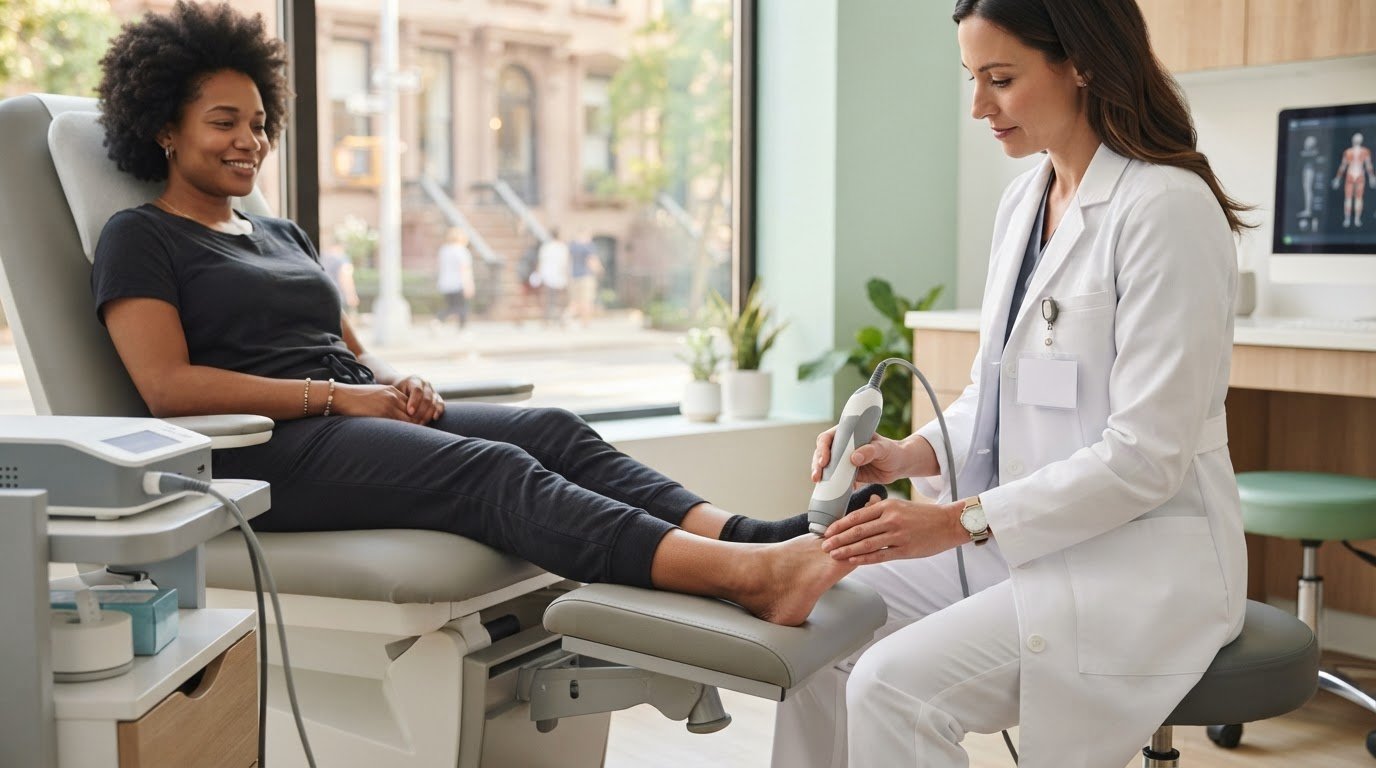
Our facilities are equipped with advanced in-office imaging technology, allowing us to identify stress fractures, nerve entrapments, or ligament tears during your initial visit. This immediate diagnostic capability ensures we don’t waste time on ineffective treatments. We prioritize non-surgical interventions whenever possible. This includes extracorporeal shockwave therapy to stimulate healing in chronic plantar fasciitis and the design of advanced custom orthotics that provide the structural support necessary for ten-hour shifts on concrete. These solutions are field-tested to ensure they stand up to the rigors of a dynamic job site.
When structural issues have progressed beyond conservative care, we provide surgical excellence with a focus on modern methodology. Our minimally invasive techniques for bunion and hammertoe correction are designed to minimize trauma and accelerate recovery times. This is especially important for our patients in Astoria, Forest Hills, and Woodhaven who need to get back on their feet quickly without the long recovery periods associated with traditional open surgery. We are committed to using the latest clinical advancements to help you return to the activities you love, both on and off the job.
A Patient-Centered Approach in Brooklyn and Queens
Dr. Majdanski and our entire team tailor each treatment plan to the specific physical demands of your job site. We don’t just look at a scan; we look at how you move, how you climb, and how you stand. By applying principles from sports medicine to the industrial workplace, we help “industrial athletes” recover with the same precision and urgency as professional runners. We are proud to be a neighborhood-based practice that remains accessible to working families across the boroughs, offering a level of personal attention that corporate medical groups often lack.
Your Path to Pain-Free Work
Your first consultation is a collaborative process. We will review your medical history, perform a physical examination, and discuss how your current symptoms impact your performance on the job. We understand the constraints of a construction schedule, so we work with you to ensure that your treatment plan causes minimal disruption to your work hours. You deserve to work without the constant distraction of physical suffering. Don’t let foot pain end your career; schedule your consultation at Local Foot Doc today and take the first step toward a more comfortable and productive future.
Protect Your Foundation and Your Career
At Local Foot Doc, we are dedicated to helping the city’s workforce stay on their feet. Led by board-certified surgeon Dr. Waldemar Majdanski, our team brings over 20 years of NYC clinical experience to every patient consultation. With multiple convenient locations across Queens and Brooklyn, we make it easy to access specialized care without disrupting your busy work schedule. Protect your career and your mobility; book an appointment with NYC’s construction foot specialists at Local Foot Doc. We are here to help you regain your independence and return to the job site with total confidence.
Frequently Asked Questions
Is it normal for my feet to hurt every day after working construction?
Daily, debilitating pain is never a normal part of any career, even in a physically demanding trade. While muscle fatigue is expected after a long shift in Brooklyn or Manhattan, sharp or localized pain indicates a mechanical failure. Successfully managing foot pain as a construction worker in NYC involves recognizing that persistent discomfort is a signal from your body that your current footwear or gait needs professional adjustment before a minor issue becomes a chronic injury.
Can the wrong work boots cause permanent foot damage?
Yes, improperly fitted boots can lead to permanent structural deformities over time. If a boot is too narrow or lacks a rigid shank, the constant pressure can cause bunions to worsen or lead to nerve entrapment like Morton’s neuroma. Because you spend more time in your work boots than any other footwear, ensuring they provide adequate volume for your foot shape is critical for preventing long-term bone and joint damage.
How can I tell if my heel pain is plantar fasciitis or just tiredness?
The timing of your discomfort is the most reliable diagnostic indicator. General tiredness usually improves with rest and feels like a dull ache across the entire foot. Plantar fasciitis, however, typically presents as a sharp, stabbing sensation in the heel during your first few steps in the morning or after sitting for a break. If the pain returns with intensity after you’ve been off your feet, it’s likely a clinical inflammatory issue.
Do I really need custom orthotics, or are store-bought insoles enough?
Store-bought insoles often fail because they provide generic cushioning rather than structural correction. While a foam pad might feel soft for an hour, it doesn’t address the underlying bone alignment issues caused by standing on concrete. Custom orthotics are medical devices designed from a 3D scan of your foot. They redistribute your weight and gear load across the entire foot, which is essential for managing foot pain as a construction worker in NYC effectively over a long career.
What are the best types of socks for construction workers in NYC?
You should prioritize merino wool blends over 100% cotton socks. Cotton traps moisture against your skin, which leads to blisters and fungal infections in the high humidity of a New York summer. Merino wool naturally regulates temperature and wicks sweat away from the skin. This keeps your feet dry and reduces the friction that causes painful calluses during a double shift on the job site.
Will I need surgery for my bunions if I keep working in boots?
Surgery is not always inevitable, but continuing to work in restrictive boots without intervention will likely cause the deformity to progress. Early treatment focuses on using custom orthotics to stabilize the toe joint and changing boot styles to reduce lateral pressure. We only recommend surgical correction when the pain begins to limit your ability to perform your job safely or interferes with your quality of life outside of work.
How can I reduce foot swelling after a long shift on concrete?
Elevation and compression are the two most effective ways to manage end-of-day swelling. When you get home, try to keep your feet elevated above the level of your heart for at least 15 minutes to assist gravity in draining fluid. Additionally, wearing graduated compression socks during your shift can prevent fluid from pooling in your lower legs and feet, which reduces that “heavy” feeling at the end of the day.
Can foot problems cause the back and knee pain I feel at work?
Yes, your feet are the foundation of your entire kinetic chain. When your feet are misaligned or painful, you unconsciously change the way you walk to protect them. This “compensatory gait” forces your knees, hips, and lower back to absorb shock in ways they weren’t designed for. Resolving foot issues often provides immediate relief for the mysterious back and knee aches you experience while climbing ladders or scaffolding.