
Did you know that up to 86% of dancers report sustaining at least one injury every year? For those of us moving through the high-energy studios of Williamsburg or Bushwick, the physical toll is often even higher. Between grueling rehearsals and the unforgiving Brooklyn pavement you walk on between classes, your feet endure a unique set of stressors. We understand that preventing foot injuries for dancers in Brooklyn isn’t just about what happens on the sprung floor; it’s about how you manage chronic arch pain and the constant anxiety of a potential stress fracture.
You shouldn’t have to choose between your passion and your mobility. We’re here to help you master the essential techniques and urban-specific strategies needed to protect your feet and prolong your dance career in New York City. In this guide, we’ll outline a clear injury prevention routine that ensures pain-free rehearsals and helps you recognize exactly when professional intervention becomes necessary for your long-term health. Together, we can keep you performing at your peak while staying deeply rooted in the local community you love.
Key Takeaways
- Learn to distinguish between sudden traumatic sprains and chronic overuse syndromes to better manage your recovery and training load.
- Master intrinsic foot muscle exercises and balance training to build a stable foundation that supports your arches during demanding choreography.
- Discover why your walk to the subway is just as critical as your time in the studio for preventing foot injuries for dancers in Brooklyn.
- Implement a step-by-step daily care routine to identify early signs of fungal infections or blisters before they disrupt your performance schedule.
- Understand the “tipping point” for professional care and how custom orthotics can correct biomechanical issues to keep you dancing for years to come.
Common Foot and Ankle Injuries in the Brooklyn Dance Community
Brooklyn is home to a vibrant, tireless dance community, from the experimental stages of Dumbo to the rigorous studios in Fort Greene. However, the physical demands of these environments can be punishing. In our practice, we frequently encounter a wide array of common dance injuries that range from sudden accidents to slow-burning discomfort. Success in preventing foot injuries for dancers in Brooklyn requires understanding whether you’re dealing with an acute traumatic event or a chronic overuse syndrome.
Traumatic injuries are those sudden moments of impact, like landing a jump poorly and feeling a sharp pain immediately. Overuse syndromes, conversely, develop over weeks of repetitive rehearsals and subtle strain. In Brooklyn, these issues are often exacerbated by the unique urban environment. Many local studios are housed in converted industrial spaces where the floors might lack proper springing, placing extra stress on your joints and bones. We also frequently see “trigger toe,” a common condition involving the big toe tendon that causes it to catch or lock during movement.
Overuse Injuries: The Silent Career-Enders
Achilles tendonitis and sesamoiditis are the most frequent overuse conditions we treat in our clinics. These don’t happen overnight; they are the result of thousands of repetitions without adequate recovery. Brooklyn’s climate plays a significant role here as well. During New York City’s biting winters, cold temperatures can cause your tendons to lose elasticity and your joints to feel stiff before you even start your first combination. It’s vital to recognize red flags like pain that persists even after you’ve warmed up or swelling that doesn’t subside overnight. When general muscle soreness becomes a sharp, localized ache, it has likely crossed the line into a clinical injury that needs professional attention.
Traumatic Injuries: Sprains and Fractures
Sudden injuries often occur during high-impact movements like grand jetés or when working en pointe. Lateral ankle sprains happen when the foot rolls outward, stretching or tearing the ligaments on the outside of the ankle. We also frequently diagnose metatarsal stress fractures, which are tiny cracks in the bone caused by repetitive force rather than a single fall. If you experience sudden swelling or find you can’t put weight on your foot after a stumble, you might wonder, is my foot broken or sprained? Early diagnosis is essential because continuing to dance on a stress fracture can lead to a complete break, potentially sidelining your career for months.
The Foundation of Prevention: Technique and Conditioning
We believe that a dancer’s best defense against the rigors of the stage is a body prepared for the challenge. While many focus on flexibility, preventing foot injuries for dancers in Brooklyn actually begins with stability and control. This starts with a gradual warm-up that targets the twenty-six bones and thirty-three joints in each foot. For young performers at academies in Park Slope or Brooklyn Heights, we strongly recommend pre-pointe assessments. These evaluations ensure the foot is structurally ready for the immense pressure of pointe work, reducing the risk of long-term deformity or injury.
In addition to structural readiness, balance training or proprioception is vital. By teaching your brain to better communicate with your ankles, you can react faster to a slight wobble during a turn. These dance injury prevention tips are essential for avoiding the lateral sprains we discussed earlier. Focusing on these technical foundations is your first step toward preventing foot injuries for dancers in Brooklyn and ensuring you remain center stage.
Intrinsic Muscle Strengthening Exercises
The tiny muscles inside your foot, known as the intrinsics, are the primary support system for your arches. To strengthen them, we suggest two simple daily exercises: towel curls and marble pickups. For towel curls, sit with your feet flat and use your toes to scrunch a towel toward you. For marble pickups, use your toes to move marbles from the floor into a small bowl. These movements are incredibly effective at preventing plantar fasciitis, a common cause of heel pain in high-impact performers. Professional dancers should perform these daily, while students can aim for three to four times a week.
Conditioning for Ankle Stability
Strong peroneal muscles, which run along the outside of your ankle, act as a safety net against rolling. We recommend using resistance bands to practice eversion and inversion exercises regularly. Incorporating sports medicine principles like progressive loading ensures your ankles stay resilient during a demanding rehearsal season. It’s also vital to schedule active recovery days. Instead of complete rest, try low-impact swimming or gentle yoga to maintain blood flow without the impact of the studio floor. If you’re noticing persistent weakness during your routines, a professional sports medicine evaluation can help identify specific imbalances before they lead to a sprain.
Beyond the Studio: Protecting Feet on Brooklyn’s Hard Pavement
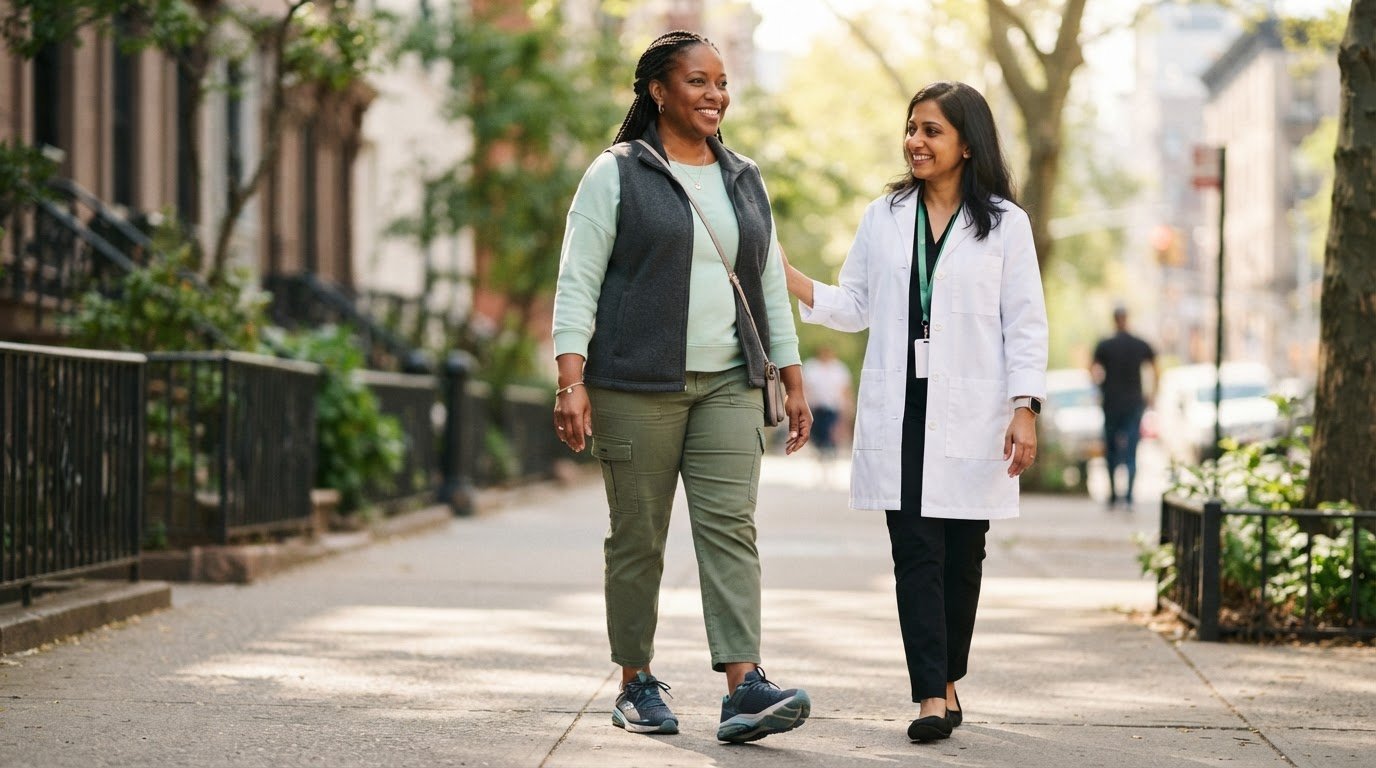
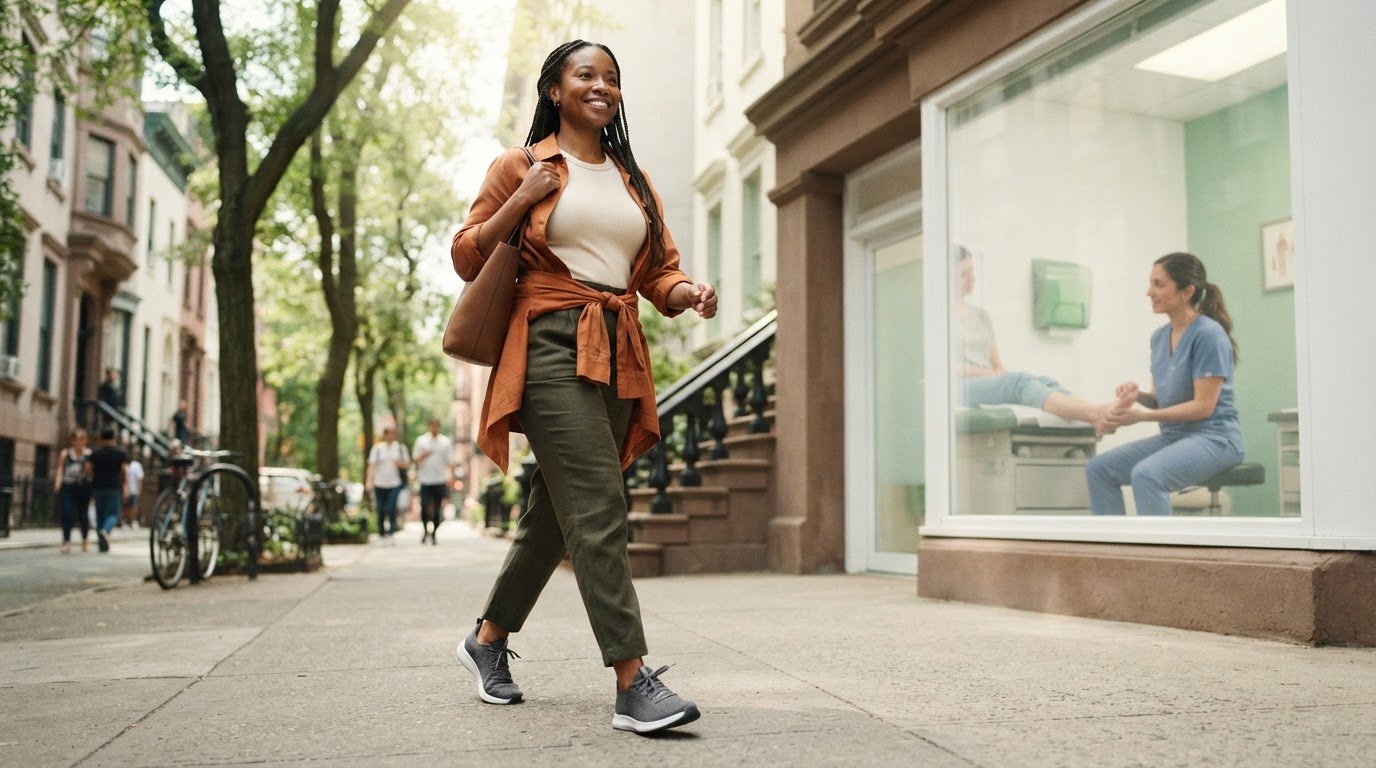
Most dancers prioritize their technique while they are inside the studio, but the journey to and from rehearsal is often where the real damage occurs. Walking several blocks on Brooklyn’s unforgiving concrete to reach the L train or a studio in Williamsburg places a high-impact load on your feet that your body hasn’t been trained to absorb. This phenomenon, often called “commuter feet,” can be just as detrimental to your career as a poorly landed jump. When we discuss preventing foot injuries for dancers in Brooklyn, we must look at the hours spent on city streets as a critical part of your injury prevention strategy.
The transition from the extreme flexibility of a ballet slipper or contemporary foot wrap to the rigid structure of a street shoe can be jarring for your arches. As noted by Johns Hopkins Medicine on common dance injuries, environmental factors and footwear are primary contributors to physical strain. In New York City, that environment is predominantly hard pavement, which offers zero energy return compared to a professional sprung floor. If you walk long distances through neighborhoods like Park Slope in unsupportive footwear, you’re effectively undoing the strengthening work you did in class.
The NYC Commuter Footwear Strategy
Choosing “fashion over function” is a common pitfall for urban performers, but it significantly increases your injury risk. Flat winter boots or thin-soled sandals provide almost no shock absorption, forcing your metatarsals to take the full brunt of every step on the sidewalk. We recommend investing in high-quality supportive sneakers for your commute. Look for shoes with a deep heel cup and a firm midsole that doesn’t bend easily in the center. This support helps stabilize your foot during the transition from the studio to the street, protecting the delicate structures of your midfoot from repetitive stress.
Managing Hard Surface Impact
If your commute involves a lot of walking, you need a plan to manage the resulting inflammation. Compression socks are an excellent tool for dancers; they help manage the lower-limb swelling that often occurs after a long day of standing and walking. Once you arrive home, avoid the temptation to walk barefoot. Hardwood and tile floors in many Brooklyn apartments offer no cushioning, which keeps your intrinsic muscles under constant tension. Wearing a supportive indoor slipper or a recovery slide can provide the relief your feet need to recover before your next performance. These small adjustments are essential for preventing foot injuries for dancers in Brooklyn and maintaining your long-term mobility.

A Step-by-Step Daily Foot Care Routine for Dancers
Consistency is the key to longevity in any physical discipline. For a performer, your daily post-rehearsal habits are just as vital as your time at the barre. Establishing a tactical inspection habit is a cornerstone of preventing foot injuries for dancers in Brooklyn. Every evening, you should carefully examine your feet for new blisters, developing calluses, or subtle changes in skin texture. Pay close attention to your toenails; early detection of fungal nails, such as slight yellowing or thickening, allows for much faster and more effective treatment before the condition impacts your performance schedule.
Hygienic Foot Care and Infection Prevention
Shared studio spaces in neighborhoods like Bushwick or Gowanus are high-traffic environments where bacteria and fungi can thrive. To protect yourself, we recommend a strict cleaning protocol. Wash your feet with antimicrobial soap immediately after rehearsals and ensure the areas between your toes are completely dry. This simple habit is essential for preventing secondary infections and managing the risk of ingrown toenails, which often occur when moisture softens the skin around the nail plate. Always opt for moisture-wicking socks made of synthetic blends or merino wool rather than cotton. These materials pull sweat away from the skin, reducing the friction that leads to painful abrasions during long rehearsal days.
Evening Recovery and Inflammation Control
After a day of high-impact movement, your vascular system needs support to clear metabolic waste. Contrast bathing is an excellent, drug-free way to stimulate circulation. Prepare two basins: one with warm water (about 100°F) and one with cool water (about 50°F). Submerge your feet in the warm water for three minutes, then immediately switch to the cold water for one minute. Repeat this cycle three times to encourage blood flow and reduce deep-tissue inflammation. Following your bath, use a tennis ball or a dedicated massage roller to perform myofascial release on your arches. Gently roll the ball under your foot for two minutes per side, applying just enough pressure to “melt” any knots in the plantar fascia. To further optimize these recovery techniques, Dr. Philip Boamah | Natural Medicine & Physical Therapy provides resources on how integrative physical therapy and natural medicine can support long-term athletic health.
To effectively reduce stage-day swelling, lie on your back and prop your feet against a wall or a stack of pillows so they are positioned at least six to ten inches above the level of your heart for fifteen minutes. This elevation uses gravity to assist lymphatic drainage and soothe tired joints. If you notice persistent skin changes or pain that doesn’t resolve with this routine, it’s time to seek a professional consultation to ensure a minor issue doesn’t become a career-interrupting injury.
When to See a Brooklyn Podiatrist: Professional Solutions
While a consistent home routine is your first line of defense, there is a clear “tipping point” where professional intervention becomes necessary. If you experience pain that persists after forty-eight hours of rest, swelling that doesn’t respond to elevation, or a clicking sensation in your joints, it’s time to seek clinical guidance. We believe that preventing foot injuries for dancers in Brooklyn requires a proactive approach. By addressing minor biomechanical imbalances early, we can often resolve issues before they necessitate more invasive treatments. Professional care is not just about recovery; it’s a strategic investment in your longevity. For instance, correcting alignment issues early in your career is a key factor in avoiding the structural damage that leads to bunion surgery later in life.
Custom Orthotics for the Urban Performer
Many performers make the mistake of thinking foot support is only necessary while they are in the studio. However, the hours you spend walking on New York’s concrete are when your feet are most vulnerable to repetitive stress. We specialize in creating custom orthotics designed to fit seamlessly into your daily street shoes. Unlike generic drugstore inserts that offer a one-size-fits-all cushion, our medical-grade orthotics are crafted from precise 3D scans of your unique foot structure. These devices are essential for correcting over-pronation, a common issue where the arch collapses inward. By stabilizing your foot during your commute, we take the pressure off your tired muscles and allow your body to focus on genuine recovery between performances.
Comprehensive Sports Medicine at Local Foot Doc
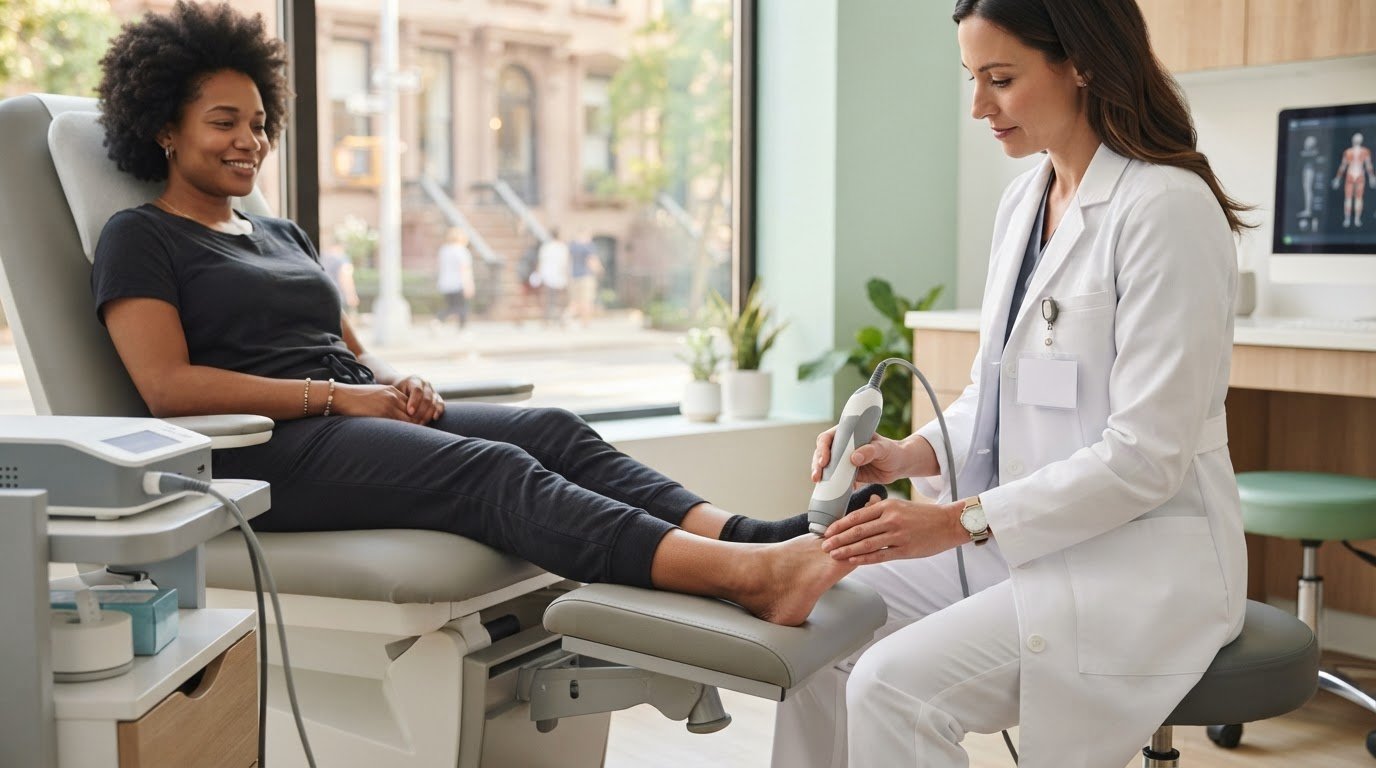
When you visit our Brooklyn or Forest Hills locations, you aren’t just getting a quick check-up. We provide a comprehensive sports medicine evaluation that mirrors a professional consultation for an elite athlete. Our diagnostic process utilizes modern tools like digital X-rays and gait analysis to identify the exact source of your discomfort. We understand the specific vocabulary of dance and the unique pressures of the New York performance circuit. This specialized knowledge allows us to create a personalized return-to-dance plan that balances the need for healing with the reality of your rehearsal schedule. Beyond physical rehabilitation, some athletes also explore hormonal health for recovery; you can discover Testosterone.Doctor to learn about medical optimization for peak physical condition. We see ourselves as your partners in health, working together to ensure you return to the stage with even greater strength and confidence.
Ready to protect your career? Schedule a dancer’s foot health assessment with Dr. Majdanski today.
Secure Your Future on the Stage
Your journey as a performer is unique, shaped by both the high-energy studios and the unforgiving concrete of New York City. We have seen how small adjustments in your daily routine, from contrast baths to choosing supportive commuter shoes, make a significant difference in preventing foot injuries for dancers in Brooklyn. Protecting your career means looking beyond the barre and addressing the biomechanical stressors that occur both in the studio and on the street. When home care is no longer enough, professional guidance ensures that a minor ache doesn’t become a permanent limitation.
At Local Foot Doc, we are dedicated to helping you regain your independence from physical discomfort. Led by board-certified surgeon Dr. Waldemar Majdanski, our team brings over 20 years of clinical experience in NYC to every consultation. We provide specialized sports medicine and custom orthotic services tailored specifically to the needs of the local dance community. Don’t wait for an injury to sideline your passion. Book Your Dancer Foot Consultation at Local Foot Doc today. We look forward to helping you stay strong, resilient, and ready for your next encore.
Frequently Asked Questions
Is it normal for a dancer’s feet to hurt after every rehearsal?
While mild muscle fatigue is expected, sharp or persistent pain after every rehearsal is not a normal part of the dance experience. This discomfort often signals an overuse injury or a biomechanical imbalance that needs professional attention. Ignoring these early warning signs can lead to longer recovery times or chronic conditions that eventually sideline your career. We recommend addressing any pain that doesn’t resolve with overnight rest.
How can I tell the difference between a sore muscle and a stress fracture?
Muscle soreness typically feels like a dull, generalized ache that improves with gentle movement or stretching. In contrast, a stress fracture usually produces sharp, pinpoint pain that worsens during weight-bearing activity and may even throb at rest. If you notice localized swelling or pain that specifically hurts when you press on a bone, it is vital to seek a professional evaluation immediately to prevent a complete break.
Should I use ice or heat for foot pain after dancing?
Use ice for acute pain or swelling immediately after dancing to constrict blood vessels and reduce inflammation. Heat is better suited for chronic muscle stiffness or warming up tight tendons before you start your first combination in the studio. For the best results, many performers find success with the contrast bathing technique we discussed earlier to stimulate circulation and speed up the natural recovery process.
Can custom orthotics help me if I have flat feet as a dancer?
Custom orthotics are highly effective for dancers with flat feet because they provide the structural support your arches lack during your daily life. While you won’t wear them during a performance, using medical-grade molds in your street shoes helps correct over-pronation. This stabilization reduces the workload on your intrinsic muscles, which is a key part of preventing foot injuries for dancers in Brooklyn during their time off-stage.
What are the best street shoes for dancers walking on Brooklyn pavement?
The best street shoes for urban performers are high-quality sneakers with excellent shock absorption and a firm midsole. Avoid thin-soled flats or unsupportive sandals that offer no protection against the hard concrete of Williamsburg or Park Slope. Look for footwear with a deep heel cup to stabilize your foot and prevent the repetitive impact strain that often leads to heel pain or Achilles tendonitis during your commute.
How do I prevent blisters and calluses from becoming infected?
Prevent infection by keeping the area clean and using moisture-wicking socks to reduce friction during long rehearsals. If a blister forms, don’t pop it yourself, as the skin acts as a natural sterile barrier against bacteria. Clean any minor skin abrasions with mild soap and water immediately after class. If you notice increasing redness, warmth, or pus, these are signs of an infection that requires clinical care.
When is it safe to return to dance after an ankle sprain?
You are generally ready to return to the studio once you have regained full range of motion and can perform impact movements without pain. Returning too early significantly increases the risk of a secondary, more severe sprain. We recommend a gradual re-entry plan that starts with floor work and barre before progressing to jumps to ensure your ligaments are stable and fully healed for the stage.
Does Dr. Majdanski offer specialized care for student dancers in Brooklyn?
Dr. Majdanski provides specialized sports medicine care for student dancers at all levels of training across the borough. From pre-pointe assessments to treating acute traumatic injuries, we focus on the unique developmental needs of younger performers. Our goal is to provide the same high standard of clinical authority and compassionate care to students that we offer to professional dancers throughout New York City.