
You shouldn’t have to choose between managing your monthly expenses and walking without chronic pain. For many of our neighbors across New York, the process of securing medical equipment feels like a second job filled with confusing terms like Durable Medical Equipment and pre-authorization. We know how discouraging it is to worry that a claim might be denied after you have already committed to your health. If you are struggling with foot discomfort, understanding how to get insurance to cover custom orthotics in NY is the first step toward regaining your independence and returning to the activities you love.
We believe that professional care should be accessible, not an administrative headache. In this 2026 guide, we’ll provide a clear path to obtaining a prescription and navigating the specific requirements of New York insurance providers. You’ll learn about the critical role of documenting medical necessity and how recent legislative shifts, such as New York State Senate Bill S10292, are working to expand your access to essential orthotic devices. We’ll walk you through the exact documentation needed, from biomechanical gait analysis to casting methods, to ensure your path to pain relief is as smooth and predictable as possible. By following these steps, you can focus on your recovery instead of the paperwork.
Key Takeaways
- Learn why New York insurance providers classify custom orthotics as Durable Medical Equipment (DME) and what this means for your coverage eligibility.
- Discover the essential clinical steps for how to get insurance to cover custom orthotics in NY, including the importance of a professional biomechanical gait analysis.
- Understand how to build a strong “Medical Necessity” case with your podiatrist to satisfy the strict documentation requirements of carriers like Empire and EmblemHealth.
- Identify the key differences between prescription orthotics and retail inserts to ensure you are investing in a solution that provides lasting relief rather than temporary comfort.
- Find out how to navigate the pre-authorization process to minimize out-of-pocket costs and secure professional-grade support for your specific foot structure.
Understanding Custom Orthotics and NY Insurance Coverage
Custom orthotics are more than just a pair of comfortable insoles; they are sophisticated medical devices designed to alter the way your foot interacts with the ground. Unlike the generic pads you find at a local pharmacy, custom orthotics are fabricated from a unique mold of your foot to address specific biomechanical imbalances. According to the foundational definition of orthotics, these devices serve to support, align, or improve the function of movable parts of the body. In our practice, we treat them as essential tools for long-term mobility. Understanding how to get insurance to cover custom orthotics in NY starts with recognizing that your insurance carrier views these as prescription treatments rather than lifestyle accessories.
Why Custom Orthotics are a Medical Necessity
For many patients, orthotics are the only way to resolve structural issues like over-pronation, where the foot rolls inward excessively during each step. While store-bought cushions might provide temporary relief for a tired arch, they lack the rigid or semi-rigid corrective support needed to realign the skeletal structure. This distinction is vital for those managing diabetic foot complications. In these cases, custom inserts redistribute pressure to prevent ulcers and infections that could otherwise lead to severe mobility loss. We focus on these clinical outcomes to prove to your insurer that these devices are a medical requirement for your health.
The DME Benefit in New York Plans
In the landscape of New York insurance, custom orthotics fall under the category of Durable Medical Equipment (DME). This specific benefit covers items that are primarily used for a medical purpose and can withstand repeated use. Most New York plans, including those from major carriers like Empire BlueCross BlueShield or EmblemHealth, include a DME rider, but the details are often tucked away in your “Summary of Benefits.”
When we submit a claim, we use specific “L-Codes” to identify the device. The most common code for a custom-molded orthotic is L3000. It is also essential to distinguish between “covered” and “reimbursable” expenses. A device might be a covered benefit under your plan, but it only becomes reimbursable once you’ve met your annual deductible. We help you navigate these nuances so there are no surprises when it comes to your out-of-pocket costs. Our goal is to ensure you receive the highest standard of care while maximizing the benefits you already pay for each month.
Step-by-Step Guide: How to Secure Coverage in NY
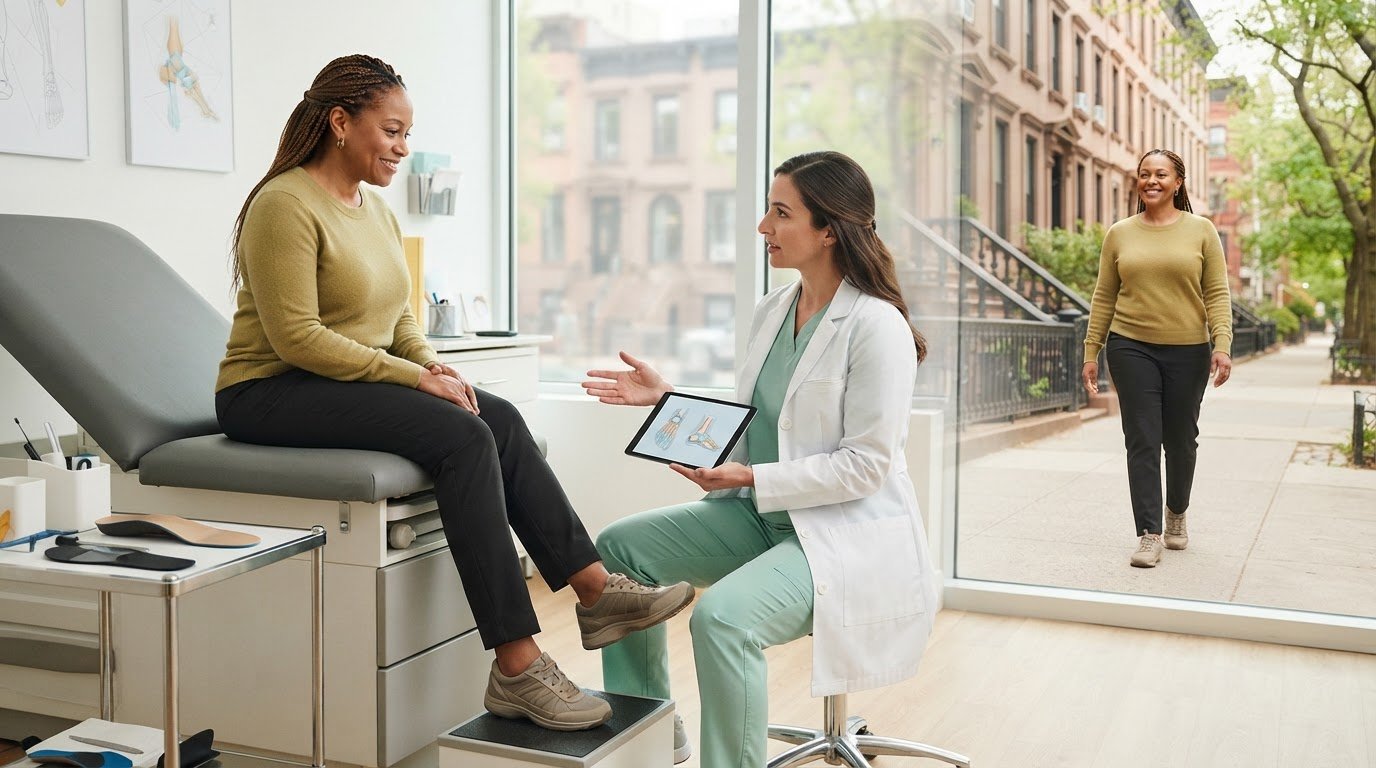
Securing medical reimbursement for your treatment requires more than just a doctor’s note; it demands a structured clinical narrative that proves your need for intervention. Many patients feel overwhelmed by the administrative hurdles, but the process is manageable when you follow a specific sequence of steps. To start, you should schedule a comprehensive consultation with a board-certified podiatrist in Forest Hills. During this visit, we focus on identifying the underlying cause of your discomfort rather than just treating the surface symptoms. This professional evaluation is the cornerstone of how to get insurance to cover custom orthotics in NY, as it establishes the clinical record that insurers require for approval.
The Clinical Examination and Casting
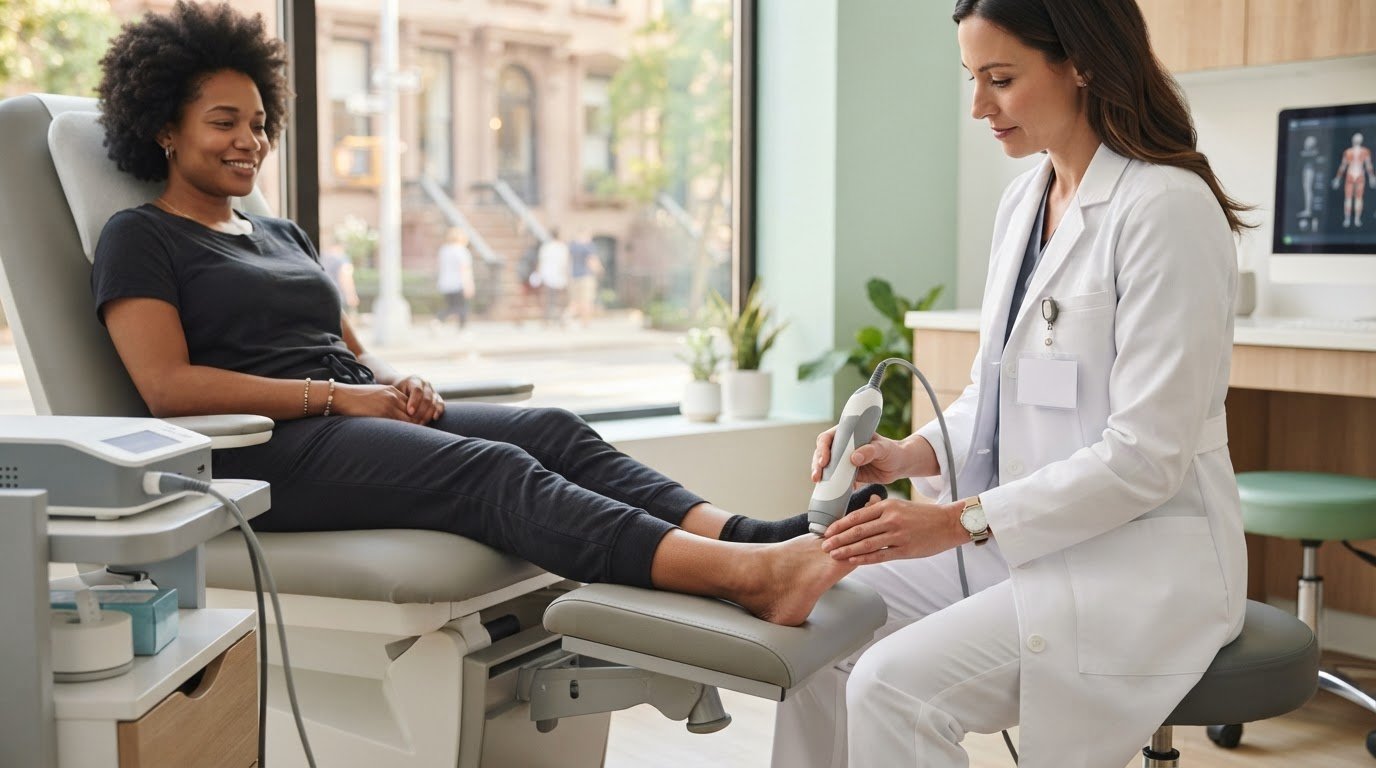
In our offices, we utilize advanced 3D digital scanning and traditional plaster casting to create a precise map of your foot’s unique anatomy. This medical-grade approach is far more persuasive to insurance carriers than the DIY foam kits offered by mail-order companies, which often lack the clinical oversight necessary for a successful claim. A physical exam allows us to document specific range-of-motion limitations and pressure points that a machine at the pharmacy simply cannot detect. Biomechanical gait analysis is the gold standard for insurance documentation. This detailed study of how you move provides the objective data points that justify the need for a custom-molded device over a generic retail alternative.
Documentation: The Key to Approval
The difference between a claim approval and a denial often comes down to the specifics in your medical file. We ensure that your “Letter of Medical Necessity” includes your formal diagnosis, a detailed history of conservative care you’ve already tried, and a clear prognosis of how the orthotics will improve your mobility. If you’re unsure about your plan’s specific requirements, we can help you verify your benefits during your initial visit to determine if your carrier requires “Prior Authorization” before we begin the casting process.
Accuracy in billing is equally critical for New York carriers. We use specific HCPCS billing codes, most commonly L3000 or L3020, to describe the exact type of orthotic being provided. We always recommend that you keep physical or digital copies of all prescriptions and doctor’s notes for your own records. This paper trail is your best defense if a claim is initially questioned. By combining precise clinical data with the correct administrative codes, we create a clear path toward the relief and independence you deserve.
Navigating NY Insurance Carriers: Empire, Emblem, and More
Every insurance company has its own internal rubric for determining medical necessity, and in our local community, the requirements can vary significantly between providers. If you’re wondering how to get insurance to cover custom orthotics in NY, you must understand that carriers like Empire BlueCross BlueShield and EmblemHealth have updated their 2026 policies to focus heavily on documented biomechanical failure. Empire, for instance, often requires proof that conservative treatments, such as physical therapy or over-the-counter bracing, have failed to provide relief before they approve custom-molded inserts. We work closely with these carriers to ensure your clinical file matches their specific criteria from the first day of your consultation.
For many New York City employees, EmblemHealth (including GHI and HIP plans) is the primary provider. Their approach to medically necessary inserts is generally favorable, provided the documentation clearly links the device to a functional deficit. UnitedHealthcare also maintains robust Durable Medical Equipment (DME) policies for NYC residents, though they often require a detailed gait analysis to prove that the orthotic is corrective rather than just comfort-oriented. We’ve found that being proactive with these specific details prevents the back-and-forth that often delays your treatment and recovery.
Private NY Carriers vs. Medicare
The path to coverage looks very different depending on your plan type. Medicare Part B remains quite restrictive in 2026; it typically only covers orthotics or therapeutic inserts if they’re directly related to diabetic foot conditions or specific types of bracing. If you’re seeking relief for general heel pain or flat feet under Medicare, coverage is often unavailable. Private PPO plans offer the most flexibility, allowing you to see specialized podiatrists across NYC even if they’re out-of-network. In contrast, HMO plans almost always require a formal referral from your Primary Care Physician before you can see us for a specialized orthotic evaluation. We recommend checking these referral requirements before your visit to ensure a seamless experience.
Handling Denials and Appeals
It’s frustrating to receive a denial, but it isn’t always the final word. A common reason for rejection is when a carrier misclassifies custom orthotics as “orthopedic shoes,” which are a frequent exclusion in many policies. If this happens, we can initiate a “Peer-to-Peer” review. This is a professional conversation where your podiatrist speaks directly to the insurance company’s medical director to explain the clinical necessity of your treatment. If a claim is still unfairly rejected, New York State provides a formal external appeal process. You generally have four months from the final denial to file this appeal, and we can provide the clinical data needed to support your case. We’re committed to being your advocate throughout this administrative journey.

Custom Orthotics vs. Retail: Is the Fight for Coverage Worth It?
We often meet patients who have spent significant amounts of money on various drugstore inserts before finally seeking professional help. It’s a common frustration. You want relief, and the convenience of a retail store is tempting. However, understanding how to get insurance to cover custom orthotics in NY is worth the effort because these prescription devices are the superior choice for both your physical health and your long-term budget. While a generic pad might feel soft for a week, it doesn’t address the underlying mechanical issues that cause pain during your daily commute or weekend activities.
Custom orthotics are engineered from high-performance, medical-grade materials like carbon fiber or high-density polypropylene. These aren’t the soft foams or gels that flatten after a few weeks of walking on New York pavement. A custom device typically serves you for 2 to 5 years, whereas retail options often lose their structural integrity and corrective power within 3 to 6 months. Mastering how to get insurance to cover custom orthotics in NY ensures you receive a device that offers a much lower “cost per day” over its lifespan compared to the constant replacement of disposable retail alternatives.
The Risk of “One-Size-Fits-Most” Solutions
Generic arch supports don’t account for the unique way your foot strike occurs. This lack of precision can lead to compensatory pain and misalignment in your knees, hips, and lower back. In many cases, improper retail inserts can actually worsen heel pain by providing support in the wrong areas or failing to stabilize the heel bone. They are also ill-suited for managing structural shifts like bunions, which require specific offloading that only a custom mold can provide. Custom orthotics are built for your specific bone structure, not a shoe size.
FSA and HSA: The Secret Weapons for NY Residents
We always remind our patients that traditional insurance isn’t the only way to manage your healthcare costs. Flexible Spending Accounts (FSA) and Health Savings Accounts (HSA) are excellent tools for covering medical expenses with pre-tax dollars. Even if a specific NY insurance policy has a high deductible or an exclusion for certain devices, these funds are almost always eligible for prescription medical equipment. To use them effectively, you just need a valid prescription from your podiatrist to validate the medical necessity for your records. This allows you to use your hard-earned benefits to bridge the gap in NYC medical costs.
If you’re ready to stop guessing with retail inserts and start a professional treatment plan, schedule your custom orthotic consultation with our team today.
Expert Orthotic Fitting at Local Foot Doc in Brooklyn & Queens
We understand that the administrative side of healthcare is often as painful as the physical symptoms you’re experiencing. At Local Foot Doc, we’ve built our practice around removing these barriers for our neighbors. Dr. Waldemar Majdanski leads our clinical team with a commitment to personalized biomechanical care, ensuring that every pair of custom orthotics is more than just a product. It’s a medical intervention designed for your unique lifestyle. Whether you’re navigating the busy streets of Astoria or commuting from Forest Hills, we provide the specialized attention required to get you back on your feet with confidence.
We’ve developed an “Insurance-First” philosophy to protect our patients from unexpected financial burdens. Before we even begin the casting process, our administrative team works directly with your provider to verify your specific benefits. We know the nuances of how to get insurance to cover custom orthotics in NY because we’ve been doing it for over 20 years. This proactive approach means you’ll have a clear understanding of your coverage, deductibles, and any potential out-of-pocket costs before you commit to treatment. Our goal is to provide a transparent, stress-free path to the relief you need.
Our clinics in Woodhaven, Forest Hills, and Astoria are equipped with modern diagnostic technology to ensure the highest level of precision. We use high-resolution digital mapping and 3D scanning to capture the exact contours of your feet. This provides the objective, clinical data that New York insurance carriers demand for claim approval. This level of technical proficiency is what separates a professional medical consultation from a generic retail experience. We combine this modern methodology with the personal touch of a neighborhood doctor who truly understands your mobility goals.
Why New Yorkers Trust Local Foot Doc
For more than two decades, we’ve served as a trusted local institution in Brooklyn and Queens. We understand the specific challenges of the NY insurance market, from the complexities of Empire BlueCross BlueShield to the referral requirements of local HMOs. Our primary goal is your “Regained Independence.” We don’t just want to treat your pain; we want to restore your mobility so you can participate fully in your community again. We invite you to bring your insurance card to your first visit for a complimentary coverage check. We’ll handle the phone calls and the paperwork so you can focus entirely on your recovery.
Schedule Your Consultation Today
Your path to pain-free movement starts with a single clinical evaluation. We’ll work with you to develop a personalized treatment plan that addresses your specific structural needs while maximizing your insurance benefits. Don’t let confusing jargon or the fear of claim denials keep you from the professional grade support you deserve. We’re here to guide you through every step of the process. Book your custom orthotic evaluation at Local Foot Doc today!
Take the Next Step Toward Pain-Free Mobility
Your journey to better health shouldn’t be stalled by administrative hurdles or confusing insurance policies. By now, you understand that securing medical coverage depends on precise clinical documentation and a clear narrative of medical necessity. Whether you’re managing chronic heel pain or structural imbalances, professional intervention is the only way to ensure your feet receive the specific support they require. Learning how to get insurance to cover custom orthotics in NY is much simpler when you have an expert team advocating for your recovery. We take the guesswork out of the process by providing the objective data carriers demand.
At Local Foot Doc, board-certified podiatric surgeon Dr. Waldemar Majdanski and our dedicated staff utilize advanced 3D foot mapping technology to create the perfect fit for your lifestyle. We have specialized expertise in navigating Empire BCBS and EmblemHealth claims, allowing us to verify your benefits before you start. You deserve a solution that lasts for years, not just weeks. We’re ready to help you regain your independence and walk without discomfort. Schedule Your Custom Orthotic Consultation in Brooklyn or Queens today and let us handle the paperwork while you focus on your well-being.
Frequently Asked Questions
Does Empire BlueCross BlueShield cover custom orthotics in 2026?
Yes, many Empire BlueCross BlueShield plans in 2026 provide coverage for custom orthotics when they are classified as medically necessary. This benefit is typically found under your plan’s Durable Medical Equipment (DME) rider. To qualify, you’ll need a formal diagnosis and a detailed prescription from a board-certified podiatrist. We recommend verifying your specific plan’s deductible and co-insurance requirements before your appointment to ensure you have a clear picture of your potential coverage.
What is the specific insurance code for custom orthotics?
The primary HCPCS billing code used for custom-molded orthotics is L3000, which describes a device fabricated from a three-dimensional model of your foot. Other related codes include L3020 for longitudinal arch support. Correct coding is essential for how to get insurance to cover custom orthotics in NY, as it ensures the carrier understands the clinical sophistication of the device. Our administrative team is highly experienced in using these codes to accurately reflect the specialized care you receive.
Will my insurance cover orthotics if I have plantar fasciitis?
Most New York insurance plans cover custom orthotics for plantar fasciitis if conservative treatments haven’t provided sufficient relief. Carriers typically want to see documentation that you’ve tried options like stretching, icing, or physical therapy first. We provide the detailed clinical notes and gait analysis required to prove that custom inserts are the next necessary step in your treatment plan to resolve chronic heel pain and restore your mobility.
How often will insurance pay for a new pair of custom orthotics?
Many private insurance policies in New York allow for a new pair of custom orthotics every 12 to 24 months. This frequency often depends on the “useful lifetime” of the device and whether your clinical condition has changed significantly. If your current orthotics show structural wear or if your foot anatomy has shifted, we can help document the medical necessity for a replacement pair to maintain your corrected gait and comfort.
Does NY Medicaid cover custom shoe inserts for adults?
As of 2026, New York State Medicaid covers custom orthotic devices for adults when they are deemed medically necessary by a licensed healthcare provider. This benefit is intended to treat specific functional impairments or structural deformities that impact your daily activity. We can assist you in navigating the specific documentation and prior authorization requirements necessary to secure these essential medical devices through your Medicaid Managed Care plan, ensuring you don’t lose your independence.
What happens if my insurance denies my claim for custom orthotics?
If your claim is denied, you have the right to file an appeal or request a “Peer-to-Peer” review where your podiatrist speaks with the insurance medical director. Rejections often occur due to simple administrative errors or a lack of detailed clinical history in the initial submission. We partner with our patients to provide additional evidence or updated letters of medical necessity to challenge these denials. Many initial rejections can be overturned with professional documentation and persistent follow-up.
Can I use my NYC teacher GHI/EmblemHealth insurance for orthotics?
Yes, NYC teachers and city employees with GHI/EmblemHealth plans generally have robust coverage for custom orthotics. These plans typically classify orthotics as a covered DME benefit, provided they are not for “comfort only” use. Understanding how to get insurance to cover custom orthotics in NY for city workers involves ensuring your clinical file highlights the functional deficits being treated. We frequently work with EmblemHealth members in our Forest Hills and Astoria offices to maximize these specific benefits.
Do I need a referral from my primary doctor to see a podiatrist for orthotics in NY?
Whether you need a referral depends on if you have an HMO or PPO plan. If you have an HMO, such as certain EmblemHealth or UnitedHealthcare plans, a referral from your Primary Care Physician is usually required to see a specialist. If you have a PPO, you can typically schedule your consultation with us directly without a prior referral. We suggest checking your “Summary of Benefits” or calling our office so we can help you confirm your plan’s specific requirements.