Most runners train for the physical distance of 26.2 miles, but they often forget they’re actually training for 26.2 miles of unforgiving, bone-jarring New York City concrete. Learning how to prepare feet for the NYC marathon is just as critical as your weekly mileage if you want to cross the finish line in Central Park without a trip to the medical tent. We understand the anxiety that builds as your training intensity increases. You might be feeling a nagging ache in your heel or worrying if that slight rubbing in your toe box will turn into a race-ending blister or a painful black toenail by the time you hit the Queensboro Bridge.
We’re here to help you master the medical-grade foot preparation needed to conquer this unique urban terrain and finish your race injury-free. In this guide, we’ll provide professional shoe and orthotic recommendations specifically tailored for the hard NYC pavement. We’ll also share how to manage existing conditions like bunions during high-volume training so you can focus on your pace rather than your discomfort. Let’s ensure your feet are as ready as your heart for the journey from Staten Island to the finish line.
Key Takeaways
- Learn why NYC’s relentless concrete demands higher-density cushioning and how a professional gait analysis can prevent overpronation during the late stages of the race.
- Discover the medical secrets to preventing painful black toenails and blisters through specific nail-trimming techniques and professional shoe sizing.
- Master how to prepare feet for the NYC marathon by addressing the unique challenges of the Verrazzano-Narrows incline and the slanted, cambered streets of the five boroughs.
- Understand how to manage bunions and chronic heel pain using professional lacing modifications and calf-stretching protocols that protect your mobility.
- Establish a “nothing new” race day protocol that prioritizes skin suppleness over soaking, ensuring your feet remain resilient from the start line to Central Park.
Building Your Biomechanical Foundation: Gait, Shoes, and Support
Training for five boroughs of pavement requires more than just endurance; it requires a structural strategy. When you’re considering how to prepare feet for the NYC marathon, your first priority must be the interface between your foot and the ground. Most training plans focus on the heart and lungs, but we’ve seen many runners’ races end prematurely because their biomechanical foundation crumbled under the weight of high-mileage training. We want to ensure your skeletal system is ready for the specific demands of the world’s largest marathon.
The NYC Concrete Factor
Running in New York City presents a unique challenge because our streets are predominantly composed of reinforced concrete rather than more forgiving asphalt. Concrete is significantly less compliant, meaning it doesn’t absorb energy. Instead, it reflects that energy back into your metatarsal heads and shins. An impact transient force is the rapid, high-magnitude peak in force that occurs the microsecond your foot hits the ground, sending a shockwave through your entire limb. Over 26.2 miles, these cumulative shocks can lead to stress reactions. For our patients with a history of stress fractures, we often recommend maximalist cushioning to provide a necessary buffer against these relentless surfaces.
While foot care is paramount, the shockwaves from concrete also affect the knees and spine; for comprehensive care, Coral Way Disc Center provides specialized non-surgical decompression that can help marathoners manage the structural strain on their discs and joints.
Professional Gait Analysis in NYC
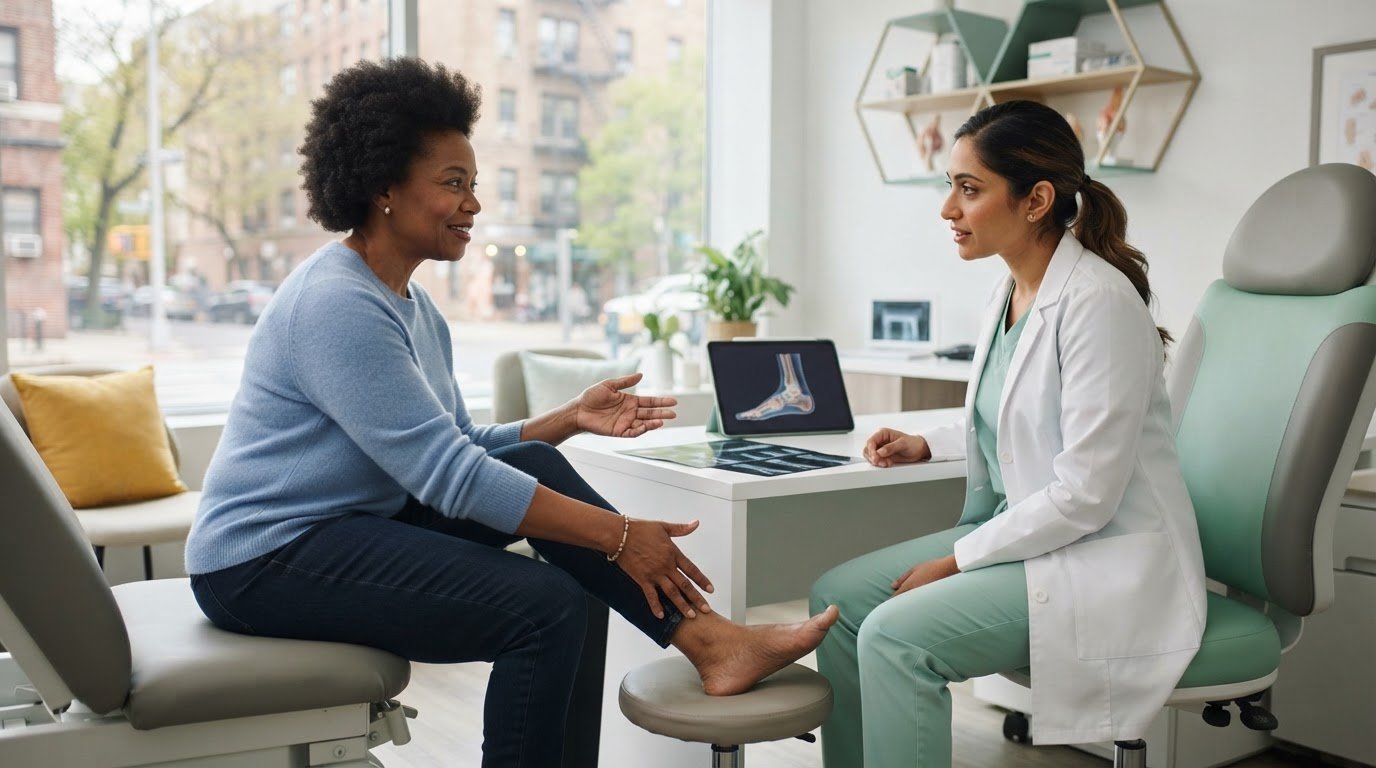
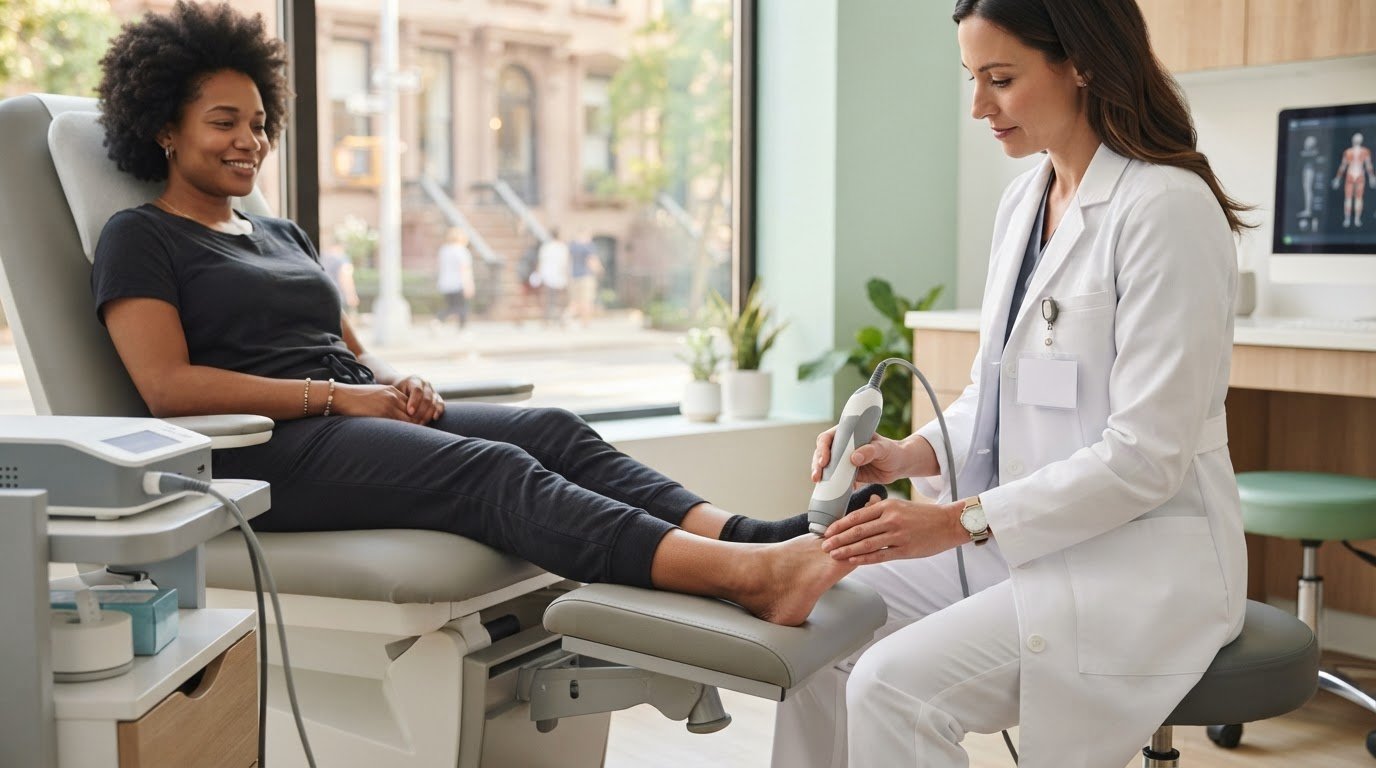
We believe every marathoner benefits from a clinical look at their stride. During a gait analysis, we evaluate your cadence, strike pattern, and limb swing to see how your body manages fatigue. If we identify significant overpronation, we might recommend custom orthotics to provide the specific arch support your feet need as they tire. Unlike generic insoles, custom orthotics are molded to your unique foot shape to correct structural misalignments. Identifying a heavy heel strike early in your training block allows us to implement corrective exercises or custom orthotics that can prevent plantar fasciitis from flaring up during your taper. This proactive approach is a vital part of how to prepare feet for the NYC marathon.
Your footwear strategy also needs a strict timeline. We suggest purchasing your race day shoes late in your training cycle so they have exactly 50 miles of wear on them by the first Sunday in November. This distance is the “sweet spot” where the materials have settled and any manufacturing stiffess has vanished, but the foam hasn’t yet begun to lose its vital energy return. If your biomechanics require extra stability, pairing a fresh shoe with custom orthotics ensures you have the medical-grade support needed to cross the finish line in Central Park injury-free.
Skin and Nail Integrity: Preventing the ‘Black Toenail’ and Blisters
A black toenail, technically known as a subungual hematoma, isn’t just a runner’s badge of honor; it’s a medical sign of repetitive micro-trauma. This painful condition occurs when your toe repeatedly strikes the front or top of your shoe, causing blood to pool under the nail plate. To prevent this, we recommend sizing your running shoes at least half a size larger than your daily footwear to accommodate foot swelling. When you’re learning how to prepare feet for the NYC marathon, nail length is a critical detail. While many sources suggest cutting nails “straight across,” high-mileage athletes actually need their nails filed slightly at the corners to ensure they don’t catch on socks or dig into adjacent toes during the late stages of the race.
Friction management is another pillar of skin integrity. In the variable humidity of a New York autumn, we often weigh the benefits of lubricants versus powders. Powders can clump when they get wet from sweat or rain, which actually increases friction and the risk of skin breakdown. We generally suggest a high-quality anti-chafe balm to create a consistent, slick barrier. Calluses also require a delicate balance. While a thin layer of thickened skin provides some protection, thick or “shelf-like” calluses act like a hard pebble under your skin. This often leads to deep, painful blisters that can stop a runner in their tracks. We can help you safely debride these calluses before race day to ensure your skin remains resilient.
Medical-Grade Blister Prevention
True blister prevention starts with a systematic approach during your long runs. We recommend using zinc oxide or kinesiology tape on known high-friction zones like the back of the heel or the sides of the big toe. Your 18-mile peak training run is the perfect time to identify “hot spots.” These are the areas that feel warm or tender before a blister actually forms. Always pair your taping with synthetic, moisture-wicking socks. Cotton is your enemy here because it holds moisture against the skin, leading to the maceration that makes your feet vulnerable to painful tears.
Pre-Race Professional Pedicure
Many runners visit a standard salon for a pedicure before the race, but this can be a risky move. A professional medical pedicure from a podiatrist focuses on health and safety over aesthetics. If you’re dealing with thick or discolored nails, they can increase pressure in your toe box, making every step across the bridges more painful. Addressing these issues with fungal nail treatment early in your training cycle ensures your nails are thin and healthy by November. We want you to focus on the energy of the crowd in Brooklyn, not the stinging in your shoes. If you’re noticing persistent discoloration, seeking professional care is an essential part of how to prepare feet for the NYC marathon.
NYC Terrain-Specific Preparation: Bridges, Turns, and Hills
Starting in Staten Island, the Verrazzano-Narrows Bridge presents an immediate test for your lower limbs. The steep incline in the first mile puts significant stress on your Achilles tendon before your muscles are fully warm. We advise performing dynamic stretches in the starting corral to prepare for this climb. As you descend into Brooklyn, you’ll encounter the “camber” of the roads. Most NYC streets are slightly sloped toward the curb to allow for water drainage. The camber in the road causes asymmetrical loading on the sub-talar joint because the foot on the “high” side of the slope is forced into a different degree of pronation than the foot on the “low” side. This can lead to lateral foot pain or peroneal tendonitis if your feet aren’t conditioned for uneven surfaces.
The silence of the Queensboro Bridge at mile 15 is where many runners first feel the true weight of foot fatigue. Without the roar of the crowd, you become acutely aware of every ache in your midfoot. This is a mental and physical hurdle where your form might start to slip. Finally, Central Park’s rolling hills in the last three miles act as a final exam for your plantar fascia and calf muscles. These elevation changes require your feet to constantly adapt their strike pattern while already under extreme stress. Understanding how to prepare feet for the NYC marathon means respecting these specific geographical hurdles.
Adapting to Surface Changes
Managing the transition from the vibrating metal grates of the bridges to the sudden, hard asphalt of the avenues is a vital part of your race strategy. These surface changes require excellent proprioception. We recommend incorporating single-leg balance drills into your weekly routine to help your ankles stabilize on the unpredictable pavement. It’s these small adjustments that keep your gait efficient when the terrain shifts underfoot. When you train on varied surfaces, you teach your nervous system to react faster to the “impact transients” we discussed earlier.
The 5-Borough Biomechanical Challenge
The sharp 90-degree turns throughout Brooklyn and Queens require a shoe with a secure midfoot lockdown to prevent your foot from sliding inside the toe box. As you approach “the Wall” at mile 20, fatigue often causes your foot strike to become heavier and less controlled, which significantly increases your injury risk. We offer specialized sports medicine consultations to help you develop a personalized course strategy that accounts for these specific biomechanical hurdles. Knowing how to prepare feet for the NYC marathon involves more than just logging miles; it requires a plan for every bridge and borough.

Managing Structural Issues: Training with Bunions and Heel Pain
Training for 26.2 miles doesn’t require “perfect” feet, but it does require a perfect management plan for the feet you have. When we discuss how to prepare feet for the NYC marathon, we focus heavily on accommodating structural issues like bunions and hammertoes. These conditions often flare up as your mileage increases in the late summer and early autumn. For runners with bunions, we recommend “window lacing” or skipping the eyelets directly over the bony prominence to reduce friction and pressure. If you have hammertoes that rub against the top of your shoe, professional-grade silicone padding can prevent the painful bursitis that often develops over the joints during high-volume weeks.
Heel pain is another primary concern for marathoners, often stemming from a mechanical chain reaction. Your calf muscles, the gastrocnemius and soleus, are directly linked to your plantar fascia through the heel bone. When these muscles are tight, they exert a constant pull on your arch, leading to micro-tears. If you’re experiencing a sharp, stabbing sensation with your first steps in the morning, you’re likely feeling the onset of a more serious injury. Pushing through this type of pain is a mistake that can lead to a chronic tear; this could sideline you for months rather than just a few days. We want to help you identify these issues during your peak mileage weeks in September and October so you can adjust your recovery protocol accordingly.
The Bunion-Friendly Marathon Strategy
Managing a bunion during training is about creating space without losing stability. We often suggest shoes with a wider toe box that still offer the high-density cushioning required for NYC’s unforgiving concrete. Using silicone toe spacers can help maintain alignment and prevent the big toe from crowding its neighbors, which reduces the risk of blisters between the toes. If your bunion continues to cause significant discomfort despite these adjustments, you might consider bunion surgery in Queens as a long-term recovery option once your marathon journey is complete.
Heel Pain and Plantar Fasciitis
It’s vital to distinguish between general muscle soreness and the clinical signs of a structural injury. You can learn more about the specific diagnostic symptoms in our guide on what is plantar fasciitis. To manage this during your peak training weeks, we recommend a strict regimen of eccentric calf stretches and the use of a night splint to keep the fascia elongated while you sleep. If you’re feeling that familiar morning sting in your heel, don’t wait for it to become a race-day disaster; get a professional evaluation to ensure you’re on the right path to the finish line.
The Final Countdown: Tapering and Race Day Execution
The final weeks before the race are about preservation rather than gains. As you finalize how to prepare feet for the NYC marathon, the “Golden Rule” must be your guide: nothing new on race day. This applies to your socks, your shoes, and even your anti-chafe balm. We’ve seen many runners try a new pair of high-performance socks at the last minute, only to have a different seam location cause a debilitating blister by mile 10. Stick to the gear that has proven its reliability during your longest training runs.
Many patients ask us about the benefits of pre-race foot soaks. We generally advise against soaking your feet in the days leading up to the marathon. While it sounds relaxing, prolonged soaking can over-soften the skin, making it more prone to maceration and tearing under pressure. Instead, focus on internal hydration and keeping the skin supple with a high-quality moisturizer. Supple skin has the elasticity to handle the friction of 26.2 miles, whereas “soft” skin is fragile. We recommend a thorough 48-hour check of your feet to inspect for any emerging blisters, ingrown toenails, or minor skin irritations that might need professional attention before you head to Staten Island.
Don’t forget to pack a “Foot First Aid” kit for your checked bag or for your supporters to meet you with at the finish. This should include a fresh pair of loose-fitting shoes, clean moisture-wicking socks, and antiseptic wipes. Having these essentials ready allows you to address any immediate skin issues as soon as the race is over.
The Taper Week Routine
During your taper, your primary goal is to reduce systemic inflammation. While active recovery like light cycling or swimming is helpful, we strongly suggest you limit your time walking at the Marathon Expo at the Javits Center. The hard floors and long lines can cause unnecessary foot fatigue just 48 hours before the gun goes off. Use this week for a final inspection of your shoe tread and lace integrity. If a lace feels thin or an eyelet is frayed, replace it now so you aren’t dealing with a mid-race equipment failure on the Verrazzano.
Post-Race Recovery in the Five Boroughs
Once you cross the finish line in Central Park, your recovery begins immediately. We recommend elevating your feet as soon as you reach your home or hotel to manage the inevitable swelling. Compression socks can also help move fluid away from the lower extremities and reduce the “heavy” feeling in your calves. In the days following the race, transition back to supportive walking shoes rather than flat sandals or flip-flops, which offer no structural support for your strained arches. If you find that certain aches or sharp pains aren’t fading after a week of rest, it’s time to visit Local Foot Doc for a professional evaluation. We take pride in helping our local running community return to their active lifestyles safely. Mastering how to prepare feet for the NYC marathon is a journey that ends with a healthy recovery, ensuring you’re ready for your next New York City adventure.
Take the First Step Toward a Pain-Free Finish in Central Park
Crossing the finish line in Central Park is the culmination of months of dedication, but your ultimate success depends on the medical-grade care you provide your feet today. We’ve explored how the relentless NYC concrete requires a biomechanical strategy that addresses everything from gait analysis to structural issues like bunions and heel pain. By focusing on skin integrity and terrain-specific preparation, you’re not just training for a race; you’re building a foundation for a safe and successful journey through all five boroughs.
In addition to biomechanics, metabolic health plays a significant role in marathon success; for instance, a nutrólogo jardins são paulo can help athletes optimize their body composition and hormonal levels to improve performance and minimize the physical toll of training.
Understanding exactly how to prepare feet for the NYC marathon is a specialized process that requires professional clinical expertise. Our practice offers board-certified surgical expertise and specialized sports medicine tailored specifically for the needs of NYC athletes. We provide compassionate care at our convenient locations in Forest Hills, Astoria, and Woodhaven to ensure you stay on track. Don’t let a preventable injury stand between you and your finisher’s medal. Schedule a Pre-Marathon Gait Analysis with Dr. Majdanski Today and let us help you finish strong. We’re proud to be part of your marathon journey and look forward to seeing you cross that line with confidence.
Frequently Asked Questions
How many miles should I put on my NYC Marathon shoes before race day?
You should aim for exactly 50 miles of break-in distance on your race-day footwear. This distance is the “sweet spot” where the shoe’s foam has settled and the upper materials have softened to your foot shape without losing the vital energy return needed for 26.2 miles. We want you to avoid the common mistake of wearing brand-new shoes on race morning, which often leads to unexpected blisters or pressure points on the Verrazzano Bridge.
Is it normal for my feet to swell a full size during the marathon?
Yes, it’s medically normal for your feet to swell significantly due to increased blood flow and the repetitive impact on New York City’s concrete. This physiological response is why we recommend purchasing your marathon shoes at least half a size to a full size larger than your daily footwear. Proper sizing is a critical part of how to prepare feet for the NYC marathon to prevent constricted circulation and painful toe cramping.
How can I prevent black toenails after running 26.2 miles?
Prevent black toenails by ensuring your shoe’s toe box has a thumb’s width of space and by keeping your nails trimmed and filed. A black toenail is a hematoma caused by your toe repeatedly hitting the top or front of the shoe. If you’re dealing with thick or fungal nails, we suggest professional thinning before the race to reduce the internal pressure that causes this painful pooling of blood under the nail plate.
Should I pop a blister if it forms during the race?
We generally advise against popping a blister during the race because the intact skin acts as a natural, sterile barrier against infection. If a blister is so large it interferes with your gait or causes extreme pain, it should only be drained at a sanctioned medical tent using sterile instruments. For your training runs, we recommend learning to identify “hot spots” early and applying kinesiology tape to prevent a full blister from developing.
When is the best time to get custom orthotics before the NYC Marathon?
The ideal time to start the process for custom orthotics is at least 10 to 12 weeks before race day. This timeline allows for the clinical scanning, manufacturing, and a gradual break-in period during your building mileage. We want your feet and lower limbs to be fully adapted to the new structural support before you hit your peak training weeks in September and October, ensuring maximum stability on the slanted NYC streets.
Can I run the NYC marathon with a bunion?
Yes, you can successfully run with a bunion if you manage the pressure through wide-toe-box shoes and specific lacing techniques. We focus on protecting the joint with medical-grade silicone padding to prevent bursitis from developing during the race. If you’re wondering how to prepare feet for the NYC marathon with structural issues, a professional gait analysis can help determine if you need additional support to reduce the load on your big toe joint.
How do I tell the difference between a sore foot and a stress fracture?
General muscle soreness usually dissipates with rest and stretching, while a stress fracture causes localized, sharp pain that worsens with activity and is tender to a specific touch. If you notice swelling on the top of your foot or pain that persists even when you aren’t running, it’s a sign of a structural injury. We recommend an immediate clinical evaluation to prevent a minor stress reaction from becoming a complete break during your taper.
What are the best socks for preventing blisters on NYC pavement?
The best socks are made from synthetic, moisture-wicking materials or merino wool blends rather than traditional cotton. Look for designs with seamless toes and targeted cushioning at the heel and metatarsal heads to absorb the impact of the concrete. Double-layer socks are also a professional favorite because they allow friction to occur between the two layers of fabric instead of directly against your skin, significantly reducing the risk of painful tears.