

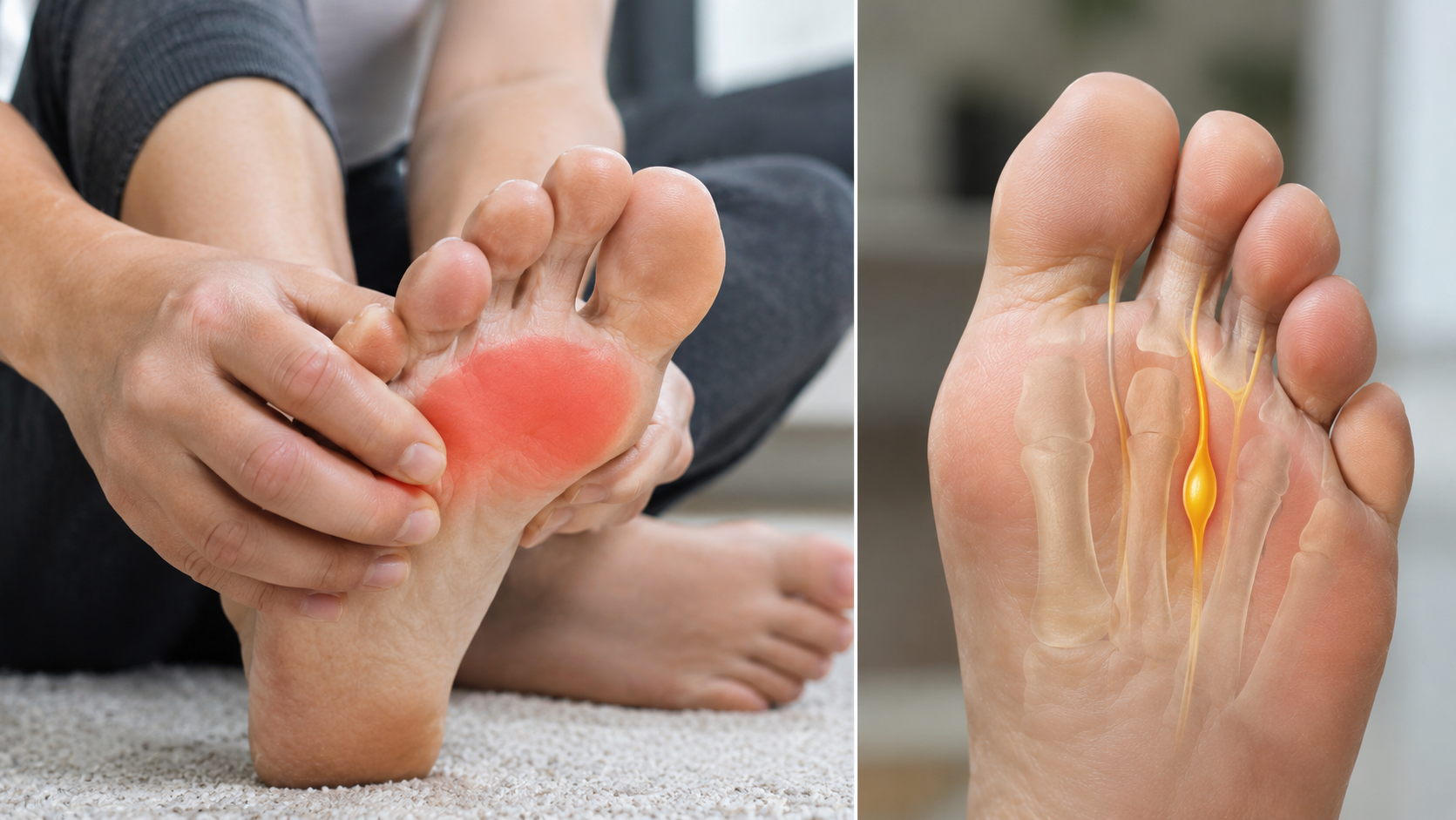
Pain beneath the front of the foot can feel like burning, pressure, or a small object trapped inside a shoe. Two possible explanations are Morton’s neuroma and metatarsalgia, but they are not the same condition. Understanding the difference between Morton’s neuroma vs metatarsalgia can help you know the symptoms and examination you may need to undergo.
Ball of foot pain can arise from nerve irritation, pressure beneath the metatarsal heads, footwear, or changes in foot mechanics. Foot Neuroma treatment in Brooklyn may be considered when an irritated interdigital nerve is confirmed, but similar symptoms can have other causes.
What Is Metatarsalgia?
Metatarsalgia is a broad term for pain beneath the ball of the foot, usually around the metatarsal heads. It may feel aching, sharp, or pressure-like and can worsen with walking, running, or footwear that concentrates force on the forefoot. Contributors include high-impact activity, narrow shoes, toe deformities, and uneven pressure.
What Is Morton’s Neuroma?
Morton’s neuroma involves irritation and thickening around an interdigital nerve, often between the third and fourth toes. It is not a true tumour. Repeated pressure may irritate the nerve and cause symptoms near the toes.
Morton’s neuroma symptoms may include burning, tingling, numbness, or a pebble-like feeling beneath the forefoot. Some may experience burning in the ball of the foot, with discomfort that worsens in tight shoes. A sensation that feels like a pebble in my shoe can occur with a neuroma, but it does not confirm the diagnosis on its own.
How the Symptoms Differ
The two conditions can overlap, but some patterns may help guide an assessment:
- Neuroma-Like Symptoms: Burning, tingling, numbness, or shooting discomfort between the toes may suggest nerve irritation.
- Metatarsalgia-Like Symptoms: A broader aching or pressure beneath one or more metatarsal heads may be more consistent with metatarsalgia.
- Footwear-Related Changes: Narrow toe boxes and high heels can aggravate either condition by increasing pressure on the forefoot.
- Activity-Related Pain: Pain in the ball of the foot when walking may occur with both conditions, so the activity pattern alone is not diagnostic.
Metatarsalgia symptoms may include localized tenderness under the metatarsal heads, a feeling of pressure, or pain when the forefoot bears weight. A clinician may need to rule out other problems, including stress injury, joint inflammation, or toe deformity.
How the Cause Is Assessed
The assessment will include a series of questions, such as when the pain started, which activities worsen it, and whether changes in footwear affect the symptoms.
A podiatrist in Brooklyn can assess both nerve symptoms and the structures beneath the forefoot.
The examination may include checking tenderness, sensation, toe movement, foot shape, and how pressure is distributed across the forefoot. Imaging may be considered when a fracture or another cause needs to be excluded.
Treatment Options Depend ON the Diagnosis
Many cases begin with measures designed to reduce pressure and irritation. Depending on findings, options may include:
- Roomier Footwear: Shoes with a wider toe box can reduce compression around the forefoot.
- Activity Modification: Temporarily reducing high-impact activity may help settle aggravated tissues.
- Padding or Orthotics: Metatarsal padding or custom orthotics may redistribute pressure when appropriate.
- Further Treatment: Persistent neuroma symptoms may lead to discussion of injections or surgery in selected cases.
Arrange an assessment if pain persists, sensation changes, walking becomes difficult, or footwear changes do not help. Seek prompt evaluation after injury or new swelling.
Find Out What Is Behind the Pain
Forefoot pain can have several overlapping causes, so treatment should not be based on a single symptom. An examination can help distinguish a nerve problem from pressure-related pain and identify suitable next steps.
Schedule a consultation with Local Foot Doc to have persistent forefoot pain assessed and discuss appropriate options.
FAQs
What is the difference between Morton’s neuroma and metatarsalgia?
Metatarsalgia describes pain beneath the ball of the foot, while Morton’s neuroma involves irritation and thickening around an interdigital nerve. Their symptoms can overlap, so an examination helps distinguish them from other causes of forefoot pain. The terms describe different causes, not two names for the same diagnosis.
Can Morton’s neuroma feel like a pebble in your shoe?
Yes. Some people describe a pebble-like or folded-sock sensation beneath the forefoot. This can occur with nerve irritation, but it is not specific to a neuroma. Other conditions affecting the metatarsal region can create a similar feeling. The sensation alone cannot confirm which structure is affected.
What causes burning pain in the ball of the foot?
Burning may result from nerve irritation, pressure from footwear, repetitive loading, or other forefoot conditions. The exact cause depends on where the sensation occurs, whether numbness is present, and what activities or shoes make it worse. Persistent or worsening symptoms should be assessed rather than self-diagnosed.
Can shoes make forefoot pain worse?
Yes. Narrow toe boxes and high heels can increase pressure beneath the forefoot or compress nerves between the toes. Roomier shoes may help reduce aggravation, but persistent pain still needs assessment to identify the underlying condition. Fit and pressure distribution matter as much as footwear style.



