Imagine standing at a busy Brooklyn crosswalk, watching the light turn green, but hesitating because that sharp, throbbing pain in your big toe makes every step across the pavement feel like a marathon. You might believe your only option is a traditional operation, but minimally invasive bunion surgery has changed the landscape for New Yorkers who need to stay active. We understand that the prospect of unsightly scars and a long, painful recovery is often as daunting as the bunion itself, especially when you have a career to maintain and a city to navigate.
You don’t have to sacrifice your mobility or your professional footwear to find relief. At Local Foot Doc, Dr. Waldemar Majdanski helps patients achieve success rates between 85% and 95% using advanced percutaneous techniques that prioritize a quicker return to your routine. This 2026 guide explains how our specialized approach in Brooklyn and Queens allows many patients to walk out in a surgical boot the same day. We’ll walk through the latest New York medical standards, including the December 2025 scope of practice expansion, to show you how our team gets you back on your feet with the expert, community-focused care you deserve.
Key Takeaways
- Learn how percutaneous techniques use tiny 1-2mm incisions to correct your foot alignment with minimal disruption to surrounding tissue.
- Understand the clinical benefits of minimally invasive bunion surgery, including significantly less post-operative swelling and a faster return to your favorite footwear.
- Discover the diagnostic steps, such as weight-bearing X-rays at our NYC clinics, that determine if you’re a candidate for this advanced procedure.
- Get a clear roadmap for your recovery, from walking in a surgical boot on day one to returning to your active lifestyle in weeks instead of months.
- Find out why patients in Forest Hills, Astoria, and Woodhaven trust Dr. Majdanski’s board-certified expertise to help them resume a pain-free life.
What is Minimally Invasive Bunion Surgery (MIS)?
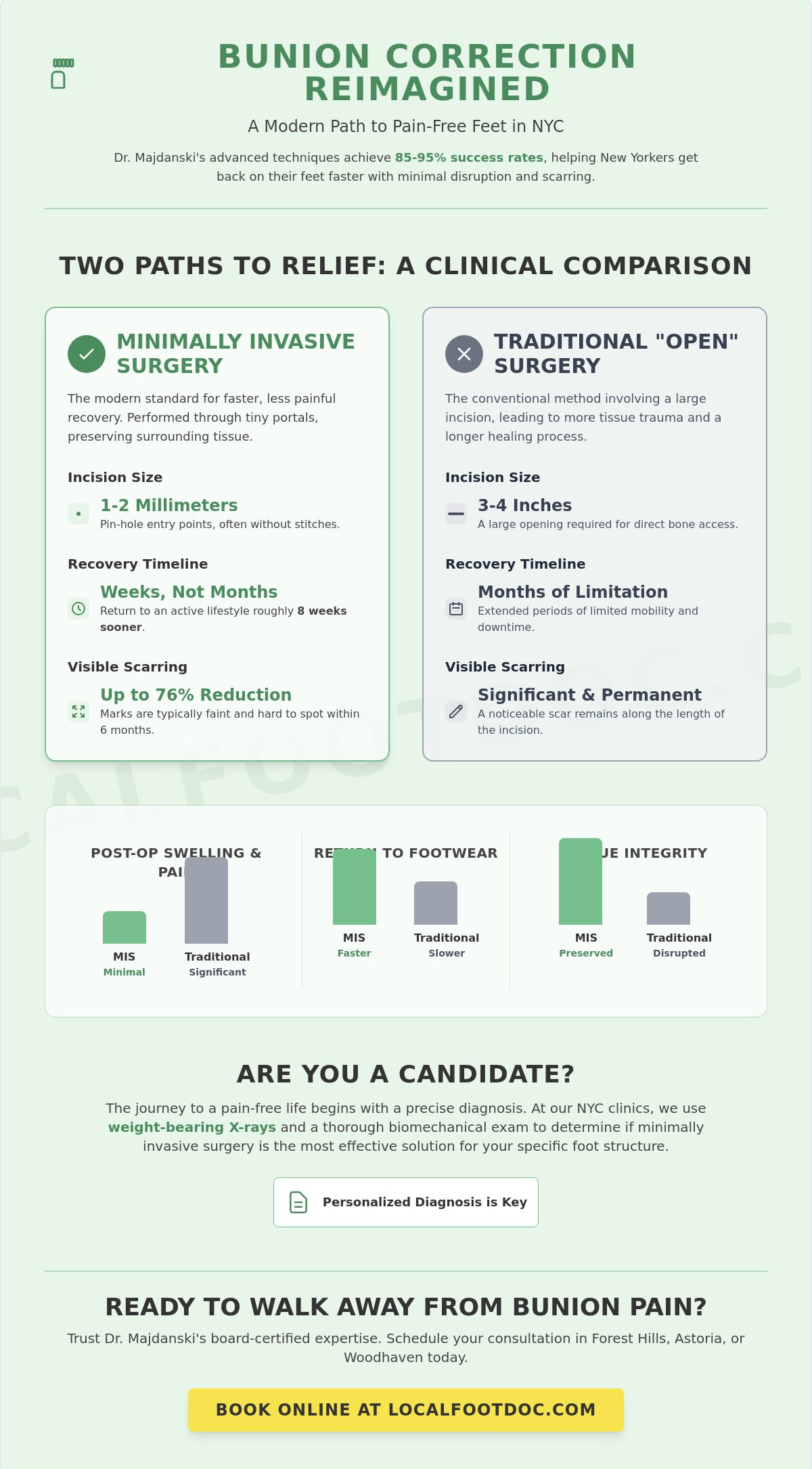
We’ve seen a revolutionary shift in how we treat foot deformities in New York. Traditionally, correcting a bunion required a long incision, often three to four inches, to allow the surgeon to see the bone directly. In 2026, minimally invasive bunion surgery has become the gold standard because it allows our team to perform the same correction through tiny portals measuring only 1-2mm. This percutaneous approach means we don’t have to “open up” the foot, which significantly protects the surrounding soft tissues and blood supply.
Before deciding on a procedure, it helps to understand the basics of the condition. What is a Bunion? Simply put, it’s a structural misalignment where the big toe leans toward the second toe, causing a painful bump to form on the joint. Instead of using a traditional large bone saw, we use a specialized surgical burr. This high-speed, low-torque tool allows for precise bone shaping through those tiny incisions. To ensure accuracy, we use real-time X-ray technology called fluoroscopy. This acts as our “eyes” during the procedure; it allows us to monitor the realignment of the bone with sub-millimeter precision without the need for a wide surgical field.
The Evolution of Bunion Correction
The journey from traditional “open” surgery to modern percutaneous techniques reflects our commitment to faster healing. In the past, patients often faced months of limited mobility. Today, advanced imaging and refined instruments have made smaller incisions the safer, more precise choice. We’ve shifted toward “walking recovery” protocols where the goal is to get you back on your feet as quickly as possible. This evolution is supported by the 2025 New York podiatry scope expansion, which ensures your local surgeons are trained in the most sophisticated ankle and foot procedures available.
Key Terminology: MICA, PECA, and Percutaneous Techniques
When you visit our offices in Brooklyn or Queens, we’ll discuss specific techniques tailored to your foot’s biomechanics. Minimally Invasive Chevron Akin (MICA) is a frequent choice for mild-to-moderate cases; it involves two small shifts to realign the joint. For more severe structural instability, we might utilize a percutaneous Lapidus procedure to stabilize the foundation of the first metatarsal. Each method focuses on the same outcome: a stable, pain-free foot with minimal scarring. Our goal is to choose the most efficient path for your specific anatomy so you can return to the NYC lifestyle you love.
MIS vs. Traditional Bunion Surgery: The Clinical Advantages
Traditional “open” bunion surgery is often compared to a major home renovation where walls are torn down just to reach the plumbing. In contrast, minimally invasive bunion surgery is a precision repair performed through tiny portals. This distinction is critical. The degree of surgical trauma directly dictates your recovery speed. While traditional methods involve a 3 to 4-inch incision, our percutaneous approach uses openings so small they often don’t require traditional stitches. This preservation of the “skin envelope” is why many patients report a recovery timeline that is roughly 8 weeks shorter than those undergoing open procedures.
The clinical advantages extend to the very biology of your foot. By leaving the surrounding soft tissue and blood vessels undisturbed, we ensure the bone receives the nutrients it needs to knit back together quickly. Data from May 2026 indicates that patients undergoing MIS experience up to a 76% reduction in visible scarring compared to traditional techniques. Within 6 months, these marks are usually so faint they’re difficult to spot. For our patients in Queens and Brooklyn, this means you can return to your favorite footwear without feeling self-conscious about surgical marks.
Healing Times and Tissue Integrity
Maintaining tissue integrity is especially vital for our neighbors who may have underlying health concerns. For diabetic patients or older adults, the micro-incisions used in minimally invasive bunion surgery significantly lower the risk of post-operative infections and wound dehiscence. We also focus on preserving the joint capsule. By avoiding the extensive cutting required in open surgery, we prevent the internal “tethering” of tendons that often leads to permanent joint stiffness. This allows for a more natural, fluid range of motion once you’re back in your sneakers and navigating the city streets.
Pain Management and Narcotic Reduction
We’ve found that the less we disturb the foot’s anatomy, the less pain our patients experience. Traditional surgery triggers a massive inflammatory response; this often necessitates strong narcotic prescriptions that can cause grogginess or nausea. Because MIS is inherently low-impact, the “throbbing” sensation is greatly diminished. Most of our patients find they can transition to simple over-the-counter anti-inflammatories within just a few days. This faster transition helps you stay alert and mobile as you begin your recovery. If you want to see if this approach fits your lifestyle, you can schedule a consultation with our board-certified team today.
Are You a Candidate for Minimally Invasive Bunion Correction?
We often meet patients who have spent years managing a “burning” sensation or a “throbbing” ache in their big toe joint. While minimally invasive bunion surgery offers a path to relief, determining your candidacy is a precise clinical process. In 2026, we categorize hallux valgus severity into three specific stages: mild, moderate, and severe. Most patients with mild-to-moderate deformities are excellent candidates for the percutaneous approach. However, if the joint has developed advanced arthritis or extreme structural instability, we may need to discuss alternative surgical strategies to ensure a permanent fix.
Our assessment begins with weight-bearing X-rays at our Brooklyn or Queens locations. This step is non-negotiable because your foot’s alignment changes the moment you stand up. We also prioritize medical necessity over aesthetics. We don’t perform surgery for cosmetic concerns alone; we look for functional impairment that interferes with your daily life. Our team also evaluates your overall health, specifically focusing on bone density and circulation. While conditions like diabetes don’t automatically disqualify you, they require a more tailored plan to ensure your micro-incisions heal exactly as expected.
Diagnostic Steps at Local Foot Doc
When you sit down for a consultation with Dr. Majdanski, we look at the entire biomechanics of your lower limb. We use digital imaging to map the three-dimensional rotation of your first metatarsal, which is often the “hidden” cause of the bunion bump. During this exam, we also check for secondary issues like hammertoes or flat feet. These conditions often travel together, and addressing them simultaneously can prevent your bunion from returning in the future. We believe in a comprehensive plan that treats the root cause, not just the symptom.
Lifestyle Factors for NYC Patients
Living in New York City places unique demands on your feet. We often ask our patients: can you walk 10 blocks to the subway without stopping due to pain? For professional New Yorkers, the ability to wear dress shoes or heels is often a requirement rather than a choice. We typically recommend minimally invasive bunion surgery when conservative treatments, such as custom orthotics or wider toe boxes, no longer provide enough relief to keep you active. If your foot pain has started to dictate your schedule, it’s a clear sign that you’re ready to explore a more permanent solution.
The NYC Recovery Roadmap: Getting Back on Your Feet
One of the biggest advantages of minimally invasive bunion surgery is the ability to weight-bear almost immediately. Unlike traditional surgery that might leave you on crutches for weeks, we prioritize early mobility. You’ll likely walk out of our clinic in a specialized surgical boot on the same day as your procedure. This is a game-changer for someone living in a fourth-floor walk-up in Astoria or needing to navigate the subway system. However, “walking” during the first week doesn’t mean trekking across the Brooklyn Bridge. It means carefully moving around your home to maintain circulation and prevent stiffness.
The city’s environment presents unique obstacles. Uneven sidewalks and steep subway stairs require a strategic approach. We recommend planning your routes to utilize elevators at major hubs like Atlantic Terminal or Jackson Heights-Roosevelt Ave during the initial 14 days. Physical therapy plays a vital role here. We’ll guide you through specific exercises designed to restore flexibility to your big toe; this ensures your gait remains natural as you transition back to your normal pace. Our goal is to make sure the “stiffness” often associated with foot surgery doesn’t become a permanent part of your stride.
The First 48 Hours to 2 Weeks
Living in a New York apartment requires some post-op preparation. We suggest setting up a “recovery station” with plenty of pillows for elevation. Keeping your foot above your heart level is essential to combat NYC’s summer humidity and the natural swelling that follows any procedure. While we encourage early mobilization to prevent blood clots, you should focus on quality of movement over quantity. Icing regularly during these first 48 hours is the most effective way to manage the “throbbing” sensation and keep your recovery on track. Most patients find they can handle basic household tasks within 3 days.
Returning to Activity in Brooklyn and Queens
By the third or fourth week, most patients are ready to transition from the surgical boot into wide, supportive sneakers. This is often when our patients ask about returning to their sports medicine routines or gym schedules. We generally advise a gradual return to low-impact activities like cycling or swimming before resuming high-impact running. A major milestone in your recovery is reaching 5,000 steps in a single day without a significant increase in swelling or pain. Once you can comfortably navigate your local neighborhood sidewalks, you’re well on your way to full independence. If you’re ready to start your journey toward pain-free walking, contact our team to discuss your options.
Why Choose Dr. Majdanski and Local Foot Doc for Your Bunion Surgery?
Choosing where to have your minimally invasive bunion surgery is a decision that impacts your mobility for years to come. At Local Foot Doc, we believe you shouldn’t have to choose between world-class surgical precision and the comfort of a neighborhood practice. Dr. Waldemar Majdanski brings over 20 years of specialized podiatric experience to every consultation. Unlike large, corporate medical groups where you might feel like just another number in a waiting room, our team prioritizes a partnership. We take the time to explain the biomechanics of your foot and the specific steps of your recovery roadmap, ensuring you feel confident before you ever step into the operating room.
Our approach is built on the concept of the “Expert Neighbor.” We offer the clinical authority of a board-certified surgeon combined with the compassionate reassurance of a local institution. From your initial diagnosis through to the fitting of customized post-op orthotics, we manage every stage of your care under one roof. This continuity ensures that your surgeon is the one monitoring your progress, not a rotating cast of residents or assistants. We’ve built our reputation on reliability and community-focused care, making us a trusted choice for families across the city.
Advanced Technology in a Community Setting
We’ve invested in the same high-caliber technology found in the city’s largest academic hospitals, but we’ve placed it right in your backyard. Whether you visit us in Forest Hills, Astoria, or Woodhaven, you’ll find the latest fluoroscopic imaging and percutaneous tools. Choosing a podiatrist in Forest Hills NY means your follow-up appointments are convenient and stress-free. You won’t have to deal with hospital bureaucracy or complex parking garages; instead, you get direct access to your surgical team in a professional, welcoming environment that understands the value of your time.
A Legacy of Results for New Yorkers
Our commitment to the local community is reflected in the thousands of patients we’ve helped return to active, pain-free lives. We understand the physical demands of living in this city. We know that “getting back on your feet” is more than just a medical goal; it’s about regaining your independence and your ability to enjoy everything New York has to offer. Residents seeking bunion surgery in Queens trust our practice because we combine advanced technology with a deeply human touch. If you’re ready to leave the “burning” and “throbbing” of bunion pain behind, the first step is a comprehensive evaluation. Contact our office today to schedule your consultation and discover how minimally invasive bunion surgery can change your life.
Take the First Step Toward Pain-Free Mobility
You don’t have to let the “throbbing” ache of a bunion dictate your life in the city. As we have discussed, minimally invasive bunion surgery offers a sophisticated alternative to traditional open procedures. By using 1-2mm incisions and real-time imaging, our team helps you achieve success rates between 85% and 95% while keeping you mobile from the very first day. The December 2025 New York scope of practice expansion ensures you are receiving the highest standard of modern podiatric care right in your own neighborhood.
Dr. Waldemar Majdanski is a Board-Certified Podiatric Surgeon with over 20 years of experience serving the diverse communities of NYC. With multiple convenient locations across Queens and Brooklyn, we make it easy to access personalized care that fits your busy schedule. We are ready to help you trade your surgical boot for your favorite sneakers and reclaim your independence on the city streets. Schedule Your Bunion Consultation with Dr. Majdanski Today and start your journey toward getting back on your feet for good.
Frequently Asked Questions
Is minimally invasive bunion surgery painful?
Minimally invasive bunion surgery is significantly less painful than traditional open surgery because it causes far less tissue trauma. Most patients report a 76% reduction in post-operative swelling, which is the primary cause of that “throbbing” sensation. We typically find that our patients transition from prescription medication to simple over-the-counter options within 48 to 72 hours.
How long do I have to stay off my feet after MIS surgery?
You don’t have to stay off your feet at all; most patients walk out of our NYC clinics in a surgical boot on the same day as the procedure. We encourage early weight-bearing to promote circulation and prevent joint stiffness. You’ll typically transition from the surgical boot back into your own supportive sneakers within 3 to 4 weeks.
Will my bunion grow back after minimally invasive surgery?
Recurrence is rare when the underlying structural causes are addressed, as we do with our 85% to 95% success rate. We use real-time X-ray guidance to ensure the bone is perfectly realigned during the procedure. Following our post-operative instructions and utilizing custom orthotics helps maintain this correction for the long term.
Can I drive after minimally invasive bunion surgery?
You can usually drive within 3 to 5 days if the surgery was on your left foot and you drive an automatic vehicle. If we operated on your right foot, you’ll need to wait until you have transitioned out of the surgical boot and are no longer taking narcotic pain relief. This transition for the driving foot usually occurs between 2 and 6 weeks post-op.
Does insurance cover minimally invasive bunion correction in NYC?
Most health insurance plans, including Medicare Part B which covers 80% of medically necessary procedures, do cover minimally invasive bunion surgery. In New York, the Workers’ Compensation Board also maintains a specific fee schedule for these services with a 2026 regional conversion factor of $251.94. We recommend verifying your specific coverage for advanced percutaneous techniques with our office team during your consultation.
How soon can I wear high heels or narrow shoes after the procedure?
Most patients return to sneakers within 4 weeks, but you should wait 8 to 12 weeks before wearing high heels or narrow professional shoes. This timeline ensures the bone has fully consolidated and the internal swelling has completely subsided. We’ll monitor your progress during follow-up appointments to give you a personalized “green light” for your specific footwear.
What are the risks of minimally invasive vs. open bunion surgery?
The risks of MIS are significantly lower regarding wound infections and joint stiffness compared to traditional open surgery. While all surgery carries some risk of nerve irritation or under-correction, the micro-incisions we use protect the blood supply and “skin envelope” much better than a 4-inch traditional cut. This approach reduces the chance of long-term stiffness by preserving the joint capsule.
How do I know if my foot doctor is qualified to perform MIS?
Look for a board-certified podiatrist licensed by the New York State Education Department (NYSED) with specific training in percutaneous techniques. Dr. Majdanski has over 20 years of experience and stays current with the latest 2026 medical standards. A qualified surgeon should be able to show you weight-bearing X-rays and explain the 3D biomechanics of your specific correction.