
Is your child’s “pigeon-toed” walk just a cute toddler phase, or is it a sign of a structural issue that could impact their mobility for years to come? We understand the late-night worry that comes with watching your little one struggle to keep up on the playground or trip over their own feet. It’s common to feel unsure about when to see a podiatrist for child’s gait issues, especially when well-meaning friends tell you they’ll simply grow out of it. While many walking patterns are a normal part of development, distinguishing between a temporary milestone and a permanent concern is vital for your child’s lifelong health.
We are here to help you navigate these milestones with confidence and clinical clarity. You’ll learn how to identify the specific signs that require professional intervention, from persistent limping to uneven shoe wear. We will also outline what is typical for every age group in our Brooklyn and Queens communities, ensuring you have the tools to protect your child’s independence. Early intervention is often simple and painless. Our goal is to provide a clear, comforting path toward a future of active, pain-free movement.
Key Takeaways
- Distinguish between normal developmental shifts and walking patterns that require clinical intervention to protect your child’s lifelong mobility.
- Identify five critical red flags, including asymmetrical walking and persistent pain, to know exactly when to see a podiatrist for child’s gait.
- Gain clarity on common pediatric conditions like intoeing and out-toeing and how specialized local care can resolve them effectively.
- Learn what to expect during a professional gait analysis and how we use medical history to create a personalized recovery path.
- Discover how proactive solutions like custom orthotics can prevent secondary issues in the knees and hips before they start.
Understanding Pediatric Gait: Normal vs. Abnormal Development
Gait refers to the specific manner or pattern of your child’s walking mechanics. It’s a rhythmic, repeating cycle that involves everything from the way their heel hits the ground to how they push off with their toes. The first three years of life represent a period of rapid biomechanical change. During this window, bones are soft, muscles are gaining strength, and the nervous system is learning to balance. Pediatric gait is a complex coordination of the neurological and musculoskeletal systems that matures by age seven. Because this development happens so quickly, many parents find it difficult to determine when to see a podiatrist for child’s gait issues or when to simply let nature take its course.
We often encounter the “growing out of it” myth in our Brooklyn and Queens clinics. While it’s true that some patterns resolve on their own, waiting too long can lead to permanent structural adaptations. If a child’s body compensates for a misalignment during these formative years, it can alter the way their joints and ligaments develop. Understanding the difference between normal and abnormal gait is the first step in ensuring your child’s physical development remains on track. Professional evaluation provides a baseline that protects their long-term mobility and independence.
Age-Based Milestones: What to Expect
Between ages one and two, most children exhibit a wide-based “toddler waddle.” This stance provides stability while they master balance. You’ll likely notice a flat-footed appearance and frequent, short steps. By ages three and four, the stance should narrow significantly. You will begin to see a clear heel-to-toe strike as the arch begins to lift. By age five and beyond, a child’s walking pattern should mirror adult-like symmetry and stability. If you notice your child still waddling or tripping frequently past age four, it’s a helpful indicator of when to see a podiatrist for child’s gait concerns.
The Role of Foot Structure in Early Walking
Most infants are born with flexible flat feet because their arches haven’t yet solidified. This is normal. These arches typically develop as the child spends more time upright and active. However, the way a child positions their feet is also heavily influenced by hip and knee rotation. For example, a slight inward twist of the thigh bone can cause “pigeon toes.” Footwear choices also play a major role, especially in New York City. Walking on the hard, unforgiving pavement of our local neighborhoods requires shoes that offer both flexibility and support. Improper footwear can hinder the natural development of the foot’s intrinsic muscles and lead to avoidable gait complications.
5 Red Flags: When Your Child’s Walking Pattern Requires Professional Evaluation
Identifying the exact moment when to see a podiatrist for child’s gait can be challenging for parents. While we expect a certain amount of clumsiness in early childhood, certain patterns act as clear indicators of underlying biomechanical stress. If your child trips over “nothing” or their own feet several times a day, it often signals that their feet aren’t clearing the ground properly. This goes beyond the normal learning curve of a toddler and suggests a coordination or structural issue that needs a professional eye.
Asymmetrical walking is another significant concern. You might notice one foot turning in or out significantly more than the other. This imbalance won’t just “even out” on its own. It often forces the rest of the body to compensate, which can lead to hip or back misalignment. Watch your child during a weekend trip to Central Park or your local Brooklyn playground. If they refuse to walk, complain that their legs feel “heavy,” or constantly ask to be carried, they aren’t being difficult. They’re likely experiencing functional fatigue. Early intervention and professional treatment for gait abnormalities can prevent these subtle issues from becoming lifelong struggles.
Pay close attention to persistent toe walking. While common in those first few months of walking, tip-toeing after age two is a red flag for tight Achilles tendons or neurological development. Finally, check the soles of their shoes. Uneven shoe wear, such as localized grinding on the inner or outer edges, provides a physical map of gait issues. If the soles are thinning rapidly in one specific spot, it’s time for a clinical review.
Identifying Subtle Signs of Discomfort
Children rarely have the vocabulary to say, “my arch is aching.” Instead, they use relatable terms like “tired” or “sore.” You might notice they are agile and fast in the morning but become noticeably more clumsy by the end of a long day. Use the “Playground Test” to compare your child’s speed and fluidity to their peers. If they consistently struggle to keep up during active play, their gait mechanics are likely working against them.
When “Growing Pains” Are Actually Gait Issues
True growing pains are typically bilateral and occur late at night. However, functional foot pain is often localized to the heel or arch and persists during activity. This discomfort isn’t just a “phase” your child must endure. Seeking flat feet treatment is often the key to reducing this unnecessary leg fatigue. If you recognize these red flags in your own home, scheduling a baseline evaluation with our team can provide the peace of mind you need.
Common Pediatric Gait Conditions We Treat in Brooklyn and Queens
In our local clinics, we encounter a wide range of Walking (Gait) Abnormalities that can cause concern for parents. Intoeing, commonly known as pigeon toes, is one of the most frequent reasons families ask when to see a podiatrist for child’s gait. This condition can originate from three different areas: the foot, the lower leg, or the hip. While many children naturally transition to a straight gait, others require specialized guidance to ensure their bones and joints align correctly during growth spurts.
Out-toeing, or “duck walking,” is less common than intoeing but often more physically taxing. It is frequently associated with flat feet or an outward rotation of the hip. We also pay close attention to toe walking. If a child continues to walk on their tiptoes past the age of two, it may signal tight Achilles tendons or sensory processing preferences. For active school athletes in Brooklyn and Queens, we often treat Sever’s Disease. This is an inflammation of the heel’s growth plate that causes significant discomfort during soccer or basketball season. It is not a condition a child should just “play through,” as proper management is key to their return to the field.
The Impact of New York City’s Hard Surfaces
Walking on the unforgiving concrete sidewalks of Queens and Brooklyn puts unique pressure on a developing foot. Unlike the soft grass or dirt surfaces found in more rural areas, pavement provides zero shock absorption. This urban environment can actually accelerate or worsen symptoms of what is plantar fasciitis in older children and teenagers. When a child spends their day walking to school and climbing subway stairs on hard surfaces, their footwear must act as their primary defense. We help parents select “city shoes” that offer the specific structural support needed for New York life.
Structural vs. Functional Issues
Our evaluation focuses on determining if a gait quirk is structural or functional. Structural issues involve the actual shape of the bones, such as Metatarsus Adductus, where the front half of the foot curves inward. Another example is Tibial Torsion, where the “twist” is located in the lower leg bone itself. Functional issues, however, are often related to muscle weakness, ligament laxity, or compensation for another imbalance. Identifying whether the root cause is skeletal or muscular is a vital step in deciding when to see a podiatrist for child’s gait, as it dictates whether we utilize physical therapy, specialized bracing, or simple observation.

The Evaluation Process: What Happens During a Pediatric Podiatry Visit
Entering a medical office can feel overwhelming for both a parent and a child. We design our evaluation process to be as transparent and comforting as possible, removing the mystery from clinical care. The consultation begins with a comprehensive medical history where we discuss birth history, developmental milestones, and family genetics. Understanding when your child first crawled or walked provides vital context for their current mechanics. This initial conversation is often the most important step in determining when to see a podiatrist for child’s gait issues, as it helps us separate temporary developmental delays from structural concerns.
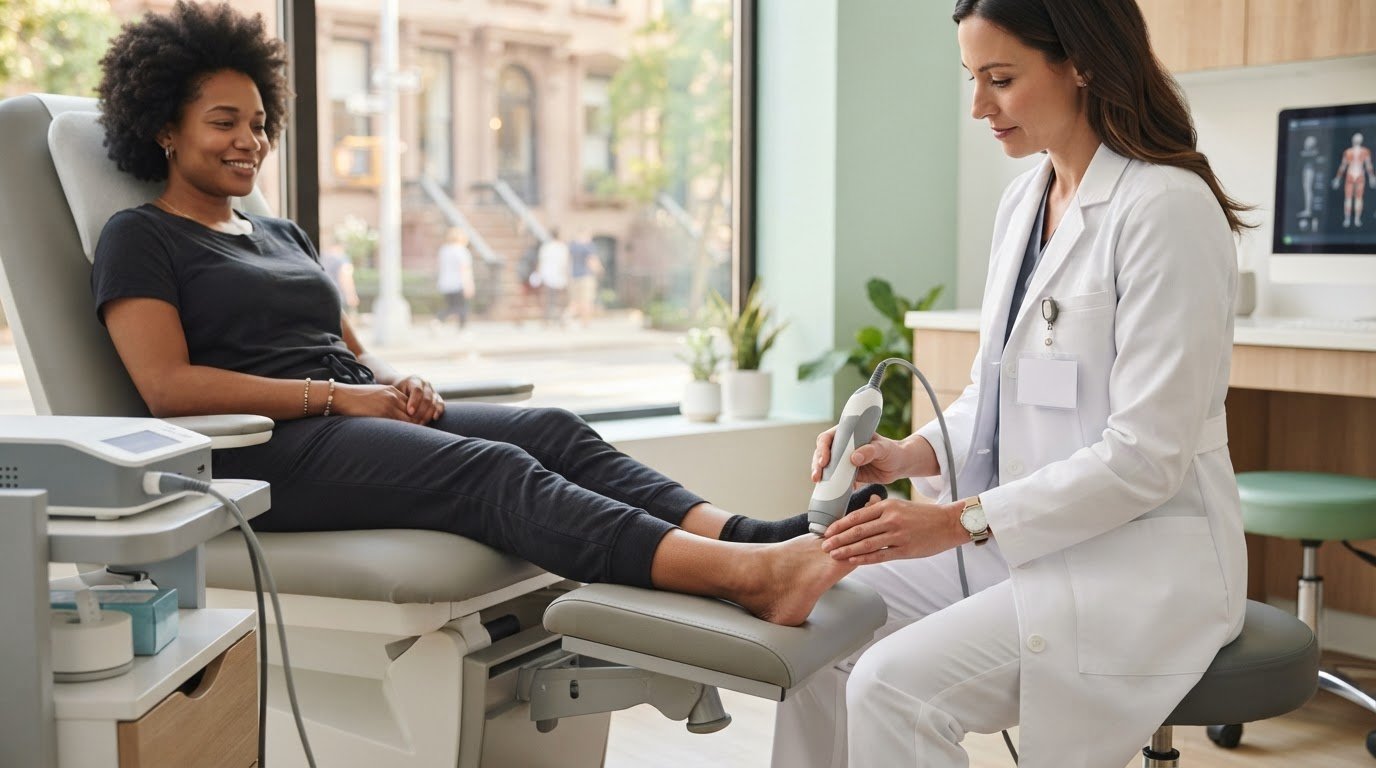
Following the history, we perform a multi-layered physical examination. This includes checking joint range of motion, muscle strength, and ligament flexibility. We also conduct a footwear assessment. Please bring the shoes your child wears most often, as the wear patterns on the soles act as a physical record of how their feet interact with the ground. If we need to verify the alignment of the growing bones, we may utilize low-dose digital X-rays to see exactly how the skeletal structure is supporting their weight. Our goal is to create a complete picture of your child’s musculoskeletal health before recommending any intervention.
Modern Gait Analysis Technology
We utilize advanced diagnostic tools that go far beyond a simple visual check. Pressure mapping technology allows us to see exactly where your child’s foot is striking the ground and identify high-impact areas that may cause future pain. We also use slow-motion video analysis to catch subtle biomechanical hitches that the human eye might miss in real-time. Because of this specialized equipment, a podiatrist in Forest Hills NY is often better equipped to handle complex walking patterns than a general pediatrician who may lack these specific diagnostic capabilities.
Making the Visit Stress-Free for Kids
Our approach to pediatric care in Brooklyn and Queens is patient-centered and gentle. We often turn our “tests” into games, asking children to “walk like a tightrope walker” or “run like a superhero” so we can observe their natural, uninhibited movement. This collaborative atmosphere helps alleviate the anxiety children often feel in clinical settings. We also prioritize parental education, ensuring you leave the office with a clear understanding of the treatment plan and the confidence to support your child’s recovery at home. If you are concerned about your child’s walking pattern, contact us today to schedule a professional gait analysis and take the first step toward protecting their mobility.
Long-Term Mobility: How Early Intervention Prevents Adult Foot Deformities
Addressing walking issues early isn’t just about fixing a current trip or stumble; it’s about protecting the entire kinetic chain. When a child’s foundation is misaligned, the knees, hips, and lower back must work harder to compensate for every step. This mechanical stress often leads to chronic secondary pain that doesn’t appear until adulthood. By understanding when to see a podiatrist for child’s gait, you’re essentially investing in your child’s future physical independence and preventing the wear and tear that leads to early-onset joint issues.
Because the body works as an integrated system, many families find that resources like mychiropracticlifestyle.com provide valuable insights into how spinal health and alignment can further support a child’s posture and gait development.
One of our most effective tools in this process is the use of custom orthotics. Parents often worry that these inserts will become a lifelong crutch. In reality, we use them as a temporary “brace” to guide the foot’s growth into a more neutral, healthy position. Correcting these biomechanical roots early can even prevent the structural changes that eventually lead to the need for bunion surgery Queens residents often require later in life. We aim to solve the problem while the bones are still flexible and responsive to gentle correction.
Beyond the physical benefits, there is a significant social and emotional component to healthy development. A child who can run, jump, and play without pain or clumsiness is a child who participates fully in sports and playground activities. This participation builds confidence and ensures they don’t feel sidelined during these crucial social years. Our goal is to ensure every child in our community has the stability they need to keep up with their peers.
Non-Surgical Treatment Pathways
Most pediatric gait issues don’t require surgical intervention. We focus on non-invasive pathways like targeted stretching programs and physical therapy to strengthen weak muscle groups and improve flexibility. Proper arch support and minor shoe modifications can also make a world of difference on the hard, unforgiving pavement of Brooklyn and Queens. We monitor this progress with regular follow-ups, adjusting our approach as your child hits new growth spurts and their activity levels increase.
Your Next Steps for Your Child’s Foot Health
If you’ve noticed your child struggling to keep up or walking with an unusual pattern, it’s time to move from “watchful waiting” to a professional consultation. Preparing your child for their first visit is easy; tell them they’re going to show a specialist how well they can walk and run. Our team provides expert pediatric care across Astoria, Forest Hills, and Brooklyn. We are here to partner with you in every step of your child’s development, ensuring they grow up with the mobility and confidence they deserve. Reach out to us today to schedule your baseline evaluation.
Protecting Your Child’s Path to Active Independence
Watching your child grow is a journey filled with remarkable milestones, but it is natural to feel uncertain when a walking pattern doesn’t seem quite right. Just as you prioritize your child’s mobility, ensuring your own physical recovery after childbirth with support from Ninja Mama allows you to be the active, present parent your little one needs. We have explored how distinguishing between normal developmental shifts and persistent red flags, such as asymmetrical walking or toe walking, can safeguard your child’s musculoskeletal health. By understanding exactly when to see a podiatrist for child’s gait, you’re taking a proactive step toward preventing secondary pain in their knees and hips during adulthood. Early intervention ensures that their feet remain a resilient foundation for a lifetime of movement and play.
Our team brings over 20 years of NYC clinical experience and the specialized expertise of board-certified podiatric surgeons to every consultation. We utilize specialized pediatric diagnostic equipment, including advanced pressure mapping, to provide clear answers and personalized care plans. Don’t let anxiety about your child’s development linger. Schedule a Pediatric Gait Evaluation at Our Brooklyn or Queens Office to gain the clinical clarity your family deserves. We are dedicated to helping your child move with confidence, stability, and the freedom to enjoy every step of their journey.
Frequently Asked Questions
Is it normal for my 2-year-old to be pigeon-toed?
Yes, intoeing is a very common developmental stage for toddlers and often resolves on its own by age eight. It usually stems from the position of the legs or feet in the womb. However, if the intoeing is asymmetrical, causes your child to trip several times a day, or seems to be getting worse, it’s a clear sign of when to see a podiatrist for child’s gait to ensure their bones are aligning correctly.
Can “growing pains” in a child’s legs be a sign of a foot problem?
Persistent “growing pains” are frequently symptoms of biomechanical strain rather than simple growth spurts. While some nighttime discomfort is normal, pain that occurs during or after physical activity often indicates that the feet aren’t supporting the body properly. We find that many children labeled with growing pains actually have functional issues like flat feet that put undue stress on their calf muscles and shins.
How can I tell if my child’s flat feet are a problem?
Flat feet are generally only a concern if they are “rigid” or cause visible physical distress. Most children have flexible flat feet, meaning an arch appears when they sit or stand on their tiptoes. If your child’s foot remains flat in all positions, or if they complain of foot fatigue during walks through Brooklyn or Queens, a professional evaluation is necessary to prevent future joint misalignment.
At what age should a child stop toe walking?
Most children should adopt a consistent heel-to-toe walking pattern by the age of two. While occasional tip-toeing is common in early walkers, persistent toe walking past this milestone can lead to shortened Achilles tendons. Addressing this pattern early helps your child develop a more stable and efficient gait, preventing the need for more intensive interventions like bracing or physical therapy later in life.
Do children always need orthotics if they have a gait issue?
No, custom orthotics are only one of several treatment pathways we use in our NYC clinics. Many gait concerns are successfully managed with targeted stretching programs, muscle strengthening exercises, or specific footwear recommendations. We only prescribe orthotics when a child needs a structural “brace” to guide their development or to alleviate pain that prevents them from participating in sports and social activities.
What kind of shoes are best for a child with intoeing?
Children with intoeing need supportive shoes with a firm heel counter and a flexible sole at the toes. It’s vital to avoid “hand-me-down” footwear, as the wear patterns from a previous owner can worsen your child’s alignment issues. For New York City life, we recommend shoes with high-quality rubber outsoles that provide the necessary shock absorption for walking on hard concrete sidewalks all day.
Will my child need surgery to fix a walking problem?
Surgical intervention is extremely rare for pediatric gait issues and is only considered for severe structural deformities that don’t respond to conservative treatments. Most conditions we see are successfully managed with non-invasive methods like physical therapy or shoe modifications. Our priority is always to restore your child’s mobility using the most gentle and effective path possible.
How often should a child’s gait be re-evaluated as they grow?
We typically recommend a follow-up every six to twelve months during periods of rapid growth or when a child starts a new sport. Regular monitoring is an essential part of knowing when to see a podiatrist for child’s gait adjustments. These check-ins allow us to ensure that their treatment plan is keeping pace with their physical changes and increasing activity levels.