By the eighth hour of standing on a Brooklyn construction site or navigating a Queens warehouse, that dull ache in your arches often turns into a rhythmic throbbing that radiates straight to your lower back. You’ve likely noticed your boots wearing down unevenly on the inside edge, a telltale sign that your arches are collapsing against the relentless NYC concrete. We understand that for a New York City professional, foot pain isn’t just a nuisance; it’s a threat to your livelihood and your long-term mobility.
We believe you shouldn’t have to choose between safety and comfort. This guide will help you discover the top-rated work boots for flat feet that meet the rigorous ASTM F2413-24 safety standards while providing the structural foundation your body needs. Beyond just picking a brand, we’ll explore how professional flat feet treatment NYC can reinforce your arches and stop overpronation at the source. We’re going to preview the best footwear models for 2026, explain the science of shock absorption on urban surfaces, and show you how custom orthotics can turn even the toughest boot into a precision tool for recovery.
Key Takeaways
- Understand why New York City’s unforgiving concrete surfaces demand structural support rather than just soft cushioning to prevent chronic arch and back pain.
- Identify the three essential structural features-rigid shanks, firm heel counters, and medial posting-that stabilize the foot against overpronation.
- Explore our 2026 professional recommendations, such as the Wolverine Overpass 6″, which meets the latest ASTM safety standards while supporting flat arches.
- Recognize the clinical red flags that signal when a footwear change isn’t enough and professional flat feet treatment NYC is required to address the root cause of your discomfort.
- Learn the proper timeline for breaking in new boots and how moisture-wicking accessories can prevent secondary issues like fungal infections during long shifts.
Why NYC Concrete is Unforgiving for Workers with Flat Feet
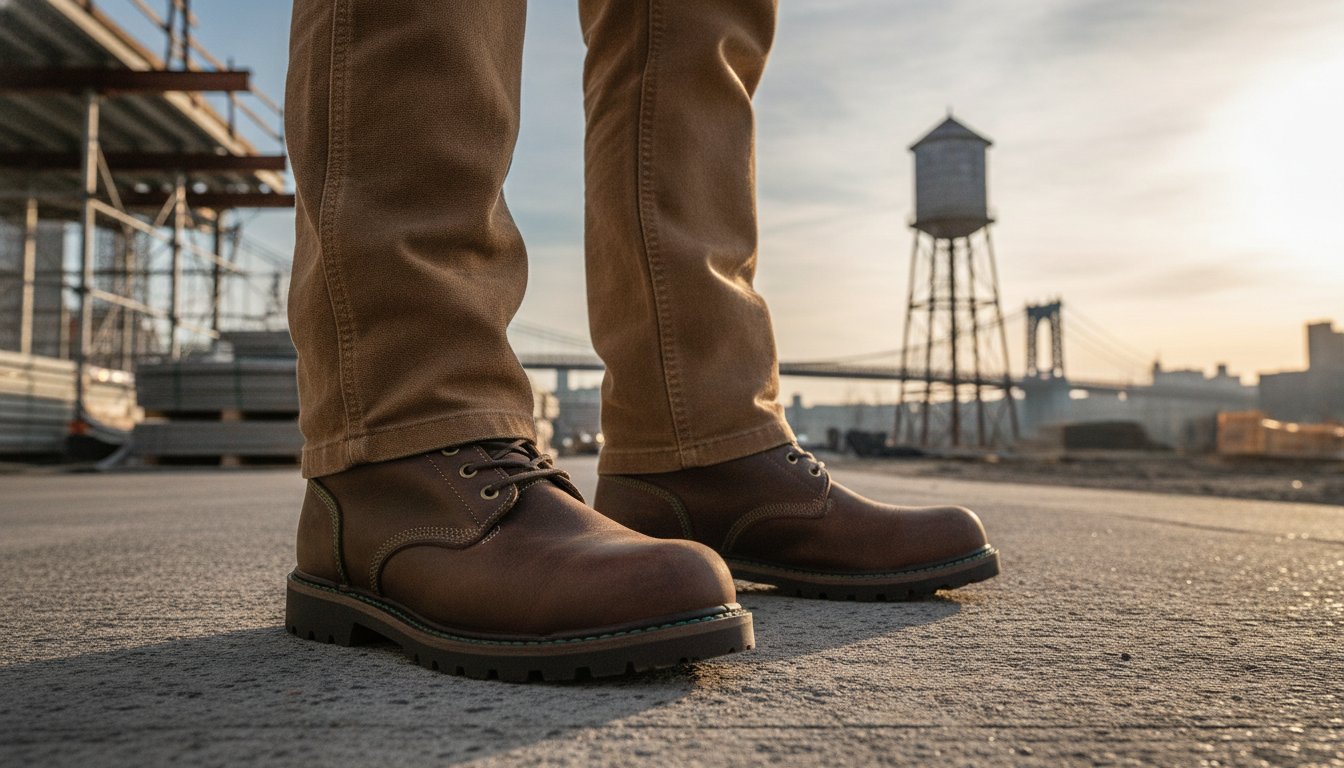
New York City is a marvel of engineering, but for the men and women building and maintaining our infrastructure, the city’s foundation is a relentless adversary. Most job sites and transit routes are composed of high-psi concrete, a material that offers zero “give” or shock absorption. For those living with Flat feet, or pes planus, this lack of cushion creates a daily biomechanical crisis. While a healthy arch acts like a natural spring, a collapsed arch forces the foot to absorb the full impact of every step. This condition is remarkably prevalent among our local labor force, where ten-hour shifts on hard surfaces are the standard. When you visit us for flat feet treatment NYC, we often find that the pain isn’t just in the feet; it’s a systemic issue caused by the unforgiving urban environment. Our goal is to provide a professional evaluation that addresses this urban foot fatigue before it leads to permanent joint damage.
The Mechanics of Overpronation on Hard Surfaces
When your arches are flat, your feet tend to roll inward excessively as you walk. This movement, known as overpronation, causes a total loss of shock absorption. Instead of the force being distributed through the midfoot, it’s sent directly into your joints. In NYC, your work boot is the only barrier between your skeletal system and miles of unyielding concrete. Without proper intervention, this misalignment creates a chain reaction of pain that travels up to the ankles, affects the alignment of the knees, and eventually settles in the lower back. This leads to chronic fatigue that lingers long after you’ve clocked out. We focus on stabilizing this motion to protect your entire kinetic chain from the ground up.
Commuting vs. Working: The NYC Hybrid Demand
New York workers face a unique challenge that national footwear guides often ignore. You aren’t just standing in one spot; you’re navigating subway stairs, trekking across boroughs, and moving between varied job sites. This hybrid demand requires a boot that is rugged enough for a construction site but light enough for a mile-long walk from the train. We see many patients at our Forest Hills, Astoria, and Woodhaven locations who struggle with boots that are either too heavy, causing muscle strain, or too flimsy to protect their arches. Balancing the weight-to-support ratio is critical for maintaining your mobility. Effective flat feet treatment NYC must account for these daily commutes, ensuring your footwear supports you during every phase of your day, from the morning rush to the final whistle.
Essential Features: What to Look for in a Flat Foot Work Boot
When you’re shopping for boots, don’t be fooled by a “marshmallow” feel. While soft cushioning feels great for the first ten minutes, it often lacks the structural support necessary for collapsed arches. For those seeking flat feet treatment NYC, we emphasize that a boot should act as an external skeleton for your foot. According to the MedlinePlus Medical Encyclopedia, flat feet occur when the arches on the inside of your feet are flattened, allowing the entire soles of your feet to touch the floor when you stand up. To combat this, we look for three pillars: a rigid shank, a firm heel counter, and medial posting. Medial posting involves using denser material on the inner side of the midsole to physically block the foot from rolling inward.
We also recommend choosing boots with a removable insole. This feature is mandatory because most factory inserts don’t provide enough lift for a flat-footed worker. Having a removable footbed allows us to integrate custom orthotics seamlessly into your footwear later without making the boot feel too tight. Finally, consider the outsole shape. Wedge soles are often better for flat-footed workers on concrete because they maximize the contact area between the boot and the ground, which distributes weight more evenly. However, if your job involves climbing ladders or navigating deep mud, a 90-degree heel remains a safety requirement. Our team specializes in flat feet treatment NYC, and we’ve seen how these specific structural choices can prevent years of chronic pain.
The Importance of the Internal Shank
The shank is the backbone of your boot. It’s a thin piece of material between the insole and outsole that prevents the shoe from folding under your midfoot. Without a shank, your arch has to do all the work, which leads to rapid fatigue and sharp pain. Steel shanks offer maximum rigidity, but composite shanks are often better for New Yorkers. Composite materials don’t conduct the cold during Astoria winters and won’t set off metal detectors at secure job sites or transit hubs. This structural integrity is a core component of Sports Medicine in New York City, as it prevents the micro-trauma that leads to stress fractures.
Heel Stability and Overpronation Control
The heel counter is the stiff reinforcement in the back of the boot that cups your heel. For overpronators, this feature must be rock solid to prevent the ankle from rolling inward. You can test this in the store with a simple squeeze test. If the back of the boot collapses easily under your thumb, it won’t support your gait. We also suggest looking for wide-base outsoles. A wider footprint provides better lateral stability, keeping you balanced on uneven urban terrain. If you are unsure whether your current boots are doing more harm than good, a professional gait analysis can provide the clarity you need.
Top Work Boot Recommendations for Flat Feet in 2026
Selecting the right footwear is a critical step in your journey toward recovery. While we offer specialized flat feet treatment NYC at our Forest Hills and Astoria clinics, the right boot acts as your daily support system. For 2026, we’ve identified several models that stand out for their biomechanical integrity. The Wolverine Overpass 6″ is a top contender because it balances flexibility with a motion-stabilizing arch structure. For those who prefer a structural wedge sole, the Thorogood American Heritage remains a gold standard. It provides a wide base that helps distribute pressure across the entire foot. If you suffer from chronic podiatric pain, the Orthofeet Granite is specifically engineered with anatomical arch support to alleviate strain. It’s vital to remember that even the highest-quality boot is often a generic fit. For true, long-term relief, most of our patients find that integrating custom orthotics into these models provides the precise correction their specific gait requires.
Best Heavy-Duty Boots for Construction Sites
On active job sites, stability is non-negotiable. The KEEN Utility Flint II is an excellent choice for outdoor stability, featuring a siped outsole that grips uneven debris. We often recommend composite toes for NYC workers. Unlike steel, composite materials don’t trigger metal detectors during your commute and offer better temperature regulation in the winter. When choosing between high-top and mid-top support, think about your specific needs. High-tops provide superior ankle bracing for those with severe overpronation, while mid-tops allow for more agility. Our clinical experience shows that the right height can prevent the rolling sensation that leads to ankle sprains.
Best Options for Standing on Concrete All Day
If your shift involves standing on unyielding warehouse floors, anti-fatigue technology is your best friend. The Timberland PRO Pit Boss is renowned for its shock-absorbing geometry that returns energy to the foot. Wedge soles are incredibly popular for flat feet because they eliminate the gap under the arch, but they often require specific arch inserts to be truly effective. The Carhartt CMF6366 is another industrial-grade option that offers impressive midfoot support. We’ve seen these models perform well for our patients, but footwear is only one part of a comprehensive plan. Seeking flat feet treatment NYC ensures that you aren’t just masking the pain, but actively correcting the underlying biomechanical issues caused by our city’s demanding environment.

The NYC Concrete Test: Maximizing Your Boot’s Performance
Buying a high-quality boot is the first phase of flat feet treatment NYC, but how you manage that footwear determines your daily comfort. We recommend a structured two-week break-in period for any new pair. Start by wearing your boots for just two hours a day in a controlled environment before committing to a full ten-hour shift. This gradual approach allows the leather and internal components to mold to your foot shape without causing the severe blisters or structural strain that can aggravate collapsed arches. If you rush this process, you risk creating pressure points that lead to compensatory pain in your knees and hips.
NYC workers frequently face damp conditions, whether from sudden rain or humid subway platforms. Trapped moisture doesn’t just damage the boot’s leather; it creates a breeding ground for fungal nail infections. We advise our patients in Brooklyn and Queens to wear moisture-wicking merino wool or high-performance synthetic socks to keep the skin dry. It’s also vital to recognize when a boot has reached the end of its useful life. Often, the internal support materials fail long before the rubber outsole wears thin. If you notice the boot tilting inward when placed on a flat surface, the structure can no longer counter overpronation. To extend the life of your footwear, we suggest rotating between two pairs. This gives the cushioning 24 to 48 hours to fully decompress, ensuring the arch support remains resilient.
Lacing Techniques for Flat Feet
How you tie your boots can significantly impact your comfort level. Window lacing is a lifesaver for workers who experience painful pressure on the top of the foot. By skipping a set of eyelets over the most sensitive area, you relieve tension while maintaining a secure fit across the rest of the foot. The heel lock lacing method creates a secure loop at the top eyelets that cinches the foot into the heel counter to prevent the sliding that leads to instability. These small adjustments help maintain the “locked-in” feel necessary for overpronators navigating uneven job sites.
Maintenance for Long-Term Support
Our city’s winter salt and slush are incredibly corrosive, breaking down the chemical bonds in leather and stitching faster than almost any other environment. This environmental damage weakens the boot’s ability to hold your foot in proper alignment. Once the outsole begins to wear unevenly, it forces your body into a dysfunctional gait, which can undo the benefits of your flat feet treatment NYC. We suggest replacing factory insoles with high-quality versions immediately to ensure your foundation is solid. If your pain persists despite these maintenance steps, schedule a professional gait analysis to see if your footwear needs further modification.
Beyond the Boot: When to See an NYC Podiatrist
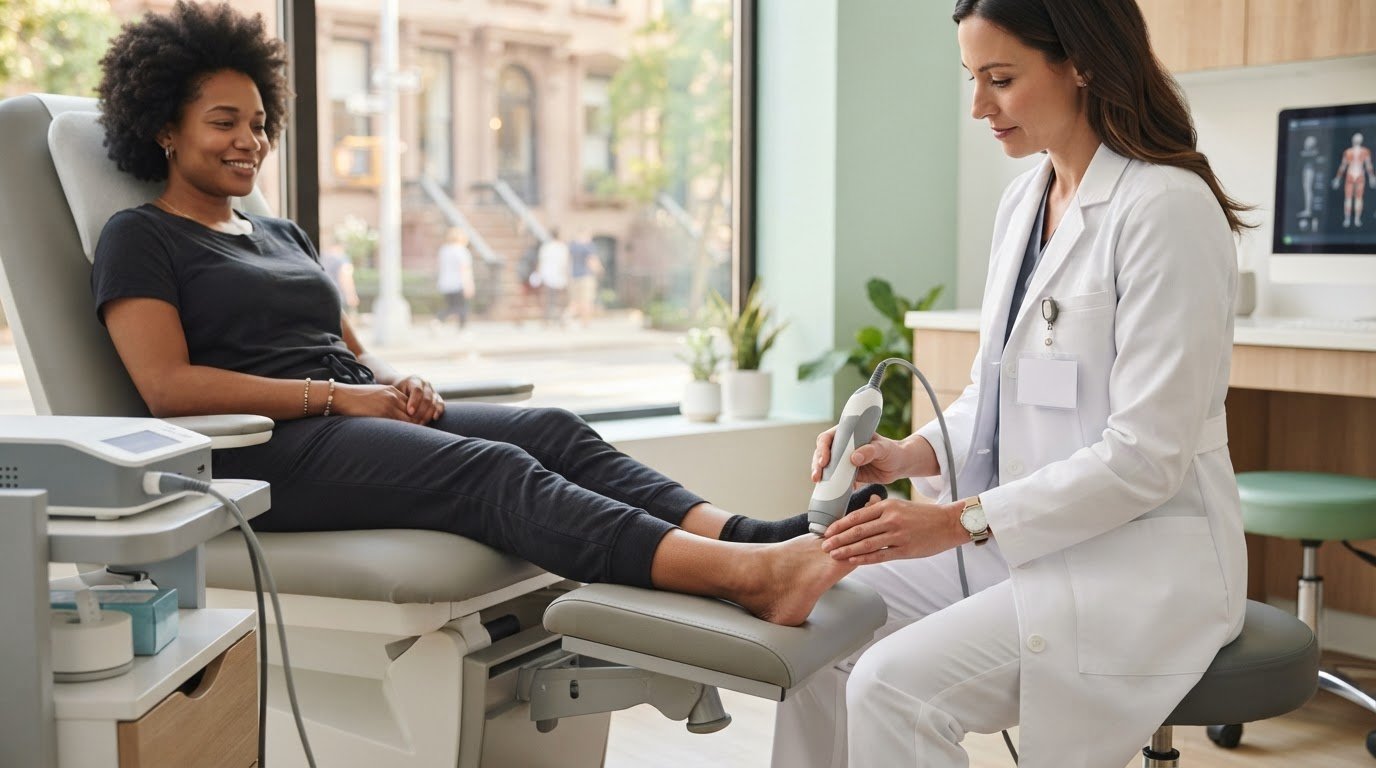
While the right work boot provides a necessary foundation, it isn’t always a complete solution for structural biomechanical issues. You may need professional flat feet treatment NYC if you experience specific “red flag” symptoms that persist despite footwear changes. One of the most common signs is sharp, stabbing heel pain during your first steps in the morning, which often indicates that your collapsed arches are severely straining the plantar fascia. Other warnings include persistent swelling around the inner ankle or pain that continues even after you’ve taken your boots off and rested. At Local Foot Doc, we use professional gait analysis to see exactly how your feet strike the ground under pressure. By identifying these patterns early, we can help you avoid the need for more invasive procedures like bunion surgery or hammertoe correction later in life.
Custom Orthotics vs. Over-the-Counter Inserts
It’s a common mistake to assume that a thick gel insert from a local pharmacy provides the same benefit as a medical device. Retail inserts offer temporary cushion, but they lack the rigid, prescriptive support needed to realign a collapsing arch. Custom orthotics are the gold standard because they are crafted from a precise 3D model of your unique foot structure. In our Forest Hills and Astoria offices, we take detailed impressions to ensure your supports fit perfectly inside your specific work boots. These devices don’t just add comfort; they physically redistribute pressure to prevent the overpronation that causes knee and back fatigue during long NYC shifts.
Comprehensive Flat Feet Treatment in Brooklyn and Queens
Our approach to flat feet treatment NYC focuses on non-surgical interventions that keep you active and on the job. Dr. Waldemar Majdanski and our team prioritize biomechanical correction through specialized stretching protocols, footwear education, and high-performance orthotics. We’ve spent over 20 years helping New York’s workforce regain their independence from chronic pain. Whether you are working on a high-rise in Manhattan or a warehouse in Woodhaven, your mobility is our priority. We believe that a collaborative atmosphere between the patient and practitioner is the fastest way to healing. If you’ve tried new boots and still find yourself limping at the end of the day, it’s time for a professional consultation. Visit us at our Forest Hills or Astoria locations to start your path toward lasting relief and the resumption of your normal, active lifestyle.
Reclaiming Your Mobility on the Streets of New York
Your career in the city shouldn’t be defined by the pain in your arches. We’ve explored how identifying the right structural features in your work boots, like rigid shanks and firm heel counters, can protect your body from the relentless impact of urban concrete. However, footwear is often just the first step toward long term relief. For many workers, the ultimate solution involves a professional gait analysis and custom-molded orthotics that provide the exact biomechanical correction a factory insole cannot offer.
Our board-certified podiatric surgeon, Dr. Waldemar Majdanski, has over 20 years of experience providing effective flat feet treatment NYC to local professionals. Whether you visit our specialists in Forest Hills, Astoria, or Woodhaven, our team focuses on precise correction to ensure you can finish your shift without debilitating fatigue. Don’t let chronic discomfort limit your quality of life or your return to activity. We invite you to Schedule an Arch Evaluation and Gait Analysis at Local Foot Doc today. We’re here to help you walk with confidence and regain your independence from foot pain.
Frequently Asked Questions
Do flat feet need arch support or cushioning in work boots?
Flat feet primarily require structural arch support to prevent overpronation rather than just soft cushioning. While cushioning provides immediate comfort on NYC concrete, it often fails to stop the inward rolling of the ankle. We recommend boots with a rigid shank and medial posting to stabilize the midfoot. This structural foundation is a core part of effective flat feet treatment NYC, ensuring your weight is distributed evenly across the entire foot during long shifts.
What is the best brand of work boots for flat feet in 2026?
For 2026, the Wolverine Overpass 6″ and Thorogood American Heritage are top-rated choices for New Yorkers with flat feet. These brands offer the necessary balance of ASTM F2413-24 safety standards and structural integrity. The Wolverine model is particularly effective for its arch structure, while Thorogood’s wedge sole provides a wide, stable base. We suggest trying these on with the socks you’ll actually wear to ensure the fit accommodates your specific arch height.
Can I put custom orthotics in any work boot?
You can integrate custom orthotics into most work boots, provided the original factory insole is removable. We always advise our patients in Forest Hills and Astoria to choose boots with extra depth or a high-volume fit. This ensures that the corrective device doesn’t crowd your toes or cause friction against the top of the boot. Custom-molded supports are the most reliable way to upgrade any safety footwear into a personalized medical tool for recovery.
How can I tell if I have flat feet or just foot fatigue?
Foot fatigue usually resolves with rest, but flat feet involve a visible loss of the medial arch when standing. You can check this by looking at your footprint on a dry surface after showering. If the print shows the entire sole of your foot, you likely have pes planus. If you notice your boots wearing out unevenly on the inside edge, it’s time to seek professional flat feet treatment NYC to prevent permanent biomechanical damage.
Is a steel toe or composite toe better for someone with flat feet?
Composite toes are generally better for workers with flat feet because they are significantly lighter than steel. Reducing the weight of your footwear minimizes the muscle strain required to lift your feet, which is vital when your arches are already compromised. Additionally, composite materials don’t conduct the cold during New York winters and won’t set off metal detectors during your subway commute, making them the more practical choice for the modern urban environment.
Why does my lower back hurt after wearing work boots all day?
Your lower back pain is likely a result of a kinetic chain reaction caused by overpronation. When your arches collapse, your ankles roll inward, forcing your shins and knees to rotate internally. This misalignment eventually tilts your pelvis and puts excessive strain on the lumbar spine. We find that stabilizing the feet with proper boots and custom orthotics often provides immediate relief for the back fatigue that plagues many of our local labor professionals.
What are the symptoms of a collapsed arch in adults?
Symptoms of a collapsed arch, or adult-acquired flatfoot, include persistent pain along the inside of the foot and ankle. You might also experience swelling after activity or a noticeable change in your foot’s shape, where the heel appears to tilt outward. Many patients report that their shoes feel tighter or fit differently than they used to. If you find it difficult to stand on your toes, it’s a sign that the supporting tendons are struggling.
How often should I replace my work boots if I have flat feet?
We recommend replacing your work boots every 6 to 12 months, depending on the intensity of your job. For NYC workers on concrete, the internal support materials often fail before the rubber outsole looks worn out. If you notice the boot tilting inward when placed on a flat table, it’s no longer providing the stability you need. Regular replacement ensures your arches remain protected and helps maintain the effectiveness of your overall treatment plan.