Imagine stepping out of your Astoria apartment, only to find that the short walk to the corner bodega feels like a trek across the Brooklyn Bridge. You aren’t alone in feeling that the city’s uneven sidewalks and steep subway stairs have become obstacles rather than paths. For many of our neighbors, the sharp sting of joint inflammation makes even simple morning routines feel like a challenge. We understand that managing arthritis foot pain in the elderly NYC requires more than just generic advice; it demands a strategy built for the concrete jungle. Since nearly 54% of people aged 75 and older live with these symptoms, finding a reliable path forward is essential for staying active in the city we love.
This guide offers professional strategies and practical, local tips to help you reduce discomfort and protect your independence. We’ll explore everything from custom orthotics that handle cracked pavement to the latest non-invasive treatments that help you keep up with your grandkids at Central Park without the constant fear of a fall. By focusing on your unique mobility needs, we can help you navigate New York with confidence and comfort once again.
Key Takeaways
- Understand how the unique “wear and tear” of New York City sidewalks accelerates cartilage breakdown in aging feet and how to identify early warning signs.
- Master a simple five-step daily routine designed to maintain joint lubrication and prevent stiffness through strategic, low-impact movement.
- Learn why managing arthritis foot pain in the elderly NYC often requires professional-grade custom orthotics rather than generic, store-bought inserts.
- Discover tactical strategies for navigating common urban mobility hurdles, including subway stairs and uneven pavement in local neighborhoods.
- Explore clinical paths to recovery that prioritize non-invasive treatments, helping you maintain your independence and avoid surgery whenever possible.
Identifying the Signs of Foot Arthritis in Seniors
The human foot is a complex structure containing over thirty individual joints that work in harmony. When the protective cartilage between these bones begins to wear thin, we call it arthritis. For many of our neighbors, managing arthritis foot pain in the elderly NYC is a daily reality because of our city’s unique physical demands. Unlike other parts of the country where people rely on cars, New Yorkers are lifelong pedestrians. We walk on unforgiving concrete, navigate steep subway stairs, and carry heavy bags through neighborhoods like Woodhaven or Astoria. This constant, high-impact activity accelerates the breakdown of joint tissue over time.
Most patients we see in our practice suffer from Osteoarthritis. This is the classic “wear and tear” condition that develops over decades of movement. It’s distinct from Rheumatoid Arthritis, which is an autoimmune disorder where the body’s immune system mistakenly attacks the healthy lining of the joints. While the underlying causes differ, both conditions can make a simple trip to the grocery store feel like a chore. We often ask our patients about the “Big Three” warning signs: stiffness that’s most severe first thing in the morning, noticeable swelling after a walk, and a distinct “bone-on-bone” grinding sensation during movement.
Common Areas of Pain: From Big Toe to Ankle
Arthritis doesn’t always affect the whole foot at once. Hallux Rigidus, or arthritis of the big toe joint, is a frequent culprit that makes the “push-off” phase of every step feel sharp and restricted. You might also experience a deep, dull ache along the top of your foot, which is a hallmark of midfoot arthritis. This pain typically intensifies after a full day of standing or walking. Ankle arthritis is another major concern, often leaving seniors feeling “unstable” or “shaky” when they step off a high curb or navigate the uneven pavement found in many older NYC districts.
When ‘Aches and Pains’ Become a Medical Concern
There’s a persistent, harmful myth that foot pain is simply a “normal” part of the aging process. Chronic discomfort is never something you should just accept. Certain red flags indicate that it’s time for a professional evaluation, such as visible joint deformities, persistent warmth or redness, or pain that’s severe enough to disrupt your sleep. Untreated arthritis changes your gait as you try to avoid the pain. This shift in how you move can lead to balance issues, significantly increasing the risk of falls. Managing arthritis foot pain in the elderly NYC is about protecting your safety and ensuring you can continue to enjoy the city on your own terms.
A 5-Step Daily Routine for Managing Pain at Home
While professional care is vital, the choices you make in your own home every day are the foundation of understanding osteoarthritis management. We often tell our patients that joints are like hinges; if they aren’t moved regularly, they tend to “rust” and lock up. Consistency is your greatest ally when managing arthritis foot pain in the elderly NYC. By establishing a morning and evening protocol, you can keep the synovial fluid—the body’s natural joint lubricant—circulating effectively. We prioritize low-impact movement over total rest, as sedentary habits often lead to increased stiffness and a loss of independence.
Step 1: The Morning Warm-Up
Your routine should begin before your feet even touch the floor. Spend two minutes performing slow ankle circles and gentle toe curls while still under the covers to “pre-heat” the joints. If your feet feel particularly rigid, applying moist heat for ten minutes can help “thaw” the stiffness before you stand. Once you’re out of bed, it’s essential that you never walk barefoot on hard apartment floors. NYC apartments often feature hardwood or tile that provides zero shock absorption. Slip into a pair of supportive house shoes immediately to protect your joints from the unforgiving impact of hard surfaces.
Step 2: Strategic Footwear Selection
The right shoes act as a mobile shock absorber for your skeletal system. We recommend following the “Rule of Threes” for every pair you own: ensure they provide deep cushioning, robust arch support, and a wide toe box that doesn’t pinch your joints. Many of our neighbors ask about the difference between running and walking shoes when selecting their daily footwear. While both offer support, walking shoes are typically designed with more flexibility through the arch to match the specific mechanics of a walking gait. If your favorite pair shows uneven wear on the soles or feels flimsy, they’ve likely lost their structural integrity and are causing more damage than relief.
Step 3: Gentle Stretching and Strengthening
Maintaining flexibility helps redistribute the pressure on your feet more evenly. Try the towel curl exercise by sitting in a chair and using your toes to scrunch a towel toward you, which improves midfoot mobility. Follow this with gentle calf stretches against a wall to reduce the mechanical pull on your forefoot. The Marble Pickup exercise involves using your toes to grasp small marbles from the floor and move them into a container to strengthen the small intrinsic muscles of the foot. These simple movements, combined with evening elevation and icing after a long day in the city, can significantly improve your daily comfort. If home routines aren’t providing enough relief, a professional podiatric evaluation can help determine if more advanced strategies are needed.
Professional Treatments: Beyond Store-Bought Solutions
While the daily home routines we discussed previously provide a necessary foundation, they are often not enough to combat the persistent impact of city life. Professional podiatric care serves as the gold standard for managing arthritis foot pain in the elderly NYC because it moves beyond temporary relief to address underlying biomechanical issues. Our practice focuses on a structured transition from conservative care to advanced interventions, always prioritizing the “whole patient” to restore mobility. We believe that professional intervention should feel like a partnership, where we identify the specific joint affected and provide a clear, technical path to recovery.
The Power of Custom Orthotics
Generic “Dr. Scholl’s” or drugstore inserts often fail for arthritic feet because they are designed for the average foot, not your specific anatomy. These mass-produced cushions may offer temporary softness, but they lack the structural integrity required to correct the way an arthritic foot strikes the pavement. We provide custom orthotics that are engineered to redistribute pressure away from your most painful, inflamed joints. At our Forest Hills and Astoria clinics, we use medical-grade casting to capture the exact contours of your foot. This precision ensures your weight is supported by healthy tissue, which is essential for navigating the cracked sidewalks and long blocks of our local neighborhoods.
Advanced Clinical Interventions
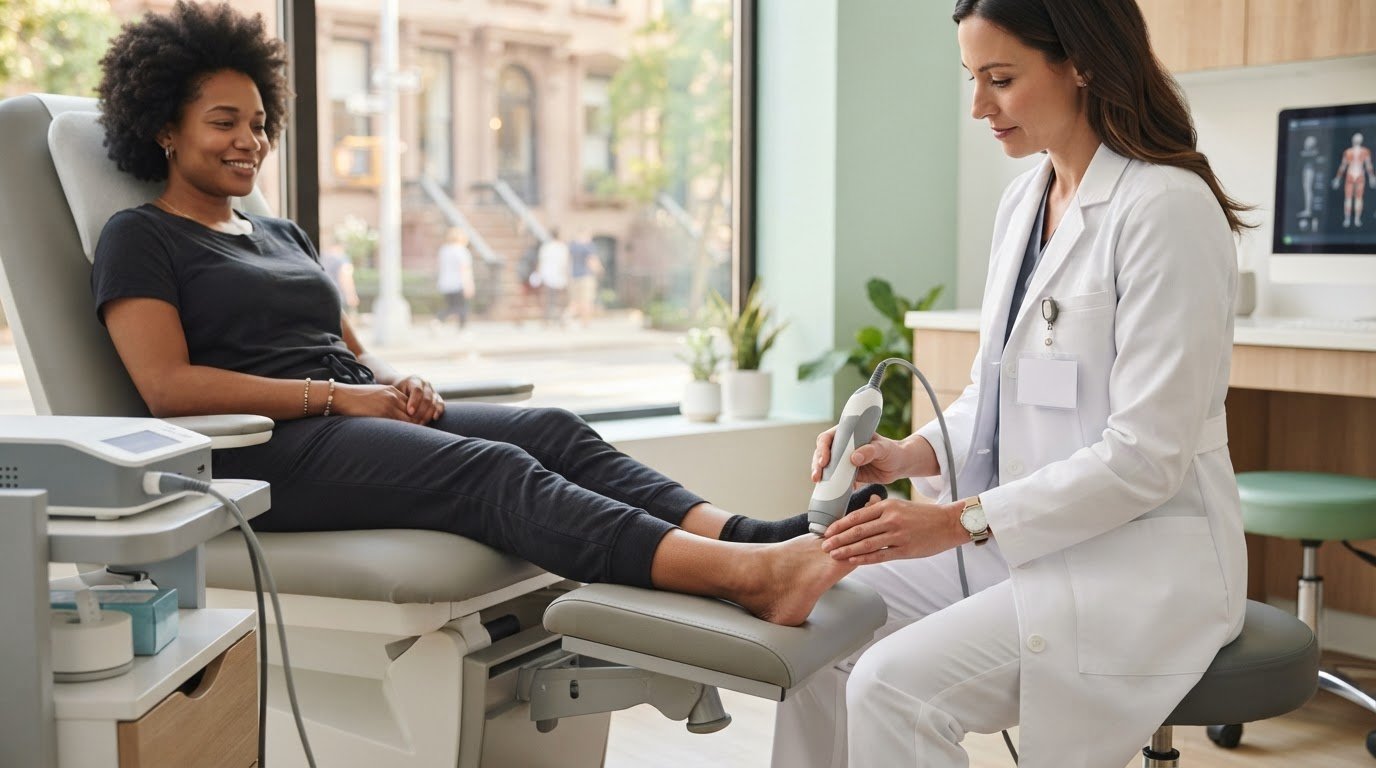
When non-invasive structural supports aren’t enough to manage a flare-up, we may introduce advanced clinical interventions. Steroid injections can provide rapid, significant relief for acute inflammation, though we use them judiciously to balance immediate comfort with long-term joint health. Physical therapy also plays a vital role in geriatric care, as it helps strengthen the muscles that stabilize the ankle and midfoot. If a structural deformity is the primary driver of your discomfort, we might discuss options like bunion surgery in Queens. Minimally invasive surgical techniques can correct the alignment of the joint, providing lasting relief when arthritis is secondary to a deformity.
Managing your condition also involves careful medication management. We work in tandem with your other healthcare providers to ensure that any anti-inflammatory prescriptions or topical treatments are used safely and effectively. Our goal is to provide a comprehensive framework that keeps you walking to the local bodega or visiting family without the constant burden of sharp pain. By combining modern clinical capabilities with individual attention, we help you maintain the independence that makes living in New York City so rewarding.

The NYC Factor: Navigating the City with Arthritic Feet
Living in New York requires a level of physical stamina that few other cities demand. For our senior neighbors, the “city that never sleeps” can feel like the city that never stops challenging your joints. Managing arthritis foot pain in the elderly NYC isn’t just about what happens in a clinical setting; it’s about how you navigate the four blocks between your home and the nearest subway entrance. We focus on energy conservation and joint protection strategies that allow you to maintain your social life without the constant fear of overexertion or injury. Staying connected to your community is a vital part of healthy aging, and we want to ensure your feet don’t hold you back from your favorite local spots.
Tackling Subways and Public Transit
The MTA can be a significant hurdle, but careful planning makes it manageable. Always check for stations with working elevators or escalators through official accessibility resources before you leave your apartment. When you’re on a moving bus or train, try to stand with your feet shoulder-width apart and keep a slight bend in your knees to absorb the vehicle’s motion. This posture reduces the direct mechanical strain on your ankle and midfoot joints. Additionally, ensure your footwear has high-traction, non-slip soles. Subway platforms often become slick with rain or condensation; a secure grip is your first line of defense against a painful slip or fall.
Sidewalk Safety in Brooklyn and Queens
Neighborhoods like Woodhaven and Forest Hills are known for their beautiful old trees, but those same trees often create “heaves” and uneven pavement. We recommend the “Scan and Step” method: keep your gaze about six feet ahead of you to identify cracks, tree roots, or debris before you reach them. This proactive approach prevents sudden, jarring movements that can trigger an inflammatory flare-up. If you feel unsteady, don’t view a cane or walker as a sign of weakness. Instead, think of it as a tool for independence that provides the extra stability needed to continue your daily walks with confidence. It’s better to use an aid and enjoy the fresh air than to stay home out of fear.
By mastering these urban mobility strategies, you can continue to enjoy everything our city offers. If you’re finding it difficult to keep up with the pace of New York, our team is here to help you find a path back to pain-free movement. Schedule a consultation at one of our local clinics to start your recovery journey today.
Restoring Independence with Local Foot Doc
The journey from chronic discomfort to a more active lifestyle begins with the realization that foot pain is not an inevitable consequence of aging. While New York City presents unique challenges for your joints, managing arthritis foot pain in the elderly NYC is a goal we achieve every day through specialized geriatric care. Dr. Waldemar Majdanski and our entire team are dedicated to providing a path to recovery that respects your lifestyle and your need for independence. We believe in treating the whole patient, ensuring that your foot health supports your ability to navigate your neighborhood with confidence and ease.
Your First Consultation: What to Expect
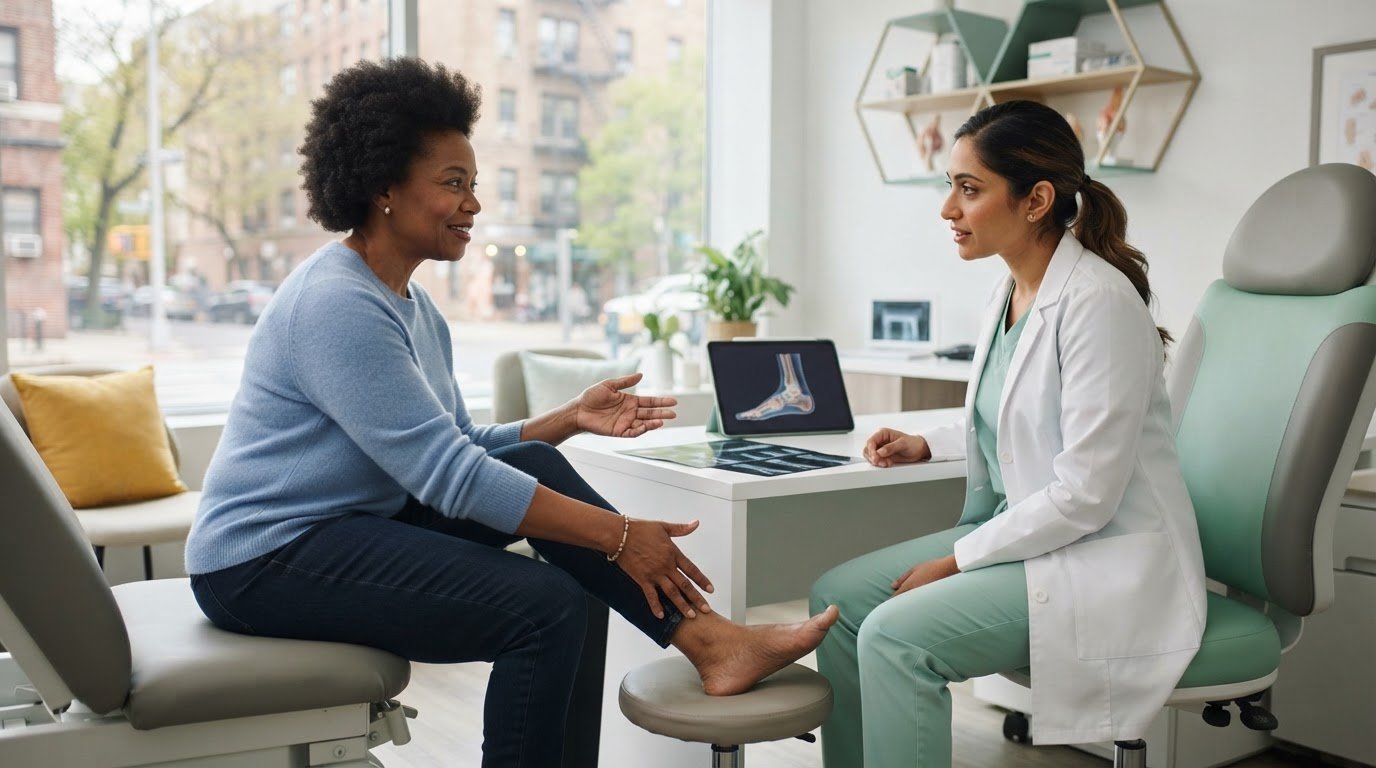
When you visit us, we start with a comprehensive evaluation that mirrors a professional consultation rather than a rushed appointment. We perform diagnostic imaging, including X-rays, right in our office to identify the specific joints affected by cartilage breakdown. This immediate data allows us to build a personalized mobility plan that accounts for your daily routine, whether that involves walking to a local community center or visiting family in another borough. For patients managing multiple conditions, we also provide specialized diabetic foot care in Brooklyn and Queens, ensuring that all aspects of your foot health are monitored under one roof. We take the time to explain the underlying causes of your symptoms, fostering a partnership that invites you into the healing process.
Convenient Care Near You
Accessibility is a cornerstone of our practice, especially for seniors who may find long-distance travel difficult. We maintain a strong presence in the community with locations in Forest Hills, Astoria, and Woodhaven. Each clinic is designed to be a welcoming, modern environment where you receive individual attention from a board-certified surgeon with over 20 years of clinical experience. We understand the complexities of healthcare coverage for seniors, including Medicare protocols, and our staff is here to help you navigate these administrative steps so you can focus entirely on your recovery. Our goal is to make professional podiatric care a reliable, local institution that you can trust for years to come.
You don’t have to settle for a life restricted by joint stiffness or sharp pain. Regaining your mobility is a literal medical goal and a symbolic promise of the independence you deserve. By combining advanced clinical interventions with traditional interpersonal rapport, we help you return to the activities that define your NYC life. The next step is simple. Scheduling your evaluation is the first move toward walking pain-free and resuming the lifestyle you love in the city we all call home.
Take the First Step Toward Pain-Free Mobility
Regaining your independence in New York City doesn’t have to be an uphill battle. By combining a structured daily routine with professional biomechanical support, you can protect your joints from the unforgiving concrete of our local streets. We’ve explored how identifying early warning signs and using specific urban navigation tactics can significantly lower your risk of falls and discomfort. Managing arthritis foot pain in the elderly NYC is about more than just clinical treatment; it’s about ensuring you can continue to enjoy your community in Forest Hills, Astoria, or Woodhaven without hesitation.
Dr. Waldemar Majdanski, a Board-Certified Podiatric Surgeon with over 20 years of experience in NYC, specializes in geriatric foot care programs designed for our city’s unique demands. Our practice is here to provide the compassionate, expert guidance you need to move from chronic stiffness to active living. You deserve to walk to your local shops or visit family without the burden of sharp pain. Schedule your consultation with Dr. Majdanski today to start walking pain-free. We look forward to helping you rediscover the joy of moving through the city with ease and confidence.
Frequently Asked Questions
Is walking good for arthritis in the feet, or will it make it worse?
Low-impact walking is generally beneficial because it promotes joint lubrication and strengthens the muscles that support your feet. However, overexertion on hard NYC concrete can lead to painful flare-ups. We recommend shorter, frequent walks on level ground rather than one long, taxing trek. If you experience sharp pain that persists even after rest, it’s a sign to scale back. Balance is essential for maintaining mobility without causing further cartilage degradation.
What are the best shoes for elderly people with arthritic feet in NYC?
The best footwear for New Yorkers features a rigid sole, deep cushioning, and a wide toe box to accommodate joint swelling. Look for rocker-bottom soles that reduce the pressure on your midfoot and big toe during the push-off phase of your stride. Since we walk extensively on pavement, shock absorption is non-negotiable. Avoid flimsy flats or worn-out sneakers that have lost their structural integrity, as these offer no protection against the city’s hard surfaces.
Can foot arthritis be cured without surgery?
While there is no permanent cure for the degenerative nature of arthritis, the symptoms can be managed effectively without surgery in many cases. We focus on conservative treatments like custom orthotics, physical therapy, and lifestyle adjustments to reduce inflammation. Surgery is typically a last resort, reserved for when structural deformities or severe pain significantly limit your daily life. Most of our patients find substantial relief through these non-invasive, professional strategies.
How can I tell the difference between arthritis and plantar fasciitis?
Plantar fasciitis typically causes sharp heel pain that is most intense during your very first steps in the morning. In contrast, arthritis often presents as a deep ache or stiffness in specific joints that may worsen throughout the day with activity. While both conditions involve inflammation, arthritis frequently includes visible swelling or a grinding sensation in the joint. A professional evaluation is the only way to get a definitive diagnosis for managing arthritis foot pain in the elderly NYC.
Does Medicare cover custom orthotics for foot arthritis?
Medicare Part B covers medically necessary foot care to treat conditions like arthritis, bunions, and heel spurs, though coverage for orthotics varies by plan. For 2026, the annual Part B deductible is $283, after which patients typically pay 20% of the Medicare-approved amount. While routine foot care like nail trimming isn’t covered for healthy individuals, treatments for chronic pain often are. It’s best to have our office verify your specific benefits during your consultation.
What is the best way to reduce swelling in arthritic feet after a long walk?
Elevation and cold therapy are the most effective immediate responses to post-walk swelling in the city. Elevate your feet above the level of your heart for twenty minutes to encourage fluid drainage and reduce pressure. Applying a cold pack to the inflamed area helps constrict blood vessels and numbs the dull ache. If you’ve been navigating the busy streets of Brooklyn or Queens all day, these simple steps can prevent a minor flare-up from becoming a setback.
Is it safe for seniors with arthritis to use foot massagers?
Most foot massagers are safe and can provide temporary relief by improving local circulation and relaxing tight muscles. However, you should avoid high-pressure settings that press directly on bony protrusions or highly inflamed joints. If you have underlying conditions like peripheral neuropathy or diabetes, it’s vital to consult us before using these devices. We want to ensure the mechanical pressure doesn’t cause skin irritation or unintended joint strain that could hinder your recovery.
When should I see a podiatrist about my foot pain instead of my primary doctor?
You should see a specialist when foot pain begins to interfere with your mobility or when you notice changes in your foot’s shape. While primary doctors handle general health, podiatrists have specialized training in the complex biomechanics of the lower extremities. For managing arthritis foot pain in the elderly NYC, a podiatrist provides targeted diagnostics and advanced treatments like medical-grade orthotics that general practitioners don’t offer. Early specialist intervention is key to avoiding long-term complications.