Did you know that in 2022 alone, over 3,100 New Yorkers underwent diabetes-related lower extremity amputations? For many neighbors in our community, this is not just a distant statistic. It is a persistent worry that can make a simple walk through Prospect Park feel like a risk. We understand the anxiety that comes with managing peripheral neuropathy, which is why securing a professional diabetic shoe fitting for seniors in Brooklyn is such a vital part of your healthcare routine. You shouldn’t have to choose between physical discomfort and the fear of a non-healing wound.
We believe that specialized footwear should be a source of relief rather than confusion. In this article, we’ll show you exactly how medical-grade shoes protect your mobility and prevent serious complications like ulcers. We will also clarify the 2026 Medicare Part B requirements and coverage rates, ensuring you understand how to access these essential tools. Our goal is to provide a clear, supportive path toward pain-free walking and a renewed sense of independence in your daily life.
Key Takeaways
- Understand why professional footwear is a clinical requirement to prevent ulcers and neuropathy complications that standard retail shoes cannot address.
- Discover the specific engineering of medical-grade shoes, including extra-depth designs that accommodate custom orthotics and protect sensitive toes.
- Learn the exact steps to prepare for your diabetic shoe fitting for seniors in Brooklyn, starting with a medical necessity statement from your primary doctor.
- Navigate the complexities of the Medicare Therapeutic Shoe Bill to identify which qualifying conditions may help you access annual footwear coverage.
- See how partnering with a local, board-certified podiatrist ensures your footwear is part of a comprehensive plan to maintain your independence and activity levels.
Why Diabetic Shoe Fitting for Seniors in Brooklyn is a Medical Necessity
For many older adults living in neighborhoods like Williamsburg or Sheepshead Bay, walking isn’t just exercise; it’s how life happens. However, when you’re managing diabetes, every step on a Brooklyn sidewalk carries a hidden risk. A professional diabetic shoe fitting for seniors in Brooklyn isn’t a luxury or a retail choice. It is a clinical intervention designed to prevent the catastrophic progression from a simple blister to a life-altering infection. We see too many patients who thought their standard sneakers were “good enough,” only to face complex wound care later.
Professional fitting serves as your first line of defense against surgical intervention. By stabilizing the foot and redistributing pressure, these shoes can often prevent the need for bunion surgery or hammertoe correction. In a city where uneven pavement is the norm, the right footwear also plays a critical role in fall prevention, providing the structural integrity needed to keep you upright and active. We view the fitting process as an essential component of your long-term mobility strategy.
Understanding Neuropathy and Pressure Points
Diabetic neuropathy is a type of nerve damage that often affects the feet, causing a loss of sensation that makes it difficult to feel pain or irritation. This sensory loss means a senior might walk miles with a fold in their sock or a small stone in their shoe without noticing. Over time, these minor irritations become deep ulcers. We also monitor “shear force,” which occurs when the skin stays in place while the underlying bone moves. This internal friction is the primary enemy of diabetic foot health, as it creates deep tissue damage before a wound even appears on the surface. A professional fitting ensures the shoe moves in harmony with your foot, neutralizing these forces.
The Dangers of ‘Off-the-Shelf’ Solutions
It’s tempting to grab a pair of “diabetic-friendly” shoes from a big-box store, but these one-size-fits-all options often lack the precise engineering required for safety. True medical-grade footwear includes Essential Features of Diabetic Footwear such as seamless interiors to prevent friction and non-binding uppers that won’t restrict circulation. Standard retail shoes rarely provide the “extra depth” needed to accommodate the swelling or deformities common in aging feet. When a shoe is too shallow, it forces the toes against the top of the toe box, inviting calluses and wounds. We incorporate these specific requirements into a broader diabetic foot care Brooklyn plan, ensuring your shoes work alongside your overall health strategy.
Essential Features of Medical-Grade Diabetic Footwear
Medical-grade footwear is far more than a comfortable walking shoe. It is a precision-engineered tool designed to mitigate the risks associated with peripheral neuropathy and poor circulation. When we perform a diabetic shoe fitting for seniors in Brooklyn, we prioritize specific structural elements that protect the foot from the unique hazards of urban life. These shoes must provide a protective environment that standard retail options simply cannot replicate. The American Diabetes Association emphasizes the medical necessity for diabetic footwear to prevent skin changes and ulcers that lead to severe infections.
One of the most critical features is the extra-depth design. Aging feet often experience swelling throughout the day or develop deformities like hammertoes. Extra depth ensures there is enough volume to accommodate these changes without creating painful friction. Additionally, a wide and reinforced toe box is essential. It acts as a shield against “micro-trauma” from stubbing your toe on a curb or uneven pavement, a common occurrence during a busy day in the city.
The Role of Custom Orthotics in Diabetic Shoes
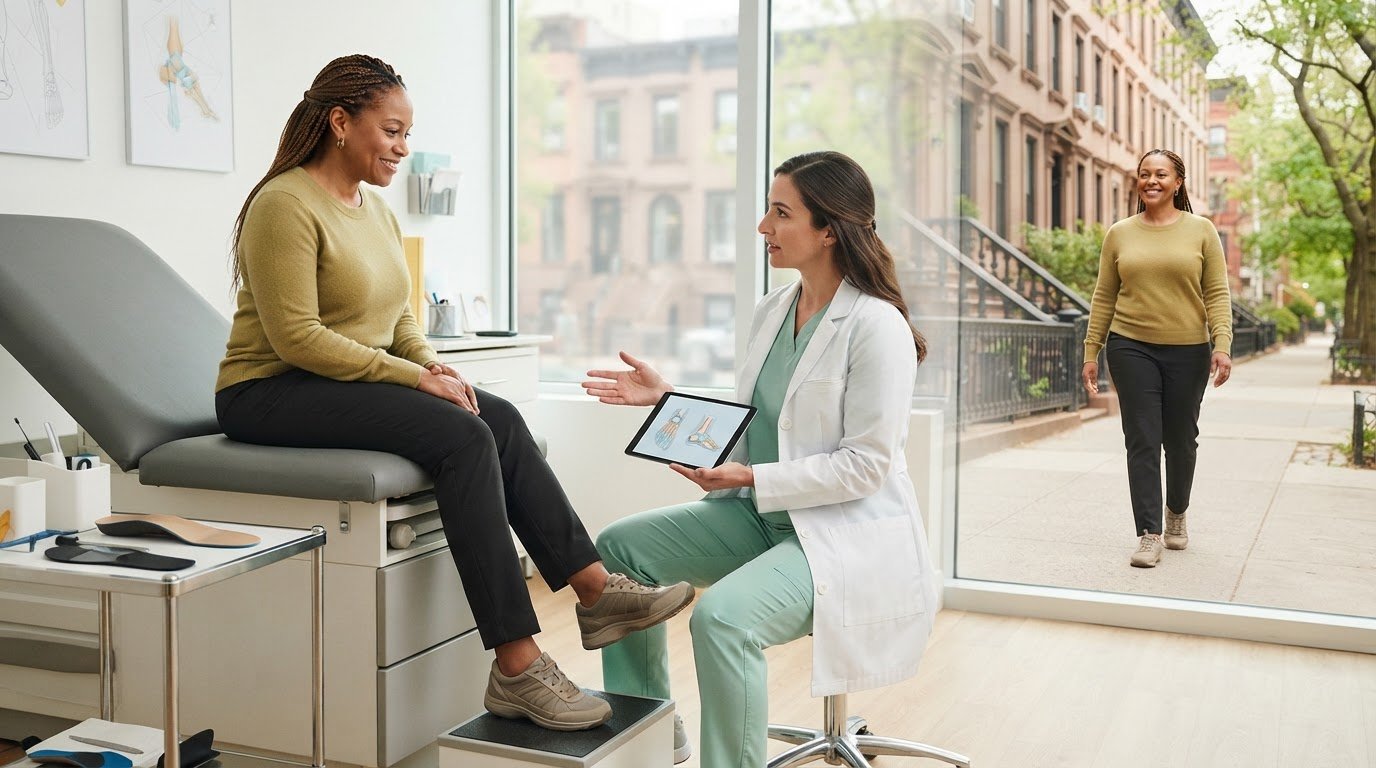
The interior of a diabetic shoe is just as important as the exterior. Most medical-grade shoes are designed with removable insoles to make room for custom orthotics. These inserts are vital because they redistribute your body weight away from high-pressure areas, such as the ball of the foot or the heel. For seniors, we often distinguish between functional orthotics, which correct abnormal motion, and accommodative orthotics, which focus on cushioning and protecting sensitive areas. By balancing the pressure across the entire sole, we can significantly reduce the risk of skin breakdown.
Stability and Closure Systems
Walking on Brooklyn’s varied terrain requires exceptional stability. A firm heel counter, the sturdy back part of the shoe, is necessary to lock the heel in place and prevent the ankle from rolling. This stability is paired with lightweight, cushioned outsoles that absorb the shock of hard concrete sidewalks. For many of our neighbors, dexterity can be a challenge. We frequently recommend Velcro or advanced bungee closure systems. These allow for easy adjustments if your feet swell in the afternoon and ensure a secure fit without the struggle of traditional laces. If you’re concerned that your current footwear isn’t providing this level of protection, our specialists can evaluate your needs during a comprehensive exam.
Finally, the materials used in these shoes are selected for breathability. Maintaining a dry environment is crucial for preventing fungal infections and keeping the skin supple. By combining moisture-wicking linings with non-binding uppers, medical-grade footwear ensures that your feet stay healthy, dry, and protected from the first step to the last.
How to Prepare for Your Professional Fitting in Brooklyn
Preparing for a diabetic shoe fitting for seniors in Brooklyn is a straightforward process, but it requires a few specific steps to ensure your footwear meets strict medical standards. Unlike a retail purchase, this is a coordinated effort between your primary care team and our podiatry practice. We view this as a partnership where your input is just as valuable as our clinical measurements. To make the most of your appointment at one of our local offices, follow these essential steps:
- Obtain a statement of medical necessity: Your primary care physician, specifically the doctor managing your diabetes, must certify that you require therapeutic shoes due to a qualifying condition.
- Schedule a comprehensive foot exam: A board-certified podiatrist must perform the actual clinical fitting and write the final prescription.
- Bring your daily socks: The thickness of your socks significantly impacts the fit. Please bring the specific pair you plan to wear most often to ensure the measurements are accurate.
- Document your symptoms: Prepare a brief list of any recurring numbness, tingling, or areas of redness you’ve noticed after walking.
The Clinical Exam: More Than Just Measuring Length
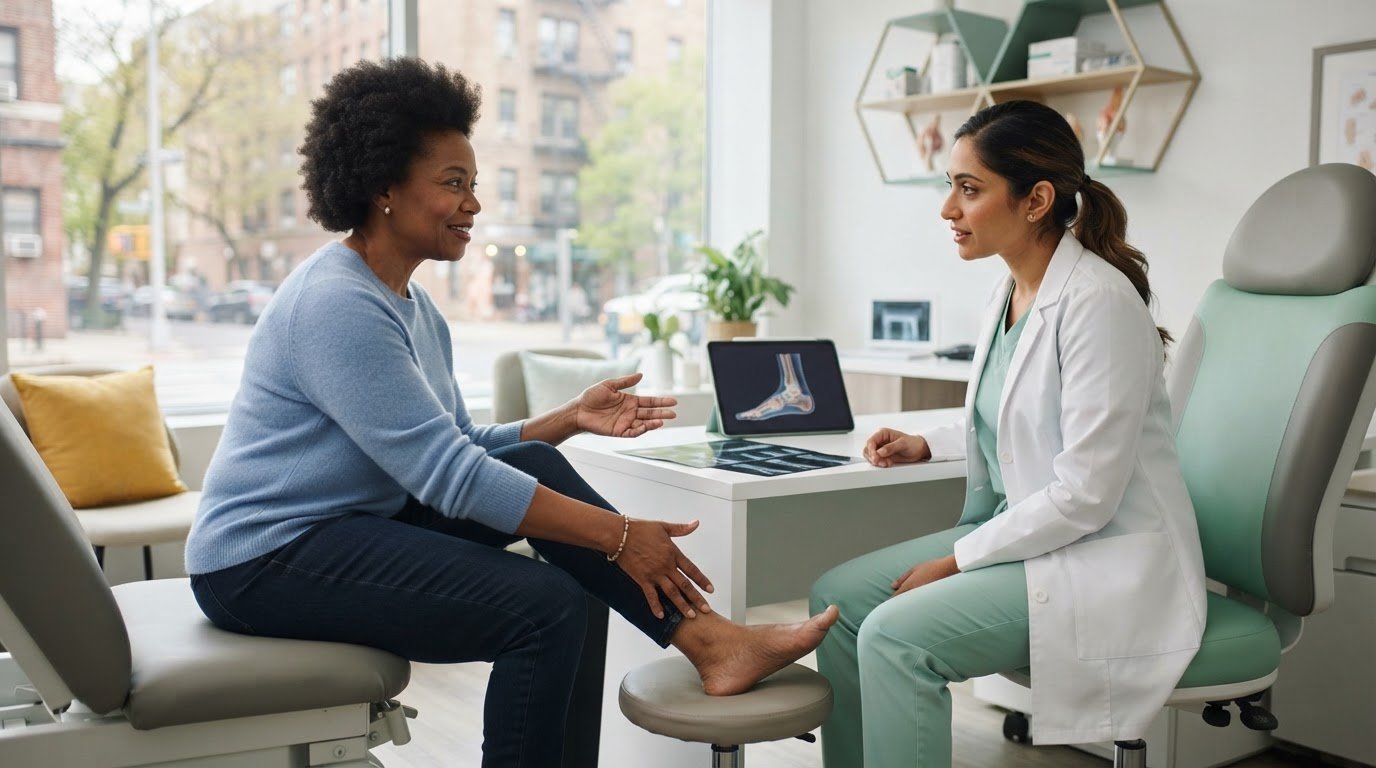
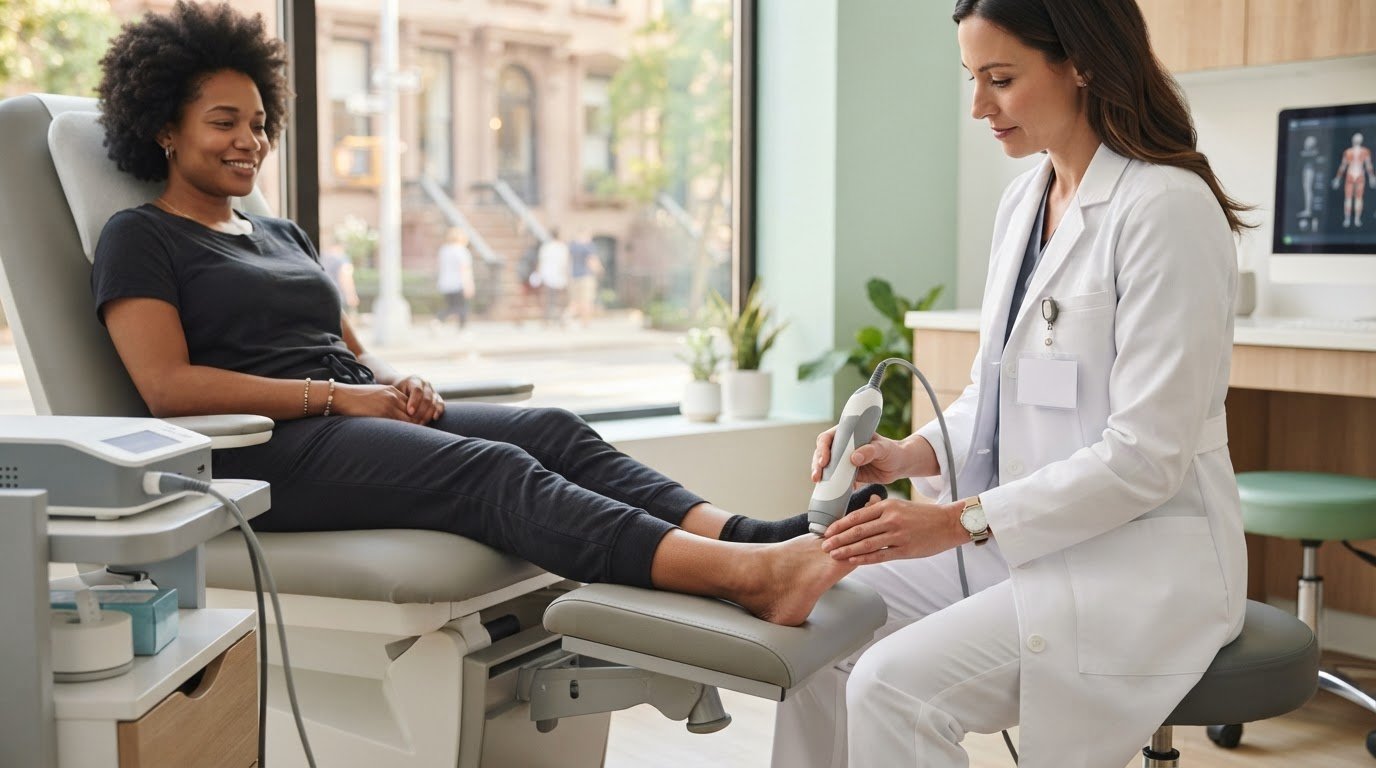
Before we even discuss shoe styles, we conduct a thorough clinical evaluation to understand your unique foot health. We start by assessing your vascular health, checking the pulses in your feet to ensure adequate blood flow. We also perform a meticulous skin integrity check to look for pre-ulcerative calluses or hidden fissures that you might not feel due to neuropathy. Our team evaluates your gait to identify biomechanical imbalances that might cause uneven wear on your shoes. If you have structural issues like bunions or hammertoes, we identify these early so your prescription includes the necessary width and depth to prevent irritation and surgical complications.
Precise Measurement Techniques
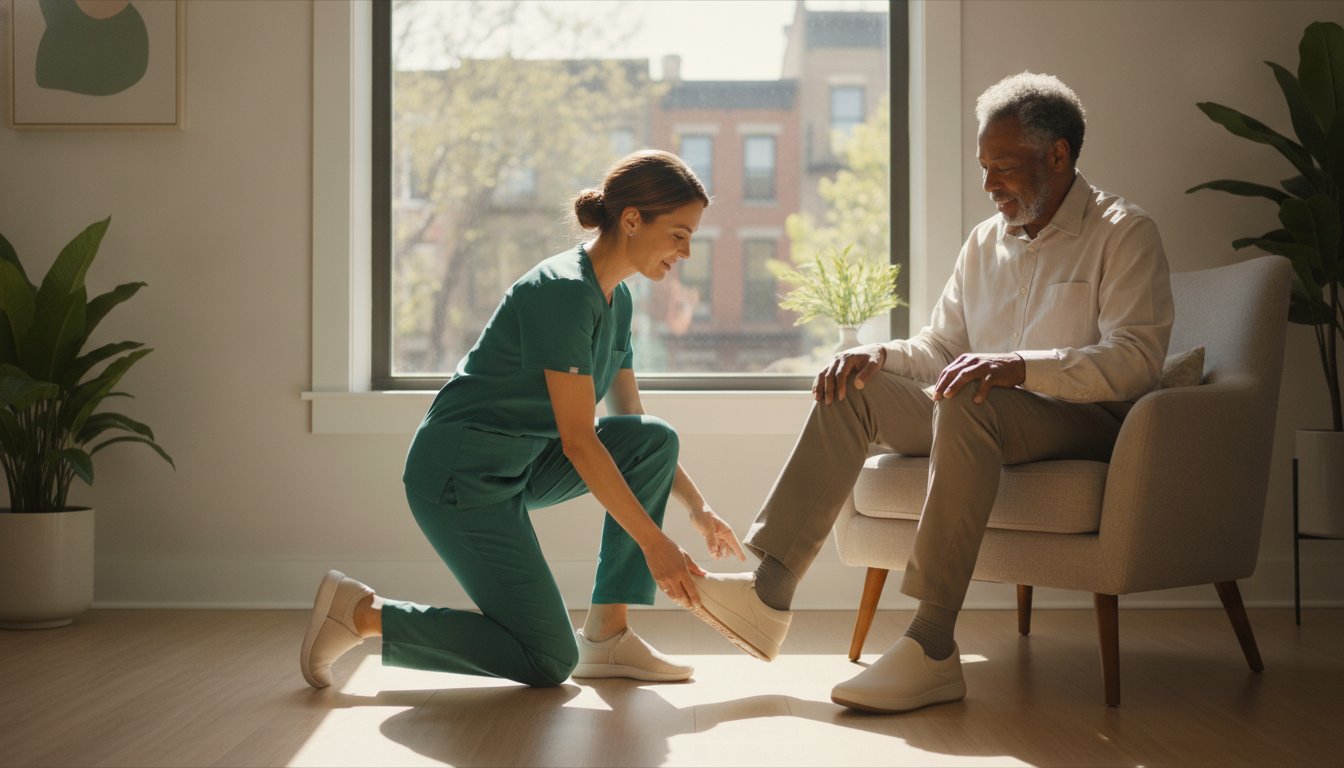
Accuracy is the foundation of a successful diabetic shoe fitting for seniors in Brooklyn. We always measure both feet because it’s rare for them to be exactly the same size; we fit for the larger foot to prevent any restrictive pressure. We don’t just look at length. We measure the width and the girth of the midfoot to ensure there is zero friction against the skin. We recommend scheduling your appointment for the late afternoon, as this is when your feet reach their maximum volume due to natural daily swelling. This ensures your shoes remain comfortable and safe even at the end of a long day walking through your neighborhood.
Medicare and Insurance: Navigating the Therapeutic Shoe Bill
Understanding the financial side of preventative care is often the biggest hurdle for our patients. The Medicare Therapeutic Shoe Bill is a federal mandate that recognizes the clinical necessity of protective footwear for those managing diabetes. For a diabetic shoe fitting for seniors in Brooklyn, this bill provides coverage for one pair of extra-depth shoes and up to three pairs of inserts every calendar year. In 2026, once you’ve met the annual Medicare Part B deductible of $283, Medicare typically covers 80% of the approved amount. You’re responsible for the remaining 20% coinsurance, though many secondary insurance plans pick up this balance.
To qualify for this benefit, you must have at least one documented foot complication. These include a history of foot ulcers, peripheral neuropathy with callus formation, poor circulation, or structural deformities like those requiring bunion surgery or hammertoe correction. The process requires seamless coordination between your “certifying physician,” who is the MD or DO managing your systemic diabetes, and your “prescribing podiatrist,” who performs the clinical fitting. We manage this bridge for you, ensuring that both sets of medical records align to meet strict federal guidelines.
Required Documentation for Reimbursement
The most vital piece of paperwork is the Statement of Certifying Physician (SCP). This document confirms that you’re under a comprehensive plan of care for diabetes and that you have a specific medical need for therapeutic shoes. Many claims are denied simply because the medical records don’t match or the physician’s signature is outdated. We take the lead in coordinating this paperwork with your primary doctor to avoid these common administrative pitfalls. If you have questions about your specific plan, our team can verify your benefits before your first appointment.
Local Brooklyn and Queens Coverage Insights
In our community, many seniors use Medicare Advantage plans, which can have varying rules for footwear benefits compared to traditional Medicare. Whether you visit our Woodhaven or Forest Hills offices, we’re familiar with the local provider networks and specific requirements of New York City plans. Navigating these regional differences is part of our commitment to accessible care. For patients in Queens, we recommend consulting the best podiatrist in Forest Hills for administrative support and to ensure your insurance verification is handled accurately from the start. We believe that financial confusion shouldn’t stand in the way of the protection your feet deserve.
Why Choose Local Foot Doc for Your Fitting and Care
Choosing the right provider for your diabetic shoe fitting for seniors in Brooklyn is about more than just finding a store; it’s about establishing a medical partnership. At Local Foot Doc, we don’t treat a fitting as a simple retail transaction. Instead, we view it as a critical clinical step in your comprehensive foot care plan. Led by Dr. Waldemar Majdanski, a board-certified surgeon with over 20 years of clinical experience, our practice combines high professional medical standards with the approachable feel of a trusted neighborhood institution. We’re here to ensure your feet remain a reliable foundation for your active life.
Our approach is holistic and results-oriented. While we focus on the immediate need for protective footwear, we also monitor your overall health to prevent the need for more invasive procedures like bunion surgery or hammertoe correction. We believe that education is just as important as the equipment we provide. By helping you understand the “why” behind every structural feature, we empower you to take an active role in your own recovery and maintenance. It’s a collaborative process where your comfort and long-term mobility are the ultimate goals.
Our Neighborhood-Focused Approach
We’ve intentionally placed our offices where our patients live and work. Whether you visit us in Astoria, Forest Hills, or Woodhaven, you’ll find a team that understands the specific challenges of aging in New York City. We’ve spent decades building a reputation for reliability and community trust. To us, proper foot support is a bridge to regained independence. It’s the difference between staying home out of fear and walking confidently to your local bakery or community center. We take pride in being the “neighborhood doctor” who offers cutting-edge medical solutions with a deeply human touch.
Next Steps: Scheduling Your Consultation
Starting your journey toward better foot health is simple. You can book an appointment through our website or by calling one of our local offices directly. During your first visit for a diabetic shoe fitting for seniors in Brooklyn, you’ll receive a comprehensive exam that goes far beyond a simple measurement. We’ll review your medical history, assess your current symptoms, and coordinate with your primary care physician to handle the necessary Medicare documentation. We’re committed to making this process as smooth and stress-free as possible. Schedule your professional diabetic shoe fitting today and take the first step toward a more mobile, pain-free future.
Take Control of Your Mobility and Foot Health
Securing a professional diabetic shoe fitting for seniors in Brooklyn is one of the most effective steps you can take to preserve your independence. By choosing medical-grade footwear, you’re not just buying shoes; you’re investing in a clinically proven shield against ulcers and infections. We’ve seen how the right support transforms a patient’s outlook, turning a walk to the local market from a source of stress into a daily joy. You deserve to move through your neighborhood without the constant fear of a hidden injury.
Our team brings over 20 years of experience serving the New York City community. As a practice led by a board-certified podiatric surgeon with specialized diabetic wound care expertise, we understand the nuances of the 2026 Medicare requirements. We’re ready to partner with you and your primary doctor to navigate the insurance process and find the perfect fit for your lifestyle. We believe that every senior deserves a clear path to recovery and active living.
Book Your Professional Diabetic Shoe Fitting at Local Foot Doc and walk with confidence again. Your path to pain-free mobility starts with a single, protected step.
Frequently Asked Questions
Does Medicare cover diabetic shoes for seniors in Brooklyn?
Yes, Medicare Part B covers therapeutic shoes and inserts for eligible beneficiaries with diabetes who have qualifying foot conditions. This coverage is part of the federal Therapeutic Shoe Bill. You’ll need a certification from the doctor managing your diabetes and a prescription from a podiatrist. Our team at Local Foot Doc helps coordinate this paperwork to ensure the process is as smooth as possible for our neighbors in Brooklyn and Queens.
How often can I get a new pair of diabetic shoes through insurance?
Medicare and most private insurance plans allow for one pair of extra-depth shoes and up to three pairs of inserts every calendar year. This annual cycle ensures your feet always have structural support that hasn’t been compromised by daily wear. Since aging feet and diabetic symptoms can change over twelve months, these regular updates are a vital part of a diabetic shoe fitting for seniors in Brooklyn to prevent long-term complications.
Do I need a prescription for diabetic shoes?
Yes, a prescription is legally required for medical-grade diabetic footwear to be covered by insurance. This process involves two specific medical professionals. First, your primary care physician or endocrinologist must certify that you have diabetes and a medical need for the shoes. Then, a podiatrist like Dr. Majdanski performs a clinical evaluation to write the specific prescription for the shoe type and any necessary custom orthotics required for your unique foot structure.
What is the difference between diabetic shoes and regular orthopedic shoes?
While both provide support, diabetic shoes are specifically engineered with a seamless interior to prevent the friction that causes ulcers. They feature extra depth to accommodate swelling and a protective toe box to guard against micro-trauma. Unlike standard orthopedic shoes, diabetic footwear is built to minimize pressure points for those with neuropathy. This specialized design is a clinical requirement for maintaining skin integrity and preventing infections that could lead to surgical intervention.
Can I use my own custom orthotics in diabetic shoes?
Yes, medical-grade diabetic shoes are designed with removable insoles specifically to accommodate custom orthotics. This allows the shoe to work in tandem with your personalized inserts to redistribute weight and protect sensitive areas. During your fitting, we’ll ensure the shoe has enough volume to hold your orthotics comfortably without crowding your toes. This combination provides the highest level of protection for seniors dealing with complex structural issues like flat feet or hammertoes.
Why do I need a podiatrist for a shoe fitting instead of a shoe store?
A podiatrist provides a clinical evaluation that a retail clerk cannot offer. We assess your vascular health, skin integrity, and neurological status before recommending a specific shoe. At Local Foot Doc, we use our 20 years of experience to identify subtle risks like pre-ulcerative calluses. This medical oversight ensures your diabetic shoe fitting for seniors in Brooklyn isn’t just about size, but about preventing serious medical complications through precise clinical expertise.
How long does the diabetic shoe fitting process take?
The initial clinical consultation and fitting typically take about 30 to 45 minutes. During this time, we perform a thorough foot exam, take precise measurements of both feet, and discuss your specific mobility needs. Once we’ve coordinated the paperwork with your primary doctor and ordered your footwear, it usually takes a few weeks for the shoes to arrive. We’ll then schedule a follow-up visit to ensure the fit is perfect before you take them home.
What happens if my diabetic shoes don’t fit perfectly after I take them home?
We prioritize your safety and comfort above all else. If you notice any redness, rubbing, or discomfort after wearing your new shoes at home, you should contact us immediately for an adjustment. We’ll re-evaluate the fit and make any necessary modifications to the shoes or inserts. It’s vital that you don’t “break in” diabetic shoes like standard footwear; they must be comfortable and protective from the very first day to avoid skin breakdown.