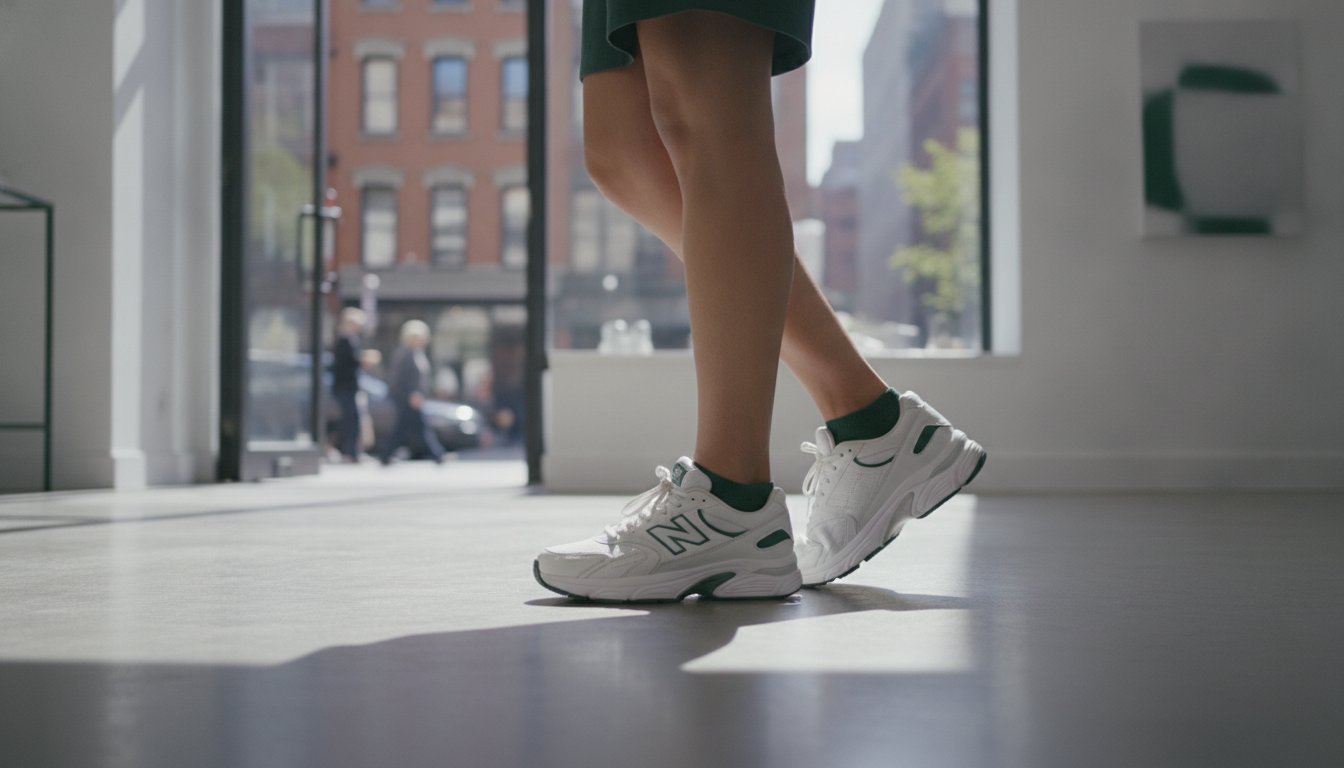
Imagine finishing a grueling eight-hour shift at a flagship store in Soho, only to face the long subway ride back to Queens with ankles that feel twice their normal size. For many New Yorkers, the sharp arch pain and lower back fatigue you feel by mid-afternoon isn’t just a part of the job. It’s a sign that you haven’t yet found the best shoes for retail workers with flat feet NYC to protect your body from the relentless concrete floors of the city.
We understand that working in retail is an endurance sport where you can easily clock over 15,000 steps before your first break. When you live with flat feet, the lack of structural support turns every one of those steps into a strain on your joints and spine. This guide helps you navigate your options by explaining the vital difference between simple foam cushioning and true medical stability. You’ll discover the professional criteria needed to survive long shifts pain-free and learn when it’s time to visit our specialists in Forest Hills, Astoria, or Woodhaven for a more permanent solution. We’re here to help you regain your independence from foot pain and get back to moving comfortably through your neighborhood.
Key Takeaways
- Understand how NYC’s unforgiving concrete and marble floors aggravate pes planus, leading to the mid-shift arch pain and overpronation that many retail workers experience.
- Learn how to identify the best shoes for retail workers with flat feet NYC by prioritizing a firm heel counter and structural stability over soft cushioning.
- Explore why motion control sneakers and professional clogs are the top choices for maintaining proper alignment during an active eight-hour workday.
- Discover why medical-grade custom orthotics are often the necessary next step when standard footwear cannot provide enough support for clinical flat feet.
- Find out how professional podiatry consultations in Forest Hills, Astoria, and Woodhaven can help you eliminate chronic fatigue and return to your normal lifestyle.
The NYC Retail Grind: Why Flat Feet Suffer on Concrete
Working retail in New York City is a high endurance activity that places immense pressure on your lower extremities. We see the results of this daily in our clinics; workers who spend eight to ten hours standing on unforgiving surfaces like marble, tile, and polished concrete. For those with a neutral arch, these surfaces are challenging. For those with flat feet, they are often debilitating. Flat feet are a biomechanical failure of the foot’s natural shock absorption system. Without a functional arch to distribute weight, every step sends a jarring force through your skeletal structure.
The clinical term for this condition is pes planus. Understanding Flat Feet is the first step toward finding relief, as it explains why your foot rolls inward excessively when you walk. This movement, called overpronation, forces the muscles and tendons in your feet to work overtime just to keep you upright. When you’re searching for the best shoes for retail workers with flat feet NYC, you’re looking for gear that can counteract this constant inward collapse. Without proper support, a single shift can trigger a painful chain reaction. Your ankles roll, your shins rotate inward, and your knees begin to ache. Eventually, this misalignment reaches your lower back, leaving you exhausted before your commute even begins.
The Biomechanics of Overpronation in Retail
Flat feet aren’t just about the shape of your footprint; it’s a functional issue that worsens as the day progresses. During a long shift, gravity and the weight of your body cause the midfoot to lose its structural integrity. As the arch collapses, the plantar fascia becomes overstretched. We often find that retail workers don’t just feel pain in their arches. They feel a deep, throbbing fatigue that makes it difficult to focus on customers. The lack of a “spring” in your step means your muscles must compensate for the missing mechanical advantage of a healthy arch.
NYC-Specific Foot Stressors
The NYC retail environment offers unique challenges that you won’t find in a suburban mall. Your shift doesn’t start at the store; it starts with a subway commute that often involves standing on a moving train or climbing several flights of stairs. By the time you reach your post in Astoria or Soho, your feet have already been under stress. Additionally, NYC’s high humidity and fluctuating temperatures in 2026 can cause significant foot swelling. When your feet swell inside a shoe that lacks proper volume or support, the pressure on your nerves increases. This makes finding the best shoes for retail workers with flat feet NYC even more critical, as your footwear must accommodate these daily physiological changes while providing the stability your anatomy lacks.
Essential Features for Flat Feet Support in Retail
When you are searching for the best shoes for retail workers with flat feet NYC, it’s easy to get distracted by “cloud-like” cushioning. While extreme softness feels good for the first ten minutes of a shift, it often fails after four hours on a concrete floor. We must distinguish between cushioning and support. Cushioning provides shock absorption, but support offers the stability needed to keep your skeletal structure aligned. For someone with a collapsed arch, support is the absolute priority. A non-negotiable feature is a firm heel counter. This is the rigid structure at the back of the shoe that cups your heel. If you can easily squeeze the back of the shoe and it collapses, it won’t provide the control you need to stop overpronation.
We also advise our patients to prioritize a wide toe box. NYC retail shifts involve constant standing, which naturally causes the feet to swell as the day progresses. A cramped toe box increases pressure on the forefoot and can lead to secondary complications. Additionally, ensure the shoe has a removable insole. This is critical if you plan to upgrade your footwear with custom orthotics, as you’ll need the extra depth to accommodate the medical device without crowding your foot. Having that extra space ensures your foot remains comfortable even during the final hours of a busy weekend shift.
Arch Support vs. Shock Absorption
Many popular athletic sneakers use soft foam that is simply too mushy for a flat foot. As explained in this guide from MedlinePlus on Flat Feet, the condition requires specific management to prevent long-term strain. You need a semi-rigid arch structure or “medial post” technology. A medial post is a firmer piece of foam located on the inside of the midsole. It acts as a physical barrier that prevents your foot from rolling inward excessively. This structural integrity is what allows you to finish a long day without that familiar burning sensation in your arches.
Durability and Material Considerations
Retail environments are usually climate-controlled, but the heat generated by walking 15,000 steps is significant. Choose breathable mesh uppers to manage moisture and prevent irritation. Slip-resistance is another safety essential, particularly if your store has polished marble or tile floors. Finally, we recommend rotating between two different pairs of supportive shoes. This gives the foam in your footwear 24 to 48 hours to decompress and recover its structural properties, which helps maintain the shoe’s effectiveness and extends the life of your investment.
Top Footwear Styles for All-Day Standing and Walking
Finding the best shoes for retail workers with flat feet NYC requires matching the footwear to your specific work environment. If you work in a high-volume big-box store, your needs differ from someone in a high-end Madison Avenue boutique. For those with severe flat feet, motion control sneakers are the gold standard. These shoes feature a very rigid medial post and a straight last to physically prevent the foot from rolling inward. While they might feel stiff initially, they provide the structural discipline required to manage a collapsed arch over a long shift.
For workers who spend more time walking than standing, stability walking shoes offer a middle ground. These provide arch support without the extreme rigidity of motion control models. It’s helpful to understand the Difference Between Running and Walking Shoes before making a purchase. Walking shoes are designed for the specific heel-to-toe gait of a pedestrian, whereas running shoes are built for higher impact and different weight distribution.
Athletic-Style Stability Shoes
Choosing the best shoes for retail workers with flat feet NYC often means looking at athletic-style stability shoes. High-drop stability trainers are excellent for workers who move constantly. A high drop means the heel is significantly higher than the forefoot, which can relieve tension on the Achilles tendon and plantar fascia. When choosing between mesh and leather uppers, consider your environment. Mesh offers superior breathability for the humid NYC summers. Leather provides better durability and a slightly more professional appearance for certain dress codes.
Professional and Boutique-Ready Options
If your store requires a more polished aesthetic, you don’t have to sacrifice your foot health. Professional clogs have long been a favorite in the retail industry because they offer a rigid sole and a high arch profile. Many modern loafers and oxfords now incorporate hidden orthopedic features, such as deep heel cups and reinforced midsoles. We’ve also seen a rise in lifestyle sneakers that look like classic streetwear but contain medical-grade footbeds. These are ideal for boutique environments where you need to look trendy while protecting your arches from the fatigue of standing on marble floors.
When ‘Best Shoes’ Aren’t Enough: The Role of Custom Orthotics
Even the highest-rated sneakers have limitations. They are built for a generic foot shape and a neutral gait. For retail professionals in NYC, especially those with severe pes planus, a standard shoe often lacks the depth and structural rigidity required to stop chronic pain. This is where Custom Orthotics become your secret weapon. Unlike mass-produced inserts, these are medical devices specifically engineered to correct your unique biomechanical alignment. They transform your work footwear from a simple covering into a precision tool for mobility.
Our process involves precise on-site casting to capture the exact contours of your foot. This ensures the support is exactly where you need it, rather than where a factory designer guessed it should be. Research indicates that 89% of custom orthotic users report significant pain reduction within 4 to 6 weeks. While the initial investment is higher than a pair of sneakers, orthotics are far more cost-effective over time. A typical retail worker might replace their shoes every 3 to 4 months as the foam compresses under the weight of 15,000 daily steps. A high-quality custom orthotic can last for years, providing consistent support long after your shoes have worn out.
Custom vs. Over-the-Counter Inserts
Drugstore inserts are often just extra padding. They might feel soft initially, but they don’t have the corrective power to stop overpronation. In contrast, custom-molded inserts use durable, semi-rigid materials that maintain their shape under the weight of a long shift. For workers navigating the marble floors of Manhattan or the busy aisles of a Queens big-box store, this medical-grade durability is the difference between finishing a shift in comfort or limping to the subway. If your current footwear isn’t cutting it, schedule a consultation at one of our locations in Forest Hills, Astoria, or Woodhaven to see if custom orthotics are right for you.
Integrating Orthotics into Your Work Wardrobe
You don’t need to wear bulky or unattractive shoes to get relief. Most modern work footwear, from athletic sneakers to professional clogs, can accommodate these devices if they have a removable factory insole. Always bring your orthotics when shopping for the best shoes for retail workers with flat feet NYC to ensure the fit is perfect. We also recommend a gradual break-in period. Your muscles and tendons need time to adjust to their new, healthy alignment. Start by wearing them for two hours on your first day and increase the time gradually. This patient-centered approach ensures your transition to pain-free shifts is as smooth as possible.
Professional Podiatry Solutions in Brooklyn and Queens
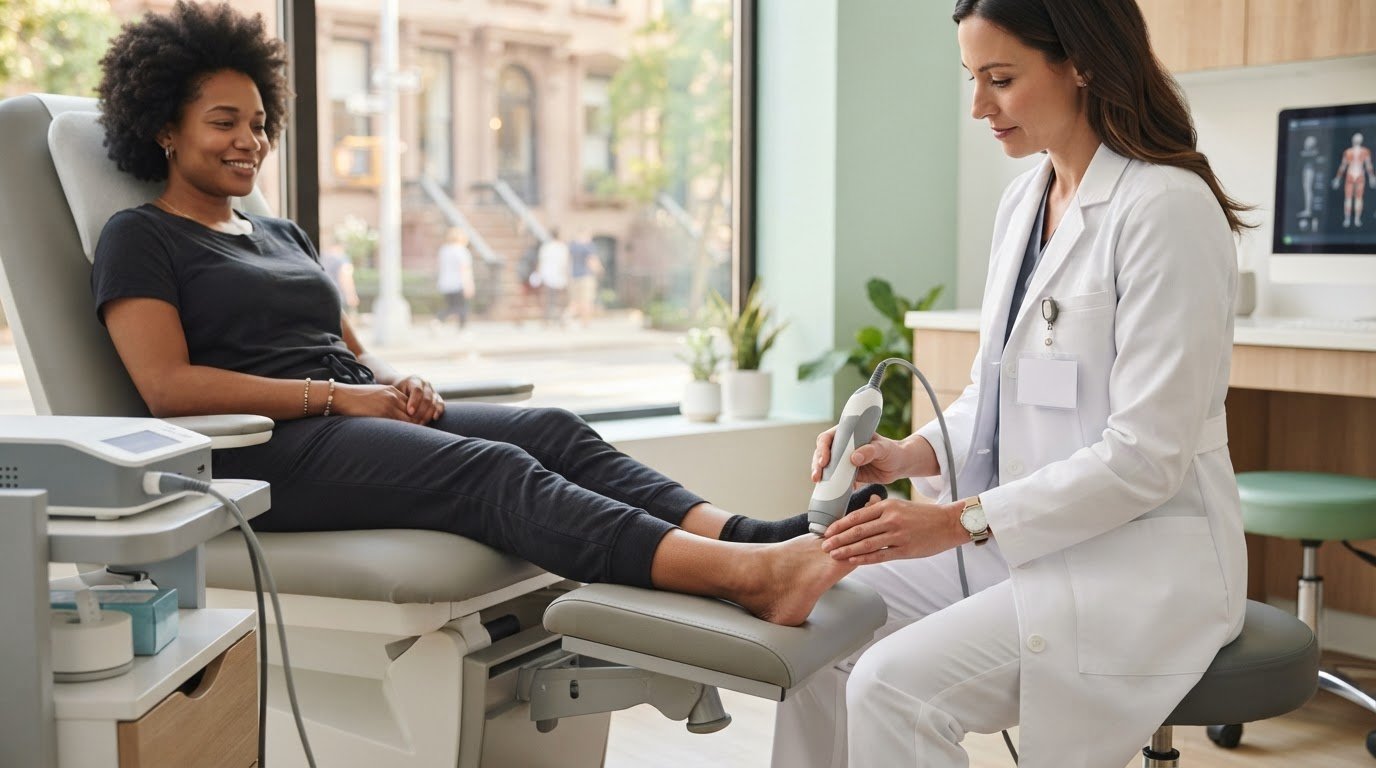
We believe that every retail professional deserves to finish their shift with the same energy they had when they clocked in. Local Foot Doc is deeply rooted in the NYC community, providing specialized care for the thousands of workers who keep our city’s commerce moving. While finding the best shoes for retail workers with flat feet NYC is a vital first step, a professional evaluation ensures you aren’t just masking a deeper structural issue. Our clinics in Forest Hills, Astoria, and Woodhaven are equipped with modern diagnostic technology to assess your specific biomechanics. We don’t just look at your footprint; we analyze your gait and how your entire lower body responds to the relentless pressure of concrete floors.
Our “return to comfort” roadmap is a structured plan designed to get you back to peak mobility. It starts with a comprehensive exam where we use precise tools to map your pressure points and identify exactly where your arch is failing. This allows us to move beyond generic footwear advice and create a clinical treatment plan tailored to your specific lifestyle. With over 20 years of clinical experience, we’ve helped countless New Yorkers regain their independence from chronic foot pain through a combination of proper footwear guidance and medical intervention.
Expert Evaluation for NYC Workers
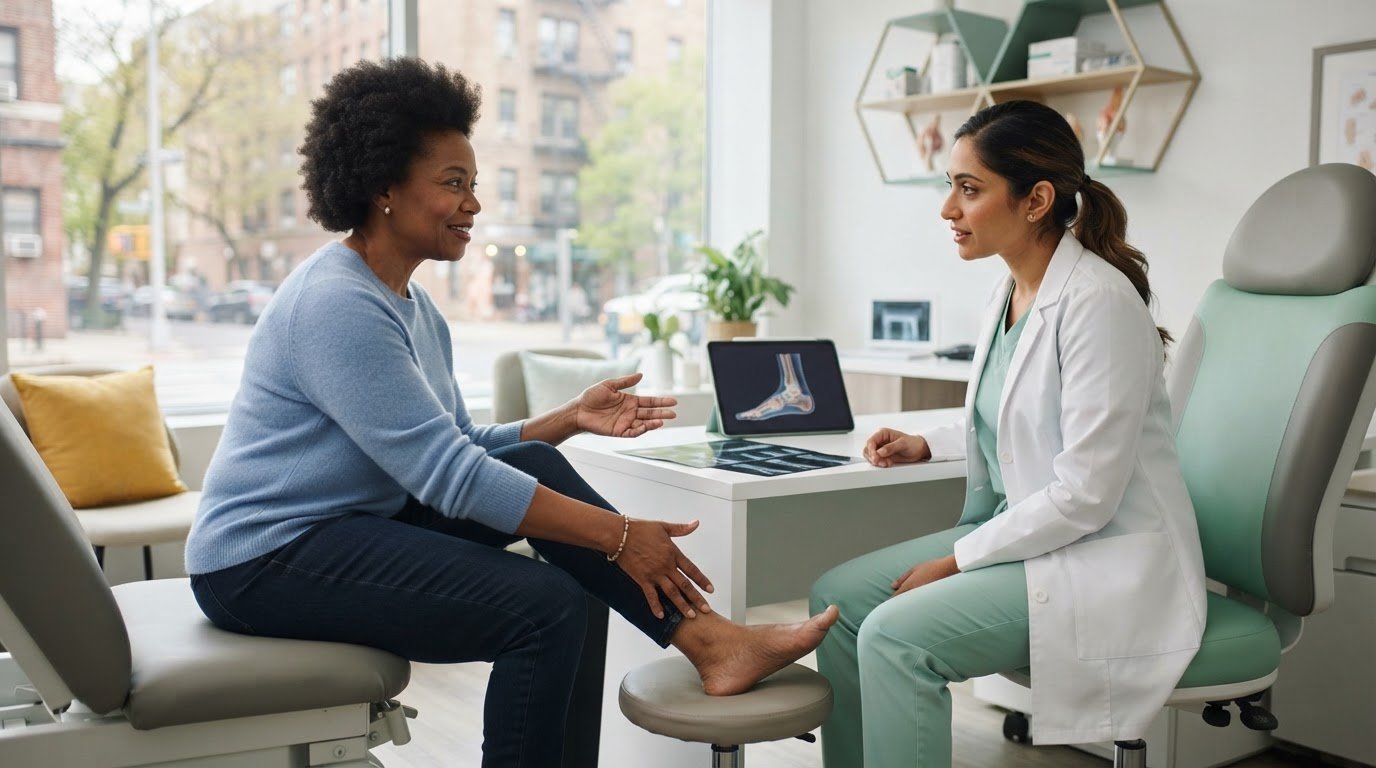
During your first consultation with Dr. Majdanski, you’ll receive a detailed assessment that looks for more than just flat feet. We often find that untreated pes planus leads to a cascade of other complications that can shorten a retail career. For example, the constant strain of a collapsed arch is a primary driver of sharp heel pain. It’s helpful to review our Plantar Fasciitis Guide to see if your morning stiffness or mid-shift heel pain matches this common condition. Identifying these underlying issues early is the best way to prevent long-term damage to your tendons and ligaments.
Accessible Care for the Local Community
We understand that retail hours are rarely standard. Our practice prioritizes making high-quality podiatry accessible to the Brooklyn and Queens workforce by offering flexible scheduling. We know you might be working an opening shift in Astoria or a late-night closing in Forest Hills, so we strive to provide appointment times that fit your busy life. You shouldn’t have to choose between your paycheck and your physical health. If you’re tired of the sharp arch pain and swollen ankles that follow every shift, we invite you to experience our patient-centered care. Schedule your flat feet evaluation at Local Foot Doc today and let us help you stand strong on the job.
Step Into a Pain-Free Workday
Surviving a long shift on NYC’s concrete floors requires more than just a soft pair of sneakers. By prioritizing structural stability and a firm heel counter, you can protect your arches from the daily strain of overpronation. We’ve explored how the best shoes for retail workers with flat feet NYC provide the necessary foundation, but even the highest-quality footwear can’t always correct complex biomechanical issues on its own. When off-the-shelf options fail, professional intervention is the next logical step toward lasting relief.
If you’re still experiencing sharp arch pain or lower back fatigue, it’s time to consider a medical solution tailored to your unique anatomy. Led by board-certified surgeon Dr. Waldemar Majdanski, our practice specializes in medical-grade custom orthotics that act as a permanent support system for your feet. We invite you to visit us at our convenient locations in Forest Hills, Astoria, or Woodhaven to begin your roadmap to recovery. You don’t have to accept foot pain as a permanent requirement of your career. Schedule Your Flat Feet Consultation in Brooklyn or Queens today and regain the independence of pain-free movement. We’re here to help you stand strong, shift after shift.
Frequently Asked Questions
How can I tell if I have flat feet or just tired arches?
Flat feet, or pes planus, is a structural condition where the entire sole of your foot makes contact with the floor. You can check this by stepping onto a flat surface with wet feet. If your footprint looks like a solid block without a curved cutout on the inside, you likely have flat feet. Tired arches are often just muscle fatigue, but consistent pain usually indicates a functional issue that we should evaluate at our Forest Hills or Astoria offices.
Are memory foam shoes actually good for retail workers with flat feet?
Memory foam is often a poor choice for those with a collapsed arch. While it feels soft initially, it lacks the structural integrity to prevent overpronation during an eight-hour shift. For long days on concrete, the best shoes for retail workers with flat feet NYC provide rigid stability rather than mushy cushioning. Memory foam tends to compress permanently under your weight, eventually leaving your feet without any meaningful support by mid-afternoon.
How often should NYC retail workers replace their work shoes?
We recommend replacing your work shoes every three to six months if you’re walking 15,000 steps a day. NYC’s concrete floors are exceptionally punishing on footwear materials. Even if the outside of the shoe looks clean, the internal support structures and foam midsoles lose their ability to absorb shock and maintain alignment after several hundred miles of use. If you notice uneven wear on the soles, it’s time for a new pair.
Can I put custom orthotics in high-end boutique shoes or loafers?
You can certainly use custom orthotics in professional dress shoes, provided they have a removable factory insole. Many modern loafers and oxfords are designed with extra depth to accommodate medical inserts. We suggest bringing your orthotics when shopping for new footwear to ensure the fit remains comfortable. This allows you to maintain a polished appearance in a boutique environment while still receiving the medical-grade support your flat feet require for long shifts.
What is the difference between arch support and cushioning in work shoes?
Cushioning is designed to absorb the impact of your steps, while arch support is meant to control the motion of your foot. The best shoes for retail workers with flat feet NYC prioritize support because it prevents the foot from rolling inward. Cushioning alone feels good but doesn’t solve the biomechanical failure of a flat foot. You need a firm structure, such as a medial post, to keep your skeletal system properly aligned on hard surfaces.
When should a retail worker see a podiatrist for foot pain instead of just buying new shoes?
You should schedule an evaluation if your pain persists for more than two weeks despite wearing supportive footwear. If you experience sharp heel pain, swelling, or numbness that lasts after your shift ends, it’s a sign of a deeper issue. Dr. Majdanski can perform a gait analysis at our Woodhaven or Astoria locations to determine if you need custom orthotics or specialized medical treatment to prevent chronic injuries like plantar fasciitis or tendonitis.
Does insurance in NYC typically cover custom orthotics for flat feet?
Many private insurance plans in New York City provide coverage for custom orthotics when they are prescribed to treat a diagnosed medical condition. Because every plan is different, we recommend checking your specific benefits for durable medical equipment or podiatric devices. Our staff can help you understand the process during your consultation. Investing in professional orthotics is often more cost-effective than repeatedly buying expensive sneakers that don’t fully address your structural needs.
Is it better to have a high-top or low-top shoe for standing all day?
The height of the shoe’s collar is less important than the rigidity of the midsole and heel counter. While high-tops might feel like they offer more ankle protection, they don’t necessarily provide better arch support. A well-constructed low-top shoe with a firm heel counter often provides superior control for flat feet. Focus on how the shoe manages your foot’s inward roll rather than the height of the material around your ankle for maximum comfort.