

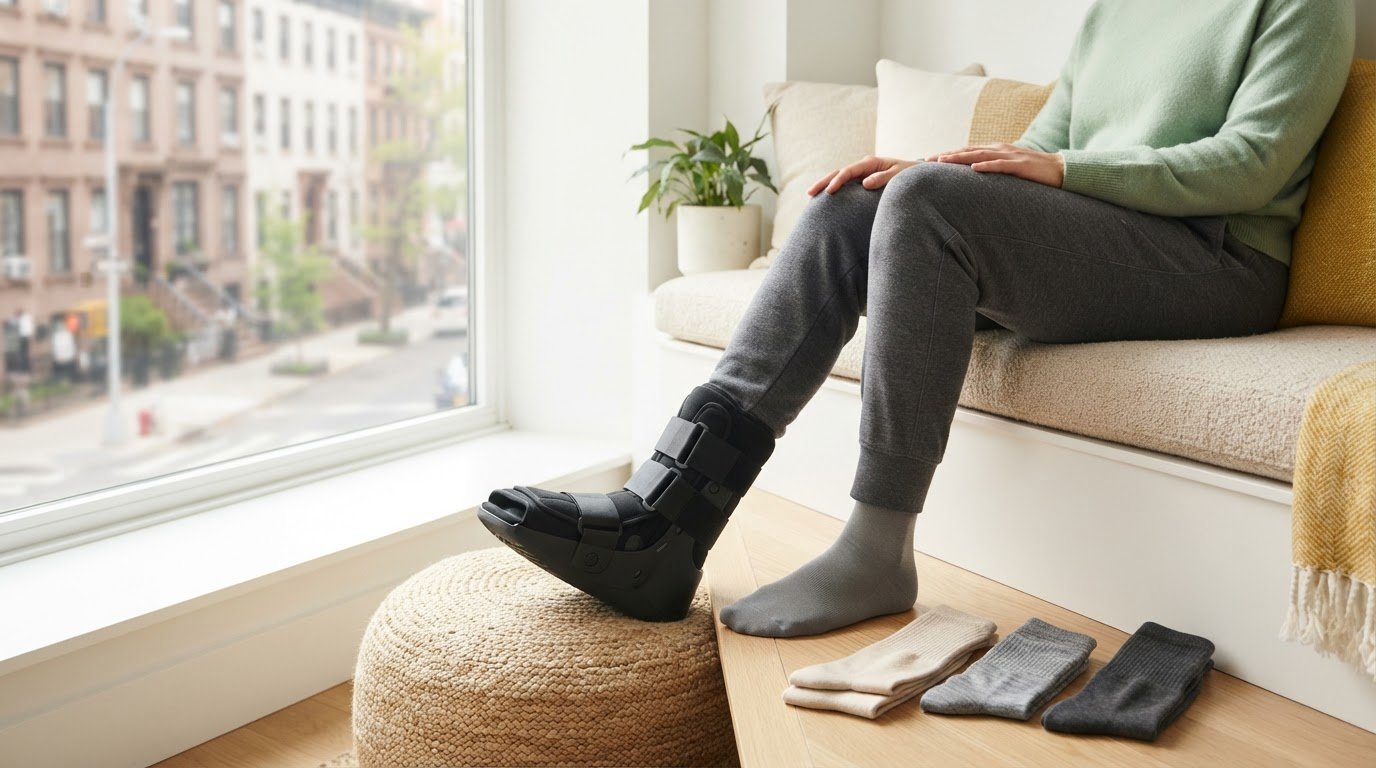
The thickest sock may seem like the coziest choice, but inside a surgical boot it can crowd your foot and affect the fit. The best socks to wear in a surgical boot protect sensitive skin without adding bulk, bunching at the toes, or conflicting with your clinician’s instructions.
If you’re unsure about sock height or thickness, or worry that seams and damp fabric could rub, those are sensible concerns. A sock should feel smooth and comfortable while leaving the boot secure and your foot free from extra pressure.
This guide explains how to compare fabric, height, seams, and cuffs, and how to balance warmth with moisture management. It also covers why compression socks aren’t right for everyone after surgery and why you should ask your care team before wearing them. If rubbing, pressure, or skin changes persist, seek individualized guidance from your care team or a podiatrist. With the right fit and regular skin checks, you can make daily recovery more comfortable.
Key Takeaways
- The best socks to wear in a surgical boot feel smooth and comfortable without making the prescribed boot too tight.
- Compare fabric, height, seams, and cuff design based on your skin sensitivity, boot, and wearing conditions.
- Swelling and dressings can change how your boot fits. Reassess comfort instead of adding a thicker sock to solve pressure.
- Put socks on smoothly, check for wrinkles, and keep a clean, dry replacement handy if yours gets damp or soiled.
- Persistent rubbing, pressure, or concerning skin changes deserve professional attention. Follow your care plan and don’t adjust boot settings on your own.
Best socks to wear in a surgical boot: start with comfort and fit
The best sock for a surgical boot is a smooth, comfortable layer that fits inside the prescribed boot without creating pressure, folds, or friction, and follows your clinician’s instructions. There isn’t one sock type that works for everyone. Your boot’s design, skin sensitivity, the temperature, and any care instructions all affect what feels appropriate.
An orthopedic boot may have a rigid outer shell, adjustable straps, and soft interior padding. If you’re new to wearing one, the Orthopedic boot overview describes the device and its common medical uses. A sock can help reduce direct rubbing and absorb moisture, but it doesn’t replace prescribed padding, dressings, or wound care. If your care team has given instructions about what to wear over or near an incision or dressing, follow them rather than changing layers on your own.
Why sock thickness matters inside a surgical boot
A thicker sock takes up space inside the boot. That extra bulk can change how the boot sits around your foot and how its straps fasten, especially if swelling or a dressing is already affecting the fit. Choose a sock that doesn’t cause tightness, bunching, or new rubbing. If your boot provider specified a sock thickness, follow that guidance. Don’t compensate for a poor fit by adding layers.
What a comfortable boot sock should feel like
Look for a smooth interior, a secure fit that stays in place, and a top band that doesn’t feel constricting. The fabric shouldn’t twist or fold beneath your toes or across your heel. A sock that feels comfortable before you put on the boot may feel different once the boot is fastened, so reassess the fit afterward.
Comfort can change as swelling shifts or your foot heals. If fastening the boot brings on pain, numbness, or increasing pressure, pause and check for visible folds or an overly bulky layer. Don’t ignore symptoms or adjust boot settings outside your care plan. Ask your clinician or boot provider for advice, particularly if discomfort persists or you notice skin changes.
In practice, the best socks to wear in a surgical boot protect your skin while allowing the boot to fit as intended. If you’re unsure whether a sock works with your specific boot, dressing, or recovery instructions, individualized guidance can help you make a comfortable choice without compromising care.
Compare sock materials, seams, and height for a surgical boot
Fabric affects warmth and how damp a sock feels. Construction and height affect whether it stays smooth under the boot. The best socks to wear in a surgical boot depend on your comfort, skin sensitivity, the boot’s contact points, and your clinician’s instructions. Use these comparisons as general preferences, not medical rules.
| Option | What to consider |
|---|---|
| Cotton | Familiar and often soft, but may feel uncomfortable if it gets damp and stays against the skin. |
| Wool | May offer warmth and suit some people’s moisture-management preferences. Personal sensitivity and comfort vary. |
| Moisture-wicking blends | Synthetic fibers such as polyester or nylon can help move moisture away from the skin. Check that the fabric feels comfortable to you. |
| Crew or taller height | Choose enough coverage to keep the boot edge from rubbing, as long as the sock’s top doesn’t constrict your leg. |
Cotton, wool, and moisture-wicking blends
Cotton can be a comfortable everyday choice, but a damp sock may feel clammy inside a boot. Wool or a technical blend may feel warmer or drier to some wearers, though no material is ideal for everyone. If you have sensitive skin, start with a fabric you already tolerate and check your skin for irritation. Follow any specific instructions from your care team, especially if you have a dressing or incision.
Seamless designs, cushioning, and sock height
A raised toe seam, shifted heel, or wrinkle can press against the same spot with each step. A smooth, well-fitting sock can reduce that friction. Extra cushioning may feel soft, but it also takes up room and can make a snug boot tighter. A crew sock may cover the boot edge for some people. A taller sock can provide more coverage, provided its cuff doesn’t feel tight or leave uncomfortable pressure.
For general boot-wearing instructions, see how to put on the walking boot. The guide discusses wearing a large sock, but your own boot provider’s directions take priority if they specify a different thickness or fit.
Try the sock with the boot fastened, then notice whether the straps feel unusually tight or the fabric bunches. Persistent rubbing or pressure may need individualized review. If you’re in Brooklyn or Queens and discomfort continues, you can learn more about podiatry care for foot concerns.
Do not let socks compromise surgical boot fit or circulation
Your clinician’s instructions take priority over general sock advice. A sock should not make your prescribed boot painfully tight or create pressure that wasn’t there before. Swelling can change during recovery, and dressings may take up space, so a sock that once felt comfortable might affect the boot’s fit later. Check with your care team if the fit changes rather than adding layers or altering the boot settings yourself.
Compression socks aren’t automatically appropriate just because your foot or ankle is swollen. The right choice depends on your procedure, circulation, skin health, and treatment plan. Ask the clinician managing your recovery before adding compression or changing its level. General advice about the best socks to wear in a surgical boot can’t replace individual instructions.
A simple fit check before walking
Before walking, put on the sock your care team has recommended and fasten the boot as directed. Pause to check how your foot feels. The boot should not create new pain, numbness, or a strong pressure sensation. Also look for sock folds or bunching that could press against your skin.
- If the sock has shifted, smooth it out before fastening the boot.
- If you notice new pressure, numbness, or pain, don’t ignore it or assume you need a thicker sock.
- If concerning symptoms persist or worsen, stop and contact your care team for guidance before continuing.
Skin checks matter, too. Orthopedic Boot Care Instructions offers guidance on boot use, padding, and checking the skin. Follow your own clinician’s directions if they differ.
Compression socks, swelling, and sensitive skin
Compression applies pressure to the leg or foot, and a surgical boot adds its own structure and straps. Combining them without guidance may make pressure or fit concerns harder to assess. If compression was prescribed, confirm which type to use with your treating clinician and how it should fit with your boot and any dressing.
Seek individualized advice before choosing a sock if you have diabetes, reduced sensation, a wound, or a dressing. Reduced sensation can make rubbing or tightness harder to notice, so don’t rely on comfort alone. For additional skin-protection context, see this diabetic foot care guide. Persistent pressure, rubbing, or skin changes deserve professional attention, especially if you can’t tell whether the sock or boot is causing them.
How to choose and wear socks in a surgical boot day to day
A simple routine can help you catch wrinkles or pressure before they become a source of irritation. Start with your care team’s instructions, especially if you have a dressing or incision. Then choose a smooth sock that fits the boot without adding uncomfortable bulk. The best socks to wear in a surgical boot are only helpful if they work with your prescribed care plan.
Putting on a sock without wrinkles or pressure
Before securing the boot, check that the sock is sitting correctly. Gently smooth the fabric and position the heel so it hasn’t twisted beneath your foot. Don’t pull a tight sock over a dressing unless your clinician has told you to do so, and don’t move or change prescribed dressings or padding to make a preferred sock fit.
Once the boot is fastened according to your instructions, notice how it feels around the heel, ankle, and edges where the boot contacts your leg. If you find a fold, remove the boot and smooth the sock rather than pushing the fabric into place under pressure. Refasten the boot as directed and check whether the discomfort has eased.
When to change socks or ask for help
Keep a clean, dry replacement nearby if your sock becomes damp or soiled. Change it rather than tolerating wet fabric or an uncomfortable fit, following any care instructions about dressings or wound areas. After changing socks, repeat the fit check before walking.
A sock adjustment may address a minor wrinkle, but it won’t solve every fit problem. Contact your care team if pressure persists, pain worsens, numbness develops, or you notice skin changes. Don’t change boot settings or padding on your own to accommodate a different sock. Your surgeon’s post-operative instructions are specific to your procedure. This bunion surgery recovery guide offers additional context for people recovering from bunion surgery.
If rubbing, boot-fit questions, or skin concerns continue, seek individualized guidance instead of trying more sock layers. Patients in Brooklyn and Queens can contact Local Foot Doc about foot and ankle concerns for help determining an appropriate next step.
When a podiatrist should review your surgical boot and sock fit
A sock that feels unfamiliar or a boot that takes a little adjusting may be a comfort preference. Persistent symptoms are different. If smoothing a wrinkle or switching to the sock recommended by your care team doesn’t resolve rubbing or pressure, ask for a professional fit review. The best socks to wear in a surgical boot support comfort, but they can’t correct a boot-fit issue or replace your prescribed care plan.
Don’t loosen, tighten, or otherwise change boot settings on your own to relieve discomfort. The boot was prescribed for your condition, and adjustments should follow the instructions from the person who fitted or prescribed it. If the fit changes as swelling or dressings change, contact your care team for individualized guidance rather than trying extra layers or padding.
Symptoms that deserve prompt clinical advice
Contact your treating surgeon or care team about worsening pain, new numbness, persistent rubbing, or concerning skin changes. These symptoms can have different causes, so don’t assume the sock is the only issue or try to diagnose it yourself. If you’re recovering from surgery, your surgical team is the right first contact for concerns related to your procedure or post-operative instructions.
A minor preference issue may improve when you smooth a fold or use a different sock that your clinician has approved. But if discomfort continues, returns each time you wear the boot, or affects the skin, get advice instead of tolerating it. Make a note of when the symptom occurs and where you feel pressure. That information can help your care team assess the fit.
Getting individualized foot and ankle guidance in New York City
A podiatrist can consider the boot’s fit alongside your foot condition, skin health, swelling, dressings, and the care instructions you’ve received. This is especially helpful when you’re unsure whether rubbing comes from the sock, the boot edge, or a change in your foot. Bring your boot and the sock you usually wear, if your clinician says it’s appropriate, so you can describe the concern clearly.
Local Foot Doc provides foot and ankle care for patients in Brooklyn and Queens. The practice is led by board-certified surgeon Dr. Waldemar Majdanski, DPM. If boot discomfort persists or you’re concerned about pressure or skin changes, reach out for guidance. You don’t have to guess your way through recovery. Contact Local Foot Doc about foot and ankle care.
Make comfort part of your recovery plan
The best socks to wear in a surgical boot feel smooth and comfortable without crowding the boot or conflicting with your care instructions. Choose a fabric and height that suit your skin and the boot’s contact points, then check how the sock feels once the boot is fastened. If swelling, dressings, or changing symptoms affect the fit, don’t try to solve the problem by adjusting the boot or adding layers on your own.
Persistent rubbing, pressure, worsening pain, numbness, or skin changes deserve individualized attention. Contact your treating surgeon or care team about post-operative concerns, and consider a podiatry review if boot or sock discomfort continues. Local Foot Doc provides foot and ankle care in Brooklyn and Queens under the care of board-certified surgeon Dr. Waldemar Majdanski, DPM. Contact Local Foot Doc to discuss foot and ankle care.
A comfortable fit can make daily recovery feel more manageable. With the right guidance, you can focus on healing and moving forward with confidence.
Frequently Asked Questions
What are the best socks to wear in a surgical boot?
The best socks to wear in a surgical boot feel smooth, stay in place, and don’t make the boot tight. Choose a fabric that feels comfortable against your skin and a height that helps prevent the boot edge from rubbing. A seamless or low-seam design may reduce pressure from rubbing or folds. Your boot provider’s instructions take priority, especially if you have a wound, dressing, or sensitive skin.
Should I wear a thick or thin sock in a walking boot?
Wear the thickness recommended by the person who prescribed or fitted your boot. A bulky sock can take up space and make the boot or straps feel too tight, while a very thin sock may not feel comfortable against the boot’s interior. Check the fit after fastening the boot as directed. If you notice new pressure or bunching, ask your care team rather than adding layers or changing the boot settings.
Can I wear compression socks with a surgical boot?
Only wear compression socks with a surgical boot if your treating clinician recommends them. Compression isn’t automatically appropriate for post-operative swelling, and the boot’s fit, your procedure, circulation, and skin health all matter. Ask which compression level and wearing instructions apply to you. If you have diabetes, reduced sensation, a wound, or a dressing, get individualized advice before using compression so pressure or irritation can be assessed appropriately.
Are cotton socks good to wear in a surgical boot?
Cotton socks may feel familiar and soft, but they can hold moisture against the skin when damp. That may become uncomfortable during extended boot wear. Some people prefer wool or a moisture-wicking synthetic blend, though comfort and skin sensitivity vary. Choose a fabric you tolerate well, follow your care instructions, and change a damp or soiled sock. If you notice irritation, ask your clinician for guidance.
How high should socks come up in a walking boot?
Choose a sock that extends above the boot’s upper edge enough to help protect your skin from rubbing. The cuff should remain comfortable and not feel tight or leave uncomfortable pressure on your leg. Boot shapes and heights differ, so check the sock while wearing the fastened boot. If the edge continues to rub despite adequate coverage, contact your boot provider or clinician rather than folding extra fabric inside the boot.
What should I do if my sock makes my surgical boot feel too tight?
Pause before walking. If it’s safe to remove the boot, check whether the sock is twisted, folded, or unusually bulky, then follow your fitting instructions when putting everything back on. Don’t loosen or adjust the boot beyond your care plan. If tightness continues, or you develop pain, numbness, or worsening pressure, contact your treating care team. New York City patients can also seek individualized foot and ankle guidance in Brooklyn or Queens.
Can I wear a sock over a bandage in a surgical boot?
Ask your surgeon or care team before putting a sock over a bandage or dressing. A sock may add pressure, shift the dressing, or interfere with wound-care instructions, and a tight sock shouldn’t be pulled over it unless you’ve been told to do so. Don’t remove or rearrange prescribed dressing or padding to make a sock fit. If you’re unsure, contact the clinician managing your recovery before wearing the boot.




