Last Tuesday, a patient in Brooklyn mentioned she hadn’t worn open-toed shoes in three years because she needed a more effective fungal nail treatment than the ones found at her local pharmacy. She isn’t alone. Research from the Journal of Fungi indicates that up to 14% of North Americans deal with onychomycosis, yet many waste months on over-the-counter creams that never reach the root of the problem. It’s exhausting to deal with the embarrassment at the gym or the sharp discomfort that hits when you lace up your running sneakers for a jog through Flushing Meadows. You deserve a solution that fits your fast-paced life and finally clears the cloudiness from your nails.
Our 2026 guide is designed to help you reclaim your confidence with the most advanced medical options available in our Brooklyn and Queens offices. We’ll show you how 15 minute laser therapy sessions and medical-grade topicals can eliminate even the most persistent infections. You’ll learn exactly how our team creates personalized plans to ensure you’re walking pain-free and ready for the beach. We are here to provide the clinical expertise you need to stop hiding your feet and start getting back on your feet.
Key Takeaways
- Understand how New York City’s unique climate can exacerbate onychomycosis and why professional care is essential for maintaining healthy, clear nails.
- Compare the limitations of over-the-counter lacquers against the high success rates of professional fungal nail treatment tailored to your lifestyle.
- Explore the benefits of advanced laser therapy, the modern gold standard for eliminating nail fungus without downtime or systemic side effects.
- Learn about our comprehensive diagnostic process in Brooklyn and Queens, designed to identify the exact cause of your infection before beginning treatment.
- Discover how early intervention and personalized care plans can help you avoid permanent damage and get you back on your feet with confidence.
Understanding Fungal Nails (Onychomycosis) in the NYC Climate
Onychomycosis is a persistent fungal infection that settles deep into the nail bed and the protective plate of the toe. It’s more than a cosmetic nuisance; it’s a medical condition our team treats daily in our Manhattan and Brooklyn offices. In New York City, the local climate plays a significant role in how these infections take hold. Our humid summers, where humidity levels frequently exceed 72% in July and August, create a tropical environment inside your shoes. When you combine this with our slushy, damp winters, your feet often spend ten hours a day in moisture-trapping footwear.
We see infection spikes linked to common NYC hotspots. High-traffic gyms in neighborhoods like Flatiron, public pools, and shared locker rooms are primary breeding grounds. These spores are resilient and thrive on the porous surfaces of communal floors. As your “Expert Neighbor” in podiatry, we know that generic advice doesn’t account for the grit and pace of city life. We focus on providing a fungal nail treatment plan that addresses both the infection and the environmental factors that cause it to return.
Common Symptoms and Red Flags
Early detection is the key to a faster recovery. You should look for thickening of the nail, a distinct yellow or brown discoloration, and a brittle or “chalky” texture that crumbles easily. Advanced infections often produce a foul odor caused by the accumulation of debris under the nail edge. We frequently see patients who mistake a “bruised toe” from a long run for a simple injury. However, that dark spot might be fungus masking a secondary subungual hematoma. If the discoloration doesn’t grow out with the nail, it’s a red flag that requires a professional look.
Why Urban Lifestyles Fuel Fungal Persistence
NYC’s active culture is a double-edged sword for foot health. The repetitive impact of running on the West Side Highway or in Central Park can cause micro-trauma to the nail. These tiny openings allow fungi to enter. When you pair this with a 40-minute subway commute in non-breathable leather boots, you create a greenhouse effect. This constant warmth and moisture allow the fungus to thrive despite over-the-counter efforts. Our team prioritizes a professional diagnosis because conditions like nail psoriasis or chronic trauma can look identical to a fungus. Getting the right fungal nail treatment depends on knowing exactly what we are fighting. We want to ensure you spend less time worrying about your feet and more time getting back on your feet.
Evaluating Fungal Nail Treatment Options: Home Remedies vs. Professional Care
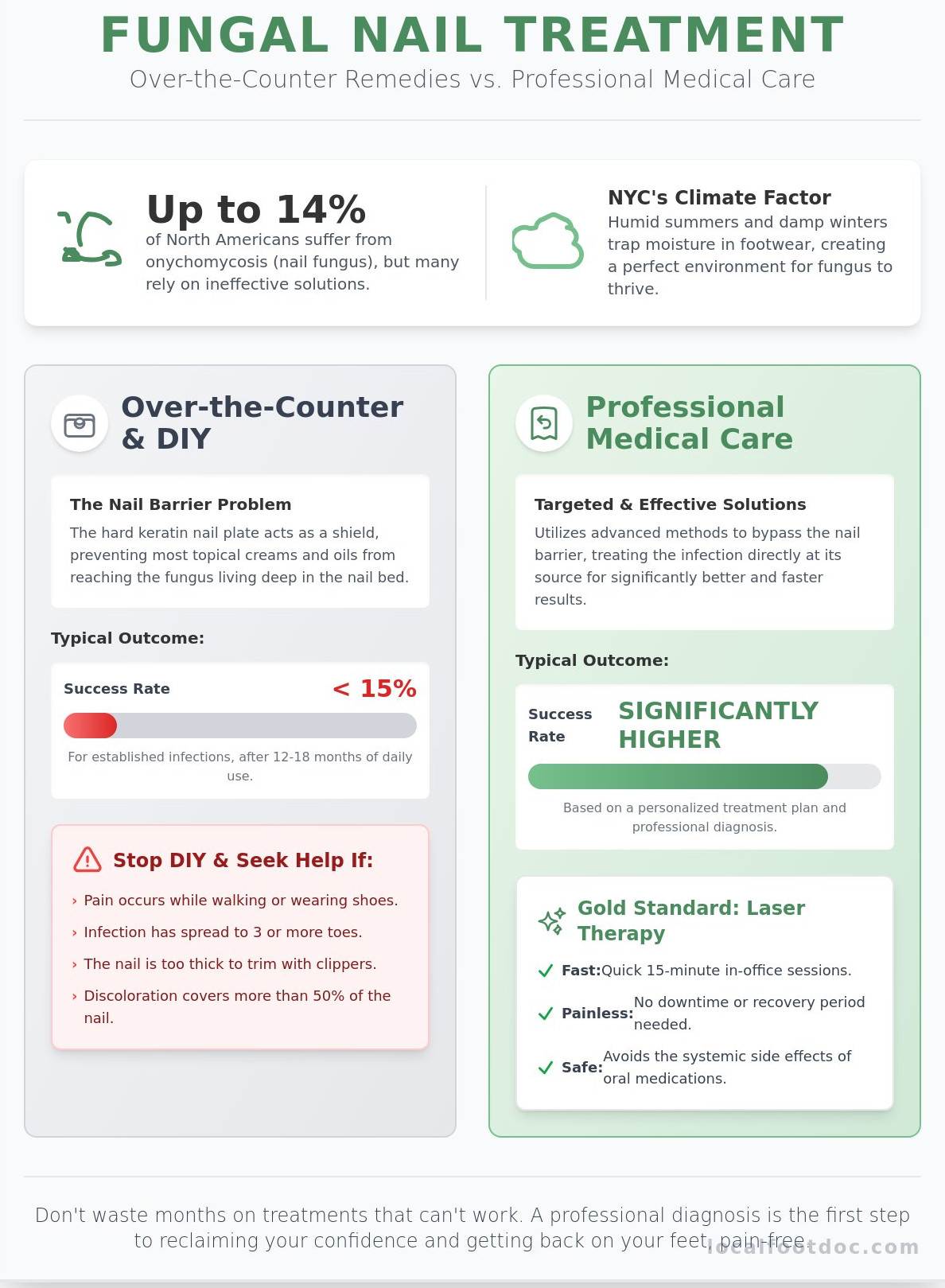
Many New Yorkers start their journey to clearer nails at the local drugstore. You’ve likely seen the rows of “maximum strength” lacquers and creams promising quick results. However, the reality of fungal nail treatment is often more complex than a bottle of clear liquid suggests. The primary obstacle is the nail plate itself. This hard layer of keratin acts as a biological shield, protecting the fungus living underneath. Most OTC products lack the chemical carriers necessary to bypass this barrier, leaving the infection to thrive while you wait for results that may never arrive.
The Limits of Over-the-Counter (OTC) Products
While home remedies like tea tree oil or Vicks VapoRub are popular on social media, clinical data tells a different story. Research suggests that while these substances possess mild antifungal properties, they rarely penetrate deep enough to clear a moderate infection. OTC treatments frequently require daily application for 12 to 18 months, yet success rates often hover below 15% for established cases. You should stop the DIY approach and seek professional help if you notice these signs:
- Physical pain while wearing shoes or walking around the city.
- The infection has spread to three or more toes.
- The nail has thickened to the point where it’s difficult to trim with standard clippers.
- Discoloration covers more than 50% of the nail surface.
Professional Topical and Oral Medications
When you visit our Forest Hills or Astoria locations, we move beyond generic solutions. We analyze various fungal nail treatment options to find the right fit for your specific biology. Prescription-strength topicals like Jublia or Kerydin are specifically engineered to penetrate the nail plate more effectively than drugstore alternatives. For more stubborn infections, we may discuss oral medications like Terbinafine. Because oral antifungals can affect the liver, our team requires baseline blood tests and regular monitoring to ensure your safety throughout the process.
Our approach isn’t one-size-fits-all. We build a customized plan based on your medical history, including factors like diabetes or poor circulation that can slow healing. If you’re tired of seeing no progress with home remedies, it’s time to consult with a specialist who can provide the clinical precision your feet deserve. We’re here to help you get back on your feet with confidence by combining advanced technology with personalized care.
Why Laser Fungal Nail Treatment is the Gold Standard in 2026
Laser technology has transformed how we approach fungal nail treatment in our New York City clinics. In 2026, we utilize advanced 1064nm Nd:YAG laser systems that deliver targeted light energy through the nail plate. This energy specifically targets the pigments in the fungal colonies, heating them to a point where the pathogens can no longer survive or reproduce. Because the laser is tuned to a specific wavelength, it passes harmlessly through your healthy skin and nail tissue, focusing its power exactly where the infection hides.
For New Yorkers managing tight schedules between Wall Street and the Upper West Side, laser therapy offers a level of efficiency that traditional creams cannot match. It requires no downtime and carries none of the systemic risks associated with oral medications. Clinical data indicates that oral antifungals can carry a 10% to 15% risk of elevated liver enzymes, making them a difficult choice for many. Professional treatment for nail fungus via laser eliminates these internal health concerns while providing a success rate often exceeding 80% in mild to moderate cases. Our team prioritizes this technology because it provides deep penetration of the nail bed, reaching the source of the “stubborn” yellowing and thickening that topical solutions simply can’t reach.
The Laser Procedure: What to Expect
It’s common to feel a bit of anxiety before a medical procedure, but laser therapy is remarkably straightforward. During the session, you’ll feel a mild warming sensation as the technician moves the laser wand across the nail. There’s no need for local anesthesia or numbing agents because the heat is controlled and localized. Most of our patients find the process quite comfortable. A typical treatment schedule involves 3 to 4 sessions, usually spaced 4 to 6 weeks apart to align with the natural growth cycle of the nail. This method is the preferred choice for our patients with diabetes or liver concerns, as it treats the infection locally without interfering with other necessary medications.
Combining Laser with Comprehensive Care
We don’t rely on technology alone to get you back on your feet. To achieve the best results, our doctors combine laser sessions with professional debridement. This process involves carefully thinning the infected nail plate, which allows the laser light to penetrate even deeper into the nail bed. It’s a collaborative effort between our clinical expertise and this modern technology. After your session, we provide a strict post-laser protocol to prevent reinfection from your environment. This is especially vital for our more active patients. If you spend your weekends training for the New York City Marathon or visiting local climbing gyms, you might also want to explore our sports medicine services. We help athletes manage the repetitive micro-trauma that often makes nails more susceptible to fungal invaders in the first place.
Your Treatment Journey at Our Brooklyn and Queens Podiatry Offices
We believe your path to healthy feet should be as clear as the results we aim for. Our team uses a five-step clinical framework to ensure your fungal nail treatment is both accurate and effective. We don’t just look at your toes; we analyze your lifestyle to create a plan that fits your New York pace.
- Step 1: Clinical Evaluation and Biopsy. Precision is our first priority. We perform a thorough physical exam and often take a small nail sample for a biopsy. This is a critical step because roughly 50% of discolored nails are caused by non-fungal issues like psoriasis or repeated micro-trauma from running on city pavement.
- Step 2: Modality Selection. We tailor the approach to you. If you have a busy commute, a high-intensity laser treatment might be better than remembering to apply a daily liquid. We balance oral medications, laser therapy, and topicals based on your medical history and the severity of the infection.
- Step 3: Professional Nail Debridement. Our podiatrists use specialized tools to thin the thickened nail plate. This immediately improves the appearance of the nail and allows topical medications to penetrate deeper into the nail bed where the fungus lives.
- Step 4: Monitored Growth Cycles. Toenails grow slowly, typically only 1.6 millimeters per month. We schedule regular follow-ups to track the “clear line” of new growth and ensure the infection isn’t resurfacing.
- Step 5: Long-Term Prevention. We provide a personalized “NYC Survival Guide” for your feet. This includes specific advice on managing moisture in your work boots and disinfecting your shoes after using a gym in Astoria or Ridgewood.
Personalized Care in Your Neighborhood
You shouldn’t have to travel to Manhattan for world-class podiatry. We’ve established modern, welcoming offices in Forest Hills, Astoria, Woodhaven, and Ridgewood to keep expert care close to home. Our “Expert Neighbor” approach means we treat you like a person, not a chart. We accept most major insurance plans to ensure our fungal nail treatment remains accessible to everyone in our community. We want you to feel confident and comfortable from the moment you walk through our doors.
Preparing for Your Consultation
To get the most out of your first visit, please remove all nail polish or lacquer at least 24 hours before your appointment. This allows us to see the natural color and texture of the nail plate. It’s also helpful to bring a list of any over-the-counter creams or home remedies you’ve already tried. If you’re still deciding on the right provider, feel free to read our guide on choosing a podiatrist in Forest Hills to see why our patient-first philosophy stands out.
Ready to start your journey toward clearer nails? Schedule your comprehensive evaluation at one of our NYC locations today.
Getting Back on Your Feet: Choosing Local Foot Doc for Fungal Nail Care
Ignoring a change in your nail’s color or texture can lead to permanent deformity. When fungal colonies take root, they slowly degrade the nail plate and can eventually damage the nail matrix, which is the area where your nail begins to grow. This damage often becomes irreversible if left for more than 12 months. At Local Foot Doc, we believe that effective fungal nail treatment should be accessible and stress-free. We combine the latest 2026 medical protocols with a patient-first approach that treats you like a neighbor, not a chart number.
Getting back on your feet involves more than just physical movement. It’s about the confidence to walk through a locker room or wear open-toed shoes during a New York summer without second-guessing yourself. Our clinical team focuses on total recovery, ensuring your nails look as healthy as they feel. We’ve spent over 20 years helping New Yorkers regain their mobility and self-esteem through precise, evidence-based podiatric care.
Long-Term Prevention and Maintenance
Winning the battle against fungus requires a proactive defense strategy. We recommend disinfecting your footwear weekly with antifungal sprays or UV light sanitizers, which can eliminate 99% of dormant spores. Switching to moisture-wicking socks made of synthetic fibers or merino wool helps keep feet dry; fungus thrives in damp environments. For many patients, custom orthotics play a surprising role in prevention. By correcting your gait, these inserts reduce repetitive micro-trauma to the toes, which prevents the tiny cracks in the nail that allow fungus to enter. If you live with chronic conditions like diabetes, where 1 in 3 patients develop nail infections, scheduled quarterly check-ups are a vital safeguard against complications. For comprehensive management of diabetes-related foot concerns, our diabetic foot care Brooklyn services provide specialized monitoring and prevention strategies.
Schedule Your NYC Fungal Nail Consultation Today
Don’t let a treatable infection limit your lifestyle or cause you daily discomfort. Our four modern offices across Brooklyn and Queens are equipped with the diagnostic tools needed to identify your specific fungal strain and start a targeted fungal nail treatment plan immediately. You can reach our central booking line at 718-445-3668 or visit our website to secure an appointment at the location most convenient for you. We’ve provided dedicated podiatric care to the NYC community for 22 years, and we’re ready to help you take that first step toward clearer, healthier nails today.
Take the First Step Toward Clearer Nails Today
Living in New York City means your feet endure everything from humid subway platforms to cramped winter boots. These unique local conditions often lead to persistent onychomycosis that won’t disappear on its own. While over the counter options frequently fall short, our 2026 treatment protocols prioritize laser technology because it targets the infection at its source without the side effects of oral medications. You deserve a solution that actually works so you can stop hiding your feet in socks all year long.
Our team at Local Foot Doc combines advanced medical technology with the compassionate care you expect from a neighborhood practice. Board-certified surgeon Dr. Waldemar Majdanski brings over 20 years of clinical experience to every fungal nail treatment plan we create. We operate multiple convenient locations across Brooklyn and Queens to ensure expert podiatric care is always within your reach. Our goal is to provide a clear, structured path to recovery that fits your busy NYC lifestyle.
It’s time to prioritize your foot health and regain your mobility. Schedule your fungal nail consultation at Local Foot Doc today! We look forward to helping you get back on your feet with confidence and comfort.
Frequently Asked Questions
Is fungal nail treatment covered by insurance in New York?
Insurance coverage for fungal nail treatment in New York depends on whether the condition causes physical pain or functional impairment. Most private insurers and Medicare cover the initial diagnostic visit and medically necessary debridement. However, they often classify laser therapy as a cosmetic procedure. Our team provides a detailed breakdown of your specific plan benefits during your first visit to our Manhattan or Brooklyn offices.
How long does it take to see results from laser fungal nail treatment?
You can expect to see a clear, healthy nail beginning to emerge at the base within 3 to 4 months after your first laser session. While the laser kills the pathogens immediately, the damaged nail must grow out completely. A total replacement of the great toenail typically takes 9 to 12 months. This timeline reflects the natural biological growth rate of human nails as documented in clinical podiatry journals.
Can I wear nail polish while undergoing fungal nail treatment?
You should avoid traditional nail polish during your recovery because it traps moisture and feeds the infection. Standard polishes create an airtight seal that prevents the nail from breathing. If you have a special event, our team recommends specialized antifungal breathable polishes. These products allow oxygen to reach the nail bed while providing an aesthetic cover that doesn’t compromise your healing process.
Is toenail fungus contagious to other family members?
Toenail fungus is highly contagious and spreads easily through shared showers, bath mats, and towels. If one person in your New York apartment has an infection, there’s a 50% chance other household members will contract it without strict hygiene. We suggest wearing flip-flops in common areas and washing all linens at 140 degrees Fahrenheit to kill dormant spores that live in fabric fibers.
What happens if I leave fungal nails untreated?
Leaving the infection alone can lead to permanent nail thickening, chronic pain, and secondary bacterial infections. In diabetic patients, untreated fungus increases the risk of foot ulcers by 15% due to the pressure from thickened nails. The infection can also spread to the surrounding skin, causing athlete’s foot. We prioritize early intervention to prevent these complications and keep you active on the city streets.
Are oral antifungal medications safe for everyone?
Oral antifungal medications are safe for the majority of patients, but we always perform baseline liver function tests first. Clinical data shows that fewer than 4% of patients experience significant side effects from modern oral treatments. We carefully review your medical history and current prescriptions to ensure no adverse interactions occur. Our goal is to provide a safe, effective path toward clear nails without compromising your health.
Why does my toenail fungus keep coming back after treatment?
Recurrence is usually caused by fungal spores that remain in your footwear or environment after your clinical treatment ends. Statistics show that 25% of patients experience a relapse if they don’t treat their shoes with ultraviolet light or antifungal sprays. We provide a comprehensive post-treatment protocol to ensure those microscopic spores don’t find a home on your newly cleared nails. It’s about protecting your long-term results.
How can I prevent getting a fungal infection at my NYC gym?
You can prevent infections at your NYC gym by never walking barefoot in locker rooms or communal showers. A 2024 study of Manhattan fitness centers found fungal pathogens on 70% of wet floor surfaces. Always wear rubber sandals and dry your feet thoroughly with a clean towel. Applying an antifungal powder to your gym sneakers daily provides an extra layer of protection against the moist environments where fungus thrives. Many active New Yorkers who deal with foot discomfort also experience plantar fasciitis heel pain from the same high-impact routines that put their nails at risk.
What is plantar fasciitis and can it occur alongside nail fungus?
While these are separate conditions, many of our patients who are active runners or gym-goers in NYC deal with both simultaneously. If you’ve been wondering what is plantar fasciitis and whether your heel pain is connected to your overall foot health, our team can evaluate both concerns during a single comprehensive visit.
Are ingrown toenails related to nail fungus or hereditary factors?
Ingrown toenails and nail fungus are distinct conditions, but they often occur together because both thrive in the same warm, moist environments common to NYC life. Many patients are surprised to learn that their nail shape and curvature may be inherited. If you’ve ever wondered are ingrown toenails genetic and whether your family history is contributing to recurring nail problems, our team can evaluate both concerns during a comprehensive visit and create a treatment plan that addresses the root cause.