

Flat Foot Surgery
Flat Foot Surgery Near You
Flat feet are common, and many people have no symptoms or treatment needs. However, some patients develop pain, weakness, fatigue, or difficulty walking when the foot structure affects normal function. When significant symptoms continue despite appropriate nonsurgical treatment, reconstructive surgery may be considered.
At Local Foot Doc, we first determine why your flat foot is causing problems and how the condition affects your movement. If surgery becomes an option, our podiatrists explain the goals of reconstruction and what recovery may involve.
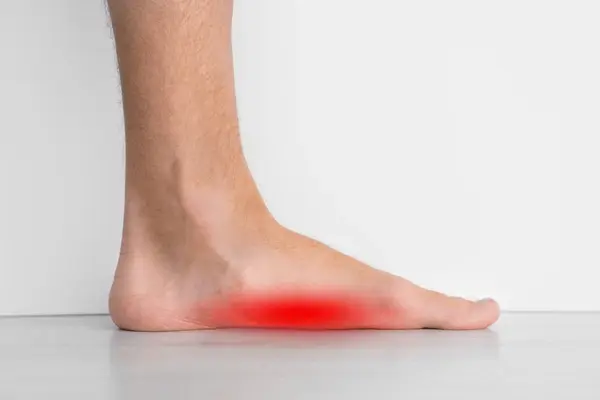
When May Flat Foot Surgery Be Needed?
Surgery is not necessary for every person with flat feet. It may be discussed when symptoms are persistent, and other treatment approaches have not provided enough relief.
Possible reasons include:
Persistent pain
Ongoing discomfort continues despite conservative care.
Walking difficulty
Changes in foot structure interfere with comfortable movement.
Progressive changes
The foot gradually becomes flatter or less stable.
Tendon problems
Dysfunction of supporting tendons may contribute to loss of the arch.
Reduced activity
Foot symptoms prevent you from participating in normal activities.
What Does Reconstruction Involve?
Flat foot reconstruction is not a single procedure. The surgical plan depends on the structures involved and the severity of the deformity.
A reconstruction may include:
Tendon procedures
A damaged or dysfunctional tendon may be repaired or supported.
Bone correction
Certain bones may be repositioned to improve alignment.
Joint procedures
Selected joints may require correction or stabilization.
Soft tissue work
Supporting tissues may be addressed when they contribute to the deformity.
Your podiatrist will explain the specific procedure recommended for your foot.
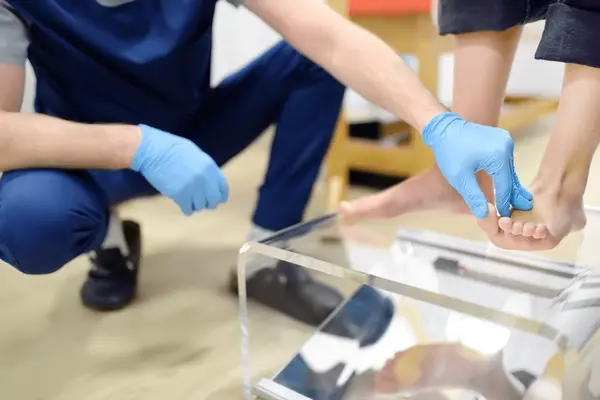
Your Evaluation Before Surgery
We review your symptoms, activity level, medical history, previous treatments, and any changes in your foot over time. Our examination looks at your arch, alignment, strength, flexibility, and walking pattern.
Imaging, such as X-rays, may be used to evaluate bone alignment. Other imaging may be recommended when more information about tendons or soft tissues is needed.
This detailed assessment helps us understand which structures need attention and whether reconstruction is appropriate.
Taking Care of Your Foot After Surgery
Following your postoperative instructions is important for protecting the reconstruction.
Protect the surgical area
Use the prescribed support device as directed.
Keep appointments
Regular visits allow your podiatrist to monitor healing.
Perform exercises as instructed
Rehabilitation should progress according to your care plan.
Avoid early overuse
Returning to strenuous activity too soon can place unnecessary stress on healing tissues.
Locations We Serve
Convenient podiatry care is available at Local Foot Doc locations across Brooklyn and Queens. Choose the office that is most convenient for you.
Howard Avenue Brooklyn Office
Address: 802 Howard Ave 1st Floor, Brooklyn, NY 11212, United States
Phone: (718) 495-3668
Forest Hills Office
Address: 69-39 Yellowstone Blvd, Forest Hills, NY 11375, United States
Phone: (718) 575-3668
Astoria Office
Address: 23-18 Broadway, Long Island City, NY 11106, United States
Phone: (718) 545-0205
Our Focus on Your Foot Health
Local Foot Doc focuses on making foot and ankle care easier to understand and more comfortable for patients.
Compassionate Support
We treat you with care and support you through your evaluation, treatment, and recovery.
Clear Treatment Information
We explain your condition and treatment options in simple, easy-to-understand language.
Care Based on Your Needs
Your symptoms, daily activities, lifestyle, and treatment goals are considered when planning your care.
Comprehensive Foot Care
Our podiatry team provides care focused on your overall foot and ankle health.
Discuss Your Flat Foot Treatment Options
Persistent pain from flat feet can affect how you walk and the activities you enjoy. Our podiatrists can evaluate your foot structure and explain whether conservative treatment or reconstruction may be appropriate. Contact Local Foot Doc to schedule an evaluation.
FAQs
How long does flat foot reconstruction take to heal?
Recovery can take several months and varies according to the procedures performed and your individual healing.
Will surgery restore my foot to a completely normal shape?
The goal is to improve alignment, stability, and function, but the final result varies from patient to patient.
Can I exercise after flat foot reconstruction?
Most patients gradually return to exercise after healing, with the timing determined by the procedure and recovery progress.
Do all flat feet require surgery?
No, many people with flat feet do not need treatment, and symptomatic cases are often managed with nonsurgical approaches.