
Corns & Calluses Treatment
Corns & Calluses Treatment Near You
Corns and calluses are areas of thickened skin that develop when the skin experiences repeated pressure or friction. They commonly appear on the toes, soles, or other areas that are subject to frequent stress. Although they are usually not dangerous, they can become painful and may make walking or wearing shoes uncomfortable.
Our team at Local Foot Doc looks beyond the thickened skin to understand why it developed. Your footwear, foot structure, walking pattern, and daily activities can all contribute to repeated pressure. Our podiatrist can evaluate the area and recommend care that addresses both your symptoms and the source of the pressure.
What Causes Corns and Calluses?
The skin naturally thickens when it is repeatedly exposed to pressure or friction. If the underlying source of that pressure persists, the thickened area may persist or recur.
Common causes include:
Poorly fitting shoes
Tight footwear can create pressure against the toes and other parts of the foot.
Repeated friction
Constant rubbing can encourage the development of thicker skin.
Foot deformities
Changes in toe or foot shape can create concentrated pressure points.
Walking mechanics
The way you place weight on your feet can affect where calluses form.
High activity levels
Repeated walking or exercise can increase pressure on certain areas.
How Corns and Calluses Differ
Although they are related, corns and calluses are not the same. Their appearance and location can help distinguish them.
Corns
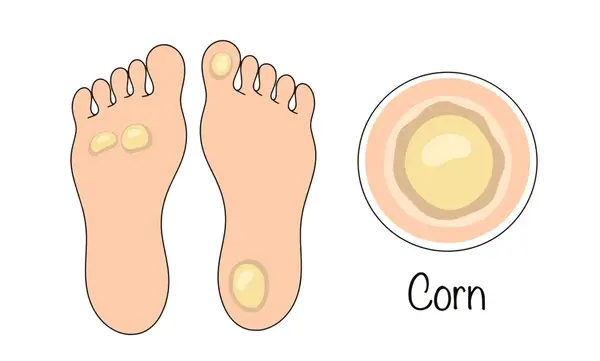
A corn is usually a smaller, more concentrated area of thickened skin caused by pressure or friction.
Calluses
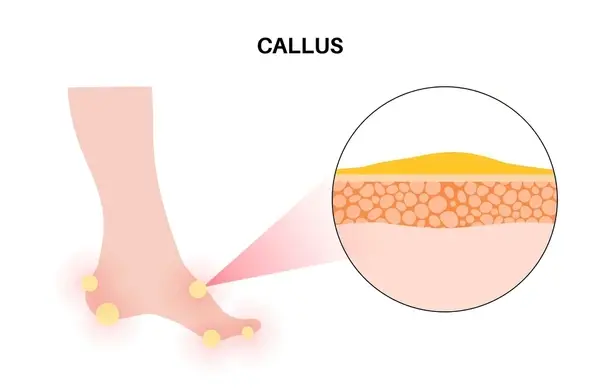
A callus is generally a broader area of thickened skin that develops over a high-pressure area.
Pain
Either type of thickened skin can become uncomfortable with continued pressure.
When Thickened Skin Becomes a Problem
Corns and calluses may not cause symptoms initially. Continued pressure can eventually make them painful or irritated.
You may experience:
Localized tenderness
Pressure on the thickened area may cause discomfort.
Burning
Repeated friction can create a burning sensation.
Hard skin
The affected area may feel noticeably thicker than the surrounding skin.
Walking discomfort
Pain can change the way you place weight on your foot.
Recurring buildup
The thickened skin may return when the underlying pressure remains.
Treatment Options
Treatment focuses on reducing discomfort while addressing the pressure or friction responsible for the problem.
Options may include:
Professional trimming
Your podiatrist can safely reduce excessive thickened skin.
Padding
Appropriate padding can protect a pressure point from further irritation.
Footwear changes
Roomier, better-fitting shoes can reduce friction and pressure.
Custom orthotics
Orthotics may redistribute pressure across the foot when appropriate.
Foot structure management
Addressing an underlying deformity may reduce repeated stress.
Ongoing care
Regular professional treatment may help manage recurring thickened skin.
Caring for Corns and Calluses at Home
Small changes in your daily routine can reduce pressure on sensitive areas.
Wear comfortable shoes
Choose footwear with enough space and appropriate support.
Avoid cutting the skin
Sharp tools can cause cuts and infection when used at home.
Use recommended products
Follow professional guidance before applying medicated pads or treatments.
Moisturize dry skin
Regular moisturizing can help keep the surrounding skin softer.
Monitor changes
Contact your podiatrist if the area becomes painful, red, swollen, or develops a wound.
Locations We Serve
Local Foot Doc provides podiatric care at three offices serving Brooklyn and Queens.
Howard Avenue Brooklyn Office
Address: 802 Howard Ave 1st Floor, Brooklyn, NY 11212, United States
Phone: (718) 495-3668
Forest Hills Office
Address: 69-39 Yellowstone Blvd, Forest Hills, NY 11375, United States
Phone: (718) 575-3668
Astoria Office
Address: 23-18 Broadway, Long Island City, NY 11106, United States
Phone: (718) 545-0205
Why Choose Us for Corn and Callus Care?
At Local Foot Doc, we believe treating a corn or callus should include understanding why it developed in the first place.
Compassionate care
We provide attentive treatment in a comfortable, relaxed environment.
Patient education
Our podiatrist explains the cause of the thickened skin and answers your questions.
Cause-focused care
We consider pressure, footwear, foot structure, and movement when planning treatment.
Personalized attention
Recommendations are based on your specific foot health needs.
Shared treatment decisions
We provide the information you need to participate in your medical care.
Find Relief From Painful Corns and Calluses
Persistent thickened skin can be a sign that pressure is repeatedly affecting the same part of your foot. Our team can examine the area and recommend ways to relieve discomfort and address contributing factors. Contact Local Foot Doc to schedule an appointment.
FAQs
Why do my calluses keep coming back?
Calluses can return when the pressure or friction that caused them continues, even after the thickened skin has been removed.
Can I cut off a corn or callus myself?
It is safer to avoid cutting thickened skin yourself, as sharp tools can cause wounds and infections.
Are corns and calluses the same thing as warts?
No, warts are caused by a viral infection and can sometimes resemble corns, so a professional examination may be helpful when the diagnosis is uncertain.
Should people with diabetes have corns or calluses treated professionally?
Yes, people with diabetes should avoid aggressive self-treatment because reduced sensation or circulation problems can increase the risk of foot injury.