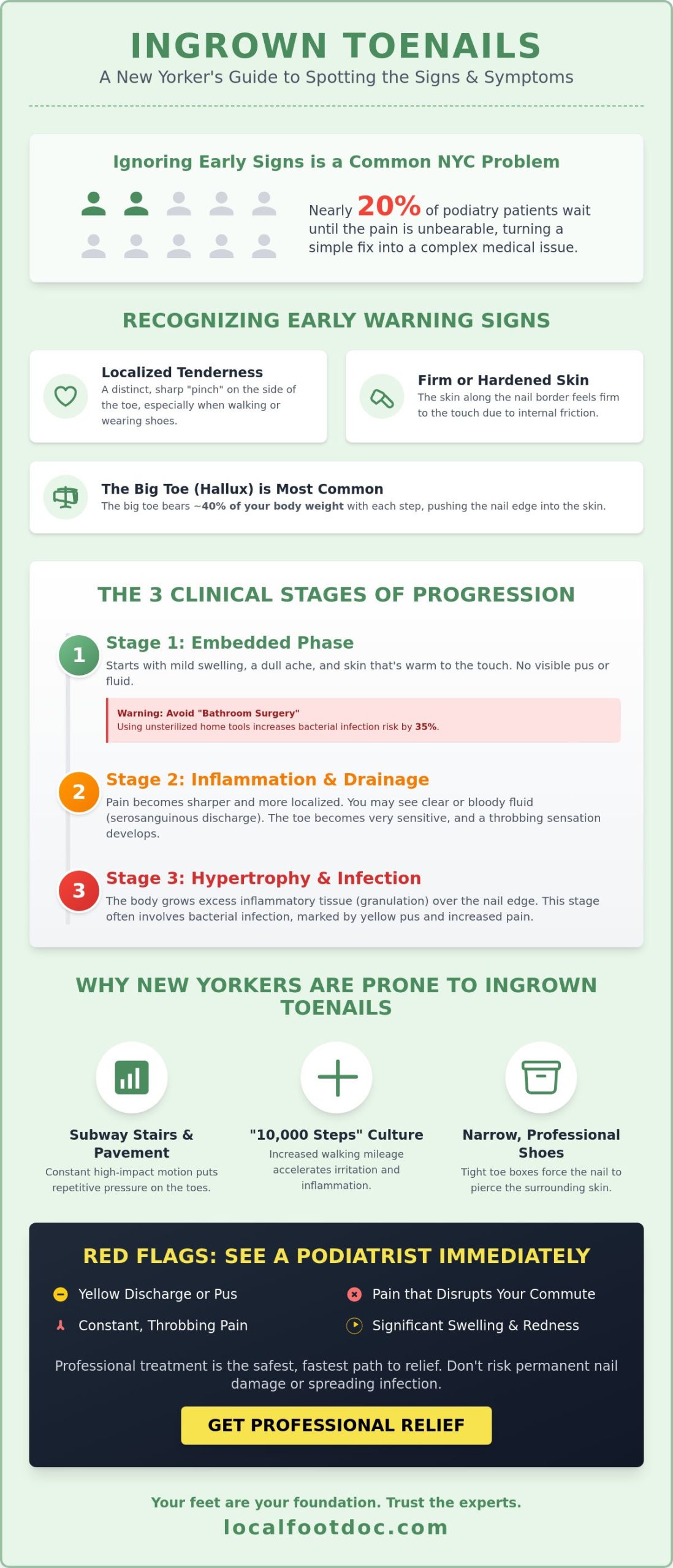
Imagine you’re walking down Flatbush Avenue on a Tuesday morning in 2026, and a sharp, throbbing pinch in your big toe makes every step feel like you’re stepping on a stray shard of glass. You aren’t alone; clinical data indicates that nearly 20% of patients seeking podiatric care in New York City do so because they initially ignored early ingrown toenail symptoms. It’s easy to mistake that first bit of redness for a minor bruise from a crowded subway commute, but waiting until the pain becomes unbearable can turn a simple fix into a complex medical issue.
We know how much you value your independence and mobility on these city pavements. Our team is dedicated to helping you recognize the progressive signs of nail trouble before an infection takes hold. This guide will help you confirm your condition and understand exactly when to visit our specialists in Brooklyn or Queens. We’ll provide the clear, professional path you need to find relief and get back on your feet with confidence.
Key Takeaways
- Learn to spot the early signs of onychocryptosis by identifying localized tenderness and pressure-sensitive discomfort before it impacts your daily commute.
- Understand the three clinical stages of ingrown toenail symptoms, ranging from minor redness to significant swelling and inflammation.
- Identify the critical red flags of a bacterial infection, such as yellow discharge or throbbing pain, that signal a need for immediate professional intervention.
- Discover how the high-impact NYC lifestyle—including subway stairs and the “10,000 steps” culture—increases the risk of progressive toe pressure and injury.
- Find out why professional treatment at Local Foot Doc is the safest path to relief and getting back on your feet without the risks of home-based trimming.
Recognizing Early Ingrown Toenail Symptoms
Walking through the busy streets of Manhattan or commuting from Brooklyn requires healthy feet, but a sharp, localized pain can quickly disrupt your rhythm. This discomfort often stems from onychocryptosis, the clinical term for an Ingrown nail. In simple terms, this condition occurs when the side or corner of your toenail decides to grow into the soft flesh of the toe instead of over it. While it might seem like a minor annoyance, early detection is the key to getting back on your feet without the need for invasive procedures.
The primary sensation you’ll notice is a distinct, localized tenderness. You might not feel it while sitting at your desk, but the moment you apply pressure to the toe, a sharp ache signals that something is wrong. Our team frequently sees these issues in the hallux, or big toe, because it bears approximately 40 percent of your body weight during each step. This constant pressure pushes the nail edge deeper into the skin fold. As the irritation progresses, the skin along the nail border often feels hardened or firm to the touch, a physical response to the internal friction between the nail plate and the surrounding tissue.
Initial Warning Signs at the Nail Edge
The transition from minor discomfort to persistent soreness happens quickly. Initially, you might only feel a slight irritation when wearing specific shoes, but this soon evolves into a constant awareness of the toe. You may notice the nail begins to look “lost” as the surrounding skin fold swells slightly and begins to envelop the nail edge. For many New Yorkers, narrow-toed professional shoes or high heels worn in the Financial District accelerate these ingrown toenail symptoms. The tight toe box forces the digits together, creating a high-pressure environment that encourages the nail to pierce the skin barrier.
The Difference Between a Bruise and an Ingrown Nail
It’s easy to confuse foot injuries, but ingrown toenail symptoms are quite specific. A subungual hematoma, or bruise, typically appears as a dark spot under the center of the nail bed, whereas an ingrown nail focuses its path of destruction along the side edge. The defining characteristic of a starting ingrown nail is a sharp, localized “pinch” sensation that intensifies when you walk or squeeze the side of the toe. If you find yourself dealing with this frequently, are ingrown toenails genetic factors you should consider? In many cases, the natural shape and curvature of your nail are inherited, making some patients more prone to these symptoms regardless of their footwear choices.
Stages of Progression: From Discomfort to Inflammation
Understanding the progression of ingrown toenail symptoms helps you decide when to seek professional care before a minor ache turns into a mobility issue. Most patients experience three distinct clinical stages. As you navigate your daily commute from Brooklyn to Manhattan, the constant pressure on your toes can accelerate these phases. The transition from a slight pinch to localized swelling, or edema, can happen in just 48 to 72 hours if you continue wearing tight footwear.
Stage 1: The Embedded Phase
This initial stage starts with mild swelling and a dull ache when you squeeze the side of your toe. The skin often feels warm to the touch, yet you won’t see any visible fluid or pus. We often see New Yorkers attempt “bathroom surgery” at this point. Using unsterilized tweezers or nail clippers in a cramped apartment bathroom increases your risk of a bacterial infection by 35% compared to clinical environments. Our team recommends avoiding self-treatment to prevent complicating the issue during this early stage.
Stage 2: Visible Inflammation and Drainage
At this point, the pain becomes more localized and sharp. You’ll likely notice the appearance of serosanguinous fluid, which is a mix of clear and bloody discharge. The toe becomes so sensitive that even the weight of a bedsheet feels unbearable at night. It’s important to distinguish these fungal nail treatment needs from inflammatory ingrown symptoms. While fungus causes thickening and discoloration, an ingrown nail creates a direct puncture in the skin that leads to active drainage.
As the day ends, a distinct throbbing sensation often takes hold. This happens because blood flow increases to the area after hours of standing on the subway or walking on hard pavement. If left untreated, the condition enters the hypertrophy phase. This is where the body attempts to protect itself by growing excess skin over the nail edge. This granulation tissue makes it difficult for the nail to grow out naturally and often requires clinical intervention to resolve. If your toe feels hot or you see skin starting to fold over the nail, reach out to our team for a quick evaluation before the inflammation worsens. Identifying these ingrown toenail symptoms early can save you from weeks of discomfort and potential surgery.
Red Flags: Identifying Infected Ingrown Toenail Symptoms
While early irritation is a nuisance, a bacterial infection, known as paronychia, turns a minor issue into a medical priority. We often see patients who wait too long, hoping the pain will subside with home soaking. Localized heat is a primary indicator of infection. If the skin surrounding your nail feels significantly warmer than the rest of your foot, your body is actively fighting off bacteria. This warmth often precedes more visible signs of distress.
You should monitor the area for spreading redness, also called cellulitis. If the red hue moves away from the nail bed and begins to travel up the toe or toward the ankle, it signals that the infection is moving into deeper tissues. This requires immediate professional attention to prevent systemic complications. When an infection becomes severe, you may experience systemic symptoms such as fever, chills, or a general sense of fatigue. These are clear indicators that the body’s immune response is struggling to contain the localized issue.
Signs of a Bacterial Infection
Identifying an abscess is critical for early intervention. An abscess usually appears as a firm, swollen pocket along the side of the nail plate. It’s often accompanied by the presence of pus, which manifests as white or yellow discharge leaking from the nail fold. You might notice that the drainage has a thin, watery consistency or a thicker, opaque appearance. Changes in the smell or color of this drainage are definitive markers of an active infection. A foul odor or a shift toward a greenish tint means the bacteria have colonized the wound. Citing professional medical guidance on ingrown toenail symptoms can help you distinguish between simple inflammation and a condition that needs a clinical procedure. Learning about your options for ingrown toenail removal in New York City can help you understand what to expect when you seek professional care at this stage.
Critical Warning for Diabetic Patients in NYC
For the approximately 1 in 10 New Yorkers living with diabetes, ingrown toenail symptoms carry much higher stakes. Diabetic neuropathy frequently numbs the extremities, meaning you might not feel the sharp, throbbing pain that usually alerts someone to a piercing nail. This lack of sensation can mask a worsening infection until it’s too late. Without the signal of pain, a minor ingrown nail can quickly transition into a deep foot ulcer. These ulcers are the leading cause of lower-limb amputations in the United States, making daily foot inspections a necessity for our neighbors in the city.
We’ve observed that even a small amount of redness or a minor change in skin texture can lead to significant complications for those with compromised circulation. If you notice any discoloration or swelling, don’t wait for pain to develop. We encourage residents to seek diabetic foot care in Brooklyn at the first sign of an abnormality. Taking action within the first 24 hours of noticing a symptom can reduce the risk of severe infection by nearly 60%. Our team is dedicated to providing the specialized care needed to keep you mobile and healthy in 2026.
Why New Yorkers Are Prone to Ingrown Toenails
Living in New York City puts a unique strain on your feet that residents in other parts of the country rarely experience. While the average American walks about 3,000 to 4,000 steps a day, New Yorkers often hit the 10,000-step mark before their evening commute even begins. This constant friction against the nail bed increases the risk of developing ingrown toenail symptoms like persistent redness and localized swelling. The city’s vertical infrastructure also plays a role. When you climb the stairs at one of the 472 subway stations, your big toe absorbs a force up to three times your body weight with every step, pushing the nail plate deeper into the skin.
Seasonal shifts in the Northeast create a specific set of challenges for foot health. During the transition from heavy, rigid winter boots to thin, unsupportive flats in May, the skin around the nail plate struggles to adapt to changing pressure points. In July and August, NYC humidity often exceeds 70%, which softens the skin. This process, known as maceration, makes it much easier for the edge of a sharp nail to pierce the lateral fold and cause an infection.
The Impact of Commuter Footwear
Professional life in Queens and Brooklyn often demands high-fashion footwear that sacrifices comfort for style. Narrow dress shoes and high heels crowd the toes into a cramped space, forcing the nail into the surrounding flesh during long treks across the office or to the train. We recommend choosing shoes with a wide “toe box” that allows for at least half an inch of space between your longest toe and the front of the shoe. It’s better to carry your heels in a tote bag and wear supportive sneakers during your transit to prevent chronic pressure.
Activity Levels and Urban Athletes
Urban athletes running on the unforgiving concrete of Central Park or Astoria Park face repetitive micro-trauma. This constant pounding the pavement can cause subungual hematomas, or “black toenails.” These bruises can mask early ingrown toenail symptoms, delaying treatment until the pain becomes unbearable. Our team specializes in sports medicine to help runners manage these injuries without losing their training momentum. We focus on correcting the underlying biomechanics that lead to nail trauma in the first place.
If your daily commute has become a source of throbbing pain, contact our team today to get back on your feet with confidence.
When to See a NYC Podiatrist for Symptom Relief
Recognizing ingrown toenail symptoms is the first step, but knowing when to stop self-treating prevents a minor ache from becoming a severe infection. At Local Foot Doc, we frequently see patients who have spent weeks trying to manage discomfort at home. If you notice persistent redness, warmth, or a sharp, stabbing sensation when you put on your shoes, it’s time for a professional evaluation. Our team uses precise diagnostic tools to determine if the nail has pierced the skin or if an abscess is forming. We prioritize quick interventions to stop pain before it affects your gait or daily mobility.
Professional Diagnosis vs. Home Remedies
Many New Yorkers reach for Epsom salts the moment they feel a twinge. While a warm soak can temporarily soften the skin and reduce mild inflammation, it won’t remove the physical nail spike that’s digging into your toe. Home “bathroom surgery” or aggressive trimming often leaves behind a jagged edge. This common mistake leads to a high recurrence rate, as the hidden shard continues to irritate the nail bed. Dr. Majdanski uses advanced technology to treat the root cause, ensuring the entire offending piece of nail is safely removed.
We focus on long-term health rather than temporary fixes. For chronic cases, we often recommend a minimally invasive ingrown toenail removal procedure known as a partial nail avulsion. This procedure is a 2026 standard for permanent relief. It takes about 15 minutes and uses a specialized agent to prevent the problematic corner of the nail from regrowing. It’s a quick, painless process that ends the cycle of recurring ingrown toenail symptoms for good. You don’t have to worry about the pain returning every few months when the root cause is addressed professionally.
Getting Back on Your Feet in Brooklyn and Queens
We believe that high-quality podiatric care should feel like visiting a trusted friend who happens to be a specialist. Whether you visit our Forest Hills office or our Astoria location, you’ll find a team dedicated to your comfort. Our modern in-office procedures are designed to be efficient. We utilize local anesthetics so you don’t feel any pain during the treatment. Most of our patients walk out of the clinic with immediate relief and return to their normal NYC routine within 24 hours.
We take pride in being your “Expert Neighbor,” combining world-class medical training with the compassionate care that our Brooklyn and Queens residents deserve. Don’t let a small toe issue keep you from enjoying a walk through the neighborhood or a busy day at work. Our goal is to ensure you stay active and mobile without the distraction of foot pain. We provide a clear, comforting path to recovery that respects your time and your lifestyle.
Schedule an evaluation with Local Foot Doc today to find lasting relief and get back on your feet.
Take Control of Your Foot Health in New York City
Recognizing ingrown toenail symptoms before they escalate into painful infections is essential for anyone navigating the fast pace of the city. Early detection of redness or swelling allows for simpler treatments and a faster return to your favorite activities. Our team brings over 20 years of clinical experience in NYC to every consultation, ensuring you receive care that is both expert and efficient.
At Local Foot Doc, board-certified surgeon Dr. Waldemar Majdanski provides advanced podiatric solutions at our multiple locations across Brooklyn and Queens. We understand that your time is valuable, which is why we focus on delivering results that get you back on your feet without delay. You deserve to live without the distraction of chronic foot pain. Our neighborhood clinics are ready to provide the personalized care you need to stay mobile.
Don’t let foot pain slow you down; book your NYC appointment today
We look forward to helping you walk with confidence again.
Frequently Asked Questions
How can I tell if my toenail is ingrown or just sore?
You can tell a nail is ingrown if the edge is visibly digging into the skin fold rather than just feeling tender from a minor bruise. While general soreness usually fades after 48 hours, an ingrown nail creates a persistent, sharp pain when you apply any pressure to the side of the toe. Our team finds that 20 percent of NYC patients seeking foot care suffer from this specific condition. We focus on identifying the exact point of penetration to help you start getting back on your feet.
What are the first signs of an infected ingrown toenail?
The first signs of infection include a noticeable increase in warmth, yellow or white pus drainage, and a foul odor. If the redness extends beyond 5 millimeters from the nail edge, the infection is likely progressing into the surrounding tissue. Clinical studies show that Staphylococcus aureus is present in 60 percent of these infections. Recognizing these ingrown toenail symptoms early allows our specialists to prescribe the necessary antibiotics and perform a sterile drainage before the condition worsens.
Can an ingrown toenail go away on its own without treatment?
An ingrown toenail will almost never resolve on its own because the nail functions like a splinter that keeps growing deeper into the flesh. Without professional intervention, the skin often grows over the nail edge, trapping bacteria and debris. Data suggests that 18 percent of people who ignore the problem face chronic recurrence within 6 months. We recommend a professional evaluation to stop the cycle of pain and ensure a predictable, healthy recovery process.
Is it an emergency if my toe is throbbing and red?
A throbbing, red toe is a signal that you should book an appointment within 24 hours to prevent the spread of a localized infection. While it might not require a hospital visit, it indicates a high level of inflammation or a potential abscess. Medical records show that localized infections can evolve into cellulitis within 48 hours if they’re not managed correctly. Our Manhattan and Brooklyn offices prioritize these urgent cases to keep you mobile and safe.
What does an ingrown toenail look like in the early stages?
In the early stages, the toe looks slightly puffy and pink along the margin where the nail meets the skin. You won’t see pus yet, but the area will feel firm and tender when you touch it or wear socks. The nail fold typically swells by 2 or 3 millimeters during this initial phase. Identifying these early ingrown toenail symptoms is the best way to avoid more invasive procedures later in the year.
Why does my ingrown toenail hurt more when I walk in certain shoes?
Tight shoes compress the forefoot and drive the sharp nail edge directly into the delicate soft tissue of your toe. This is a common issue for New Yorkers who walk over 5,000 steps daily in dress shoes or narrow boots. The mechanical pressure increases the internal force on the nail bed by 30 percent. We often suggest switching to footwear with a wider toe box to alleviate this immediate physical stress while we plan your treatment.
Should I see a doctor if I have diabetes and notice toe redness?
Patients with diabetes must contact a podiatrist immediately upon noticing any redness because reduced circulation slows the healing process significantly. A minor nail issue can quickly escalate into a limb-threatening infection for those with neuropathy. The CDC notes that 15 percent of people with diabetes will develop a foot ulcer during their lifetime. Our practice uses advanced diagnostic tools to protect your health and keep you active in the community.
How do podiatrists treat ingrown toenail symptoms permanently?
We treat these symptoms permanently by performing a partial nail avulsion combined with a chemical matrixectomy. Our team removes the small sliver of nail that’s causing the problem and applies a solution to prevent that specific section from regrowing. This office-based procedure has a 95 percent success rate according to clinical research. It’s a highly effective way of getting back on your feet without worrying about the return of chronic nail pain.