Imagine standing at the bottom of your Brooklyn brownstone’s stairs, looking up at three flights of steps with a bandaged foot and wondering how you’ll get home. For many New Yorkers, the biggest hurdle to bunion surgery recovery isn’t the clinical procedure itself, but the logistical puzzle of navigating our vertical city. We understand that living in a walk-up or relying on the L train makes the healing process feel more daunting than it would in a suburban ranch home. You likely worry about losing your independence or feeling trapped in a small apartment while the city moves on without you.
Our 2026 guide transforms that anxiety into a clear, actionable roadmap to master your journey back to pain-free walking. We’ve built a comprehensive NYC-specific recovery timeline and daily care checklist tailored for the unique demands of metropolitan life. We will provide a detailed day-by-day plan, professional tips for managing stairs and subways, and the confidence you need for a successful, permanent correction that gets you back on your feet for good.
Key Takeaways
- Learn how to optimize your NYC apartment layout for the critical first 72 hours to ensure a seamless and safe transition from surgery to home.
- Master the essential week-by-week milestones of bunion surgery recovery to safely transition from protecting your incision to regaining your mobility.
- Navigate the city with confidence using our guide to accessible subway stations and local paratransit services throughout Brooklyn and Queens.
- Implement a structured daily care checklist that balances clinical requirements with the fast-paced lifestyle of a high-achieving New Yorker.
- Discover the benefits of choosing a local neighborhood specialist who understands the unique physical demands of living and walking in New York City.
Immediate Post-Op: Preparing Your NYC Home for Day One
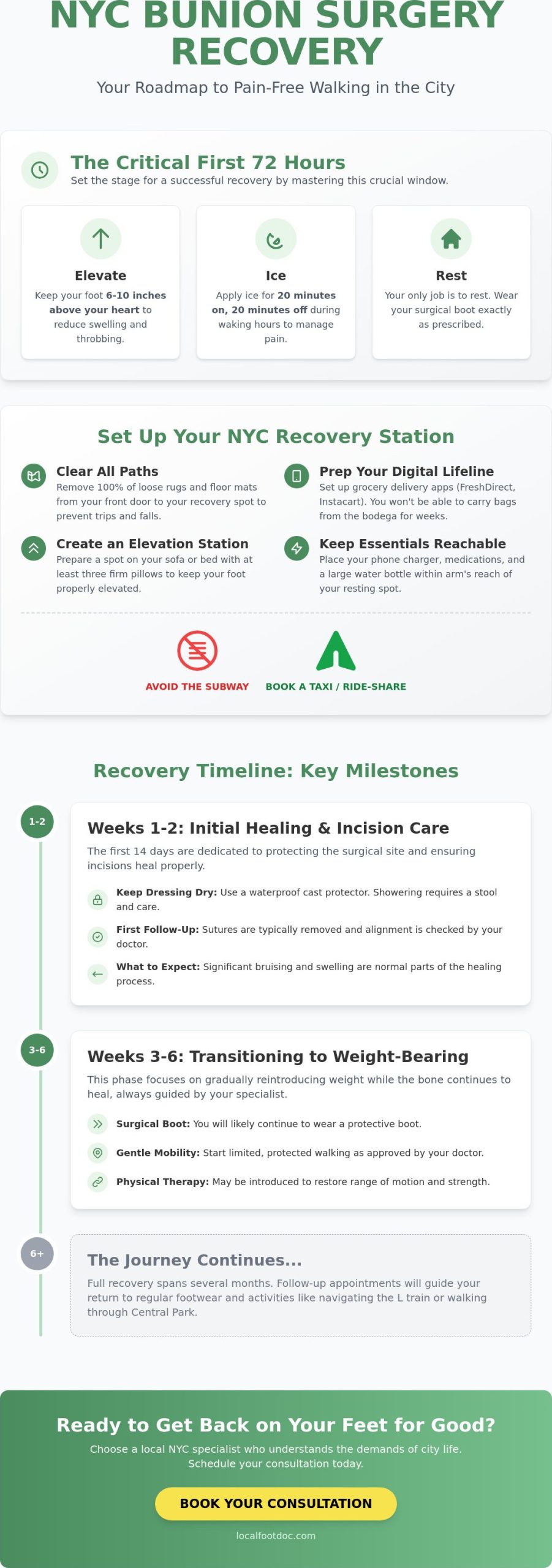
The first 72 hours after your procedure represent the most critical window for your long-term success. During this timeframe, your body initiates the primary inflammatory response. Managing this phase correctly prevents complications and sets the stage for a faster return to your favorite pair of shoes. We focus on these three days because they dictate the trajectory of your entire bunion surgery recovery. Our team wants you to feel prepared before you even step into the surgical center, ensuring your transition back to your apartment is seamless and stress-free.
Logistics matter in a city like New York. When you leave the surgical center, your priority is keeping your foot protected and elevated. We strongly advise against using the subway to get home to Brooklyn or Queens. The stairs at Grand Central or the unpredictable crowds on the L train pose a direct risk to your surgical site. A taxi or ride-share service is the only reliable option. These vehicles allow you to sit in the back seat with your leg slightly propped up, avoiding the physical jarring and accidental bumps common in public transit. Plan your ride in advance so your driver can meet you at the door.
Setting Up Your NYC Recovery Station
New York City apartments often present unique challenges with tight hallways and narrow doorways. Before your surgery date, you must clear a direct path from your front door to your bed or sofa. Remove 100% of loose rugs and floor mats, as these are the leading causes of trips and falls during the early bunion surgery recovery stages. If you live in a walk-up, ensure your “recovery station” is stocked with everything you need on one level to avoid unnecessary trips on the stairs.
- The Elevation Station: Prepare a spot on your sofa or bed with at least three firm pillows.
- Digital Prep: Set up your local grocery delivery apps like FreshDirect or Instacart. You won’t be able to carry heavy bags from the corner bodega for at least 14 days.
- Reachability: Place your phone charger, medications, and a 32-ounce water bottle within arm’s reach of your primary resting spot.
Managing the First 72 Hours
Once you’re settled in, your primary job is to control swelling. We utilize a specific icing protocol to keep you comfortable. You should apply ice for 20 minutes on and 20 minutes off throughout your waking hours. This cycle is essential for combatting the deep throbbing that can occur as the local anesthesia wears off. You’ll likely be fitted with a specialized “surgical boot” or a stiff-soled wedge sandal. You must wear this exactly as prescribed by our practitioners to protect the delicate alignment of your toe bones.
Gravity is your greatest challenge during the first few days. Our team defines the “elevation rule” as keeping the foot 6-10 inches above the heart to facilitate proper drainage and reduce throbbing. This height is necessary to help your circulatory system move fluid away from the surgical site. Understanding the Bunion surgery recovery period begins with this commitment to rest. By staying disciplined during these first 72 hours, you significantly reduce the risk of wound issues and ensure you get back on your feet as quickly as possible.
The Bunion Surgery Recovery Timeline: Week-by-Week Milestones
Healing from a bunion correction requires a structured, patient-led approach. While the initial discomfort often peaks within the first 48 hours, the total bunion surgery recovery process spans several months to ensure the structural correction remains stable. Our team utilizes a three-phase timeline designed to protect the surgical site while gradually restoring your mobility. We focus on getting you back to your daily routine in the city without compromising the long-term results of the procedure.
Weeks 1-2: Initial Healing and Incision Care
The first 14 days are dedicated to protecting the correction and ensuring the surgical incisions close properly. You’ll need to keep your surgical dressing completely dry at all times. In a typical NYC apartment bathroom with limited space, this often involves using a waterproof cast protector or a heavy-duty plastic bag secured with medical tape while using a shower stool. During your first follow-up appointment, Dr. Majdanski removes your sutures and evaluates the site for proper alignment. It’s normal for your foot to appear bruised or significantly swollen during this window; this inflammatory response is a standard part of recovering from bunion surgery as the body directs blood flow to the repair site.
Weeks 3-6: Transitioning to Weight-Bearing
Once the skin has healed, we begin shifting from total rest to controlled movement. We’ll teach you the “heel-walk” technique, which allows you to move safely by placing weight only on the back of your foot. This protects the big toe from unnecessary pressure while you navigate your home. We also introduce early range-of-motion exercises to prevent joint stiffness and maintain flexibility. Bone fusion in procedures like Lapiplasty typically begins by week six, providing the internal stability needed for the next phase of activity. If you’re ready to take the first step toward relief, you can book an appointment with our team to discuss your personalized surgical plan.
Weeks 6-12: Returning to Supportive Footwear and NYC Walking
By the eighth week, most patients transition from a surgical boot into wide, supportive sneakers. This is the “NYC walking” phase where you gradually increase your step count on the concrete sidewalks of Manhattan or Brooklyn. We suggest starting with short, 15-minute walks and monitoring for any “throbbing” or “stiffness” that indicates you need to elevate your foot. By week 12, the bone has usually reached a level of strength that allows for a return to most low-impact daily activities. Patients who also experience stiff, curled toes alongside their bunion deformity should explore hammertoe correction options, as addressing both conditions together can significantly improve your overall foot function and comfort during this return-to-walking phase.
It’s a common mistake to assume that because your incision looks great after 14 days, you’re fully healed. Skin cells regenerate quickly, but bone remodeling is a biological process that requires 12 to 16 weeks to reach full maturity. Even when you feel “back to normal,” the internal structures are still hardening. Respecting this biological clock is the best way to ensure your bunion never returns.
Navigating NYC During Recovery: Mobility Strategies
Living in New York City adds a layer of complexity to your bunion surgery recovery that suburban patients don’t often face. Between the uneven pavement of Astoria and the steep staircases of Brooklyn brownstones, mobility requires a tactical approach. Our team focuses on getting you back on your feet by helping you map out your environment before you even leave the surgical center. Success in an urban environment depends on knowing which routes offer the least resistance to your healing foot.
The MTA accessibility map is an essential tool for your recovery. In Queens, the 74th St-Broadway station provides reliable elevator access, while Brooklyn residents should prioritize hubs like Atlantic Av-Barclays Center to avoid stairs. If public transit feels too daunting during the first month, we recommend applying for NYC Paratransit (Access-A-Ride) at least 21 days before your procedure. This service provides door-to-door transportation for medical appointments, which is a safer alternative to navigating a crowded platform while your balance is compromised.
According to Johns Hopkins Medicine on Bunion Surgery Recovery, protecting the surgical site from accidental impact is vital during the initial six-week healing phase. Once you transition out of your protective boot, custom orthotics become your secret weapon for the NYC streets. We design these medical devices to redistribute pressure across your foot, preventing the recurrence of the deformity while providing the necessary shock absorption for the city’s concrete surfaces. During this phase, some patients also notice discomfort along the outer edge of the foot; if you experience pain on the side of the foot as you transition back to regular footwear, it’s important to have that evaluated separately from your bunion correction.
Subways, Taxis, and Rideshares
Our “Expert Neighbor” advice is to avoid the G-train during early recovery. It’s notorious for long transfers and deep platforms that lack elevators at many key stops. When you use Uber or Lyft, message your driver as soon as they’re assigned. Ask them to pull over in a spot where you can safely deploy a knee scooter or crutches without competing with heavy traffic. If you’re navigating Forest Hills or Astoria, stick to the main avenues. These areas generally have better-maintained curb cuts and wider sidewalks than the narrower residential side streets.
Managing Stairs and Small Spaces
For those living in 2nd or 3rd-floor walk-ups, we teach the “Up with the Good, Down with the Bad” rule. Lead with your non-surgical foot when climbing and your surgical foot when descending to minimize strain. We often apply sports medicine principles to these early movements, treating your home navigation like a specialized rehabilitation program. Swap your tote bags for a sturdy backpack to keep your hands free for railings. This simple change significantly improves your center of gravity and reduces the risk of a fall in tight apartment hallways.
The Ultimate Bunion Recovery Checklist: Daily and Weekly Tasks
For the high-achieving New Yorker, recovery isn’t a period of passive downtime; it’s a strategic phase of your physical comeback. We treat your bunion surgery recovery like a professional training program. Consistency in the small details determines how quickly you’ll be back on the subway or walking through Bryant Park. Following a structured checklist ensures you hit every milestone without the setback of preventable complications.
The Daily “Expert Neighbor” Protocol
Our team recommends a rigorous approach to the first 14 days of healing. This period is critical for managing inflammation and protecting the delicate surgical correction. Use this daily checklist to stay on track:
- Medication Tracking: Log every dose of pain relief or anti-inflammatories on a digital app or paper chart to stay ahead of the pain curve.
- Icing Regimen: Apply ice packs for 20 minutes every 2 hours while awake to manage throbbing and swelling.
- Circulation Exercises: Perform 10 to 15 ankle pumps every single hour. These simple flexions of the foot are vital to maintain circulation and prevent blood clots.
- Bandage Inspection: Check your dressing daily for any unusual drainage, bleeding, or a foul odor.
- Toe Wiggles: If cleared by your surgeon, perform gentle toe wiggles to maintain joint flexibility.
Keep in mind that bunion surgery Queens recovery varies significantly based on whether we used a minimally invasive approach or a traditional correction. Always follow the specific weight-bearing instructions provided during your discharge.
Nutrition and Weekly Milestones
Bone healing requires specific fuel. We suggest prioritizing 1,200mg of calcium and 800 IU of Vitamin D3 daily to support the osteoblasts as they knit the bone back together. High-quality protein is equally essential for the soft tissue repair surrounding the surgical site. Aim for roughly 1 gram of protein per kilogram of body weight during the first 6 weeks.
Every Sunday evening, perform a weekly “red flag” check. Monitor the surgical site for localized heat that doesn’t dissipate with icing or redness that spreads beyond the incision line. If you notice a sudden increase in calf pain or shortness of breath, contact our office immediately. These check-ins keep you proactive rather than reactive during your bunion surgery recovery.
Long-Term Recovery Milestones
As you move past the initial healing phase, your goals will shift toward regaining full mobility. At the 3 month mark, most patients transition from orthopedic sneakers back into professional work shoes. By month 6, we typically clear you for high-impact activities, such as jogging loops in Central Park or hitting the gym for HIIT sessions. While you’ll feel significantly better within weeks, full internal remodeling of the bone can take up to 12 months to complete. If persistent toe pain or curling continues to affect your gait during this period, a consultation about hammertoe correction in New York City may be warranted to address any co-existing deformities that could impede your full recovery.
Ready to reclaim your mobility? Book your recovery consultation with our NYC specialists today.
Getting Back on Your Feet: Choosing Your NYC Recovery Partner
Choosing a partner for your bunion surgery recovery is just as vital as the procedure itself. In a city where we walk an average of 8,000 to 10,000 steps a day, your feet are your primary mode of transportation. Dr. Majdanski and the Local Foot Doc team understand that New Yorkers don’t have time for a slow, unguided healing process. We design personalized treatment plans that account for the unique demands of an urban lifestyle, from navigating subway stairs to returning to a high-impact gym routine.
Many patients hesitate because they worry about the downtime. It’s a valid concern. While the initial healing phase often requires six weeks of modified activity, the long-term benefit of walking without a sharp, throbbing pain in your big toe joint far outweighs the temporary inconvenience. When you weigh a few weeks of rest against the next 15 to 20 years of pain-free mobility, the investment in your health becomes clear. Our goal is to make that transition as seamless as possible by combining advanced surgical techniques with compassionate, local follow-up care.
Why Proximity Matters for Post-Op Care
Recovery isn’t always a straight line. Having your podiatrist nearby in Forest Hills, Astoria, or Woodhaven eliminates the stress of long, bumpy commutes when you’re still in a surgical boot. If you feel an unexpected pinch or simply have a question about your swelling, you shouldn’t have to cross two boroughs to get an answer. This proximity allows for quick “peace of mind” checks that ensure your bunion surgery recovery stays on its 2026 timeline. It’s one reason why we are considered the best podiatrist in Forest Hills, NY for surgical excellence and attentive post-surgical support.
Your Next Steps to Pain-Free Living
Preparing for your first consultation is the first step toward reclaiming your active lifestyle. To make the most of your appointment, we recommend bringing the following:
- A list of your current medications and any previous foot X-rays.
- The shoes you wear most frequently for work or exercise.
- A list of your specific recovery goals, such as returning to running or wearing specific footwear.
Our team doesn’t just monitor your incision; we coordinate directly with local NYC physical therapists to rebuild your foot’s strength and balance. We use a collaborative approach to ensure you aren’t just healing, but thriving. Ready to walk NYC without pain? Schedule your bunion consultation at Local Foot Doc today.
Take the First Step Toward Your Pain-Free NYC Lifestyle
Successful bunion surgery recovery depends on a combination of professional expertise and a well-executed home plan. By organizing your living space for the first 48 hours and adhering to your week-by-week milestones, you can effectively manage the common throbbing and stiffness associated with healing. Our guide ensures you have the 7 essential recovery items ready before your procedure, allowing you to focus entirely on your physical progress.
You don’t have to navigate this process alone. At Local Foot Doc, board-certified surgeon Dr. Waldemar Majdanski uses over 20 years of NYC podiatric experience to guide patients through every phase of treatment. With convenient locations in Brooklyn and Queens, we provide the localized, expert care required to handle the unique mobility challenges of New York City. Our team is dedicated to getting you back on your feet with confidence and lasting relief.
Book your NYC bunion consultation with Dr. Majdanski
Frequently Asked Questions
How long after bunion surgery can I walk normally in NYC?
Most patients return to a normal walking gait within 6 to 12 weeks after their procedure. During the first 14 days, you’ll use a specialized post-operative shoe to protect the site. By the 6 week mark, 85% of our patients transition into supportive sneakers. We focus on restoring your natural biomechanics so you can navigate busy Manhattan sidewalks without that lingering stiffness or burning sensation.
Can I drive after bunion surgery if I live in Queens or Brooklyn?
You can typically resume driving 6 weeks after surgery if the procedure was on your right foot. If we operated on your left foot and you drive an automatic, you may return to the road in as little as 10 days. Navigating the BQE or local Queens streets requires quick reaction times, so we ensure your foot is strong enough to handle sudden braking and rapid pedal transitions.
Will I need physical therapy after my bunionectomy?
Yes, 90% of our patients benefit from a structured physical therapy program to ensure a successful bunion surgery recovery. We usually begin these sessions 3 to 4 weeks post-op to address any joint stiffness. Our team focuses on manual therapy and targeted exercises to reduce throbbing and improve mobility. This specialized care helps you regain the strength needed for those long walks through Prospect Park.
How do I shower with a post-surgical boot or cast?
You must keep your surgical site completely dry for the first 14 days by using a waterproof cast protector or a heavy-duty plastic bag sealed with medical tape. We recommend using a shower chair to prevent slips while your balance is adjusted. If the bandage gets damp, call our office immediately. Keeping the incision dry reduces the risk of infection by 95% during the initial healing phase.
When can I wear high heels or narrow shoes again?
Most patients can safely wear high heels or narrow dress shoes 6 months after their procedure. We advise starting with a heel height of 2 inches or less for short durations to test your comfort. Because 70% of bunion recurrences are linked to improper footwear, we’ll evaluate your foot structure before you return to designer shoes. We want to ensure your results remain stable for years.
What are the signs of a complication during bunion surgery recovery?
Contact us immediately if you experience a fever over 101 degrees, calf pain, or foul-smelling discharge from the incision. While some swelling is expected, a sudden increase in throbbing or skin that feels hot to the touch can indicate an infection or blood clot. These symptoms occur in fewer than 5% of cases, but early detection is vital for your safety and continued healing.
How much time off work should a New Yorker plan for?
Plan for 1 to 2 weeks off if you have a sedentary desk job, but expect 6 to 8 weeks if your role requires standing. A 2023 study showed that early return to high-impact activity can delay your bunion surgery recovery significantly. If your commute involves the subway, we often suggest working from home for at least 14 days to avoid the physical strain of crowded platforms.
Is bunion surgery recovery more difficult for older adults?
Recovery isn’t necessarily more difficult for seniors, though the bone healing process may take 20% longer than in younger patients. We use advanced technology and personalized care plans to address concerns like bone density or circulation. Our team ensures that every patient, regardless of age, receives the support needed to get back on their feet and maintain an active, independent NYC lifestyle.