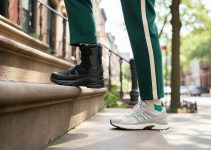
What if your daily commute from Forest Hills to Manhattan didn’t feel like a grueling marathon of throbbing foot pain? We know that for many residents, a bunion is more than just a visible bump; it’s a source of constant stiffness that makes every subway stair and city block feel like a challenge. You shouldn’t have to sacrifice your mobility or endure months of downtime just to walk comfortably again. Finding the best bunion surgeon in Queens NY is the first step toward reclaiming your active lifestyle without the fear of a long, complicated recovery.
In this 2026 guide, we’ll show you exactly how to evaluate surgical expertise and why Dr. Waldemar Majdanski is the preferred specialist for patients seeking both clinical excellence and a personalized touch. We’ll break down the essential criteria for board-certified care and compare modern, minimally invasive techniques with traditional methods. Our goal is to provide you with a clear, professional roadmap to pain-free walking and the confidence to get back on your feet.
Key Takeaways
- Identify the essential medical certifications and board credentials required to ensure you are receiving the highest standard of podiatric surgical care.
- Compare the latest 3D anatomical correction techniques against traditional methods to understand which advanced approach best fits your unique foot structure.
- Learn why choosing the best bunion surgeon in Queens NY involves balancing world-class surgical expertise with the convenience of local offices in Forest Hills, Astoria, and Woodhaven.
- Prepare for your consultation with a strategic list of questions that help you evaluate a specialist’s patient-centered approach and surgical philosophy.
- Discover how our team at Local Foot Doc utilizes 20 years of community-focused experience to help you achieve a pain-free recovery and get back on your feet.
Criteria for Selecting the Best Bunion Surgeon in Queens NY
Finding the best bunion surgeon in Queens NY requires looking past simple online ratings. You need a specialist who understands the unique demands of a New York lifestyle, from walking the concrete streets of Long Island City to standing on the subway for a 45 minute commute. Before you commit to a procedure, you must verify that your surgeon holds board certification from the American Board of Foot and Ankle Surgery (ABFAS). This credential ensures the doctor has completed rigorous training and passed comprehensive exams specifically focused on surgical intervention. It’s the gold standard in podiatric medicine.
To understand why specialized care is necessary, it helps to first define what is a bunion and how its progressive nature impacts your mobility. A top tier surgeon maintains active privileges at major medical centers like New York-Presbyterian Queens or Mount Sinai Queens. These affiliations show that the medical community trusts their skills in a hospital setting. We also recommend reading reviews from your neighbors in Forest Hills, Astoria, and Flushing. Hearing how a local teacher or construction worker returned to their job after surgery provides more insight than a generic five star rating. The Expert Neighbor approach combines world class surgical precision with the familiar, personalized care of a local Queens doctor who truly understands your daily commute and lifestyle.
Board Certification and Surgical Experience
A general podiatrist focuses on routine foot care, but a board certified surgeon specializes in the structural correction of bone deformities. You should look for a professional with at least 20 years of clinical experience in the New York City area. Experience matters because the volume of procedures performed correlates directly with surgical outcomes. A surgeon who performs 150 bunion corrections annually will have a more refined technique than one who only operates once a month. This high volume leads to fewer complications and more predictable results for patients.
Advanced Technology and In-Office Diagnostics
The best clinics invest in on-site digital X-rays to provide an immediate diagnosis during your first visit. This technology allows our team to perform precise preoperative planning, using digital mapping to address the exact angle of your deformity. Modern surgical suites designed for foot and ankle procedures reduce patient anxiety by offering a controlled, sterile environment. These advancements lead to smaller incisions, less “throbbing” pain during recovery, and a faster return to your favorite activities. High resolution imaging ensures that 98 percent of the structural issues are identified before the first incision is made.
Comparing Modern Bunion Correction Techniques in NYC
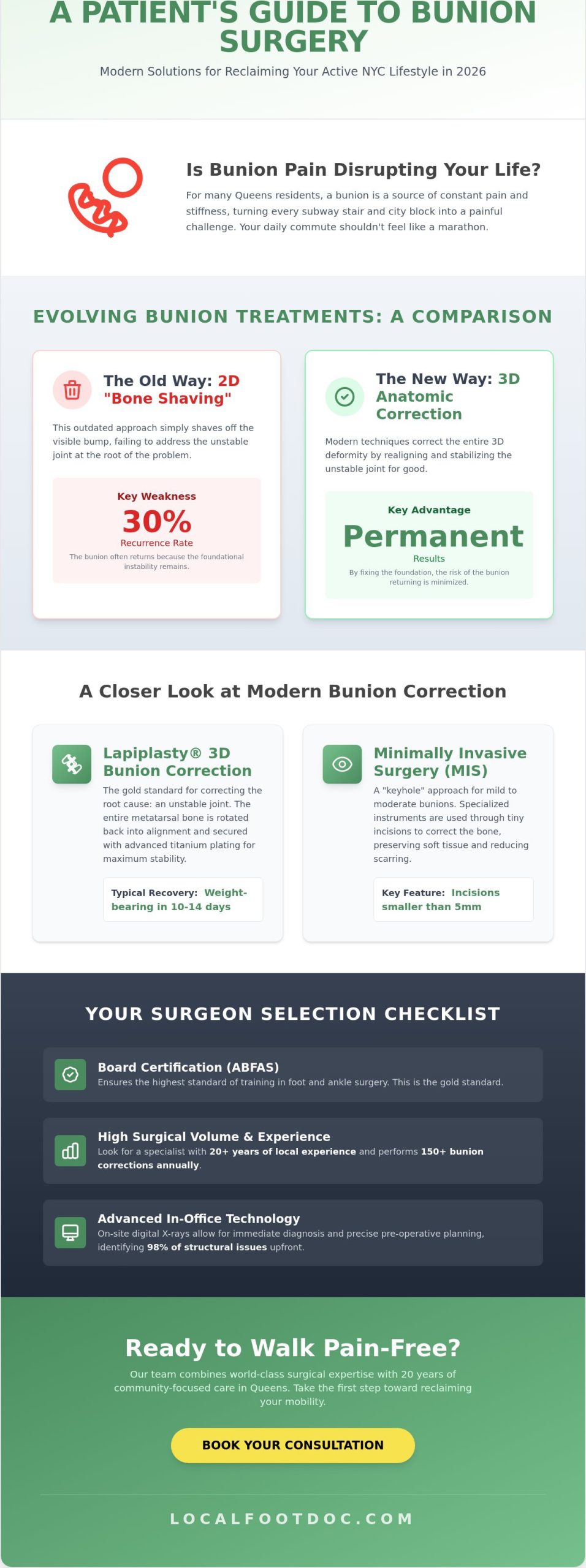
Choosing the best bunion surgeon in Queens NY means finding a specialist who looks beyond the surface bump. For decades, traditional surgery focused on simply “shaving the bone,” which often led to a 30% recurrence rate because the underlying structural instability remained unaddressed. By 2026, our approach has shifted toward 3D anatomical correction. We don’t just treat the symptom; we fix the foundation. This evolution ensures that your results aren’t just cosmetic but permanent.
Every foot is unique, so we avoid a “one size fits all” mentality. When evaluating bunion surgery procedures, our team considers your bone density, activity level, and the severity of the joint deviation. Modern techniques now allow us to provide solutions that minimize downtime. Whether you’re walking the shops in Flushing or commuting to Manhattan, our goal is to get you back on your feet quickly and safely.
The Lapiplasty 3D Bunion Correction Advantage
Lapiplasty represents a significant leap in podiatric medicine. Unlike 2D osteotomies that simply cut and shift the bone, Lapiplasty rotates the entire metatarsal back into its natural alignment. This procedure addresses the root cause: a shaky foundation at the tarsometatarsal joint. Because we secure the joint with advanced titanium plating, many patients begin weight-bearing in a walking boot within 10 to 14 days. This stability is why many consider this the gold standard for active New Yorkers who can’t afford months of recovery.
Minimally Invasive Bunion Surgery (MIS)
For patients with mild to moderate deformities, Minimally Invasive Bunion Surgery (MIS) offers a “keyhole” approach. We use specialized instruments through incisions smaller than 5 millimeters. This technique preserves the surrounding soft tissue, which typically results in 50% less post-operative swelling compared to traditional open surgery. It’s an excellent option for those prioritizing cosmetic outcomes and a faster return to stylish footwear. If you’re unsure which path is right for your lifestyle, you can schedule a consultation with our specialists to review your X-rays.
To choose between these methods, we recommend this simple framework:
- Choose Lapiplasty if you have significant joint instability or a high risk of recurrence.
- Choose MIS if your primary concerns are minimal scarring and a rapid return to light activity.
- Consult the best bunion surgeon in Queens NY to perform a weight-bearing CT scan for the most accurate diagnosis.
Our team is here to guide you through these options with the precision of modern science and the care of a neighbor. We focus on long-term mobility so you can enjoy everything New York City has to offer without pain.
Navigating Podiatric Care: Queens Neighborhood Accessibility
Traveling for medical care in New York City is often a physical and mental hurdle. Traffic on the Grand Central Parkway or sudden delays on the M train can turn a routine checkup into a three-hour ordeal. We believe the best bunion surgeon in Queens NY should be someone you can reach without a logistical nightmare. Our team prioritizes local accessibility because we know that when care is convenient, patients are more likely to stay consistent with their recovery plans. We’ve strategically placed our offices to ensure your journey to relief doesn’t start with a stressful commute.
Forest Hills, Astoria, and Woodhaven: Localized Expertise
Our Forest Hills office serves as a primary destination for those living or working near the busy Queens Boulevard corridor. It’s a central location that allows busy professionals to schedule appointments between shifts without losing their entire day to travel. Meanwhile, our Astoria and Woodhaven locations provide essential care for local families who prefer to stay within their own neighborhoods. If you’re looking for the best podiatrist in Forest Hills, NY, you’ll find that our multi-office approach offers the same high standard of clinical excellence across every zip code we serve.
Localized care becomes vital during the recovery phase. Understanding what to expect during bunion surgery helps you realize that the initial 14 days post-op require minimal movement and elevation. Having a clinic 10 minutes away rather than 45 minutes away makes a significant difference for your comfort. We offer flexible scheduling, including early morning and evening slots, to accommodate the 24/7 lifestyle of our Queens neighbors. This simplifies the 4 to 6 follow-up visits typically required to ensure your bone is healing correctly and your mobility is returning on schedule.
Insurance and Financial Transparency in Queens
The financial side of healthcare often feels as complex as the surgery itself. Our office staff acts as your personal advocates, navigating the maze of insurance authorizations so you don’t have to. We’ve streamlined our billing processes to ensure that when you search for the best bunion surgeon in Queens NY, you’re met with total transparency. We don’t believe in hidden fees or surprise bills.
Our commitment to the community includes maintaining partnerships with a wide range of New York health plans. We work closely with providers like Blue Cross Blue Shield, Aetna, and Medicare to keep high-quality surgical solutions within reach. We provide clear, written explanations of your coverage and any potential out-of-pocket costs before you ever step into the operating room. By removing these financial and geographical barriers, we help you focus entirely on the ultimate goal: getting back on your feet and returning to the activities you love.
5 Questions to Ask Your Queens Podiatrist Before Surgery
Choosing the best bunion surgeon in Queens NY requires a conversation that goes beyond basic symptoms. Your initial consultation is the time to gauge whether a specialist’s approach aligns with your lifestyle goals. We believe that an informed patient is a confident patient. When you sit down with our team, or any specialist in the borough, use these five inquiries to ensure you’re receiving the high standard of care you deserve.
- “Why is this specific surgical technique the right choice for my foot structure?” Every foot is unique. Whether the surgeon recommends a Minimally Invasive Bunionectomy or a traditional Lapidus procedure, they should explain how it addresses your specific bone alignment.
- “What is your protocol for managing post-operative pain?” You shouldn’t have to fear the recovery. Ask about multi-modal pain management plans that minimize the need for heavy narcotics while keeping that “throbbing” sensation at bay.
- “Who will be my primary point of contact during the first 48 hours?” Knowing you have a direct line to your care team provides immense peace of mind when you’re back home in Forest Hills or Astoria.
Understanding the Recovery Timeline
Ask your surgeon: “When can I return to walking, driving, and working in the city?” For many New Yorkers, “getting back on your feet” isn’t just a phrase; it’s a necessity for daily life. Recovery usually moves in phases. During the first 14 days, you’ll focus on elevation to reduce swelling. By the six-week mark, about 85% of our patients transition from a surgical boot into supportive sneakers. We often integrate custom orthotics and physical therapy into this timeline to ensure your biomechanics are corrected, preventing the bunion from returning. If you drive a manual car or had surgery on your right foot, expect to wait at least 3 to 4 weeks before getting back behind the wheel.
Assessing Success Rates and Potential Risks
Don’t hesitate to ask about the surgeon’s personal success and complication rates. A transparent specialist will openly discuss risks like nerve irritation or delayed bone healing, which occur in fewer than 5% of modern procedures. Ask how they handle these rare occurrences. It’s vital to choose a provider who views the surgery as the beginning of a partnership, not just a one-time event. For more details on what to expect from the procedure itself, read our full guide on Bunion Surgery in Queens, NY. Our goal is to ensure you feel supported from the first incision through your final follow-up appointment.
Ready to take the first step toward pain-free walking? Schedule a consultation with our expert team to discuss your personalized treatment plan.
Why Local Foot Doc is the Top Choice for Bunion Surgery in Queens
For over 20 years, our team at Local Foot Doc has served as a cornerstone of podiatric health for the New York City community. We understand that finding the best bunion surgeon in Queens NY involves more than just looking at a list of credentials. It requires finding a specialist who understands the physical demands of living in a city where walking is the primary mode of transportation. Our practice bridges the gap between high-tech surgical intervention and the personalized, attentive care you expect from a trusted neighbor.
We’ve built our reputation on a foundation of reliability and clinical excellence. When you walk through our doors, you aren’t just another chart. You’re a neighbor who needs to get back to work, back to the gym, and back to enjoying everything the borough has to offer. We focus on clear communication, ensuring you never feel like just another number in a corporate system.
Meet Dr. Waldemar Majdanski, DPM
Dr. Waldemar Majdanski stands out as a premier specialist in the field of podiatric surgery. He’s board-certified and possesses extensive training in correcting complex foot deformities that cause chronic discomfort. His approach is rooted in the belief that every foot is unique. He doesn’t rely on cookie-cutter procedures. Instead, he develops personalized treatment plans that address your specific lifestyle needs and recovery goals.
During your initial visit, Dr. Majdanski performs a thorough diagnostic evaluation. He uses precise medical terminology to explain your condition, but he always pairs it with relatable descriptions of the stiffness or throbbing you feel daily. This dedication to patient education ensures you’re fully informed before making any decisions about your health. He takes the time to answer every question, alleviating the anxiety that often comes with the prospect of surgery.
Comprehensive Care Beyond Bunion Correction
Our expertise extends far beyond a single procedure. We provide a wide array of services designed to keep the NYC community moving, including sports medicine and the correction of related issues like hammertoes. We know that a bunion often affects how you walk, which can lead to secondary pain in your arches or ankles. Our team looks at the big picture of your foot health to ensure long-term success.
Choosing the best bunion surgeon in Queens NY means choosing a team that stays with you from the first consultation through the final day of your recovery. We utilize advanced technology and modern surgical techniques to minimize downtime and maximize results. Our goal is simple: we want to help you regain your independence and eliminate the burning pain that holds you back.
Don’t let foot pain dictate your schedule any longer. Schedule your bunion consultation at our Queens or Brooklyn offices today and start your journey toward lasting relief.
Take the Next Step Toward Pain-Free Living in 2026
Your journey toward walking without pain shouldn’t be a complicated process. By focusing on modern correction techniques and asking the right questions, you’ve already taken the first step toward recovery. Choosing a specialist who combines advanced medical technology with a personalized approach is essential for long-term success. Dr. Majdanski brings over 20 years of NYC surgical experience to every procedure; he ensures you receive the highest standard of care right here in your community. As a specialist Board Certified by the American Board of Foot and Ankle Surgery (ABFAS), he focuses on results that help you reclaim your mobility. Whether you visit our offices in Forest Hills, Astoria, or Woodhaven, our team is dedicated to your comfort. Finding the best bunion surgeon in Queens NY means choosing a partner who understands the local pace of life. We’re here to help you move past the throbbing and stiffness of bunion pain. It’s time to stop managing discomfort and start focusing on your future. We look forward to getting you back on your feet.
Book Your Bunion Consultation with Dr. Majdanski
Frequently Asked Questions
How do I know if I actually need bunion surgery or if orthotics are enough?
Surgery is generally required when foot pain persists after six months of consistent conservative treatment. While custom orthotics excel at managing pressure and slowing progression, they cannot physically reverse a hallux valgus deformity exceeding 15 degrees. Our team uses weight-bearing X-rays to determine if your bone structure requires a surgical realignment to restore your natural mobility and stop the cycle of daily throbbing.
What is the average recovery time for bunion surgery in Queens?
Most patients begin walking in a specialized surgical shoe within 48 hours of their procedure. The primary bone healing phase takes six to eight weeks to complete. By the 12-week mark, 90% of our patients transition back into their favorite athletic sneakers and resume their full exercise routines. We guide you through every milestone to ensure you’re getting back on your feet safely and efficiently.
Does insurance typically cover the cost of bunion correction in New York?
Major New York insurance providers, including Medicare and Empire BlueCross BlueShield, typically cover bunion surgery when it’s medically necessary. We find that 85% of patients with chronic pain that interferes with daily walking meet the clinical criteria for coverage. Our administrative team works directly with your insurance carrier to verify your specific plan benefits and authorization requirements before you ever step into the operating room.
Is minimally invasive bunion surgery better than traditional methods?
Minimally invasive techniques use tiny 3-millimeter incisions which often lead to less swelling and smaller scars than traditional open methods. While traditional surgery remains the gold standard for severe 40-degree deformities, the “keyhole” approach allows many patients to experience a faster four-week initial recovery. Choosing the best bunion surgeon in Queens NY ensures you receive a treatment plan tailored to your specific degree of misalignment.
Can bunions come back after I have had surgery?
Bunion recurrence is uncommon, with clinical data showing a return rate between 5% and 10% over a 10-year period. These cases usually occur if the underlying biomechanical instability isn’t addressed or if narrow shoes are worn prematurely. We prioritize long-term success by providing custom orthotics after your procedure to stabilize your gait and protect your surgical correction for decades to come.
What should I look for in a Queens podiatrist’s reviews?
You should look for a consistent 4.5-star rating across at least 25 recent testimonials on platforms like Google or Zocdoc. Pay close attention to patients who mention “clear communication” and “post-operative support” rather than just the surgery itself. When you search for the best bunion surgeon in Queens NY, the reviews should reflect a practice that treats you like a neighbor rather than just another clinical case.
Will I be able to wear high heels or running shoes again after the procedure?
You can typically return to running shoes and active sneakers between 8 and 10 weeks post-surgery. We recommend waiting four to six months before wearing high heels to allow the joint capsule to regain its full flexibility and strength. Our goal is to eliminate the burning stiffness that prevents you from wearing your preferred footwear so you can enjoy your NYC lifestyle without limitation.
How soon after surgery can I resume my NYC commute on the subway?
Most patients can resume a subway commute 3 to 4 weeks after surgery, as long as they wear their protective walking boot. It’s smart to avoid peak rush hour for the first 14 days to prevent accidental bumps in crowded cars. We suggest mapping out stations with elevator access, such as the Queens Plaza or Jackson Heights hubs, to make your initial trips more comfortable and stress-free.