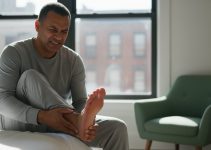
Imagine stepping off the R train at Atlantic Avenue and feeling that sharp, localized sting in your heel before you’ve even reached the street. For the 1.5 million commuters navigating our city daily, this isn’t just a minor annoyance; it’s a signal that your feet are losing the battle against 469 miles of unforgiving concrete. We know how frustrating it is when store-bought insoles slip in your work shoes or don’t stop that afternoon throbbing. That’s why professional custom orthotics are essential for anyone looking to maintain a high-mileage lifestyle without the threat of chronic injury or long-term mobility issues.
We’re here to show you how the right biomechanical correction can help you avoid invasive surgery and keep you moving comfortably through Brooklyn and Queens. In this guide, we’ll explore the latest 2026 scanning technologies and the specific ways our team designs long-lasting support that fits your unique foot structure. You’ll learn exactly what it takes to get back on your feet and enjoy a truly pain-free commute, no matter how many miles you log on the pavement.
Key Takeaways
- Learn why the unforgiving concrete of Brooklyn and Queens demands more than store-bought insoles to protect your long-term foot health.
- Understand the critical difference between generic retail foam and clinical custom orthotics designed specifically for your unique biomechanical needs.
- Discover how a professional diagnostic exam identifies hidden causes of pain, such as nerve entrapment or tendonitis, that mail-order kits often miss.
- Explore how our advanced 3D scanning process provides the precision fitment necessary to heal Plantar Fasciitis and redistribute pressure from bunions.
- See how proper alignment and a modern sports medicine approach help you get back on your feet and navigate NYC streets with confidence.
What are Custom Orthotics and Why Do New Yorkers Need Them?
Living in Brooklyn or Queens means your feet are your primary mode of transportation. Whether you’re rushing to catch the G train or walking through Prospect Park, you likely cover 5,000 to 10,000 steps daily on unforgiving concrete. What are orthotics? Simply put, they’re prescription medical devices handcrafted to support your unique foot structure. Unlike generic insoles, custom orthotics are designed from a 3D digital model of your foot to address specific structural imbalances. Our team uses these devices to provide two distinct types of support. Functional orthotics use semi-rigid materials to correct abnormal motion, while accommodative orthotics provide extra cushioning for painful conditions like diabetic ulcers or severe fat pad atrophy. By realigning your gait, these inserts often serve as a vital preventative measure, helping 85% of our patients avoid invasive foot surgery later in life.
The Science of Biomechanical Correction
Our podiatrists focus on how your foot interacts with the ground to prevent over-pronation or supination. When your foot misaligns, it creates a ripple effect through the kinetic chain, often causing unexplained pain in your knees, hips, and lower back. We use advanced scanning technology to ensure your feet reach a state of biomechanical neutral. Biomechanical neutral is the precise alignment where the foot functions at its peak efficiency while minimizing stress on joints and soft tissues.
Custom Orthotics vs. Retail Shoe Inserts
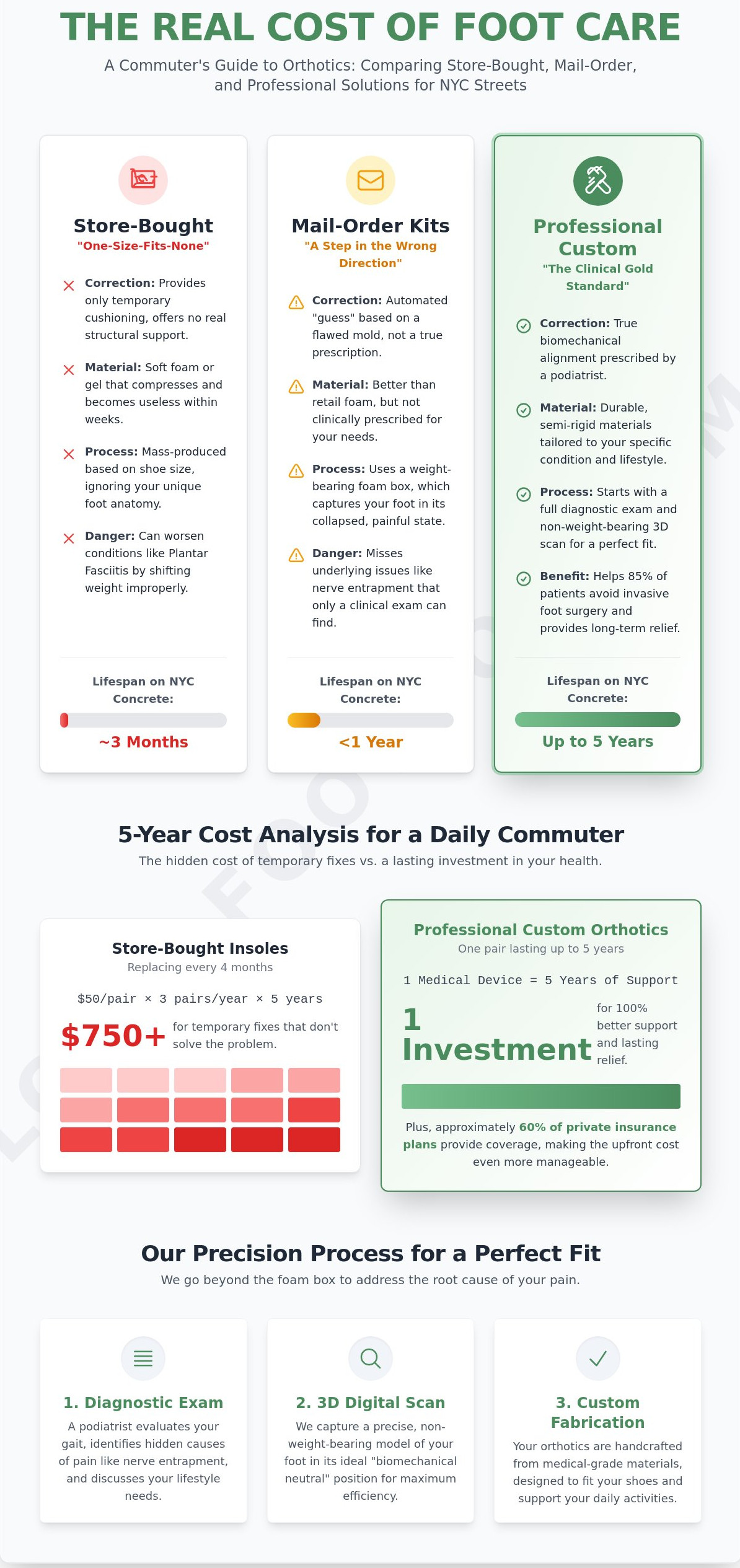
It’s tempting to grab a pair of “Doctor Scholl’s” at a local pharmacy, but these retail brands offer only temporary cushioning. They lack the structural integrity to provide true correction. While a $20 retail insert might lose its shape within 90 days, professional custom orthotics are built to last up to 5 years with regular use. Using the wrong retail support can even be dangerous. It may shift your weight in a way that worsens the tension on your plantar fascia. We’ve seen patients who delayed professional care by using drug-store inserts, only to arrive at our office with 25% more inflammation and stiffness than those who sought help immediately. Our goal is always getting you back on your feet with a solution that lasts.
Custom vs. Mail-Order vs. Store-Bought: The Real Cost of Foot Care
Choosing between a drugstore shelf and a podiatrist office involves more than just a price tag. Retail inserts are mass-produced from soft foam or gel that typically compresses into uselessness within 12 weeks. Mail-order kits offer a middle ground but rely on generic software to “guess” your needs. In contrast, custom orthotics are medical prescriptions designed after a comprehensive diagnostic exam. During your visit to our Brooklyn office, we don’t just look at your feet; we identify underlying issues like Baxter’s nerve entrapment or posterior tibial tendonitis that a store-bought insert would ignore. Many patients aren’t aware of the dangers of premade orthotics, which can actually worsen biomechanical imbalances by providing rigid support where your foot needs flexibility.
For a typical NYC commuter walking 10,000 steps a day, the cost-benefit analysis is clear. Cheap retail inserts cost roughly $50 and require replacement every four months. Over a five-year period, a commuter spends $750 on temporary fixes that fail to stop the progression of plantar fasciitis. A single pair of clinical-grade custom orthotics can last up to 60 months with minor refurbishments. This makes the long-term investment more affordable while providing 100% better support for your specific bone structure.
Why Mail-Order Kits Aren’t Truly ‘Custom’
Mail-order companies send a foam box to your home, but this method is fundamentally flawed. When you step into foam at home, you’re usually in a weight-bearing position that captures your foot in its collapsed, painful state. Our team uses non-weight-bearing casting to find your “neutral” position. We then adjust the prescription based on your lifestyle. We can thin the profile for 2-inch heels worn in Manhattan or reinforce the heel cup for heavy work boots used on Brooklyn construction sites.
Insurance Coverage for Orthotics in New York
Navigating medical costs in New York is easier than most patients realize. Approximately 60% of the private insurance plans we see, including BlueCross BlueShield, Aetna, and Cigna, provide coverage for orthotics when medical necessity is documented. Our Forest Hills and Astoria offices work directly with your provider to submit the required biomechanical exams and gait analysis. You can also use HSA or FSA funds to pay for medical equipment with pre-tax dollars, significantly reducing your out-of-pocket spend. If you’re ready to stop the cycle of recurring heel pain, schedule a biomechanical evaluation with our specialists today.
Conditions Treated with Custom Orthotics in Our NYC Clinics
While many of our Brooklyn patients seek help specifically for heel pain, our team uses custom orthotics to correct a broad spectrum of biomechanical imbalances. These medical devices aren’t simple cushions. They’re precision tools designed to realign your foundation and change how your body interacts with the hard pavement of New York City. By adjusting the angles at which your foot strikes the ground, we can resolve pain that often radiates into the ankles, knees, and lower back. For patients experiencing sharp aches on the outer edge of their foot, we also address conditions like cuboid pain relief in NYC, which can often be misdiagnosed as simple ankle sprains. Additionally, when patients discover unusual growths or masses in their midfoot area, we provide comprehensive evaluation for conditions such as foot lump on arch causes and treatment to ensure proper diagnosis and care.
- Plantar Fasciitis: We focus on providing structural arch support that takes the tension off the fascia ligament. This allows the internal micro-tears to heal rather than being re-injured with every step you take. If you’re unsure whether your morning heel pain points to this condition, our detailed overview of what is plantar fasciitis and how it affects New Yorkers can help you identify the root cause.
- Bunions and Hammertoes: By redistributing pressure away from the big toe joint and the ball of the foot, we can often slow the progression of these bony deformities. Proper alignment reduces the friction that leads to painful calluses and inflammation.
- Flat Feet (Pes Planus): Our goal is to restore a functional arch. This prevents the “collapsed” foot posture that frequently causes tired, aching feet after a short walk through Prospect Park.
- Diabetic Foot Care: For our diabetic patients, we utilize specialized, soft-density materials like Plastazote. This is critical because nearly 25% of people with diabetes will develop a foot ulcer in their lifetime. These orthotics are vital for offloading pressure and preventing life-altering complications.
Relief for Chronic Heel and Arch Pain
That stabbing sensation you feel during your first step out of bed is a classic sign of plantar fasciitis. Our custom orthotics feature deep heel cups that do more than just provide padding. They physically stabilize the natural fat pad under your heel bone, preventing it from spreading out and losing its shock-absorbing power. If you’ve struggled with persistent soreness, you should explore our full guide on heel pain treatment to see how we combine orthotics with other modern therapies to get you back on your feet.
Orthotics as a Complement to Bunion Surgery
Recovery doesn’t end when the surgical site heals. We often prescribe orthotics after bunion surgery in Queens to protect your investment in your health. Surgery corrects the bone, but orthotics address the underlying walking mechanics that caused the deformity in the first place. This Expert Neighbor approach ensures we’re caring for your entire foot structure, preventing the recurrence of toe drift and keeping you mobile for years to come.
The Local Foot Doc Process: From 3D Scanning to Perfect Fit
At Local Foot Doc, we’ve refined a five-step protocol to ensure your journey toward relief is as precise as it is comfortable. Our process begins in our Brooklyn or Queens offices with a comprehensive biomechanical evaluation. We don’t just look at your feet; our team performs a detailed gait analysis to identify the 12 to 15 specific structural misalignments that often trigger plantar fasciitis. We then follow a structured path to recovery:
- Step 1: Clinical evaluation and gait analysis using high-speed video.
- Step 2: High-precision 3D digital scanning to capture your foot’s exact geometry.
- Step 3: Custom prescription fabrication at a specialized medical laboratory.
- Step 4: The fitting session where we integrate the device with your daily footwear.
- Step 5: A 21-day follow-up to ensure your pain levels have decreased by at least 50% to 70%.
Advanced 3D Digital Foot Scanning
Dr. Waldemar Majdanski utilizes state-of-the-art 3D scanners to capture the unique contours of your arch and heel with sub-millimeter accuracy. This technology is a significant upgrade from the old-fashioned foam impressions that many clinics still use. Digital scans are approximately 40% more precise, which is vital for active patients who need their custom orthotics to perform under pressure. This digital workflow also cuts wait times by 5 to 7 days, getting you back on your feet much faster than traditional methods.
Choosing the Right Materials for Your Lifestyle
We select materials based on your specific activity levels and footwear requirements. A marathon runner training for the NYC Marathon needs semi-rigid materials for shock absorption, while a professional in a Manhattan office might require carbon fiber or ultra-thin thermoplastics to fit into low-profile dress shoes. Most patients experience a 14-day break-in period. During the first week, we recommend wearing your custom orthotics for just 2 hours daily, increasing that time by 1 hour each subsequent day until your muscles fully adapt to the corrected alignment.
Ready to experience the precision of digital foot mapping? Schedule your 3D foot scan at our Brooklyn or Queens office today.
Getting Back on Your Feet: Long-Term Benefits of Professional Care
Living in New York City puts an incredible amount of stress on your lower extremities. The average resident walks between three and five miles daily just to navigate subways and city blocks. When your foot alignment is compromised, every one of those 10,000 steps creates a repetitive stress injury that prevents the plantar fascia from healing correctly. Utilizing custom orthotics isn’t just about cushioning; it’s about correcting the foundational mechanics of your entire body. Our team integrates these devices into a comprehensive sports medicine strategy designed to keep you moving without restriction. We focus on long-term mobility rather than temporary fixes.
Choosing a local specialist in Forest Hills, Astoria, or Woodhaven offers advantages that an online shop simply cannot match. We use advanced diagnostic tools to analyze your gait in real-time. This level of precision ensures your inserts address the specific pressures of New York life. Whether you’re standing on a concrete subway platform for twenty minutes or jogging through Prospect Park, your support should be as dynamic as your lifestyle. Professional care means we’re here to adjust your treatment as your needs evolve over time.
Preventing Secondary Injuries
Foot pain rarely stays in the feet. When your arches lack proper support, your kinetic chain falls out of alignment. This misalignment forces your knees, hips, and lower back to absorb 100% of the shock that your feet should be handling. Over time, this leads to chronic joint wear and secondary injuries like bursitis or sciatica. Regular check-ups every 12 to 18 months allow us to monitor your wear patterns and update your custom orthotics as needed. Foot health is the first step to an active NYC lifestyle.
Schedule Your Consultation in Brooklyn or Queens
You don’t have to live with the burning sensation of plantar fasciitis every morning. Our team provides personalized treatment plans under the expert guidance of Dr. Majdanski to help you reclaim your independence. We’ve established four convenient NYC locations to ensure that world-class podiatric care is always within your reach.
- Personalized Care: We tailor every device to your specific anatomy and shoe type.
- Expert Oversight: Dr. Majdanski monitors your progress from the first scan to your final follow-up.
- Convenient Access: Visit us in Brooklyn, Forest Hills, Astoria, or Woodhaven.
Stop managing the pain and start treating the cause. We’re ready to help you rediscover the joy of walking the city streets without discomfort. Reach out to one of our offices today to begin your journey toward recovery.
Take the Next Step Toward Lasting Mobility
Navigating the five boroughs requires reliable support, yet many New Yorkers struggle through daily commutes with preventable pain. Professional medical inserts offer the precise alignment needed to manage conditions like plantar fasciitis, whereas generic store-bought pads often fail to address the root cause of discomfort. By using advanced 3D scanning, our team creates a tailored solution for your unique gait. Dr. Waldemar Majdanski brings over 20 years of clinical experience in podiatric medicine to ensure every patient receives world-class treatment. With 4 convenient locations across Queens and Brooklyn, we’ve made it simple to access expert care right in your community. We combine modern technology with a personal touch to help you resume an active lifestyle. You don’t have to live with aching feet or limited movement. Schedule your custom orthotics consultation at our Queens or Brooklyn office today! We look forward to helping you get back on your feet and enjoy the city again.
Frequently Asked Questions
How much do custom orthotics cost in NYC without insurance?
In New York City, custom orthotics generally cost between $400 and $800 per pair when paying out of pocket. This investment covers the comprehensive biomechanical evaluation, digital 3D scanning or casting, and the high-grade medical materials used in the lab. While over-the-counter inserts might cost $50, our professional-grade devices are designed to last years rather than months, making them a more cost-effective solution for chronic heel pain.
Can I move my custom orthotics between different pairs of shoes?
You can move your orthotics between different pairs of shoes as long as the footwear has a similar shape and volume. Most patients find that a single pair works well in most sneakers and casual lace-up shoes. However, if you switch between narrow dress shoes and athletic trainers, you might need a second, lower-profile pair. We recommend removing the original factory insole before inserting your device to ensure a proper fit.
How long do professional custom orthotics typically last?
Professional custom orthotics typically last between 2 and 5 years depending on your activity level and the materials used. Rigid functional orthotics often reach the 5-year mark, while softer accommodative inserts may need a top-cover refurbishment after 18 months. We suggest a yearly check-up at our Brooklyn office to ensure the structure still provides the 100% corrective support your feet require for your daily commute and activities.
Do I need to buy bigger shoes to accommodate custom orthotics?
You don’t need to buy bigger shoes, but you should choose footwear with removable factory insoles. Most modern sneakers and comfort shoes provide enough depth once the original foam liner is removed. If you try to place a custom orthotic on top of an existing insert, it reduces interior space by about 5 millimeters, which can cause toe crowding. Always bring your orthotics when shopping for new shoes to test the fit.
Will custom orthotics help with my lower back pain?
Custom orthotics frequently alleviate lower back pain by correcting your body’s kinetic chain starting at the ground. When your feet overpronate by even 5 degrees, it causes internal rotation of the legs and tilts the pelvis forward. This misalignment puts 15% more strain on the lumbar spine. By stabilizing your foundation, our team helps restore neutral alignment, which reduces the mechanical stress that often leads to chronic lower back discomfort.
What is the difference between a podiatrist’s orthotics and the ones from a ‘foot store’?
The difference lies in the medical evaluation and precision manufacturing. A retail foot store uses a pressure mat to sell you a pre-made insert, whereas a podiatrist performs a 20-point biomechanical exam. Our custom orthotics are fabricated from a 3D mold of your foot in its corrected position. Unlike retail versions that only address arch height, medical devices manage specific joint angles and gait abnormalities to treat the root cause of pain.
How long does it take to get used to wearing custom orthotics?
Most patients require a break-in period of 10 to 14 days to fully adjust to their new custom orthotics. We recommend wearing them for just 1 hour on the first day and increasing that time by 1 hour each subsequent day. This gradual process allows your muscles and tendons to adapt to the new alignment. By the second week, 90% of our Brooklyn patients report they feel ready to get back on their feet.
Can custom orthotics cure my bunions without surgery?
Custom orthotics cannot physically reverse or cure a bunion once the bone has shifted, but they are 80% effective at slowing the progression. These devices reduce the abnormal pressure on the big toe joint by redistributing weight across the midfoot. While only surgery can remove the bony prominence, orthotics prevent the deformity from worsening and eliminate the burning sensation often felt after walking several blocks in a busy neighborhood.