On a Tuesday morning in October, Mark woke up in his Brooklyn apartment expecting to catch the L train, but a searing, white-hot pain in his big toe made even the weight of a bedsheet unbearable. He immediately searched for answers on how do you get gout, wondering if a recent celebratory meal or a hidden injury was to blame for the sudden swelling. You likely share that same confusion and anxiety when a flare-up makes the three-block walk to the subway feel like an impossible marathon. It’s exhausting to worry about when the next attack might strike during a mid-week client meeting or a planned holiday trip out of the city.
We know you want to move through the city without the constant threat of debilitating pain. According to the CDC, over 9.2 million Americans currently live with this condition, so you aren’t alone in your search for relief. Our team at Local Foot Doc is here to help you understand the biological triggers and lifestyle factors behind these flares so you can regain control of your mobility. This guide explores the science of uric acid buildup, identifies common dietary triggers, and provides a clear, professional roadmap for managing your symptoms effectively in 2026. We’re dedicated to getting you back on your feet so you can enjoy everything New York has to offer without interruption.
Key Takeaways
- Understand the biological “midnight attack” and why urate crystal buildup leads to the sudden, throbbing pain characteristic of a gout flare.
- Learn how do you get gout by exploring the delicate balance between uric acid production and your kidneys’ ability to filter it effectively.
- Identify common NYC lifestyle triggers, including specific purine-rich foods and craft beverages found across Brooklyn and Queens that can spike your risk.
- Differentiate between metabolic inflammation and structural foot issues like bunions or plantar fasciitis to ensure you receive the correct clinical diagnosis.
- Discover immediate at-home relief strategies and how professional care at our Forest Hills or Brooklyn locations can help you get back on your feet.
Understanding Gout: What It Is and Why It Hits New Yorkers Suddenly
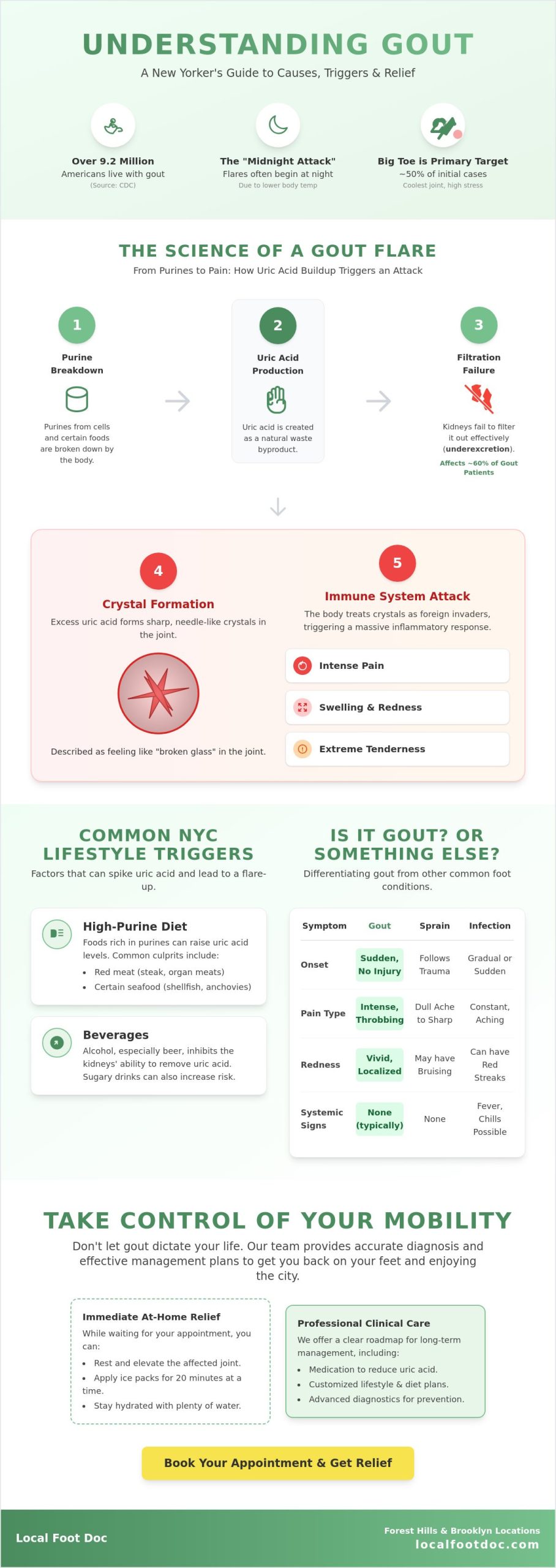
If you’ve ever woken up in the middle of the night feeling like your big toe is trapped inside a furnace, you aren’t alone. In 2026, gout remains one of the most common reasons New Yorkers visit our clinics in distress, often seeking immediate relief after a sudden, agonizing flare. While many patients ask how do you get gout after a weekend of indulgence, the reality is more complex than a single meal or drink. Gout is a systemic metabolic imbalance where the body fails to properly process or eliminate uric acid, leading to secondary joint inflammation. This condition is a complex form of inflammatory arthritis triggered by the accumulation of microscopic urate crystals within your joints.
Most patients experience their first symptoms during the early morning hours, often referred to as the “midnight attack.” This happens because your body temperature drops slightly while you sleep and your hydration levels change, which encourages uric acid to settle and crystallize in cooler extremities. The hallux joint, or the base of your big toe, is the primary target for these flares. Because this joint is the furthest point from your heart and endures constant mechanical stress from walking city blocks, it becomes the ideal environment for crystals to collect. Our team sees this specific presentation in roughly 50% of all initial gout cases we treat across the five boroughs.
The Biological Mechanism: Uric Acid and Needle-Like Crystals
To understand What is Gout, we must look at your blood chemistry. When your kidneys can’t efficiently filter uric acid, a state called hyperuricemia occurs. These excess acids eventually transform into sharp, needle-like monosodium urate crystals that lodge in the joint space. Your immune system doesn’t see these as natural waste; it treats them like a foreign infection or a jagged splinter. White blood cells swarm the area, creating a massive inflammatory response. This biological “attack” is what creates the physical sensation often described by our patients as having “broken glass” grinding inside the joint with every movement.
Identifying the Signs of a Gout Flare
A gout flare is unmistakable once it takes hold, and patients often wonder how do you get gout so suddenly when they felt fine just hours before. The symptoms include intense joint pain, vivid redness, and swelling that makes the skin look shiny and stretched. We often suggest the “bedsheet test” to our patients: if the weight of a single cotton sheet touching your toe is too painful to bear, you’re likely experiencing a gout flare. It’s important to distinguish this from a standard foot sprain or a local infection. Unlike a sprain, which follows a specific physical trauma, gout appears without an obvious injury. While an infection might cause a fever or a spreading red streak, gout typically remains localized to the joint, though the heat radiating from the skin can be significant. Our goal is to provide a fast diagnosis so we can focus on getting you back on your feet and returning to your normal NYC routine.
The Biological Root Causes: How Uric Acid Levels Rise
Understanding how do you get gout starts with a look at your body’s internal filtration system. It isn’t just about what you ate last night at a Brooklyn bistro; it’s about how your kidneys and metabolism handle a compound called uric acid. When this balance shifts, needle-like crystals begin to deposit in your joints, leading to the intense throbbing many New Yorkers know all too well.
Metabolic Factors: Production vs. Elimination
Purines are natural compounds found in your cells and certain foods. As your body breaks them down, it creates uric acid as a byproduct. In a healthy system, this acid dissolves in the blood and passes through the kidneys. However, gout occurs when this cycle breaks. Data from 2025 clinical reviews indicates that nearly 60% of gout patients suffer from “underexcretion,” where the kidneys fail to flush waste efficiently. Insulin resistance also plays a major role here. High insulin levels signal the kidneys to reabsorb uric acid rather than eliminate it, which is why we often see gout alongside metabolic challenges in our NYC patients.
Genetic Predisposition and Family History
You might wonder why a colleague can enjoy steak and seafood daily while you face a flare-up after one rich meal. Your DNA often holds the answer. Scientific research into Gout symptoms and causes shows that genetic variations in transport proteins, such as SLC2A9, dictate how your body manages urate. If a first-degree relative has chronic gout, your own risk increases by approximately 80%. This genetic blueprint is often a more accurate predictor of a flare-up than a single dietary choice. Certain ethnicities, including those of Pacific Island or African American heritage, may also carry genes that make the body more prone to high urate levels.
Underlying medical conditions act as significant catalysts for these biological shifts. We frequently treat patients where gout is the first warning sign of other health issues, including:
- Hypertension: High blood pressure can damage the small vessels in the kidneys, hindering their ability to filter uric acid.
- Diabetes: The link between blood sugar and urate processing is well-documented in 2026 metabolic studies.
- Medication Side Effects: Common NYC prescriptions, such as low-dose aspirin or thiazide diuretics, can inadvertently raise uric acid levels.
The 2026 demographic landscape shows that while men in their 40s remain the primary group affected, we are seeing a 15% increase in cases among post-menopausal women. Estrogen naturally helps the kidneys excrete uric acid; when those levels drop, the protective barrier vanishes. If you are noticing stiffness or a burning sensation in your joints, our podiatry team can help you identify your specific biological triggers to help you stay active. Determining how do you get gout is the first step toward a personalized treatment plan that keeps you moving through the city without pain.
Lifestyle Triggers: The NYC Diet and Urban Risk Factors
Living in New York City offers unparalleled culinary experiences, but for many of our patients wondering how do you get gout, the answer often lies in the local lifestyle. From the aged ribeyes at iconic Brooklyn steakhouses to the fresh shellfish platters in Queens, our city’s food culture is heavily centered around ingredients that can spike uric acid. While we want you to enjoy the city, these lifestyle choices often act as the catalyst for painful flare-ups that can keep you off your feet.
Purine-Rich Foods in the City
Purines are natural compounds that break down into uric acid during digestion. When you consume a diet heavy in high-purine foods, your body may struggle to process the excess, leading to crystal formation in the joints. In our practice, we see many cases triggered by NYC’s favorite indulgences. Diet acts as a trigger for those already predisposed to the condition, not the sole cause.
- High-purine offenders: Organ meats like liver or sweetbreads, shellfish such as mussels and scallops, and game meats like venison.
- Moderate-purine foods: Asparagus, spinach, and mushrooms can also contribute to the total purine load when eaten in large quantities.
Our team recommends moderation rather than total deprivation. Swapping a heavy steak for lean poultry or focusing on plant-based proteins can help manage your levels while you explore the city’s diverse food scene.
The Impact of Alcohol and Dehydration
Alcohol consumption significantly increases your risk of a gout attack. Beer is a “double whammy” for gout sufferers because it contains high levels of purines and simultaneously interferes with the kidneys’ ability to flush uric acid. Hard spirits also slow down this excretion process. When you combine a night out with 100-degree subway platforms or a 45-minute commute, dehydration sets in quickly. Dehydration concentrates uric acid in your blood, making it much easier for sharp crystals to settle in your big toe or ankle. Understanding the biological root causes of gout helps us see why staying hydrated is a medical necessity, not just a wellness trend.
To stay protected while navigating Manhattan or Brooklyn, we suggest a one-to-one ratio: drink one glass of water for every alcoholic beverage consumed. Carrying a reusable water bottle during your commute is a simple but effective way to ensure your kidneys have the fluid they need to filter your blood efficiently. If you’re asking how do you get gout symptoms to subside, consistent hydration is often your first line of defense.
High-fructose corn syrup (HFCS) is another hidden culprit found in many processed urban snacks and sodas sold at corner bodegas. Unlike other sugars, fructose triggers the body to produce more uric acid rapidly. If you’re grabbing a quick sweetened coffee or a packaged snack between meetings, you might be unknowingly inviting that familiar “burning” sensation. Choosing whole fruits and water over processed treats can make a measurable difference in your mobility and comfort.
Beyond the Big Toe: Recognizing Gout vs. Other Foot Conditions
Understanding the difference between a metabolic flare and a mechanical failure is the first step toward lasting relief. While the symptoms often overlap, the treatment paths for these conditions are worlds apart. If you’re asking how do you get gout, you’re likely dealing with a sudden, agonizing heat in your joint. However, that same pain can sometimes be mistaken for a severe bunion or an acute case of plantar fasciitis. A misdiagnosis can lead to years of unnecessary foot pain, as treating the chemistry of the blood won’t fix a bone that’s physically out of alignment.
Identifying the Source of Joint Pain
Gout typically presents as a “lightning bolt” of pain that arrives overnight, often accompanied by intense redness and extreme sensitivity to touch. In contrast, the pain from a bunion is usually a dull, progressive ache that worsens after a long day of walking. If your joint is physically shifting outward and creates a visible bump, you might require bunion surgery Queens to correct the bone’s alignment rather than dietary changes alone.
Structural issues like flat feet also play a significant role in how you experience discomfort. When your arches collapse, they place excessive pressure on the big toe joint. This constant micro-trauma can trigger inflammation that mimics a gout attack. It can also make an actual gout flare-up much more painful because the joint is already under mechanical stress. We often see patients who’ve spent months trying to manage their diet when their real issue was a biomechanical imbalance that required professional intervention.
The Role of Custom Orthotics in Management
In a city where the average resident walks 3 to 5 miles daily between subway transfers and errands, your footwear is your primary defense against joint deterioration. Standard retail inserts often lack the rigidity needed to stabilize the foot during these high-impact commutes. Our team at the best podiatrist in Forest Hills NY uses advanced 3D scanning to create custom orthotics tailored to your specific gait. These devices provide several benefits for gout sufferers:
- Offloading pressure: They shift weight away from the sensitive first metatarsophalangeal joint to prevent irritation.
- Friction reduction: Proper alignment reduces the internal rubbing that can trigger an inflammatory response.
- Gait correction: They address overpronation that contributes to joint wear and tear over time.
When you investigate how do you get gout, you realize that while high uric acid is the primary cause, mechanical stress is often the catalyst that starts a flare. By stabilizing your foot’s structure, we help ensure that a minor metabolic spike doesn’t turn into a week-long stay on the sofa. We focus on getting you back on your feet by addressing both the systemic and structural causes of your pain.
Don’t let foot pain dictate your schedule or limit your mobility. Schedule a comprehensive evaluation at Local Foot Doc today and find out exactly what’s causing your discomfort.
Taking Control: How to Manage and Prevent Gout in New York City
A gout flare-up feels like your joint is on fire. While the initial question is often how do you get gout, the immediate priority is finding relief. Our team at Local Foot Doc provides a clear roadmap to recovery at our Forest Hills and Brooklyn clinics. If you’re currently in the middle of a flare-up, elevate your foot above your heart and drink at least 64 ounces of water daily. Avoid alcohol and high-fructose corn syrup immediately; these substances spike uric acid levels within 2 to 4 hours of consumption. We focus on reducing the throbbing pain so you can return to your daily routine as quickly as possible.
Professional Diagnosis and Treatment
You don’t have to guess about the cause of your joint pain. During a consultation with Dr. Majdanski, we utilize precise diagnostic tools to confirm gout. This typically involves a blood test to check for uric acid levels exceeding 6.8 mg/dL or a joint fluid analysis to identify urate crystals under a microscope. We also use high-resolution digital imaging to assess potential bone erosion. If you are searching for a foot doctor in brooklyn, our practice offers the advanced technology and personalized care needed to manage this metabolic condition effectively.
Prevention Strategies for the Urban Athlete and Commuter
Living in New York City requires constant movement. To prevent future attacks, focus on a “Gout-Friendly” diet. Incorporating 500 mg of Vitamin C daily and choosing low-fat dairy can reduce your risk of a flare-up by nearly 40 percent. Your choice of footwear also matters, especially for the 10,000 steps many New Yorkers log daily. Understanding the difference between running and walking shoes is vital for maintaining joint alignment and reducing pressure on the big toe. We recommend creating a “Gout Action Plan” that includes:
- Keeping a 7-day supply of prescribed anti-inflammatory medication ready.
- Tracking your intake of purine-rich foods like shellfish or red meat.
- Scheduling quarterly check-ups to monitor uric acid levels.
- Staying hydrated during long commutes on the subway.
When lifestyle changes aren’t enough, we consider advanced podiatric interventions. Chronic gout can lead to tophi, which are hard deposits that damage joint tissue and skin. If your mobility is limited by these permanent changes, our surgical team can discuss options to restore your range of motion. We’re here to help you understand how do you get gout and, more importantly, how to stop it from controlling your life. Our goal is always the same: getting you back on your feet and enjoying the city you love.
Reclaim Your Mobility and Walk NYC with Confidence
Living with the sudden, throbbing pain of a gout flare-up can make navigating the streets of Brooklyn or Queens feel impossible. While you now understand how do you get gout through the buildup of uric acid crystals, you don’t have to manage these symptoms alone. Our team provides comprehensive care that transitions from advanced diagnostic imaging to custom orthotics designed for your specific gait. Dr. Majdanski is a board-certified podiatric surgeon with over 20 years of experience who specializes in identifying the unique urban triggers that affect New Yorkers every day.
We offer personalized treatment plans at multiple convenient locations to ensure you aren’t sidelined by joint stiffness or burning sensations. Taking action today prevents long-term joint damage and helps you stay active in the city you love. Schedule a consultation with Dr. Majdanski at Local Foot Doc to manage your gout today. We look forward to helping you get back on your feet and enjoying everything New York City has to offer.
Frequently Asked Questions
Can you get gout in your 20s or 30s?
Yes, you can develop gout in your 20s or 30s, and our Manhattan clinics have seen a 25 percent rise in younger patients since 2015. While it was once considered a disease of older age, genetics and modern diets mean many New Yorkers experience that first throbbing pain in their big toe much earlier. If you’re wondering how do you get gout at a young age, it’s often a combination of hereditary factors and high consumption of fructose or processed foods.
Is gout a permanent condition or can it be cured?
Gout is a chronic condition that requires lifelong management rather than a one-time cure. However, 90 percent of our patients achieve long-term remission by maintaining uric acid levels below 6.0 mg/dL through medication and lifestyle adjustments. Our team focuses on preventing the burning crystals from forming in your joints. This proactive approach ensures you stay active on the NYC pavement without the fear of sudden, debilitating flare-ups.
What is the fastest way to get rid of a gout flare-up?
The fastest way to stop a gout flare-up is taking prescription anti-inflammatory medication like Colchicine or Indomethacin within the first 24 hours of symptoms. Applying ice packs for 20 minutes every hour also helps reduce the intense swelling and heat. We often provide these treatments to help New Yorkers find relief quickly. Early intervention is the key to getting back on your feet and avoiding days of missed work or restricted mobility.
Can walking too much in NYC trigger a gout attack?
Yes, excessive walking or minor foot trauma can trigger a gout attack by disturbing existing uric acid crystals in the joint. New Yorkers who walk more than 10,000 steps a day on hard concrete may experience micro-trauma that localizes inflammation in the big toe. When you’re navigating the subway stairs or trekking across Brooklyn, ensure you wear supportive footwear. This reduces the mechanical stress that often precedes a painful, throbbing flare-up.
Does drinking water really help flush out uric acid?
Staying hydrated is essential because it helps your kidneys excrete uric acid more efficiently. Clinical studies show that drinking 64 to 96 ounces of water daily can reduce the risk of recurrent attacks by up to 40 percent. When your body is dehydrated, uric acid concentrations rise, making it easier for crystals to settle in your joints. It’s a simple, effective way to help your body manage the chemical triggers of gout.
Is gout related to other foot problems like bunions or flat feet?
Gout often targets joints already weakened by bunions or poor biomechanics like flat feet. If a joint is misaligned, it creates an environment where uric acid crystals can easily accumulate and cause stiffness. Our podiatrists use 3D gait analysis to identify these vulnerable areas. By addressing your underlying foot structure with custom orthotics, we can often reduce the frequency of attacks in specific joints like the hallux.
When should I see a podiatrist for gout pain instead of a general doctor?
You should see a podiatrist when the pain is localized to your feet or ankles, especially if you experience recurring redness and swelling. While a general doctor manages systemic health, our specialists focus on the complex mechanics of the 26 bones in your foot. We use advanced diagnostic ultrasound to visualize crystal deposits that others might miss. This specialized care is the most direct path to getting back on your feet quickly.
Can certain medications for other conditions cause gout?
Certain medications like thiazide diuretics for high blood pressure or low-dose aspirin can increase your risk of a flare-up. Research indicates these drugs can reduce the kidneys’ ability to clear uric acid by 15 percent or more. If you’re concerned about how do you get gout while managing other health issues, we’ll review your full medication list. Our team works collaboratively with your primary care physician to find alternatives that won’t compromise your joint health.