Imagine walking toward the subway entrance and feeling that sharp, familiar throb in your big toe with every step on the concrete. For the 23% of adults who live with these bony protrusions, a simple daily commute often feels like a test of endurance. You’ve likely tried the pads and wider sneakers only to find that the discomfort persists and your favorite professional shoes remain tucked away in the closet. At Local Foot Doc, we recognize that bunion surgery is more than a cosmetic fix. It’s a necessary structural realignment designed to keep you moving through the streets of Manhattan and Brooklyn without hesitation.
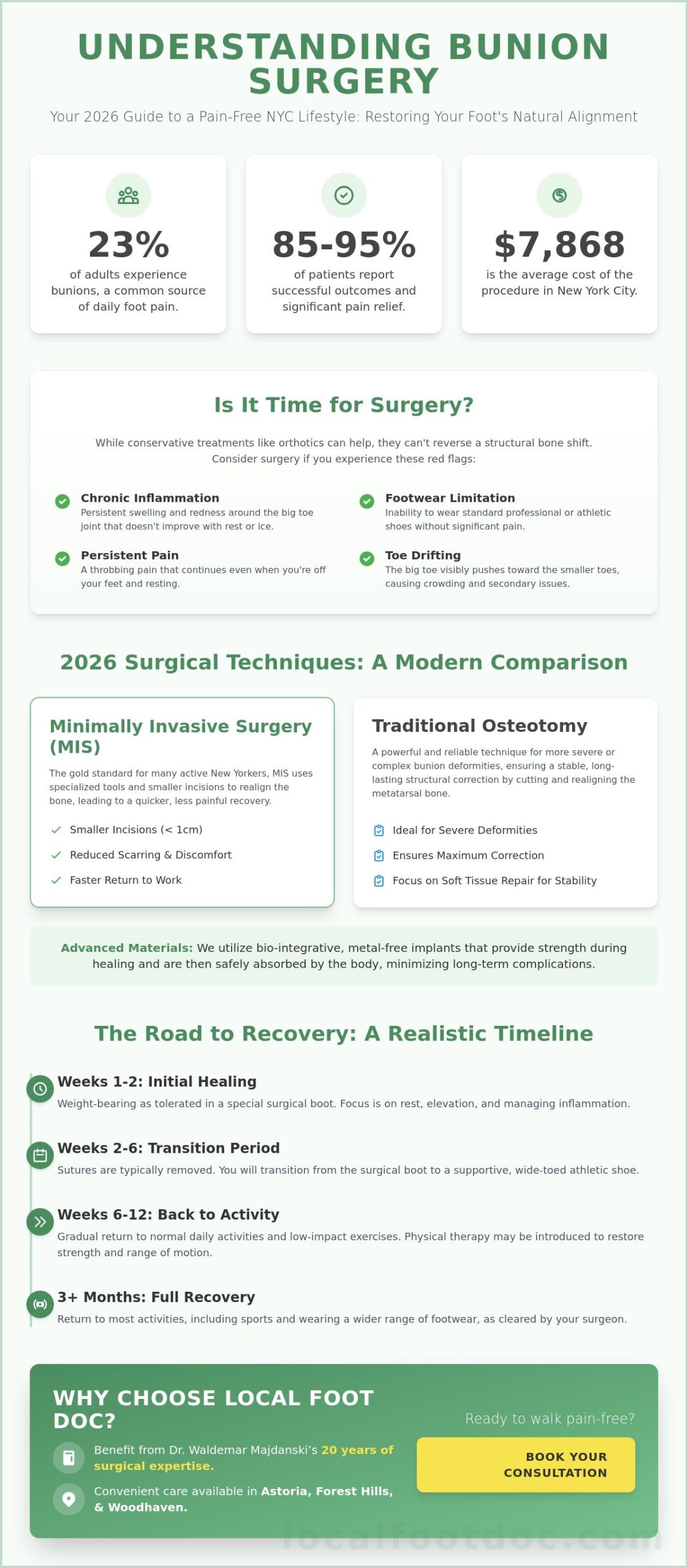
We’re here to help you understand your options for a pain-free future. This guide details the latest 2026 surgical techniques and provides a realistic look at recovery so you can plan your return to activity. You’ll learn why 85% to 95% of patients experience successful outcomes and get the facts on the average $7,868 cost of the procedure in New York. We’ll walk you through the shift toward minimally invasive options and provide a clear timeline for getting back on your feet and back to the life you love.
Key Takeaways
- Understand why modern bunion surgery focuses on restoring your foot’s structural alignment and eliminating chronic pain rather than just aesthetic correction.
- Explore the latest 2026 surgical techniques, ranging from traditional osteotomy to minimally invasive procedures tailored to your unique bone density and activity level.
- Identify the clinical criteria that make you a strong candidate for surgery, including persistent inflammation and the failure of conservative treatments like custom orthotics.
- Navigate a realistic recovery timeline designed for the active NYC lifestyle so you know exactly when you’ll be back on your feet and heading to the subway.
- Benefit from Dr. Waldemar Majdanski’s 20 years of surgical expertise with convenient care available in Astoria, Forest Hills, and Woodhaven.
Is It Time for Bunion Surgery? Recognizing Symptoms & Deformity
Bunion surgery, technically known as a bunionectomy, is the surgical correction of a hallux valgus deformity. While many people think of this as a cosmetic fix, our team views it as a vital structural realignment. The primary goal is to restore the natural function of your foot and eliminate the chronic, daily pain that keeps you off the streets of Manhattan or Queens. We don’t just want your foot to look better; we want it to work better.
Living in New York means walking is a non-negotiable part of life. When that bony bump at the base of your big toe starts producing a constant, throbbing sensation after just a few blocks, your quality of life suffers. This isn’t just minor discomfort. It’s a limitation on your ability to catch the train or walk through Forest Hills without wincing. For a comprehensive overview of bunions, including how they progress, understanding the underlying bone structure is essential. Delaying treatment often leads to secondary complications. When the big toe shifts too far, it puts pressure on the smaller toes, frequently causing hammertoes or premature arthritis in the joint.
When Conservative Care Is No Longer Enough
Many of our patients arrive after spending years trying wider shoes or silicone pads. While custom orthotics provide excellent support and can slow the progression of the deformity, they cannot reverse the physical bone structure once it has shifted. You might need to consider surgery if you notice these specific red flags:
- Chronic toe inflammation that doesn’t improve with rest or ice.
- An inability to wear standard professional or athletic footwear.
- Throbbing pain that persists even when you’re resting at home.
- A visible “drifting” of the big toe toward the smaller toes, causing crowding.
Understanding the Hallux Valgus Deformity
A bunion isn’t just a growth on the side of the foot. It’s a complex misalignment where the first metatarsal bone shifts outward, creating that signature bump. Sometimes, a similar issue happens on the pinky toe side, known as a Tailor’s bunion or bunionette. Dr. Majdanski uses advanced diagnostic imaging to measure the exact degree of this shift. By assessing the severity of the angle, we can determine if the joint is stable enough for a minimally invasive approach or if a more traditional realignment is necessary to ensure lasting relief. This precise assessment is the first step in getting you back on your feet.
Surgical Techniques: From Traditional Osteotomy to Minimally Invasive Procedures
Choosing the right surgical approach is a collaborative decision between you and our surgical team. In 2026, we utilize over 40 distinct types of bunion surgery to address varying degrees of hallux valgus deformity. We don’t just look at the bone shift; we evaluate your specific bone density and lifestyle requirements to create a personalized surgical plan. This precision ensures that the correction is stable enough for your daily commute while minimizing the risk of recurrence, which currently stands at approximately 4.9% nationwide. A successful Bunion surgery procedure involves more than just bone realignment. We also focus on soft tissue repair, meticulously balancing the tendons and ligaments around the joint to maintain long-term alignment and prevent the toe from drifting back over time.
Advanced technology plays a central role in our modern practice. We often incorporate bio-integrative, metal-free implants like OSSIOfiber. These materials provide the necessary strength during the initial healing phase but are gradually absorbed by your body, reducing the long-term complications sometimes associated with permanent metal hardware. This intersection of high-tech biomaterials and clinical expertise allows us to prioritize your long-term mobility and comfort as you get back on your feet.
The Benefits of Minimally Invasive Bunion Surgery
Minimally invasive surgery (MIS) has become the gold standard for many active New Yorkers. By using specialized tools and smaller incisions, we can often reduce post-operative discomfort and visible scarring. This technique is particularly popular for patients who need to return to work quickly and can’t afford weeks of total downtime. Smaller incisions mean less disruption to the surrounding tissue, which translates to a faster recovery curve. Dr. Majdanski determines candidacy by reviewing high-resolution imaging to ensure your bone structure is suitable for this refined approach. If you’re wondering if this path is right for you, scheduling a consultation with our team is the best way to explore your options.
Traditional Osteotomy and Arthrodesis
For more severe cases or significant joint instability, a traditional osteotomy or arthrodesis remains the most reliable path to lasting relief. Osteotomy involves precisely cutting and realigning the first metatarsal, while arthrodesis fuses the joint for those with severe arthritis or previous failed surgeries. These procedures are deeply rooted in sports medicine principles, focusing on restoring the biomechanical integrity required for high-impact activities. Whether you’re a marathon runner or a weekend hiker in Central Park, our goal is to rebuild a foundation that supports your most ambitious goals. We focus on the total mechanics of the foot to ensure every step feels natural and pain-free.
Evaluating Candidacy: Are You a Good Candidate for a Bunionectomy?
Deciding to move forward with bunion surgery is a significant step that requires a thoughtful evaluation of both your physical symptoms and your overall health. We don’t just look at the size of the deformity; we look at how it limits your life. Ideal candidates for bunion surgery typically present with chronic toe inflammation that doesn’t respond to rest, significant pain that hinders daily NYC activities, and a visible drifting of the big toe that impacts the alignment of other toes. It’s a partnership between you and our team. We provide the surgical expertise, but your commitment to the recovery process is what ensures a successful, lasting outcome.
Your overall health status plays a critical role in surgical clearance. We carefully assess factors like circulation and systemic health to minimize risks. It’s vital to have realistic expectations about the journey ahead. While the goal is to get you back to an active lifestyle, the initial healing phase requires patience and adherence to our specific protocols. We’ll guide you through every step, ensuring you feel confident and informed before you ever enter the operating room.
Medical Evaluations and Pre-Operative Testing
Before scheduling your procedure, we perform a suite of diagnostic tests to ensure your safety. This includes high-resolution X-rays to measure bone angles, blood work to check for underlying issues, and occasionally an EKG for cardiac clearance. Dr. Majdanski places a heavy emphasis on diabetic foot care during this screening phase. For our patients with diabetes, managing blood sugar levels is non-negotiable for proper bone healing and infection prevention. We also conduct a detailed biomechanical analysis to understand how your foot moves, which allows us to tailor the surgical correction to your unique gait and prevent future issues.
Lifestyle Factors and Emotional Readiness
Success isn’t just about what happens in the operating room; it’s about what happens at home in the weeks following. We evaluate your ability to follow post-operative weight-bearing restrictions, which might mean arranging for help with groceries or navigating a walk-up apartment during the first few days. Smoking or nicotine use significantly hinders bone healing and increases the risk of surgical complications, so we often discuss cessation strategies as part of your preparation. You’re likely a candidate for bunion surgery if conservative measures like NSAIDs or custom inserts have failed to provide relief for at least six months.
The Road to Recovery: Getting Back on Your Feet in New York City
Recovery after bunion surgery is a structured journey that requires patience, especially in a city as fast-paced as ours. We utilize an “Expert Neighbor” approach to post-operative care. This means our team remains in constant communication with you during the critical early stages of healing. You aren’t just a chart number; we’re your partners in mobility. We provide clear, comforting paths to recovery to alleviate the anxiety that often follows a surgical procedure. Our goal is to ensure you feel supported from the moment you leave the surgical center until you’re back to your regular urban routine.
Living in New York presents unique challenges that generic medical guides often overlook. You can’t simply avoid walking when your daily life involves navigating subway platforms or climbing three flights of stairs in a walk-up apartment. We tailor your recovery plan to these specific urban demands. We emphasize the importance of physical therapy, which typically begins a few weeks after the procedure. PT is essential for regaining your range of motion and preventing the “stiffness” that can occur if the joint isn’t properly mobilized during the healing process.
Immediate Post-Operative Care (Weeks 1-6)
The first six weeks focus on protecting the structural realignment. You’ll wear a specialized surgical boot and protective bandages to keep the bones in their new, correct positions. Elevation is vital during the first 48 to 72 hours to minimize swelling and that heavy, “throbbing” sensation. We prioritize your comfort with pain management strategies that are both safe and effective. For daily hygiene, we recommend using a high-quality waterproof cast protector to keep your bandages bone-dry while showering. Keeping the incision site dry is a non-negotiable rule for preventing infection and ensuring the skin heals cleanly with minimal scarring.
Long-Term Recovery and Urban Mobility
When can you return to the subway? We generally advise patients to avoid crowded public transit for the first 14 days to prevent accidental bumps or jars to the foot. As your bone strength increases, you’ll transition from the surgical boot into wide, supportive sneakers around the six-week mark. By month three, most patients return to regular footwear, though we suggest waiting six months before wearing narrow or high-heeled shoes. For our neighbors in Astoria or Woodhaven, we ensure bunion surgery in Queens recovery is managed at our local offices for your convenience. If you’re ready to reclaim your active lifestyle, contact us to discuss your personalized recovery plan today.
Why Choose Local Foot Doc for Your Bunion Surgery in Brooklyn & Queens?
Choosing the right provider for your bunion surgery is as critical as the procedure itself. At Local Foot Doc, we combine world-class medical training with a deep commitment to our local community. Dr. Waldemar Majdanski brings over 20 years of specialized surgical expertise to every case, ensuring that your path to recovery is guided by a veteran hand. We understand that New Yorkers don’t have time for prolonged discomfort or failed treatments. That’s why we focus on precise, personalized plans that prioritize your long-term mobility. Whether you’re commuting from Astoria or living in Forest Hills, our goal is to provide accessible, high-quality care that fits into your busy life.
We believe that a successful outcome starts with patient education. During your initial consultation, we’ll walk you through every detail of the structural realignment and what it means for your specific anatomy. We don’t just treat symptoms like “burning” or “stiffness”; we address the underlying biomechanical causes. By utilizing multiple locations across Astoria, Forest Hills, and Woodhaven, we make it easier for you to attend follow-up appointments and physical therapy sessions without traveling across the entire city. This local presence reinforces our identity as your Expert Neighbor, a trusted institution that’s always within reach when you have questions about your healing process.
Board-Certified Surgical Excellence
Working with a board-certified podiatric surgeon means you’re receiving care that meets the highest national standards for safety and technical proficiency. We use advanced diagnostic imaging to map out the exact angles of your deformity before any incisions are made. This high-tech approach, combined with the use of modern bio-integrative materials, ensures that your bunion surgery is as precise as possible. Our mission is to provide every patient with the advanced technology of a major hospital in the comfortable, personal setting of a neighborhood clinic.
Patient-Centered Care in Your Neighborhood
Our Brooklyn and Queens offices are designed to feel professional yet welcoming, alleviating the anxiety often associated with surgical procedures. We’re not a cold, corporate medical group; we’re a team that knows your name and understands your lifestyle goals. We make ourselves available for post-operative questions, ensuring that your transition from the surgical boot back to your favorite shoes is seamless and safe. If you’re tired of the throbbing pain and ready to reclaim your independence, we’re here to help. Schedule your bunion consultation with Dr. Majdanski today and take the first step toward getting back on your feet.
Reclaim Your Mobility and Walk Without Pain
You don’t have to let the persistent throb of a bunion dictate your route through the city or the shoes in your closet. We’ve explored how modern bunion surgery techniques, like minimally invasive procedures, offer a path to structural realignment with reduced downtime. By choosing a treatment plan tailored to your unique biomechanics, you’re investing in long-term stability rather than a temporary fix. Dr. Waldemar Majdanski brings over 20 years of NYC clinical experience to our practices in Brooklyn and Queens, ensuring you receive the sophisticated care you deserve right in your neighborhood.
Our team is ready to partner with you on a clear, comforting path to recovery. If you’re ready to stop managing the pain and start solving the structural problem, Book Your Bunion Consultation at Local Foot Doc today. We’re dedicated to helping you regain your independence and getting you back on your feet with confidence. Your journey toward pain-free movement is just one conversation away.
Frequently Asked Questions About Bunion Surgery
Is bunion surgery painful?
We use advanced local anesthesia and sedation during the procedure to ensure you don’t feel any pain while we work. After the numbing wears off, it’s normal to experience some swelling or a dull, throbbing sensation. We provide a comprehensive pain management plan that includes specific medications and elevation techniques to keep you comfortable during the first 48 hours of your recovery.
How long is the recovery time for bunion surgery in NYC?
Initial healing usually takes six to eight weeks, but your total recovery timeline depends on the complexity of your procedure. Most patients can return to sedentary work within two weeks. However, because navigating the city involves significant walking, we typically wait until the three month mark before clearing you for long treks across the boroughs or high impact exercise.
Will my insurance cover bunion surgery at Local Foot Doc?
Most private insurance plans and Medicare Part B cover the procedure when it’s deemed medically necessary due to chronic pain or limited mobility. Medicare typically covers 80% of the cost after you meet your deductible. Our team helps document the failure of conservative treatments, like custom orthotics, to ensure your carrier understands the necessity of the structural correction.
Can bunions come back after surgery?
Recurrence is rare when the underlying structural causes are properly addressed during the initial procedure. Studies show that approximately 95% of patients maintain their correction permanently. We focus on balancing the soft tissues and realigning the first metatarsal bone to provide a stable foundation, which significantly reduces the likelihood of the deformity returning as you age.
When can I drive again after a bunionectomy?
You can often return to driving within one week if the surgery was performed on your left foot and you drive an automatic vehicle. If the procedure involved your right foot, you’ll need to wait until you’ve transitioned out of the surgical boot and regained full braking strength. This transition usually occurs between six and eight weeks post-op to ensure your safety on the road.
What happens if I don’t get bunion surgery?
Leaving a progressive deformity untreated often leads to secondary issues like hammertoes, corns, or premature arthritis in the joint. As the big toe shifts further out of alignment, it forces your other toes to carry more weight, which can cause chronic metatarsalgia. Early intervention helps prevent these complications and keeps you moving through your daily NYC routine without compensatory pain.
Can I have bunion surgery on both feet at the same time?
While bilateral surgery is possible, we generally recommend treating one foot at a time to preserve your mobility. Navigating stairs in a Queens walk-up or using the subway is much safer when you have one stable foot to rely on. We usually space the procedures about six to twelve weeks apart so your first foot is strong enough to support you while the second heals.
How long before I can wear heels or dress shoes again?
Most patients can transition into supportive sneakers at six weeks and standard dress shoes around the three month mark. We recommend waiting at least six months before returning to narrow heels or pointed-toe shoes to allow the bone to reach maximum strength. Our team will perform a final biomechanical assessment to ensure your foot can handle the pressure of fashion footwear without risking the correction.