It’s 8:15 AM on a Tuesday in 2026, and as you step off the L train at Union Square, a sudden, searing spasm locks your arch into a rigid claw. You’re left hobbling against the flow of commuters, wondering how a simple walk became an immobilizing ordeal. We know that for many New Yorkers, these episodes aren’t just a nuisance; they’re a direct threat to the 10,000 steps we average daily on unforgiving pavement. Whether it’s a sharp “charley horse” that ruins your sleep at 3:00 AM or a tightening in your toes during a jog through Central Park, the causes of cramps on feet often feel like a frustrating mystery.
Our team at Local Foot Doc is here to help you solve that mystery and get you back on your feet. You’ll discover the biological and environmental triggers behind these spasms and learn actionable techniques to stop the pain in under 30 seconds. We’ll also explain when a cramp is a simple hydration issue and when it’s time to book a professional consultation at our Manhattan or Brooklyn offices.
Key Takeaways
- Understand how the high-impact NYC lifestyle contributes to muscle spasms and what is physically happening when your foot knots up.
- Explore the biological causes of cramps on feet, including how electrolyte imbalances can cause your muscles to misfire during your daily commute.
- Learn how structural issues like flat feet or bunions create muscle imbalances that lead to chronic, painful contractions.
- Master a specific stretching protocol to find immediate relief from a foot cramp, whether you are at home or on a subway platform.
- Identify the “red flag” symptoms that indicate it is time to visit our Brooklyn or Queens offices for professional diagnostic care and gait analysis.
Understanding Foot Cramps in the NYC Lifestyle
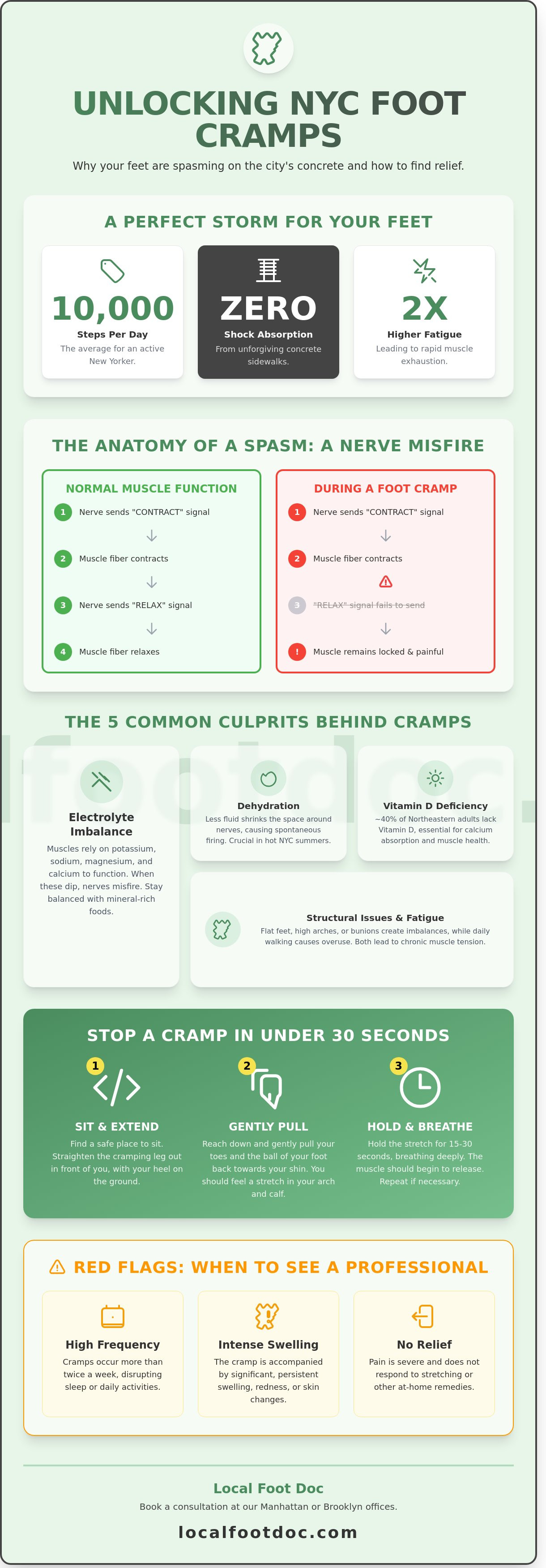
Foot cramps are more than just a fleeting discomfort; they’re a physical disruption that can stop a New Yorker mid-stride. We define a foot cramp as an involuntary, forceful muscle contraction, often referred to as a spasm. When this occurs, you’ll feel a sudden, sharp pain that can make the muscle visibly knot or bulge under the skin. This physical reaction often leads to a temporary loss of mobility, which is particularly frustrating when you’re navigating a busy subway station or rushing to a meeting in Midtown. While many people experience an occasional twitch, understanding the underlying causes of cramps on feet is essential for those who find their daily routine constantly interrupted by pain.
For a comprehensive overview of muscle cramps, it’s helpful to look at how various biological factors and environmental stressors contribute to these sudden contractions. In our practice, we distinguish between the occasional spasm caused by a long day of activity and chronic cramping that requires professional medical intervention. If your cramps occur more than twice a week or involve intense swelling, it’s time to seek a clinical evaluation to rule out more serious vascular or neurological issues.
The Anatomy of a Foot Spasm
Most spasms we treat involve the intrinsic muscles of the arch, the toes, or the top of the foot. A minor “charley horse” might feel like a sharp, localized tug, but a deep muscle spasm involves a sustained contraction that locks the foot in an awkward, painful position. These events occur when nerve signals misfire. Essentially, the nerves tell the muscle to contract but fail to send the corresponding signal to relax. Our team frequently observes this in patients who have high arches or flat feet, as these structural variations can cause the nerves to become overstimulated during long periods of standing.
Why the Concrete Jungle Triggers Cramps
New York City presents a unique challenge for your biomechanics. The average resident walks between three and five miles daily, mostly on the non-yielding concrete of Brooklyn and Queens. Unlike soft earth or modern gym flooring, pavement provides zero shock absorption. This repetitive stress on the small muscles of the foot leads to rapid fatigue and micro-trauma. “In NYC, your feet act as shock absorbers for every mile of concrete, leading to muscle exhaustion that often manifests as nighttime cramps.”
When these muscles reach a point of exhaustion, they become hypersensitive. This is one of the most common causes of cramps on feet for locals who rely on walking as their primary mode of transportation. We’ve found that the 8.3 million people living here are at a higher risk simply because of the sheer volume of impact their feet endure on a daily basis. By identifying these triggers early, we can help you implement strategies to keep you moving comfortably across all five boroughs.
Biological Causes of Cramps on Feet: Beyond Just Water
When your foot suddenly seizes into a painful, rigid arch, it’s more than a simple inconvenience. It’s a physiological “misfire.” At the cellular level, the biological causes of cramps on feet involve a breakdown in communication between your nerves and muscle fibers. Normally, nerves send a signal to contract and then a signal to relax. In a cramp, the relaxation signal never arrives; the muscle remains locked in a state of hyper-excitation. This often happens because the chemical environment surrounding the muscle cells is out of balance, making the nerves hypersensitive and prone to firing without warning.
Electrolytes and Nutrient Deficiencies
Your muscles rely on a precise electrical gradient to function. Potassium and sodium facilitate the electrical impulses, while magnesium and calcium regulate the actual contraction and release of the muscle fibers. If these levels dip, your feet are often the first place to feel the effects. New Yorkers face a specific challenge with Vitamin D deficiency. Data suggests that roughly 40% of adults in the Northeast lack sufficient Vitamin D, which is essential for calcium absorption. Without it, your muscles become irritable and prone to spasms. To combat this locally, we recommend visiting the Union Square Greenmarket or similar local hubs for mineral-rich leafy greens and fortified dairy to support your musculoskeletal health.
Dehydration and Medication Side Effects
Hydration is about more than just drinking water; it’s about maintaining the fluid volume that cushions your nerves. When you’re dehydrated, the fluid space around your motor neurons shrinks. This physical change increases the concentration of electrolytes, which can cause nerves to discharge spontaneously. This is particularly dangerous during NYC summers when humidity hits 80% and temperatures regularly exceed 90 degrees. You’re losing fluids through perspiration faster than you realize during a subway commute.
Certain medications also play a role in how your body manages these fluids and minerals. Statins used for cholesterol and diuretics prescribed for high blood pressure are frequent culprits. These drugs can alter the balance of potassium or cause direct muscle toxicity. If you suspect your prescriptions are the culprit, we suggest reviewing your current medication list with a podiatrist in Brooklyn to see if a clinical adjustment is necessary. Research into the causes and treatment of cramps shows that even minor adjustments in mineral intake can significantly reduce the frequency of nocturnal spasms.
The “marathon commuter” lifestyle also contributes to muscle fatigue. Walking several miles daily on concrete sidewalks puts immense strain on the small intrinsic muscles of the foot. When these muscles reach a point of exhaustion, they lose their ability to regulate neural signals properly. Understanding the causes of cramps on feet helps us create a targeted plan to restore your mobility. If you are struggling with persistent pain, our team at Local Foot Doc is ready to help you find lasting relief and get you back to your active lifestyle.
Structural and Medical Triggers: When Your Foot Shape is the Problem
While dehydration or a long day of walking are common culprits, the underlying causes of cramps on feet often stem from your unique anatomy. If your foot structure is misaligned, your muscles must work twice as hard to maintain balance. This constant overcompensation leads to the sudden, painful seizing of muscle fibers that we call a cramp. Our team frequently finds that patients with persistent spasms are dealing with more than just a temporary twitch; they are fighting their own biomechanics.
Beyond the physical shape of your foot, systemic health conditions play a significant role. For the approximately 1.1 million New Yorkers living with diabetes, peripheral neuropathy is a frequent trigger. This nerve damage interferes with the signals between your brain and your muscles, causing involuntary contractions. Additionally, poor circulation in the lower extremities can deprive your muscles of the oxygen they need to function. When blood flow is restricted, metabolic waste builds up and your feet respond with sharp, throbbing spasms that don’t easily dissipate. If you experience persistent cramping along with burning sensations or numbness in your calves during daily activities like climbing subway stairs, it’s important to recognize PAD disease symptoms that could indicate compromised circulation requiring immediate medical attention.
Flat Feet and Biomechanical Stress
A collapsing arch does more than just make your feet feel tired. It pulls on the tendons and muscles along the bottom of your foot, creating a state of chronic tension. We see this often in patients who navigate the steep stairs of the NYC subway system daily. Every step on an uneven surface forces a flat foot to roll inward excessively, which strains the plantar fascia. To help realign your gait and stop these spasms, custom orthotics provide the structural support needed to distribute your weight evenly across the entire foot, preventing the repetitive strain that triggers a cramp.
Bunions, Hammertoes, and Muscle Fatigue
Structural deformities like bunions or hammertoes aren’t just cosmetic issues. A bunion shifts your weight distribution toward the outer edge of your foot, forcing smaller muscles to take on a load they weren’t designed to carry. This imbalance leads to localized toe cramps that can strike without warning during a workout or even while you’re resting. When conservative treatments like padding or wider shoes fail to provide relief for chronic cases, bunion surgery in Queens offers a permanent way to correct the misalignment and eliminate the root cause of muscle strain. We focus on modern, results-oriented procedures that help you get back on your feet and return to your active lifestyle without the constant threat of muscle fatigue.
Immediate Relief: How to Stop a Foot Cramp in Seconds
When a sudden spasm locks your arch while you are navigating the L train or waking up in a Chelsea apartment, you need a solution that works instantly. While the underlying causes of cramps on feet often involve complex factors like electrolyte shifts or muscle fatigue, the immediate physiological goal is to break the involuntary contraction. Our team recommends a mechanical approach that forces the muscle to relax by stretching it in the exact opposite direction of the cramp.
For most New Yorkers, heat is a far more effective tool than ice during an active cramp. While ice reduces inflammation, it also constricts blood vessels. Heat at approximately 104 degrees Fahrenheit encourages vasodilation, which brings oxygenated blood back to the seized muscle fibers. If you are at home, a warm soak or a heating pad can provide the relief that cold packs often delay.
The Active Stretch Protocol
We suggest this four-step method to regain mobility quickly. Follow these steps the moment you feel the “knot” forming:
- Step 1: Stand up immediately. Placing your full weight on the affected foot helps override the neurological signals causing the spasm.
- Step 2: Gently pull your toes upward toward your shin. This action, known as dorsiflexion, manually lengthens the arch and the plantar fascia.
- Step 3: Massage the knot with your thumbs. Use firm, circular pressure to physically break up the muscle bundle.
- Step 4: Walk slowly across the room. Movement encourages steady blood flow and prevents the muscle from re-cramping once you sit back down.
The NYC Subway Stretch
Commuters stuck on a crowded train don’t always have the luxury of sitting down to massage their feet. If a cramp strikes while you are standing, use the “NYC Subway Stretch.” Place the ball of your cramped foot against the metal base of the subway seat or the bottom of a vertical pole. Keep your heel on the floor and lean your body weight forward. This creates a deep, hands-free stretch in the arch that can stop a spasm even in a packed car during rush hour.
Prevention Strategies for the Urban Commuter
Addressing the immediate causes of cramps on feet requires looking at your daily habits. A 2024 survey of urban professionals found that 65 percent of foot pain cases were linked to improper footwear. We recommend a footwear audit; if your commuter shoes have thin, flat soles, they are likely straining your intrinsic foot muscles during those long walks through Queens or Midtown.
To keep your muscles resilient, incorporate a nightly foot-rolling routine. Use a tennis ball or a frozen water bottle to roll out the bottom of each foot for five minutes before bed. Additionally, perform dynamic stretches before tackling long distances. If you plan to walk the 1.1 miles across the Brooklyn Bridge, start with ten repetitions of calf raises to wake up the muscles and improve circulation before you begin your journey.
When to Visit Local Foot Doc in Brooklyn or Queens
Most New Yorkers expect a certain level of soreness after a day spent trekking between subway transfers and office buildings. However, when the causes of cramps on feet shift from occasional tightness to persistent, sharp pain, it’s time to look beyond your stretching routine. Ignoring chronic spasms can lead to compensatory injuries, where you inadvertently change how you walk to avoid pain, eventually damaging your knees or lower back. We believe that proactive care is the best way to ensure you don’t face permanent mobility restrictions in the future.
At Local Foot Doc, we treat your ability to walk the city streets as a vital sign. Our team uses 2026-standard diagnostic technology, including high-resolution digital X-rays and computerized gait analysis, to see exactly how your feet strike the pavement. This data-driven approach helps us identify if your discomfort stems from a simple electrolyte imbalance or a complex structural issue like tarsal tunnel syndrome. By capturing 100 data points per second during your stride, our gait analysis reveals the hidden mechanical stresses that trigger muscle fatigue.
Warning Signs You Shouldn’t Ignore
You should schedule an evaluation if you notice physical changes alongside the cramping. Redness, localized heat, or visible swelling often indicate vascular issues or inflammatory conditions that require medical attention. If your spasms occur more than three times per week despite proper hydration, your body is signaling an underlying problem. We’re particularly concerned when patients describe “drop foot,” a heavy sensation where it’s difficult to lift the front part of the foot. This symptom often points to nerve compression that could lead to long-term muscle weakness if left untreated.
Professional Solutions for Lasting Relief
NYC pavement is unforgiving and offers zero shock absorption for your arches. We often find that custom orthotics are the most effective way to neutralize the biomechanical causes of cramps on feet. Unlike over-the-counter inserts, our prescription orthotics are crafted from precise 3D scans of your feet to provide structural support exactly where you need it. This level of customization is especially critical for maintaining diabetic foot health in NYC, where proper circulation and pressure distribution are essential for preventing complications like neuropathy.
Our goal is to help you stay active and independent in the city you love. Whether you’re a weekend runner in Astoria or a daily commuter in Woodhaven, we provide the specialized care needed to keep you moving comfortably. Don’t wait for a minor spasm to become a major hurdle. Visit us at our Forest Hills, Astoria, or Woodhaven locations today so we can help you get back on your feet with confidence.
Step Forward Without the Pain
Living in New York City means your feet endure miles of concrete every single day. While many people attribute sudden spasms to simple dehydration, the causes of cramps on feet often involve complex structural triggers or specific biomechanical issues that require professional attention. Whether you’re dealing with a flat arch or a nerve-related condition, you don’t have to navigate these painful disruptions alone. Our team focuses on identifying the root cause so you can maintain your active city lifestyle without fear of the next cramp.
With over 20 years of clinical experience, board-certified surgeon Dr. Waldemar Majdanski provides the advanced technology and personalized care you need to find lasting relief. Local Foot Doc operates multiple convenient locations across Brooklyn and Queens, making it easier than ever to access expert podiatric support right in your neighborhood. We’re dedicated to helping you understand your body and providing clear paths to recovery. Schedule your consultation with NYC’s foot experts today and let’s get you back on your feet with confidence.
Frequently Asked Questions
Why do I get foot cramps specifically at night?
Nocturnal foot cramps affect roughly 60% of adults according to the American Family Physician. These spasms often occur because your muscles stay in a shortened position for several hours while you sleep. Our team sees this frequently in patients who spend their days standing on hard subway platforms or walking through Central Park. Staying hydrated and performing light calf stretches before bed can significantly reduce these painful episodes.
Can certain shoes cause my feet to cramp more often?
Yes, footwear with narrow toe boxes or inadequate arch support are primary causes of cramps on feet. When you wear unsupportive shoes, your foot muscles must work 25% harder to stabilize your gait on uneven NYC sidewalks. We advise patients to replace their daily commuters every 400 miles. This ensures the internal cushioning still provides the proper biomechanical support needed to prevent muscle fatigue and sudden seizing.
Is a foot cramp a sign of a blood clot?
A foot cramp is usually harmless, but it can signal a blood clot if it’s joined by localized swelling, redness, and warmth. The CDC reports that Deep Vein Thrombosis affects 900,000 Americans each year. If your cramp feels like a deep, throbbing ache and your skin appears discolored, you need immediate medical attention. Our team prioritizes these symptoms to ensure your vascular health is protected and your mobility remains intact.
How much water should I drink to prevent foot spasms while walking in NYC?
You should drink approximately 125 ounces of water daily if you’re a man and 91 ounces if you’re a woman to maintain proper muscle function. These guidelines from the National Academies of Sciences are essential for New Yorkers who walk an average of 3 to 5 miles a day. Dehydration leads to electrolyte imbalances that cause your muscles to misfire and seize up during your morning commute or weekend errands.
What vitamins are best for stopping foot cramps?
Magnesium, Vitamin B12, and Vitamin D are the most critical nutrients for preventing muscle spasms. A 2021 clinical study showed that magnesium supplementation can decrease cramp frequency by 40% in adults with chronic deficiencies. We use precise blood tests to identify these gaps. This allows us to create a personalized plan to address the underlying causes of cramps on feet rather than just treating the temporary discomfort.
Can flat feet cause chronic cramping in the arches?
Yes, flat feet often cause chronic arch cramping because the muscles are forced to overcompensate for a lack of structural support. Research shows that people with low arches experience muscle fatigue 30% faster than those with neutral alignment. Our team uses 3D scanning technology to create custom orthotics that redistribute pressure. This advanced approach allows you to walk through Queens or Manhattan without the constant threat of arch spasms.
When is a foot cramp a medical emergency?
A foot cramp is a medical emergency if you notice a total loss of feeling, extreme coldness in the limb, or visible leg swelling. These signs can indicate a serious vascular blockage or severe neurological distress. If your pain level reaches a 9 out of 10 and doesn’t respond to massage or stretching, you should seek help at a New York hospital immediately. Prompt action is necessary to prevent permanent tissue damage.
Are foot cramps more common as we get older?
Foot cramps become more common as we age, with 33% of adults over 60 reporting regular episodes. This increase is often due to the natural thinning of the fat pads on the soles of your feet and a 15% decrease in muscle mass per decade. We work with many older residents in our community to improve their balance and flexibility. Our goal is to keep you active and help you get back on your feet quickly.