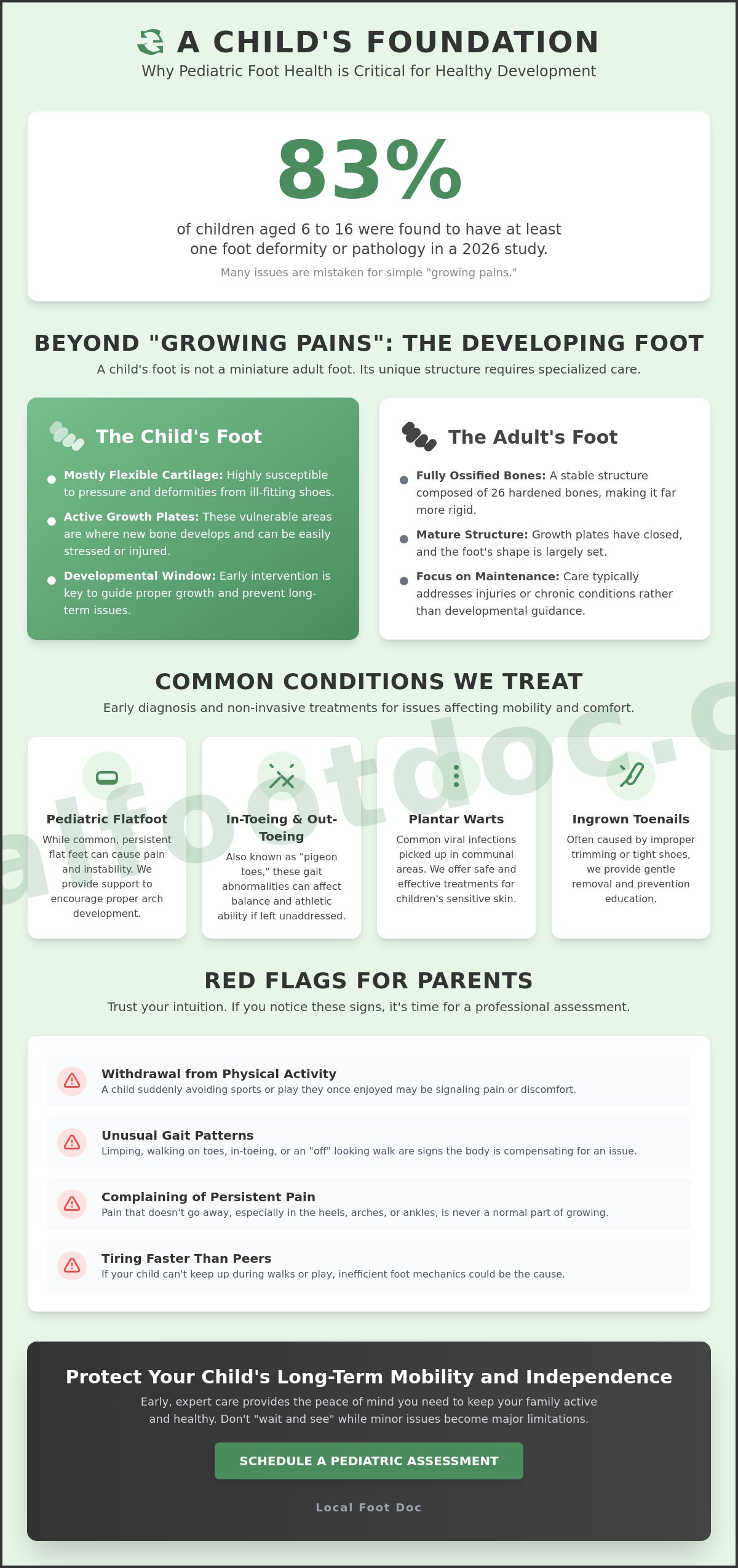
Did you know that a 2026 study of children aged 6 to 16 revealed that 83% had at least one foot deformity or pathology? While many parents assume a child’s withdrawal from sports or play is just a phase, these behaviors often signal underlying discomfort that requires a specialist’s eye. If you’ve spent hours researching the right shoes or worrying about potential developmental delays, you aren’t alone. Connecting with an expert pediatric podiatrist Brooklyn parents rely on is the first step toward ensuring your child’s foundation is healthy and strong.
We understand that the prospect of clinical intervention can feel daunting for both you and your little one. Our approach focuses on providing a clear diagnosis and prioritizing non-invasive treatment options that respect your child’s comfort. By addressing issues like flat feet, ingrown toenails, or persistent heel pain early, we can protect their long-term development and keep them moving confidently through the streets of Park Slope or Williamsburg. In this guide, you’ll discover how specialized pediatric care provides the peace of mind you need to keep your family active and healthy in 2026.
Key Takeaways
- Understand why children’s feet require specialized care due to developing cartilage and why standard “growing pains” often mask treatable structural issues.
- Learn how a pediatric podiatrist Brooklyn families trust can address common issues like flat feet, warts, and ingrown toenails using modern, non-invasive techniques.
- Identify specific red flags, such as a child withdrawing from physical activity or unusual gait patterns, that indicate a need for professional assessment.
- Discover how custom orthotics and adapted sports medicine protocols provide a foundation for healthy development without the need for immediate surgical intervention.
- Explore the benefits of local, community-focused care across Brooklyn and Queens that prioritizes your child’s long-term mobility and independence.
Why Pediatric Podiatry is Different: Beyond “Growing Pains”
Many parents are told that their child’s foot discomfort is simply a part of “growing pains.” While children do experience rapid growth cycles, persistent pain is never a normal developmental milestone. Pediatric podiatry is a specialized medical field that focuses specifically on the unique development of the young musculoskeletal system. Unlike an adult’s foot, which is composed of 26 fully ossified bones, a child’s foot is largely made of flexible cartilage. This distinction is critical for proper diagnosis. When you consult a pediatric podiatrist Brooklyn families can rely on, we look at how these structures are forming in real-time. Early intervention is the key to preventing permanent gait abnormalities that can follow a child into their adult years.
The Anatomy of a Growing Foot
The primary reason children’s feet are so vulnerable is the presence of growth plates, or epiphyseal plates. These are areas of active new bone growth near the ends of the long bones. Throughout childhood, soft cartilage gradually ossifies into hard bone, a process that isn’t fully complete until late adolescence. Because the foot is in this “soft” stage, it’s highly susceptible to deformities caused by ill-fitting shoes, repetitive stress, or structural imbalances. If a growth plate is stressed or injured, it can lead to lifelong issues with mobility and alignment. We prioritize understanding these developmental windows to ensure your child’s foundation remains stable.
Why the “Wait and See” Approach Can Be Risky
It’s tempting to wait for a child to grow out of a limp or an unusual walking pattern. However, the “wait and see” approach often leads to significant complications. When a child experiences discomfort, their body instinctively compensates. They might shift their weight or change their gait to avoid pain. This chain reaction often leads to secondary issues in the knees, hips, and lower back. We frequently see cases where untreated flat feet or juvenile bunions cause a child to withdraw from physical activities. Trust your intuition. If your child’s gait looks “off” or they seem to tire faster than their peers during a walk through Prospect Park, a pediatric podiatrist Brooklyn specialist can provide the clarity you need. Proactive care ensures that minor structural issues don’t become permanent limitations on their independence.
Common Pediatric Foot Conditions We Treat in Brooklyn
We see a wide variety of foot and ankle concerns at our Brooklyn and Queens offices. Most of these issues fall into three distinct categories: structural development, skin or nail health, and activity-related injuries. As a dedicated pediatric podiatrist Brooklyn parents trust, we prioritize non-surgical, conservative methods to resolve these issues before they impact a child’s long-term mobility. Early diagnosis of gait patterns, such as in-toeing or out-toeing, allows us to intervene during critical growth windows when the musculoskeletal system is most responsive to change.
Structural Issues: Flat Feet and In-toeing
Pediatric flatfoot is one of the most common reasons parents seek our help. While some children naturally develop arches as they grow, others require custom orthotics to manage pain and improve stability. We also specialize in treating gait abnormalities such as in-toeing (pigeon-toes) and out-toeing. These often stem from conditions like femoral anteversion or tibial torsion, which can affect a child’s balance and athletic performance. Identifying Pediatric Foot Alignment Deformities early ensures your child’s foundation is set for a lifetime of healthy movement. Unlike many general practices, we also focus on juvenile bunions, a hereditary condition that requires specialized monitoring to prevent progression during bone development.
Skin and Nail Health: Warts and Ingrown Nails
Communal Brooklyn play areas, local pools, and school locker rooms are frequent hotspots for plantar warts. Children are particularly susceptible to these viral infections because their immune systems are still maturing. We also provide safe, gentle ingrown toenail removal for kids who experience discomfort from tight shoes or improper trimming. Preventing fungal infections and recurring nail issues starts with education, and we’re here to help your family establish healthy hygiene habits for school and sports.
Sever’s Disease: The Leading Cause of Pediatric Heel Pain
If your child complains of pain during soccer, gymnastics, or after a long day at school, they might be experiencing Sever’s disease. This isn’t a “disease” in the traditional sense; it’s an inflammation of the growth plate in the heel caused by repetitive stress. It’s the primary cause of heel pain in active children aged 8 to 14. Our heel pain treatment plans typically involve a combination of rest, specialized stretching, and activity modification to alleviate pressure on the growing bone. If your child is limping after a game, a quick professional evaluation can help them regain their independence on the field.
When to See a Pediatric Podiatrist: Red Flags for Parents
As a parent, you are the primary observer of your child’s physical development. You see how they move every day, from the playground to the living room. Identifying when a stumble is just a part of learning to walk versus a sign of a structural issue is vital. While acute injuries like a suspected broken foot or an ankle sprain require immediate attention, chronic developmental issues often whisper before they shout. We view our role as a partnership with you. Dr. Majdanski combines your daily observations with clinical expertise to ensure your child’s mobility remains unhindered. This collaborative approach allows us to address concerns before they impact your child’s quality of life or long-term independence.
Physical Red Flags to Watch For
One of the most reliable indicators of a foot problem is found in your child’s closet. Take a close look at the soles of their sneakers. Uneven wear patterns, such as heavy erosion on the inner or outer edges, often signal alignment issues like overpronation. According to the 2023 US Children’s Foot Shape Database, 34.2% of children aged 0-14 show measurable foot health abnormalities. You should also watch for physical changes such as persistent redness, swelling, or a sudden visible arch collapse. A “treadmill” gait, where a child seems to frequently trip over their own feet, is a significant indicator that they should see a pediatric podiatrist Brooklyn specialist. These Red Flags for Parents are often the first signs of conditions that are highly treatable when caught early.
Behavioral Changes in Active Kids
Sometimes the signs aren’t physical, but behavioral. Children often lack the vocabulary to describe “aching arches” or “joint fatigue,” so they show you through their actions instead. If your child suddenly asks to be carried more often during a weekend walk through Prospect Park, it may not be laziness. They might be experiencing “tired legs,” a common symptom of untreated flat feet. Watch for “voluntary withdrawal” from sports or games they previously enjoyed. When a child stops running with their peers, it’s often because the physical cost of keeping up has become too high. Our diagnostic process, including digital X-rays and gait analysis, helps identify the root cause of these shifts quickly and accurately. We focus on providing a clear path to recovery so your child can return to the activities they love without discomfort.
Conservative Treatments and Custom Orthotics for Children
Brooklyn’s hard concrete sidewalks and asphalt playgrounds place unique demands on a child’s developing feet. We prioritize a conservative, non-surgical approach to care, understanding that most pediatric issues respond exceptionally well to early, gentle interventions. Our clinical team adapts advanced sports medicine techniques specifically for younger bodies, ensuring that your child can remain active without the need for invasive procedures. We often combine physical therapy exercises with targeted stretching to correct minor alignment issues, helping to guide the growth of muscles and tendons during these formative years. The repetitive impact of walking on city surfaces can exacerbate conditions like heel pain, so we focus on building strength and stability through movement.
Finding a pediatric podiatrist Brooklyn parents trust means gaining a partner who understands the local environment. Walking several blocks to school or spending the afternoon at Brooklyn Bridge Park requires footwear that can absorb significant shock. Consulting with a pediatric podiatrist Brooklyn specialist ensures your child’s footwear matches their specific developmental stage. Proper support is the first line of defense against chronic discomfort and fatigue, allowing your child to keep up with their peers comfortably.
Custom Orthotics for Growing Feet
Generic, store-bought insoles are designed for an average foot that rarely exists in reality. For a child with flat feet or high arches, these one-size-fits-all solutions can actually cause more harm by providing support in the wrong places. We provide custom-molded inserts that are tailored to your child’s unique foot structure. These devices align the foot, reduce strain on the growth plates, and improve overall balance. Because children grow quickly, we offer an “Outgrowth Program” for our orthotics. This ensures your child always has the correct level of support as they transition through shoe sizes, preventing the need for a completely new assessment every few months.
Footwear Advice for Brooklyn Parents
Choosing the right school shoes is critical for children navigating NYC. When shopping, look for a firm heel counter; the back of the shoe shouldn’t collapse when you press on it. The shoe should be flexible at the ball of the foot but rigid through the middle. We strongly advise against “hand-me-down” shoes. Every child has a unique gait, and a used shoe has already been molded to someone else’s foot pattern, which can force your child’s foot into an unnatural position. For the winter months, ensure boots have adequate arch support and traction for icy subway stairs. In the summer, look for sandals with secure straps rather than flimsy flip-flops that offer no stability. If you’re unsure about your child’s current footwear, you can schedule an orthotic evaluation to ensure they have the protection they need for the city streets.
Why Choose Local Foot Doc for Your Child’s Care
We believe every child deserves a future of pain-free movement and full independence. Choosing the right pediatric podiatrist Brooklyn parents trust is about finding a balance between high-level surgical expertise and a gentle, community-focused approach. Dr. Waldemar Majdanski brings years of experience as a board-certified podiatric surgeon specializing in both adult and pediatric care. We’ve designed our practice to be a reliable local resource rather than a detached corporate medical group. Our offices are welcoming spaces where clinical anxiety is replaced by clear, comforting paths to recovery. We make sure you leave every appointment with a detailed roadmap for your child’s healing process, ensuring you feel confident in every step of the journey.
Accessible Specialist Care in Brooklyn and Queens
Finding time for specialist appointments in New York City is often a challenge for busy families. We’ve simplified this process by maintaining multiple locations across Brooklyn and Queens, specifically serving neighborhoods like Forest Hills and Astoria. Our scheduling is flexible to work around school calendars and extracurricular activities, making it easier to prioritize your child’s health without disrupting their routine. We also utilize state-of-the-art diagnostic tools right in our offices. This means you don’t have to travel to multiple facilities for digital X-rays or gait analysis; we provide a comprehensive evaluation in a single visit. This efficiency allows us to identify issues like a broken foot or ankle sprain immediately, so treatment starts without unnecessary delay.
Our Patient-First Philosophy
Our “Partners in Recovery” philosophy ensures that you are an active participant in your child’s healthcare. We don’t just treat physical symptoms; we explain the underlying cause and how to prevent future occurrences. This patient-centered approach is especially vital when dealing with complex structural conditions such as brachymetatarsia. While we always pursue conservative treatments like custom orthotics first, Dr. Majdanski’s surgical background ensures that even the most difficult cases receive expert, specialized attention. We encourage parents to book a consultation even for minor concerns. Proactive care is the best way to safeguard your child’s long-term mobility and ensure they continue to explore our Brooklyn neighborhoods with confidence. Connecting with a pediatric podiatrist Brooklyn specialist today can prevent a small discomfort from becoming a lifelong limitation.
Investing in Your Child’s Lifelong Mobility
Your child’s feet are the foundation for every milestone they’ll reach, from those first unsteady steps to their final high school soccer game. We’ve discussed how specialized care goes beyond dismissing symptoms as “growing pains” and why early intervention is critical for healthy musculoskeletal development. By addressing structural issues like flat feet or skin conditions like plantar warts now, you’re preventing gait abnormalities that could follow them into adulthood. Our team is dedicated to providing the non-invasive, conservative treatments that keep Brooklyn’s youngest residents active and confident.
With over 20 years of NYC clinical experience, Dr. Majdanski offers the clinical authority of a Board-Certified Podiatric Surgeon combined with the personal touch of a neighborhood doctor. We maintain multiple convenient Brooklyn and Queens locations to ensure that high-quality care is always accessible to your family. If you’ve noticed a change in your child’s gait or a withdrawal from play, don’t wait for the issue to resolve itself. Consulting a pediatric podiatrist Brooklyn specialist today is a proactive step toward your child’s long-term health and independence.
Schedule Your Child’s Consultation with Dr. Majdanski Today and let’s work together to keep your child moving forward with strength and stability.
Frequently Asked Questions
How can I tell if my child has flat feet?
You can identify flat feet by observing your child while they stand upright. If the entire bottom of their foot touches the floor or the inner arch appears collapsed, they likely have flat feet. Other signs include ankles that lean inward or shoes that show excessive wear on the inner side of the sole. If they complain that their legs feel heavy or tired after a walk through Prospect Park, a professional evaluation is recommended.
Are custom orthotics comfortable for children to wear at school?
Custom orthotics are highly comfortable because they’re molded specifically to your child’s unique foot anatomy. Unlike generic store-bought inserts, these devices provide support exactly where it’s needed without adding unnecessary bulk. Most children adapt to them within a few days of wearing them in their school sneakers. They actually reduce daily fatigue, helping your child stay active and focused during school hours without the distraction of foot pain.
What is the best age to take my child to a podiatrist for the first time?
You should schedule an appointment as soon as you notice an unusual walking pattern or if your child expresses persistent discomfort. While many children start walking between 10 and 15 months, a pediatric podiatrist Brooklyn specialist can assess foot development at any age. Early detection of structural issues during the “soft cartilage” stage often allows for non-invasive treatments that prevent permanent gait abnormalities in adulthood.
Can my child still play sports while being treated for Sever’s disease?
Most children can remain active in sports, though we may suggest a temporary modification of high-impact activities. Sever’s disease is an inflammation of the heel’s growth plate, so managing the intensity of sports like soccer or gymnastics is essential for recovery. We typically use a combination of specialized stretching and heel cushions to alleviate pressure. Our goal is to manage the inflammation while keeping your child safely on the field.
Do you treat plantar warts in children, and is the process painful?
We provide several gentle wart removal options designed to minimize discomfort and anxiety for our younger patients. While some treatments may cause a minor tingling sensation, we prioritize methods that are effective yet sensitive to a child’s needs. Plantar warts are common in communal Brooklyn play areas and school gyms. We focus on removing the infection and teaching your child hygiene habits to prevent recurrence in public spaces.
Why does my child trip so often while walking?
Frequent tripping is often a result of in-toeing or out-toeing, where the feet don’t point straight ahead. This gait pattern is frequently caused by a slight rotation in the hip or shin bone during development. A pediatric podiatrist Brooklyn expert can perform a comprehensive gait analysis to identify the exact source of the imbalance. Pinpointing the cause early allows us to implement corrective strategies that improve your child’s stability and coordination.
Will my child need surgery for an ingrown toenail?
Surgery is rarely necessary for a pediatric ingrown toenail. We can usually resolve the issue with a minor, in-office procedure to remove the painful nail border using a local anesthetic. This provides immediate relief and prevents the infection from spreading. We also guide parents on proper nail trimming techniques and shoe sizing to ensure the problem doesn’t return as the child’s feet continue to grow and change.
Does insurance typically cover pediatric podiatry visits in Brooklyn?
Most health insurance plans cover specialist visits for medically necessary foot and ankle concerns. While coverage details vary significantly between providers, many plans include diagnostic consultations and treatments for structural issues, infections, or injuries. It’s essential to verify your specific co-pays and deductibles with your insurance company before your visit. Our staff can provide the necessary documentation to help you understand your benefits during the consultation process.