Imagine walking down Broadway toward your favorite bistro, but every step feels like you’re stepping on a sharp pebble because of that “clawed” toe. You’ve likely tried the pads and the wider sneakers, yet the painful corns keep returning and the embarrassment of wearing sandals persists. It’s frustrating when your feet dictate your lifestyle in a city built for walking. We understand that deciding on hammer toe surgery is a significant step, but it’s often the only way to permanently correct the alignment and stop the cycle of discomfort.
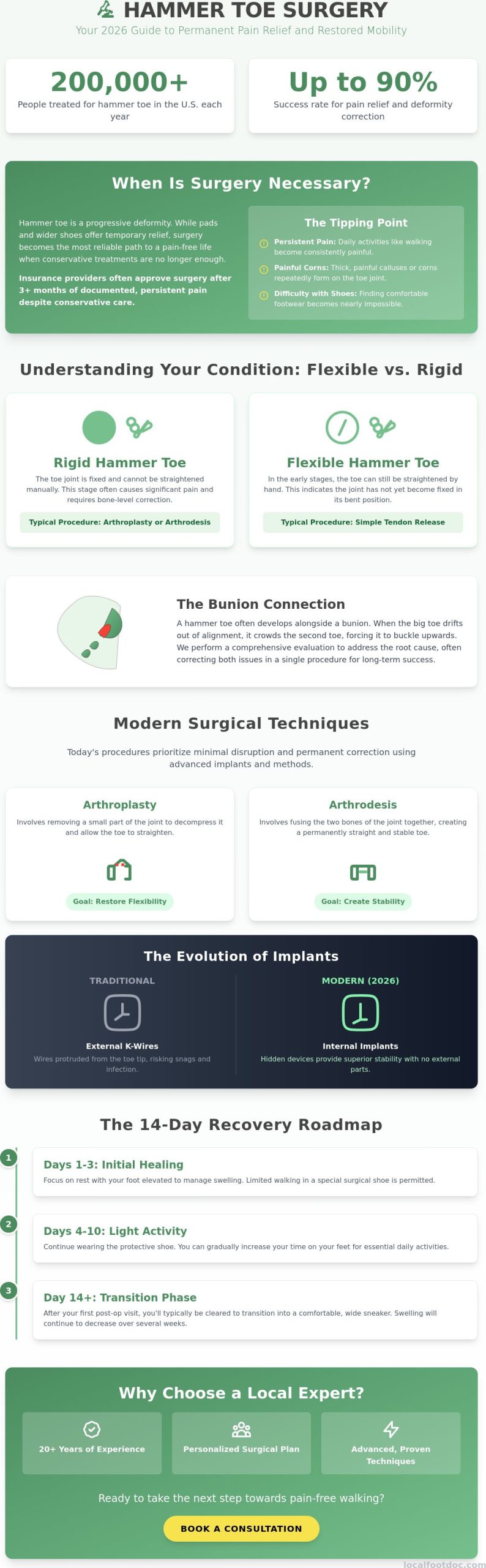
Our team views this procedure as a vital restoration of your foot’s biomechanical foundation, not just a cosmetic straightening. More than 200,000 people in the United States are treated for this condition each year, with success rates reaching up to 90% for pain relief and deformity correction. In this 2026 guide, we’ll explain the latest minimally invasive techniques and provide a clear recovery timeline. You’ll learn exactly how we help New Yorkers across the boroughs trade sharp pain for lasting mobility, ensuring you can wear your favorite dress shoes again and get back on your feet with confidence.
Key Takeaways
- Learn to identify the difference between flexible and rigid toe joints to understand when conservative care is no longer enough.
- Explore how modern hammer toe surgery utilizes minimally invasive techniques and hidden internal implants to improve your results.
- Discover how permanent alignment correction restores your ability to push off your toes properly while walking through the city.
- Follow a structured 14-day recovery roadmap designed to manage swelling and get you safely back on your feet.
- Understand why a personalized surgical approach from a local expert with 20 years of experience is vital for long-term success.
Understanding the Deformity: When is Hammer Toe Surgery Necessary?
A hammer toe isn’t just a minor cosmetic annoyance; it’s a structural failure of the toe’s internal architecture. We define hammer toe surgery as a corrective procedure designed to realign the joint and restore the foot’s natural function. While many patients start with pads or wider shoes, these are temporary fixes for a progressive problem. When the tendons and ligaments around the toe joint tighten, the toe begins to buckle. Over time, this misalignment leads to painful friction against footwear, causing thick corns and calluses that simply won’t stay away. For many of our patients, the decision to proceed with surgery comes when the pain begins to interfere with daily NYC life, whether that’s commuting on the subway or finishing a morning run in Central Park.
Understanding Hammer Toe requires looking at the biomechanics of your entire foot. A single bent toe can shift your weight and cause secondary pain in the ball of your foot or even your ankle. This shift in gait can lead to a “tipping point” where conservative measures fail. Insurance providers, including Aetna and Medicare, typically look for documented persistent pain and difficulty walking after at least three months of conservative treatment before approving a surgical solution. At this stage, hammer toe surgery becomes the most reliable path to regaining a pain-free lifestyle.
Flexible vs. Rigid Hammer Toes
In the early stages, a deformity is often “flexible,” meaning you can still straighten the toe by hand. At this point, our team might only need to perform a simple tenotomy, which is a tendon release, to allow the toe to lie flat. However, if left untreated, the joint eventually becomes “rigid” or fixed in place. Rigid deformities usually necessitate bone-level intervention to create a straight, stable digit. The Proximal Interphalangeal joint, or PIP joint, serves as the primary site of the hammer toe bend and is the focus of most corrective procedures.
The Bunion Connection
It’s very common to see a hammer toe develop alongside a bunion. When the big toe drifts out of alignment, it often crowds the second toe, forcing it to buckle upward to find space. This is why bunion surgery Queens patients often choose to have their hammer toes corrected during the same surgical session. Fixing the big toe provides the necessary “real estate” for the smaller toes to remain straight. Our team performs a comprehensive evaluation to ensure we address the root cause of the crowding, preventing the hammer toe from returning after your procedure. We don’t believe in a one-size-fits-all approach; we look at the entire biomechanical chain of your foot to ensure long-term success.
Modern Surgical Techniques: Arthroplasty, Arthrodesis, and MIS
The field of podiatric surgery has changed significantly over the last decade. In 2026, our team prioritizes techniques that minimize disruption to your life while ensuring a permanent fix. Choosing the right approach for hammer toe surgery depends on the severity of your joint’s stiffness and your activity level. We typically perform these procedures under local anesthesia combined with “twilight” sedation. This ensures you stay comfortable and relaxed without the heavy recovery associated with general anesthesia. Our specialists carefully evaluate your toe’s unique shape before recommending a specific path.
The hardware used in these procedures has also evolved. While traditional methods often relied on external K-wires that protruded from the tip of the toe, we now favor hidden internal implants. These modern devices, such as bone staples, allograft bone pins, or resorbable rods, provide superior stability without the risk of snagging on socks or bedding. Because the hardware is tucked away inside the bone, you don’t have to worry about the “scary” look of a metal pin during your initial weeks of healing.
Arthroplasty vs. Arthrodesis
These two procedures represent the primary ways we address rigid deformities. Arthroplasty involves removing a small portion of the joint to create space, which helps restore flexibility and is often preferred for patients who want to maintain movement in the toe. In contrast, arthrodesis involves fusing the joint together for a permanent, stable correction. When deciding on the best surgical treatment for hammer toe, we weigh your need for flexibility against the necessity for structural stability. For example, a runner might benefit more from the flexibility of an arthroplasty, while someone with a severely rigid deformity may require the definitive correction of an arthrodesis to prevent recurrence.
Minimally Invasive Toe Correction
Minimally invasive surgery (MIS) has become the gold standard for many of our patients. This “keyhole” approach uses specialized micro-tools to correct the deformity through tiny incisions that often don’t even require stitches. By utilizing these micro-incisions, we reduce the risk of infection and post-operative stiffness. This is particularly beneficial for active New Yorkers who need to get back on their feet quickly. Dr. Majdanski prioritizes these tissue-sparing techniques because they respect the foot’s natural anatomy and lead to less swelling and minimal scarring. If you’re tired of constant foot pain, you can schedule a consultation with our team to see if you’re a candidate for this advanced approach.
Benefits vs. Risks: What to Consider Before Your Procedure
Deciding to move forward with surgery is a choice that balances the desire for a pain-free life with the natural caution any medical procedure requires. The primary benefit of hammer toe surgery is the immediate elimination of the mechanical friction that causes agonizing corns and calluses. When your toe is properly aligned, you regain the ability to wear normal shoes without the constant “stinging” or “throbbing” sensations that define a rigid deformity. Beyond aesthetics, this procedure restores your foot’s propulsion. This is the critical ability to push off your toes effectively while walking, which prevents secondary strain on your ankles and knees. Most patients report a significant return to their active lifestyles, finally enjoying long walks through their neighborhoods without counting every painful step.
We believe in being transparent about potential risks to ensure you feel fully prepared. Common post-operative experiences include temporary swelling and a localized numbness that usually resolves as the nerves heal. While complication rates are low, choosing a board-certified surgeon in 2026 is the best way to minimize risks like infection or poor wound healing. You can find more detailed clinical information on the MedlinePlus on Hammer Toe Surgery page, which outlines the standard safety protocols we follow. Our team prioritizes advanced technology and personalized care to ensure your recovery is as smooth and predictable as possible.
Addressing the “Will it Come Back?” Fear
The success rate for hammer toe correction is remarkably high, with 80% to 90% of patients achieving permanent relief and deformity correction. However, the toe doesn’t exist in a vacuum. If underlying biomechanical issues like flat feet or high arches aren’t addressed, the imbalance that caused the hammer toe could return. This is why we often recommend custom orthotics after your procedure. These medical-grade inserts maintain the corrected alignment by stabilizing the foundation of your foot, ensuring your “new” toe stays in its proper place for years to come.
Surgical Safety and NYC Logistics
Modern hammer toe surgery is almost always an outpatient procedure, meaning you’ll go home the same day. For our patients in Queens and Brooklyn, we recommend arranging a private ride home rather than relying on public transport immediately after the procedure. Your comfort is our priority, and navigating the subway stairs isn’t ideal during the first 48 hours. For those with specific health considerations, such as high blood sugar, we provide specialized diabetic foot care clearance to ensure your circulation and healing capacity are optimized before we begin. This comprehensive approach is how we ensure every patient has a clear, comforting path to recovery.
The Recovery Roadmap: Getting Back on Your Feet
Recovery is a structured process that requires patience and precise care. While the surgery itself is a major step, the weeks following the procedure determine the long-term quality of your results. We design our recovery protocols to fit the high-energy lifestyle of New Yorkers, ensuring you move through each phase with confidence. Most patients find that they can resume light desk work within a few days, but a full return to high-impact activity typically occurs between four to six months post-op. Following our step-by-step roadmap is the most reliable way to ensure your hammer toe surgery provides the permanent relief you deserve.
- Step 1: The First 48 Hours – This is the critical “RICE” period. You must focus on Rest, Ice, Compression, and Elevation to keep initial inflammation under control. Keeping your foot above the level of your heart for 90% of the day is essential during this window.
- Step 2: Weeks 1-2 – You’ll begin transitioning within your home using a specialized post-operative shoe. We’ll see you for your initial follow-up during this time to check the incision sites and ensure the healing process is on track.
- Step 3: Weeks 3-6 – Weight-bearing increases gradually. You’ll move from the surgical boot into a wide-toe-box sneaker. We’ll monitor your progress to ensure the joint remains stable as you begin to walk longer distances.
- Step 4: Month 2 and Beyond – This is when you’ll return to low-impact sports medicine activities. Whether it’s cycling or swimming, we’ll help you rebuild strength and flexibility.
Managing Swelling in the City
Living in New York presents unique challenges during recovery. If you live in a Brooklyn walk-up or a Queens apartment with several flights of stairs, you’ll need to plan your outings carefully. NYC walking requirements are much higher than in other cities, which makes elevation even more critical once you’re back on the move. We recommend ordering your groceries and essentials for delivery during the first two weeks to avoid unnecessary strain. Remember that swelling is the body’s way of healing, but management is key to comfort.
Footwear Transition Timeline
The transition from a post-op boot to normal shoes is a major milestone. By week six, most of our patients are comfortable in high-quality sneakers with plenty of room for the toes to splay naturally. While you might be eager to wear dress shoes or heels again, we usually recommend waiting at least three months. This allows the internal structures to fully stabilize. Our team may also introduce physical therapy exercises to restore the toe’s range of motion and ensure your gait is balanced. If you’re ready to fix your foot pain and regain your mobility, you can schedule your consultation to start your recovery journey today.
Why Choose Local Foot Doc for Hammer Toe Correction?
Selecting the right surgical team is the most important decision you’ll make for your long-term mobility. At Local Foot Doc, we recognize that being a New Yorker requires a level of foot health that most other cities simply don’t demand. Dr. Waldemar Majdanski brings over 20 years of NYC podiatric surgery experience to our practice, ensuring that your care is rooted in both deep expertise and local understanding. We don’t believe in a one-size-fits-all surgery. Instead, we create personalized treatment plans that account for your specific lifestyle, whether you’re a marathon runner or a daily subway commuter. Our comprehensive approach means we look at your entire foot health, from correcting toe alignment to explaining what is plantar fasciitis if you’re also struggling with chronic heel pain.
Our commitment to your recovery extends across the boroughs, with specialized care available at our convenient locations in Forest Hills, Astoria, and Woodhaven. We’ve built our practice to be a trusted local institution where clinical authority meets compassionate reassurance. When you trust us with your hammer toe surgery, you’re gaining a partner dedicated to getting you back on your feet without the “stinging” or “throbbing” pain that has held you back for too long.
Advanced Technology Meets Compassionate Care
We utilize 2026-standard digital imaging and the latest surgical hardware to ensure every procedure is precise and stable. However, advanced technology is only half of the equation. Our “Expert Neighbor” approach ensures that we treat you like a person, not just a chart number. You’ll have direct access to our team for any post-operative questions, which is vital when you’re managing the logistics of NYC life during your recovery. We take the time to explain every step, from the initial incision to the moment you can finally wear your favorite dress shoes again.
Booking Your Consultation in Brooklyn or Queens
Your first surgical evaluation is a collaborative process where we identify the root cause of your discomfort. To make the most of your visit, we recommend preparing a few things in advance:
- Medical History: Bring any recent X-rays or imaging results related to your foot pain.
- Shoe History: Bring 2-3 pairs of your most-worn shoes so we can analyze your wear patterns and biomechanics.
- Insurance Information: Our team helps you understand your coverage for hammer toe surgery to avoid any surprises.
Navigating the healthcare system shouldn’t be as difficult as a rush-hour commute. We assist with all insurance navigation, ensuring you have a clear, comforting path to correction. Don’t let a “clawed” toe or painful corns keep you from enjoying everything the city has to offer. It’s time to reclaim your independence and walk with confidence once again. Schedule your consultation with Local Foot Doc today and let’s get you back on your feet.
Reclaim Your Mobility and Walk the City with Confidence
Living in New York means your feet are your primary mode of transportation. Whether you’re navigating the subway or walking through Forest Hills, you shouldn’t have to endure the sharp, stinging pain of a rigid joint deformity. We’ve explored how modern advancements, including hidden internal implants and tissue-sparing techniques, have transformed the experience of hammer toe surgery. By addressing the underlying biomechanics and choosing a corrective path tailored to your specific needs, you can finally trade the embarrassment of “clawed” toes for the ability to wear your favorite shoes comfortably again.
Our team at Local Foot Doc brings board-certified surgical expertise and over 20 years of experience serving our local NYC communities. We prioritize minimally invasive surgical options that lead to faster healing and less swelling, helping you return to your active lifestyle sooner. Don’t let chronic foot pain dictate where you can go or what you can do. It’s time to take the final step toward lasting relief and regained independence.
Schedule your hammer toe consultation at our Forest Hills or Astoria office today. We look forward to helping you get back on your feet and back to the life you love.
Frequently Asked Questions
How painful is hammer toe surgery really?
Most patients experience manageable discomfort rather than intense pain because we use long-acting local anesthetics and “twilight” sedation during the procedure. You’ll likely feel a dull throb for the first 48 to 72 hours, which we manage effectively with prescribed or over-the-counter medication. Modern techniques like MIS involve less tissue trauma, which significantly reduces post-operative soreness compared to traditional methods used a decade ago.
Can I walk immediately after my toe surgery?
Yes, you can typically walk immediately after the procedure using a specialized post-operative boot that protects the surgical site. However, walking in the first week should be limited to essential trips within your home to manage swelling. We emphasize the “heel-walk” technique to keep pressure off the corrected digits until your first follow-up appointment, which we usually schedule 7 to 10 days after surgery.
Will insurance cover the cost of hammer toe correction?
Medical insurance, including Medicare and private plans like Aetna, generally covers hammer toe surgery when it’s deemed medically necessary. Insurers typically require documentation of persistent pain and functional impairment after at least three months of conservative treatment. Our team assists with the prior authorization process by providing radiographic evidence and detailed clinical notes to help you understand and maximize your benefits.
How long do I need to take off work for recovery?
Most patients with sedentary desk jobs return to work within 3 to 7 days, especially if they have the option to work remotely. If your job requires standing or heavy walking, you may need 2 to 4 weeks off to ensure proper healing. Because NYC commutes often involve subways and stairs, we recommend a more conservative return-to-work timeline for those relying on public transit to avoid premature swelling.
Is it better to fix multiple toes or a bunion at the same time?
It’s often highly beneficial to correct multiple toes or an associated bunion during a single surgical session. Addressing these issues together prevents the “crowding” that often causes hammer toes to recur. This approach also consolidates your recovery time into one window, which is much more efficient for busy New Yorkers who want to minimize their total time away from an active lifestyle.
What happens if I leave my hammer toe untreated?
Leaving a hammer toe untreated usually leads to the joint becoming “rigid” or permanently fixed in a bent position. This progression often causes secondary issues like painful bursitis, skin ulcerations, or open sores from constant shoe friction. Over time, the imbalance can even cause stress fractures in the metatarsal bones as your gait shifts to compensate for the toe’s lack of function.
Are there non-surgical alternatives that actually work in 2026?
Non-surgical options like custom orthotics and wider toe-box shoes are excellent for managing symptoms, but they cannot reverse a structural bone deformity. In 2026, we use advanced biomechanical mapping to design orthotics that slow the progression of flexible toes. However, once a toe becomes rigid, hammer toe surgery remains the only way to permanently realign the joint and eliminate the root cause of the pain.
Will I have a permanent scar on my toe?
While every incision results in some level of marking, modern minimally invasive surgery utilizes “keyhole” incisions that leave virtually invisible scars. These tiny openings often measure less than 3 millimeters and typically don’t require external stitches. If a traditional open approach is necessary, we place incisions along the natural skin creases of the toe to ensure the final result is as discreet as possible.