Imagine another July afternoon in Brooklyn where you are choosing heavy sneakers over sandals because you feel the need to hide a “short toe” from the world. This is a daily reality for many neighbors living with brachymetatarsia, a condition where a shortened metatarsal bone causes one toe to appear recessed. We know that the struggle goes far beyond aesthetics. It often involves persistent pain in the ball of the foot and a constant search for shoes that don’t pinch or rub. Finding an experienced brachymetatarsia specialist Brooklyn can trust is the first step toward reclaiming your mobility and your comfort.
You shouldn’t have to compromise your lifestyle or your self-esteem. We are here to show you how advanced toe-lengthening techniques can restore the physical alignment of your foot and your own self-assurance. This article previews the latest 2026 surgical options, including gradual lengthening and acute correction, to help you understand the path toward a naturally proportioned foot and a pain-free stride.
Key Takeaways
- Understand how a shortened metatarsal causes physical pain and weight-shifting issues like metatarsalgia.
- Compare the benefits of acute bone grafting versus gradual lengthening techniques to see which recovery path fits your lifestyle.
- Learn why choosing a board-certified brachymetatarsia specialist Brooklyn trusts is essential for achieving precise, functional results.
- Discover how correcting a “floating toe” restores your ability to wear open-toed shoes and walk without discomfort.
- Explore Dr. Waldemar Majdanski’s patient-centered approach to deformity correction and specialized surgical care at Local Foot Doc.
What is Brachymetatarsia? Understanding the ‘Short Toe’ Condition
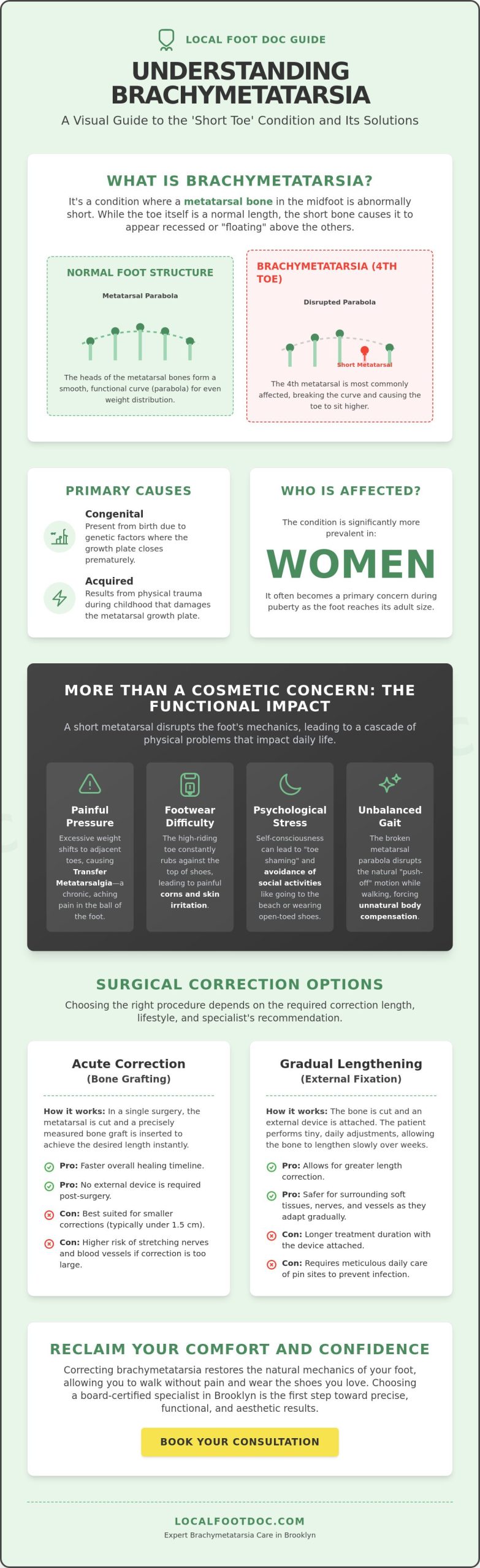
Many patients visit our office believing they simply have a “short toe” that didn’t grow properly. In reality, the condition we call brachymetatarsia involves a metatarsal bone in the midfoot that stopped growing prematurely. While the toe itself is usually a normal size, the shortened bone behind it causes the toe to drift upward or appear recessed. To truly understand What is Brachymetatarsia?, we must look at the growth plate. When this plate closes too early, the bone cannot reach its full length. This most frequently affects the fourth metatarsal, creating the characteristic “floating toe” look that many find distressing.
We categorize this condition into two main types: congenital and acquired. Congenital cases are present from birth and are often linked to genetic factors. Acquired brachymetatarsia, however, results from physical trauma. If a child suffers a foot injury that damages the metatarsal growth plate, that specific bone may stop lengthening while the rest of the foot continues to develop normally. Because this is a complex structural issue, seeking a brachymetatarsia specialist Brooklyn residents can rely on is the best way to ensure an accurate diagnosis and a clear path toward correction.
Who Does Brachymetatarsia Affect?
Statistical trends suggest this condition is significantly more prevalent in women than in men. While the structural difference exists from early childhood, it often becomes a primary concern during puberty as the foot reaches its adult proportions. This period is frequently when the psychological impact of “toe shaming” begins. We’ve cared for many neighbors who have spent years in social withdrawal, avoiding the beach or NYC pools to hide their feet. Brachymetatarsia is a structural metatarsal shortening that impacts the entire forefoot.
Is it Just a Cosmetic Concern?
While the aesthetic appearance of a floating toe is a valid reason to seek care, the functional impact on your health is even more critical. Your foot is designed to distribute weight evenly across the metatarsal arch. When one bone is too short, it fails to carry its share of the load during walking. This imbalance shifts excessive pressure onto the adjacent third and fifth toes, which often leads to painful calluses and a condition called transfer metatarsalgia. We recommend early consultation with a brachymetatarsia specialist Brooklyn expert before these secondary pains develop into chronic mobility issues. Correcting the length of the metatarsal isn’t just about how the foot looks; it’s about restoring the natural mechanics of every step you take.
Symptoms and Functional Impact: Why Correction Matters
The impact of brachymetatarsia extends far beyond the visual appearance of a recessed toe. When you walk, your foot relies on a specific sequence of pressure distribution. If one metatarsal bone is too short, it cannot reach the ground to support your weight. This structural gap forces the adjacent third and fifth toes to compensate for the missing support, a condition known as transfer metatarsalgia. Over time, this extra burden causes a dull, aching pain in the ball of the foot. Working with a brachymetatarsia specialist Brooklyn residents trust can help identify these mechanical issues before they limit your daily activities.
Finding comfortable footwear is another significant hurdle. Because the affected toe often sits higher than the others, it frequently rubs against the top of the shoe’s toe box. This constant friction leads to painful corn formation and chronic skin irritation. Many of our patients find themselves limited to wide shoes just to avoid the stinging sensation of a standard sneaker or dress shoe. If you’re experiencing these physical setbacks, consulting a podiatrist in Brooklyn is the first step toward understanding your options for relief.
The Biomechanics of a Short Metatarsal
Your foot is built around a “metatarsal parabola,” which is a gentle curve formed by the heads of the five metatarsal bones. This alignment is critical for a smooth “push-off” phase when you walk. A short bone breaks this curve, disrupting your gait and forcing your body to find unnatural ways to balance. According to this medical overview of brachymetatarsia, leaving this misalignment untreated can lead to long-term risks like stress fractures in the overworked neighboring bones. While custom orthotics can redistribute pressure for temporary comfort, they can’t address the underlying bone length.
Recognizing the Signs in Children and Adults
The most obvious sign is the visual cue of a toe appearing to sit “on top” of the foot rather than in line with its neighbors. However, the pain patterns are just as telling. You might notice a deep ache in the forefoot after a long day in Manhattan or Brooklyn. These symptoms shouldn’t be ignored as “just the way your feet are.” A qualified brachymetatarsia specialist Brooklyn expert can use a definitive X-ray to measure the exact degree of shortening. If you’re tired of managing the pain with bandages and wide shoes, we invite you to learn more about our specialized treatments to explore a permanent solution.
Toe Lengthening Surgery: Acute vs. Gradual Techniques
Once we’ve identified the functional impact of a short metatarsal, the next step is choosing the surgical path that best fits your anatomy. There isn’t a one-size-fits-all approach to bone lengthening. We carefully evaluate the specific measurements of your foot to decide between immediate correction and a slower, more controlled growth process. When you meet with a brachymetatarsia specialist Brooklyn residents rely on, we’ll use precise imaging to determine exactly how many millimeters of length your foot requires to regain its natural balance.
The choice between these two primary techniques depends largely on the severity of the shortening and the flexibility of the surrounding soft tissues. You can find more detailed information on various symptoms and treatment options through the American College of Foot and Ankle Surgeons. Our goal is always to provide a solution that restores your independence and gets you back to the NYC activities you love without the burden of chronic forefoot pain.
Acute (One-Stage) Lengthening
Acute lengthening is a single-stage procedure that provides immediate results. This technique is generally best for cases requiring less than 1 centimeter of growth. During the surgery, we cut the metatarsal bone and insert a bone graft to fill the gap. This graft can be an autograft, taken from elsewhere in your own body, or a processed allograft. While it’s rewarding to see an instant change in the foot’s appearance, this method is limited by the tension it places on nerves and blood vessels. If the bone is stretched too far all at once, it can compromise circulation to the toe.
Gradual Lengthening (Distraction)
For neighbors with more significant shortening, typically over 10-15mm, we often recommend gradual lengthening. This method uses a biological process called distraction osteogenesis. We place a small external fixator on the foot, which you’ll use to slowly “stretch” the bone by approximately 1mm per day. This slow pace allows your skin, nerves, and blood vessels to adapt alongside the growing bone. While the visible hardware requires a few weeks of patience, this technique offers the greatest potential for significant length and often allows for earlier weight-bearing during the recovery phase. Consulting an experienced brachymetatarsia specialist Brooklyn expert ensures that whichever method you choose, your safety and long-term mobility remain the top priorities.
Choosing a Brachymetatarsia Specialist in Brooklyn
Selecting the right surgeon is the most critical decision you’ll make in your recovery journey. Because metatarsal lengthening involves both bone and soft tissue manipulation, you need a board-certified podiatric surgeon who specializes in deformity correction. A brachymetatarsia specialist Brooklyn patients trust should be able to show you a robust ‘Before and After’ gallery of their own successful cases. Seeing these results firsthand provides a clear picture of the specialist’s technical skill and aesthetic eye. It’s not just about the length of the bone; it’s about the final alignment and the way the foot functions as a whole.
Proximity matters more than you might think. During the bone-growth phase, especially if you choose gradual lengthening, you’ll need frequent follow-up visits to monitor your progress. Having a local office in Brooklyn or Queens makes these appointments much more manageable. We also understand the ‘NYC lifestyle’ challenges that other practices might overlook. Planning your surgery means accounting for subway commutes, narrow stairs, and the high-energy pace of our city. We work with you to map out a recovery plan that respects these local realities, ensuring you aren’t stranded in a walk-up apartment without the support you need.
Questions to Ask Your Surgeon
Before you commit to a procedure, we encourage you to have a candid conversation with your provider. Don’t hesitate to ask these specific questions during your initial consultation:
- How many toe-lengthening procedures have you performed in the last year?
- Based on my X-rays, which technique do you recommend for my specific bone structure?
- What is your specific protocol for managing post-operative swelling and pain in the first week?
- Can you explain the expected timeline for returning to regular shoes?
Navigating Insurance and Planning
A common concern is whether insurance covers this procedure. We help our patients understand the distinction between functional and cosmetic coding. Since brachymetatarsia often causes transfer metatarsalgia and gait issues, many plans recognize the medical necessity of correction. You’ll also need to prepare your home for the first 2-6 weeks of non-weight bearing. If you have underlying health issues, such as poor circulation or a need for diabetic foot care Brooklyn services, we’ll coordinate your care to ensure a safe healing process. If you’re ready to take the next step toward a more comfortable stride, you can schedule a consultation with our team today to discuss your personalized treatment plan.
Expert Brachymetatarsia Care at Local Foot Doc
At Local Foot Doc, we believe that no neighbor should have to adjust their lifestyle to accommodate foot pain or self-consciousness. Dr. Waldemar Majdanski leads our practice with a specialized focus on deformity correction, bringing a sophisticated understanding of foot biomechanics to every case. As a dedicated brachymetatarsia specialist Brooklyn residents trust, he combines clinical precision with a compassionate, patient-centered philosophy. We don’t just treat symptoms; we partner with you to restore your mobility and your confidence.
Our Brooklyn and Queens locations are equipped with state-of-the-art diagnostic imaging, allowing us to capture high-resolution views of your metatarsal structure. This technology is essential for creating the personalized recovery plans that our patients need to return to their busy NYC lives. Whether you’re walking to the L train or climbing stairs in a brownstone, we ensure your post-operative path is structured for your specific environment. We focus on the ultimate goal of healing and the resumption of a normal, active lifestyle.
Why Patients Choose Dr. Majdanski
Dr. Majdanski brings over 20 years of experience to the operating room, having performed numerous complex procedures ranging from metatarsal lengthening to bunion surgery Queens residents rely on for lasting relief. Patients choose our practice because we prioritize a collaborative atmosphere. We want you to feel empowered and informed before you ever step into surgery. By maintaining offices in multiple neighborhoods, we provide reliable, community-focused care that makes our practice feel like a trusted local institution rather than a detached medical group.
Schedule Your Consultation Today
Your journey toward a pain-free stride begins with a comprehensive first visit. During this consultation, we’ll perform detailed digital X-rays and a thorough gait analysis to see exactly how your bone structure affects your movement. We’ll discuss your specific goals, whether that’s running a marathon or simply feeling comfortable in open-toed shoes during a Brooklyn summer. It’s time to stop hiding your feet and start walking with pride. You can take the first step toward recovery right now. Book your consultation with a Brooklyn brachymetatarsia specialist today.
Take the First Step Toward a Pain-Free Stride
Correcting a short toe is about more than just aesthetics; it’s about restoring the natural balance and mechanics of your entire foot. We’ve discussed how specialized surgical techniques can resolve transfer metatarsalgia and eliminate the friction that makes NYC commutes so difficult. By choosing a brachymetatarsia specialist Brooklyn residents rely on, you’re investing in a future where you no longer have to hide your feet or manage daily discomfort. Our team focuses on specialized deformity correction to ensure your results are both functional and lasting.
With board-certified surgical expertise and over 20 years of NYC clinical experience, we understand the unique needs of our neighbors. We’re dedicated to providing a clear, comforting path to recovery that respects your active lifestyle. If you’re ready to stop compromising and start walking with renewed independence, we invite you to reach out. Schedule Your Brachymetatarsia Consultation at Local Foot Doc today. We look forward to helping you regain your confidence and your mobility.
Frequently Asked Questions
Is brachymetatarsia surgery painful?
Most patients experience manageable discomfort rather than intense pain because we utilize advanced local anesthetic blocks and modern post-operative protocols. You’ll likely feel some pressure and swelling during the first few days, but we provide a detailed plan to keep you comfortable at home. Our goal is to ensure your path to recovery is as smooth and stress-free as possible.
How long is the recovery time for toe lengthening surgery?
A full recovery typically takes three to four months before you can return to regular footwear. While the initial bone healing occurs within the first six weeks, the new bone needs additional time to harden and support your full body weight. We’ll monitor your progress closely to ensure you’re ready for the demands of walking on NYC pavement.
Will I have a scar after the procedure?
You will have a small surgical scar, but we use precise, minimally invasive incision techniques to ensure it’s as discreet as possible. These marks are strategically placed to blend with the natural lines of your foot and usually fade significantly over time. We also provide guidance on topical treatments to help the skin heal beautifully.
Can I walk immediately after brachymetatarsia surgery?
Most patients need to remain non-weight bearing for the first two to four weeks to protect the surgical site. We’ll provide you with a specialized boot or cast and discuss mobility aids like knee scooters to help you get around your home. Gradually, we’ll transition you back to walking as the bone consolidation progresses.
Is brachymetatarsia surgery covered by insurance in New York?
Insurance providers in New York often cover the procedure when we can document that the condition causes physical pain or gait imbalances. As a dedicated brachymetatarsia specialist Brooklyn neighbors trust, we work with your insurance company to demonstrate the medical necessity of the surgery. We focus on the functional benefits, such as relieving metatarsalgia and restoring proper foot mechanics.
What happens if I don’t treat my brachymetatarsia?
Leaving the condition untreated often leads to chronic pain in the ball of the foot and the formation of painful calluses on neighboring toes. Because the short metatarsal doesn’t carry its share of your weight, the rest of your foot has to overcompensate. This imbalance can eventually cause stress fractures or long-term mobility issues that limit your activity levels.
Can both feet be operated on at the same time?
While bilateral surgery is possible, we usually recommend treating one foot at a time to preserve your independence during recovery. Operating on both feet simultaneously typically requires the use of a wheelchair for several weeks. For most of our patients, staging the procedures allows for a more manageable transition back to their daily routines.
How much length can actually be gained through surgery?
We can typically gain between 10mm and 20mm of length, which is usually enough to restore a natural appearance and proper function. The specific amount depends on the flexibility of your skin and nerves. A brachymetatarsia specialist Brooklyn expert will use digital imaging to determine the exact measurement needed to realign your metatarsal arch perfectly.