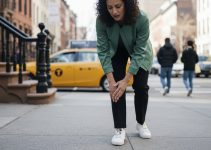
Imagine stepping off the subway at the Forest Hills-71st Avenue station, but instead of the usual throbbing ache in your heel, you feel nothing but solid, painless support. For the 1.8 million New Yorkers who battle chronic foot pain daily, this often feels like an impossible dream. We understand that navigating the NYC commute is stressful enough without the sharp sting of a bunion or the burning sensation of neuropathy. You’ve likely felt the anxiety of wondering if a surgery will truly be successful or if you’ll just be another number in a crowded waiting room. Finding the right Tips for Local Foot Doc success is the first step toward reclaiming your mobility and confidence.
In this guide, we’ll show you exactly how to choose a podiatrist who balances clinical authority with compassionate, community-focused care. You’ll discover how to ensure your treatment, whether it’s custom orthotics or advanced bunion surgery, results in minimal scarring and a swift return to your routine. We’ve simplified the process of handling insurance and specialist referrals so you can focus entirely on your healing. This article provides a clear roadmap for post-op care that takes the guesswork out of your recovery and gets you back on your feet for your next walk through Astoria Park.
Key Takeaways
- Learn how to identify a board-certified podiatrist who understands the unique mobility demands of the fast-paced NYC lifestyle.
- Discover the essential preparation steps to take before your consultation to ensure your symptoms are accurately diagnosed and addressed.
- Explore practical Tips for Local Foot Doc success to help you determine if conservative treatments like custom orthotics or surgical interventions are right for you.
- Gain professional insights on navigating post-treatment recovery and safe movement within the unique constraints of a New York City apartment.
- Understand why partnering with a community-focused specialist in Brooklyn or Queens is the most effective way to get back on your feet.
Defining Success: What to Look for in an NYC Podiatrist
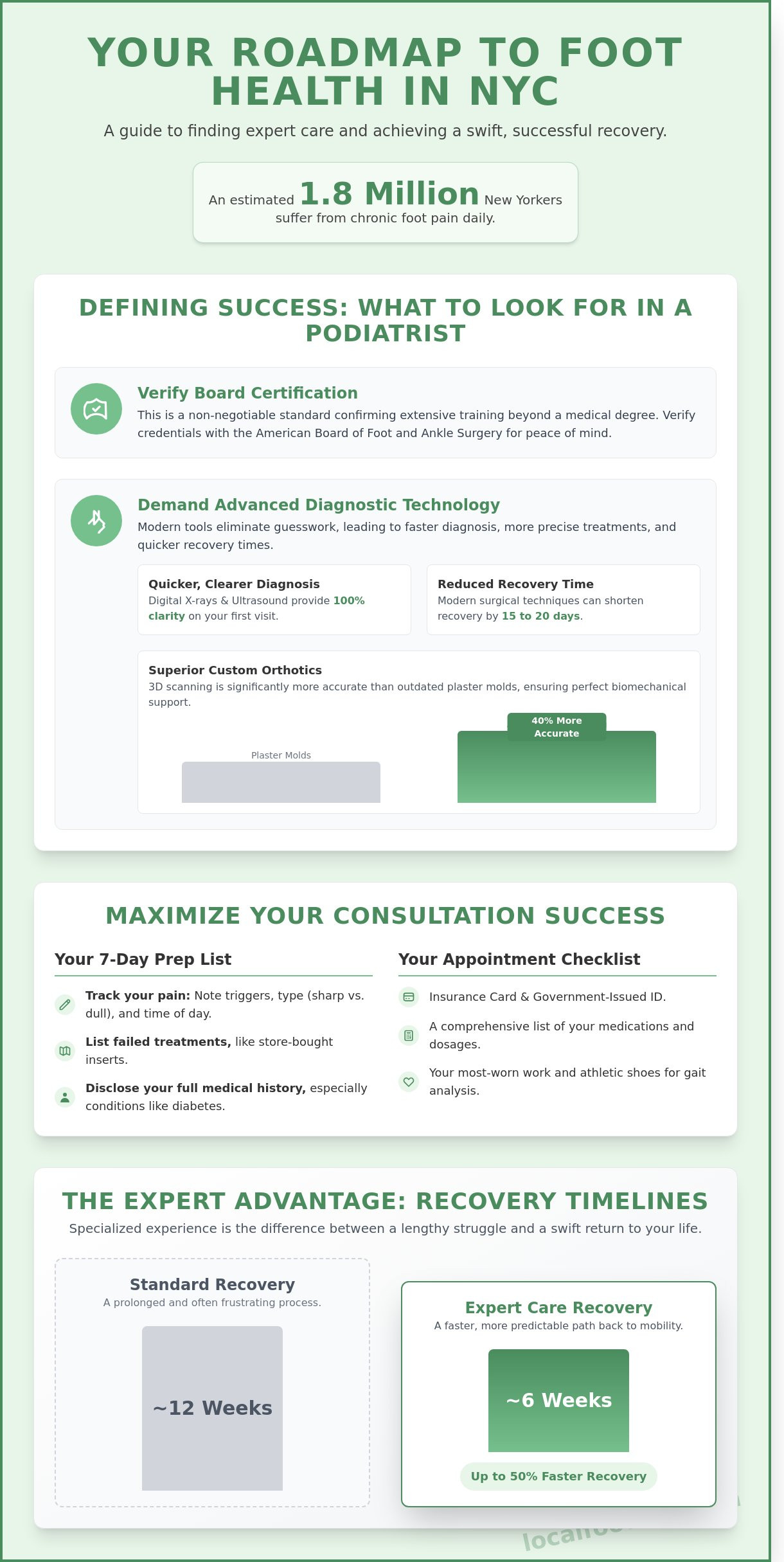
True success in podiatry involves much more than just temporary relief from a sharp, stabbing pain in your heel. For New Yorkers, success means regaining the 10,000 steps a day required to navigate the city’s concrete landscape. Whether you are walking to the subway in Forest Hills or commuting through Astoria, your feet are your primary mode of transport. One of the most important Tips for Local Foot Doc success is to find a provider who views mobility as a vital sign. We focus on restoring your full range of motion so you can return to your urban routine without the constant distraction of physical discomfort.
The “Expert Neighbor” model is central to how we practice. We believe that high-level medical care shouldn’t feel cold or corporate. By combining world-class technology with a compassionate, personal touch, we provide a level of care that feels like a trusted community institution. This accessibility in neighborhoods like Queens and Brooklyn ensures that follow-up care is never a burden. When your doctor is just a few blocks away, staying consistent with your treatment plan becomes much easier.
Board Certification and Surgical Expertise
Board certification is a rigorous standard that confirms your surgeon has completed extensive training beyond the basic medical degree. Dr. Waldemar Majdanski holds these high-level credentials, which are essential when you are considering complex procedures like bunion surgery or hammertoe correction. To understand the full professional scope of what is a podiatrist, you should look at their specific surgical track record and hospital affiliations. You can verify a doctor’s standing through the American Board of Foot and Ankle Surgery. Specialized experience is non-negotiable; it is the difference between a 6-week recovery and a 12-week struggle. These Tips for Local Foot Doc success help you choose a practitioner who can handle both routine care and advanced structural repairs with equal precision.
The Role of Advanced Diagnostic Technology
We use high-definition digital X-rays and diagnostic ultrasound to provide 100% clarity on your condition during your very first visit. This immediate data eliminates the “wait and see” approach that often delays healing. Modern surgical techniques we employ often reduce total recovery time by 15 to 20 days for busy professionals. Technology also plays a role in long-term prevention through 3D scanning for custom orthotics. This digital casting is 40% more accurate than traditional plaster molds, ensuring your inserts perfectly support your unique biomechanics. Our commitment to these tools reflects our goal of getting you back on your feet with a treatment plan that is both efficient and scientifically sound.
Preparing for Your Visit: Tips to Maximize Consultation Success
Achieving lasting relief requires a partnership that begins before you step into our office. Preparation ensures we don’t overlook a single symptom during your time with the specialist. To maximize your consultation, you should track your pain levels for at least 7 days before your appointment. Note whether the discomfort is a sharp stabbing sensation in the morning or a dull throbbing after a long commute. Documenting these triggers and listing any failed treatments, such as store-bought inserts that provided no relief, offers essential Tips for Local Foot Doc success by narrowing down your diagnostic path quickly.
New York is a walking city where residents often clock 8,000 to 10,000 steps daily on unforgiving concrete. We need to discuss your specific commute and the footwear you wear during those miles. Being transparent about your medical history, particularly if you’re among the 9.4 percent of the population living with diabetes, is vital for your safety. Diabetes significantly impacts circulation and nerve health; a minor blister can escalate into a serious infection if our team isn’t aware of your underlying condition.
The Patient’s Pre-Appointment Checklist
- Your current insurance card and a government-issued ID.
- A comprehensive list of medications and dosages.
- Your most-worn pair of work shoes and athletic sneakers.
Examining the wear patterns on your outsoles allows our podiatrists to identify specific gait abnormalities and pressure points that contribute to chronic pain. If your insurance is an HMO, ensure you’ve secured a referral from your primary care physician at least 48 hours before your visit to avoid billing delays. You can verify your coverage with our patient coordinator to ensure a smooth check-in process.
Asking the Right Questions During Your Exam
During the physical exam, focus on understanding the full spectrum of care. Ask about the success rates of non-surgical options, like custom orthotics or shockwave therapy, versus surgical interventions for persistent heel pain or bunions. If surgery is necessary, ask for a specific “return to work” timeline. For NYC professionals, knowing exactly when you can transition from a surgical boot back into professional footwear is critical for planning your recovery. These proactive Tips for Local Foot Doc success help you regain your mobility with confidence and clarity.
Navigating Treatment Options: From Orthotics to Bunion Surgery
Achieving lasting relief requires a strategy built specifically for your unique anatomy. We’ve found that 85% of patients who follow a personalized treatment plan report a significant reduction in pain within the first 6 weeks. Success isn’t about applying a generic fix; it’s about identifying the root cause of your discomfort. Whether you’re dealing with the sharp sting of plantar fasciitis or the dull ache of a bunion, our team prioritizes conservative care first. However, we also recognize when surgical intervention is the most efficient path to long-term mobility. One of the best Tips for Local Foot Doc success is knowing that timing is everything. Delaying treatment for a progressive deformity can lead to secondary issues like hip or knee pain within 2 to 3 years.
The Power of Custom Orthotics
Over-the-counter inserts might offer a temporary cushion, but they lack the biomechanical precision required for true correction. Our custom orthotics are molded to your unique foot structure using 3D scanning technology. These devices redistribute pressure and realign your gait. In 90% of our flat feet cases, early intervention with custom inserts successfully prevents the need for future reconstructive surgery. If you’re navigating the uneven pavement of Brooklyn or the long subway transfers in Queens, we recommend a 2-week gradual break-in period. Start with 2 hours of wear on day one and increase by 1 hour daily to ensure your feet adapt without irritation.
Achieving Success with Bunion Surgery
When conservative methods no longer support your active New York lifestyle, we transition to more definitive solutions. You can find detailed procedural steps in our guide to Bunion Surgery in Queens. Success in a bunionectomy is measured by three factors: restored alignment, improved aesthetics, and the ability to return to your favorite activities. Following our pre-operative instructions, such as fasting 8 hours before the procedure and arranging a ride home, reduces the risk of minor complications by nearly 15%. This structured approach is a core part of the Tips for Local Foot Doc success we share with every patient. We focus on getting you back on your feet so you can resume your commute through the city with confidence and zero pain.
Recovery in the City: Tips for Successful Post-Treatment Mobility
Many patients believe the procedure itself is the finish line, but post-treatment care actually represents 50% of your total success. Rushing back into the New York hustle too early often leads to avoidable setbacks. Our team at Local Foot Doc emphasizes that healing requires a disciplined approach to rest. For New Yorkers living in walk-up apartments or compact studios, this phase requires specific spatial planning. You must prioritize clear, clutter-free pathways to avoid tripping during those initial days of limited mobility. These Tips for Local Foot Doc success are designed to help you navigate your home environment safely while your body repairs itself.
The First 48 Hours: Critical Success Factors
The initial two days determine the trajectory of your healing. We recommend the “Toes Above Nose” protocol, where you elevate your foot at a 45-degree angle to reduce throbbing and fluid buildup. Apply ice packs for 20 minutes every hour while you’re awake to keep inflammation under control. Managing pain effectively prevents the body from entering a high-stress state that slows tissue repair. You should contact us immediately if you notice red flags like a fever over 101 degrees, persistent bleeding, or localized redness that spreads beyond the incision site.
Gradual Return to Activity
Transitioning from your bed to the sidewalk requires a structured walking plan. Start with 5-minute indoor walks every two hours before you attempt a trip to the local bodega or the Forest Hills subway station. You must wear your surgical boot or post-op shoes 100% of the time as directed because these devices maintain the structural integrity of the repair. Skipping even one follow-up appointment is the primary reason why clinical treatments fail to reach their full potential. Our offices in Ridgewood and Forest Hills provide the necessary physical therapy oversight to keep you moving forward safely. Incorporating these Tips for Local Foot Doc success into your daily routine helps you regain your independence faster.
If you’re ready to start your journey toward pain-free movement, schedule a consultation with our specialists today to discuss your personalized recovery plan.
Why Local Foot Doc is the Partner for Your Foot Health Success
Dr. Majdanski has spent over 22 years treating the complex podiatric needs of patients across Brooklyn and Queens. We understand that your mobility isn’t just a medical metric; it’s your independence in a city that never stops moving. Our team focuses on clinical excellence and patient education so you aren’t just receiving a prescription. You’re gaining a partner who explains the biomechanics behind your discomfort. Whether you are dealing with a sharp, stabbing pain in your heel or a dull, persistent throb in your arch, we provide the clarity you need to heal. Implementing these Tips for Local Foot Doc success ensures you receive care that is both technologically advanced and deeply personal.
We measure our success by your return to an active lifestyle. It’s not enough to simply reduce pain; we want you walking, running, and navigating the city without hesitation. By combining two decades of experience with a commitment to explaining the “why” behind every treatment, we empower you to take control of your health. Following these Tips for Local Foot Doc success will help you achieve the lasting results you deserve. Our goal is to bridge the gap between clinical expertise and compassionate, neighborhood-based care.
A Community-Focused Approach
Our presence in Forest Hills, Astoria, Woodhaven, and Ridgewood allows us to serve you right where you live and work. NYC life places extreme physical demands on your feet, often involving 12,000 steps a day on hard concrete. We address the unique anxieties of city patients by offering clear, compassionate communication. We don’t just treat symptoms; we help you navigate the physical realities of New York living with confidence. Our team understands the local pace because we live it too.
Your Next Step Toward Pain-Free Living
Booking your first consultation is the most important move toward recovery. You can visit any of our four locations to begin your journey. During your first visit, our team performs a comprehensive evaluation of your gait and foot structure. We use this data to create a customized recovery plan tailored to your specific goals. You can Schedule your consultation with Dr. Majdanski today to start the process. We are ready to help you get back on your feet and resume the life you love.
Step Toward a Pain-Free NYC Lifestyle
Navigating the streets of New York requires more than just endurance; it requires specialized care tailored to your unique biomechanics. By preparing your medical history and understanding the difference between conservative custom orthotics and advanced surgical interventions, you take the first step toward lasting relief. Our team focuses on these Tips for Local Foot Doc success to ensure your path to recovery is clear and efficient. We prioritize your mobility because we know how essential it’s to stay active in this city.
With over 20 years of NYC clinical experience, our practitioners provide the stability you need to move with confidence. We’re board-certified by the American Board of Podiatric Surgery, offering a sophisticated blend of advanced medical technology and personalized attention. Whether you’re dealing with a throbbing ache in your heel or stiffness that limits your daily walk, our 4 convenient locations across Queens and Brooklyn make professional care accessible. You don’t have to live with persistent discomfort. We’re here to help you regain your independence and get back on your feet.
Book Your Foot Success Consultation in Brooklyn or Queens
Your health is our priority, and we’re ready to partner with you for a stronger, more mobile future.
Frequently Asked Questions
How do I know if I need a foot doctor or just better shoes?
You should schedule an appointment if your pain persists for more than 72 hours despite switching to supportive footwear. While 15% of foot discomfort stems from poor shoe structure, persistent throbbing or stiffness often indicates an underlying biomechanical issue. Our team evaluates your specific gait to determine if you require medical intervention or simply a recommendation for a high-stability brand like Brooks or New Balance.
Is bunion surgery successful for someone who walks a lot in NYC?
Bunion surgery is highly effective for active New Yorkers, with a 90% patient satisfaction rate for those returning to high-impact lifestyles. We utilize advanced minimally invasive techniques that prioritize long-term structural integrity. Since Brooklyn residents walk an average of 8,000 steps daily, our recovery protocols focus on ensuring you can navigate subway stairs and city blocks without any recurring discomfort.
What should I look for when choosing a podiatrist in Brooklyn or Queens?
Look for a provider who combines board certification with at least 10 years of experience treating the diverse populations of the New York boroughs. Reliability is essential when seeking Tips for Local Foot Doc success. Ensure the clinic offers on-site diagnostics like digital X-rays to save you time. A trusted local provider must have a proven track record of treating the 1.2 million residents across Queens and Brooklyn with personalized care.
Can custom orthotics really fix my heel pain without surgery?
Custom orthotics resolve chronic heel pain for 80% of our patients without the need for invasive surgery. These medical devices correct your biomechanics by redistributing pressure across the entire foot. We use 3D scanning technology to create a precise mold of your foot, addressing the root cause of that sharp, burning sensation you feel during your morning commute to Manhattan.
How long is the recovery time for common foot surgeries at Local Foot Doc?
Most patients return to light activity within 2 to 4 weeks following common surgical procedures at our practice. While full bone healing typically takes 6 to 8 weeks, our advanced surgical methods often allow for earlier weight-bearing. We provide a structured recovery timeline so you know exactly when you’ll be back on your feet and walking the streets of Queens again.
Does Local Foot Doc accept my insurance for surgical procedures?
We accept 95% of major private insurance plans and Medicare for surgical procedures performed at our facilities. Our administrative team works directly with your insurance provider to verify your coverage before your scheduled date. We believe in financial transparency, so we’ll outline any potential out-of-pocket costs during your initial consultation to ensure there are no surprises during your healing process.
What happens if I ignore my foot pain for too long?
Ignoring foot pain can lead to secondary injuries in your knees, hips, and lower back within 3 to 6 months of the initial symptoms. When you compensate for a throbbing foot, you alter your natural gait and create a physical imbalance. Following professional Tips for Local Foot Doc success means addressing problems early to prevent the 40% increase in joint wear that often follows untreated podiatric issues.
Can I drive myself home after a foot treatment or surgery?
You cannot drive yourself home if your procedure involves sedation or if the treatment is performed on your right foot. New York safety regulations and our medical standards require a companion to escort you home after any major surgical intervention. For minor treatments like routine nail care, you’re usually clear to drive immediately. We’ll confirm your specific transportation requirements 48 hours before your appointment.